
Nabataean Spice Route Israel: What to See
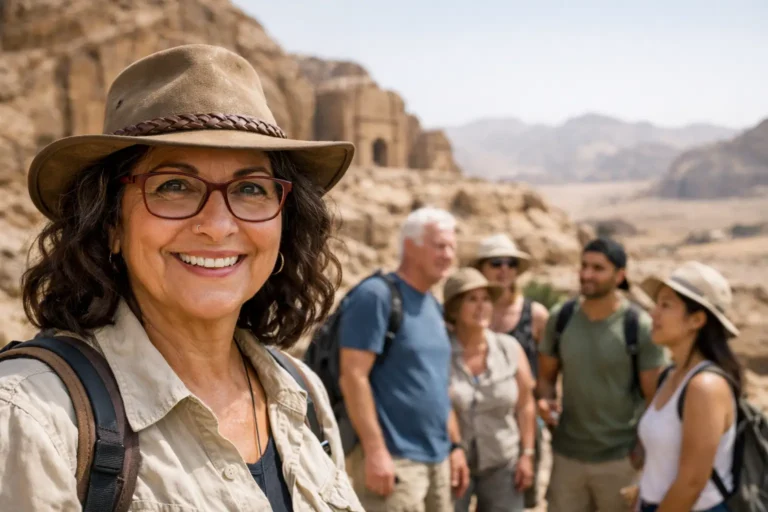
The desert does not give up its stories all at once. On the Nabataean spice route Israel preserves some of its most striking chapters in stone, silence, and distance – from cliffside cities to lonely milestones and high desert viewpoints where trade once moved with astonishing precision.
This is one of those journeys that rewards curiosity more than speed. If you rush it, you will see ruins. If you travel it well, you begin to understand how merchants crossed harsh terrain with frankincense, myrrh, spices, textiles, and precious goods, and how a desert people built prosperity by mastering routes that others could barely survive.
Why the Nabataean spice route in Israel matters
The Nabataeans are often introduced through Petra, but the story does not stop in Jordan. The Nabataean spice route in Israel is where the wider network becomes tangible in a very different way. In the Negev, you can trace the infrastructure of trade itself – the stations, towns, water systems, fortifications, and road segments that made long-distance commerce possible.
That is what makes this route so satisfying for travelers who want more than a photo stop. You are not simply visiting isolated archaeological sites. You are seeing a connected system designed for movement, survival, and profit across a demanding landscape.
There is also a practical advantage to exploring the route in Israel. The distances between major points are manageable, especially with a private guide or tailored itinerary, and the route works well for travelers who like to combine archaeology with desert scenery, short hikes, jeep access, local food, or a deeper conversation about how people adapted to arid environments.
What you actually see along the Nabataean spice route Israel
The heart of the experience is in the Negev Highlands, where several UNESCO-recognized Nabataean cities and related sites help tell the story. Avdat is often the anchor site, and for good reason. Set dramatically on a ridge, it offers the kind of setting that immediately explains why placement mattered. You can walk through temples, churches from later periods, living quarters, wine presses, and the remains of urban planning that grew out of caravan trade. The views do part of the teaching. You can see how command of terrain was a business asset.
Mamshit feels different. It is one of the more approachable sites for understanding domestic life and the wealth that trade could generate. The stone houses are unusually impressive, and the site gives a sense of comfort and status that surprises many visitors who imagine desert trade stations as rough and temporary. Mamshit shows a more settled, prosperous side of the Nabataean world.
Shivta has a quieter character. It is haunting in the best sense – less dramatic at first glance, but deeply atmospheric. It helps travelers think about continuity and change in the desert, because the site reflects both Nabataean foundations and later development. If you enjoy places that do not overexplain themselves, Shivta stays with you.
Halutza is less visually complete, yet it matters for people who want the broader map rather than only the polished highlights. Sometimes a site is valuable because it sharpens your understanding of the network, not because it is the most photogenic stop of the day.
Then there are the route elements beyond the cities themselves. Kahn sites, roadside remains, ancient agricultural systems, and lookout points all add depth. The Nabataeans were not only traders. They were highly skilled in water harvesting and desert adaptation. Once you start noticing runoff channels, cisterns, and terraced farming, the landscape changes. What first looked empty begins to look engineered.
Best way to experience the route
This depends on what kind of traveler you are. Some visitors want a history-focused day with strong archaeological interpretation. Others want the route as part of a larger desert experience that includes Machtesh Ramon, a scenic drive, a short hike, or a 4×4 segment to reach less obvious viewpoints.
A self-drive trip can work well if you are comfortable reading sites independently and do not mind that some of the most interesting details are easy to miss. Signage gives you a framework, but not always the texture. A pile of stones is just a pile of stones until someone explains why camels, water storage, taxation, and topography all meet in that exact place.
That is where expert guiding changes the day. The route becomes a story of decision-making – where to build, how to collect water, why one settlement grew and another declined, what travelers carried, and how the desert shaped timing and risk. For returning visitors to Israel, this is often exactly the kind of experience that feels fresh: less checklist, more insight.
How much time should you allow?
If your schedule is tight, you can build a meaningful day around one or two major Nabataean sites, usually paired with desert landscapes and a good lunch stop. Avdat alone deserves unhurried time, especially if you enjoy photography, archaeology, or panoramic settings.
If you have more flexibility, a fuller Negev itinerary is far more rewarding. Two days allows the route to breathe. You can combine Nabataean sites with Mitzpe Ramon, crater-edge vistas, desert wildlife spotting, farm visits, or hands-on experiences that make the region feel lived-in rather than museum-like.
For travelers who have already seen Jerusalem, Masada, and the Galilee on earlier trips, this is often where Israel opens up in a new way. The south offers space, light, and a different rhythm. It feels both ancient and unexpectedly personal.
What makes this route special for families, couples, and repeat visitors
The route has range. For families, the caravan story gives children something concrete to imagine – camels, goods, water, distance, survival. The physical remains are often open enough to explore without the feeling of being trapped in a conventional museum.
For couples, the route works beautifully as a scenic and thoughtful day, especially when paired with a desert overlook, a boutique winery, or sunset in the highlands. There is romance in the scale of the landscape, but it is grounded by real history.
For repeat visitors, the Nabataean spice route Israel offers one of the clearest alternatives to standard touring. It is ideal for travelers who want to go deeper, ask better questions, and spend time in places that many first-time visitors miss entirely. That is often where the strongest travel memories are made – not necessarily at the most famous site, but at the one that suddenly makes the country feel larger and more layered.
A few trade-offs worth knowing
The desert is not an every-season, every-hour destination in the same way. Summer heat can be intense, and midday touring may limit how much walking feels enjoyable. In cooler months, the route is often superb, but weather still matters, especially if you are adding hiking or off-road components.
Accessibility also varies by site. Some areas are straightforward, while others involve uneven ground, steps, or exposed walking paths. That does not mean you should skip the route if mobility is a concern, only that it is worth shaping the day carefully.
And while the archaeology is compelling, this is not a theme-park experience. Parts of the route ask for imagination. If you love heavily reconstructed ancient sites, some locations may feel understated. If you appreciate landscapes that hold their history quietly, that understatement is part of the appeal.
Turning the route into a richer Negev day
The best itineraries usually do not isolate the Nabataeans from everything around them. The route gains meaning when it sits inside the wider desert environment. A day might begin at Avdat in the softer morning light, continue through highland views or a scenic drive, and end with a food or wine experience that brings contemporary desert life into the picture.
That mix is often what makes customized touring so effective. You can lean more archaeological, more scenic, more active, or more family-friendly without losing the thread of the day. A skilled guide can also adjust the pace for business travelers who need something short and meaningful, or for multigenerational families balancing curiosity, comfort, and attention spans.
At Patchwork Israel, this is exactly the kind of route that benefits from personal tailoring, because the desert gives generously when the day is built around your interests rather than forced into a one-size-fits-all schedule.
The Nabataean route is not only about what moved across the desert long ago. It is about learning how to read a landscape that still rewards patience, perspective, and the right guide beside you.

Nabataean Spice Route Israel: What to See
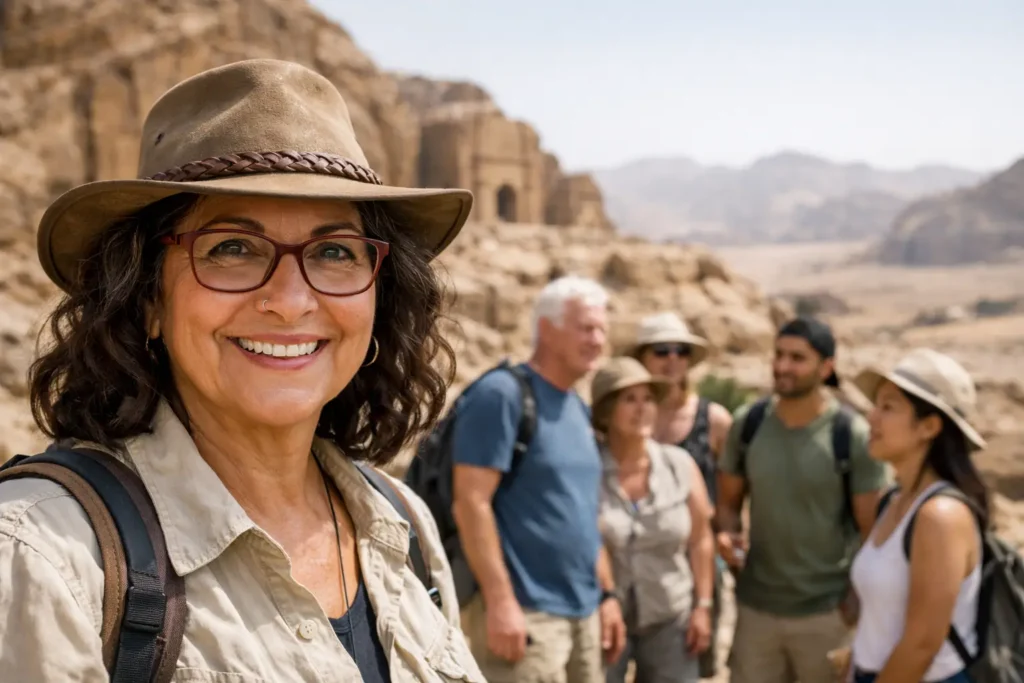
The desert does not give up its stories all at once. On the Nabataean spice route Israel preserves some of its most striking chapters in stone, silence, and distance – from cliffside cities to lonely milestones and high desert viewpoints where trade once moved with astonishing precision.
This is one of those journeys that rewards curiosity more than speed. If you rush it, you will see ruins. If you travel it well, you begin to understand how merchants crossed harsh terrain with frankincense, myrrh, spices, textiles, and precious goods, and how a desert people built prosperity by mastering routes that others could barely survive.
Why the Nabataean spice route in Israel matters
The Nabataeans are often introduced through Petra, but the story does not stop in Jordan. The Nabataean spice route in Israel is where the wider network becomes tangible in a very different way. In the Negev, you can trace the infrastructure of trade itself – the stations, towns, water systems, fortifications, and road segments that made long-distance commerce possible.
That is what makes this route so satisfying for travelers who want more than a photo stop. You are not simply visiting isolated archaeological sites. You are seeing a connected system designed for movement, survival, and profit across a demanding landscape.
There is also a practical advantage to exploring the route in Israel. The distances between major points are manageable, especially with a private guide or tailored itinerary, and the route works well for travelers who like to combine archaeology with desert scenery, short hikes, jeep access, local food, or a deeper conversation about how people adapted to arid environments.
What you actually see along the Nabataean spice route Israel
The heart of the experience is in the Negev Highlands, where several UNESCO-recognized Nabataean cities and related sites help tell the story. Avdat is often the anchor site, and for good reason. Set dramatically on a ridge, it offers the kind of setting that immediately explains why placement mattered. You can walk through temples, churches from later periods, living quarters, wine presses, and the remains of urban planning that grew out of caravan trade. The views do part of the teaching. You can see how command of terrain was a business asset.
Mamshit feels different. It is one of the more approachable sites for understanding domestic life and the wealth that trade could generate. The stone houses are unusually impressive, and the site gives a sense of comfort and status that surprises many visitors who imagine desert trade stations as rough and temporary. Mamshit shows a more settled, prosperous side of the Nabataean world.
Shivta has a quieter character. It is haunting in the best sense – less dramatic at first glance, but deeply atmospheric. It helps travelers think about continuity and change in the desert, because the site reflects both Nabataean foundations and later development. If you enjoy places that do not overexplain themselves, Shivta stays with you.
Halutza is less visually complete, yet it matters for people who want the broader map rather than only the polished highlights. Sometimes a site is valuable because it sharpens your understanding of the network, not because it is the most photogenic stop of the day.
Then there are the route elements beyond the cities themselves. Kahn sites, roadside remains, ancient agricultural systems, and lookout points all add depth. The Nabataeans were not only traders. They were highly skilled in water harvesting and desert adaptation. Once you start noticing runoff channels, cisterns, and terraced farming, the landscape changes. What first looked empty begins to look engineered.
Best way to experience the route
This depends on what kind of traveler you are. Some visitors want a history-focused day with strong archaeological interpretation. Others want the route as part of a larger desert experience that includes Machtesh Ramon, a scenic drive, a short hike, or a 4×4 segment to reach less obvious viewpoints.
A self-drive trip can work well if you are comfortable reading sites independently and do not mind that some of the most interesting details are easy to miss. Signage gives you a framework, but not always the texture. A pile of stones is just a pile of stones until someone explains why camels, water storage, taxation, and topography all meet in that exact place.
That is where expert guiding changes the day. The route becomes a story of decision-making – where to build, how to collect water, why one settlement grew and another declined, what travelers carried, and how the desert shaped timing and risk. For returning visitors to Israel, this is often exactly the kind of experience that feels fresh: less checklist, more insight.
How much time should you allow?
If your schedule is tight, you can build a meaningful day around one or two major Nabataean sites, usually paired with desert landscapes and a good lunch stop. Avdat alone deserves unhurried time, especially if you enjoy photography, archaeology, or panoramic settings.
If you have more flexibility, a fuller Negev itinerary is far more rewarding. Two days allows the route to breathe. You can combine Nabataean sites with Mitzpe Ramon, crater-edge vistas, desert wildlife spotting, farm visits, or hands-on experiences that make the region feel lived-in rather than museum-like.
For travelers who have already seen Jerusalem, Masada, and the Galilee on earlier trips, this is often where Israel opens up in a new way. The south offers space, light, and a different rhythm. It feels both ancient and unexpectedly personal.
What makes this route special for families, couples, and repeat visitors
The route has range. For families, the caravan story gives children something concrete to imagine – camels, goods, water, distance, survival. The physical remains are often open enough to explore without the feeling of being trapped in a conventional museum.
For couples, the route works beautifully as a scenic and thoughtful day, especially when paired with a desert overlook, a boutique winery, or sunset in the highlands. There is romance in the scale of the landscape, but it is grounded by real history.
For repeat visitors, the Nabataean spice route Israel offers one of the clearest alternatives to standard touring. It is ideal for travelers who want to go deeper, ask better questions, and spend time in places that many first-time visitors miss entirely. That is often where the strongest travel memories are made – not necessarily at the most famous site, but at the one that suddenly makes the country feel larger and more layered.
A few trade-offs worth knowing
The desert is not an every-season, every-hour destination in the same way. Summer heat can be intense, and midday touring may limit how much walking feels enjoyable. In cooler months, the route is often superb, but weather still matters, especially if you are adding hiking or off-road components.
Accessibility also varies by site. Some areas are straightforward, while others involve uneven ground, steps, or exposed walking paths. That does not mean you should skip the route if mobility is a concern, only that it is worth shaping the day carefully.
And while the archaeology is compelling, this is not a theme-park experience. Parts of the route ask for imagination. If you love heavily reconstructed ancient sites, some locations may feel understated. If you appreciate landscapes that hold their history quietly, that understatement is part of the appeal.
Turning the route into a richer Negev day
The best itineraries usually do not isolate the Nabataeans from everything around them. The route gains meaning when it sits inside the wider desert environment. A day might begin at Avdat in the softer morning light, continue through highland views or a scenic drive, and end with a food or wine experience that brings contemporary desert life into the picture.
That mix is often what makes customized touring so effective. You can lean more archaeological, more scenic, more active, or more family-friendly without losing the thread of the day. A skilled guide can also adjust the pace for business travelers who need something short and meaningful, or for multigenerational families balancing curiosity, comfort, and attention spans.
At Patchwork Israel, this is exactly the kind of route that benefits from personal tailoring, because the desert gives generously when the day is built around your interests rather than forced into a one-size-fits-all schedule.
The Nabataean route is not only about what moved across the desert long ago. It is about learning how to read a landscape that still rewards patience, perspective, and the right guide beside you.
Get the latest blog updates in your inbox.