
Repeat Traveler Israel Experiences That Matter
You have already stood at the Western Wall, floated in the Dead Sea, walked the Old City, and checked Masada off the list before breakfast. That is exactly why repeat traveler Israel experiences can be the most rewarding kind of trip. Once the pressure to see the “must-sees” is gone, Israel opens up in a different way – more personal, more layered, and often far more memorable.
A return visit changes the question. It is no longer, “What should I see?” but “What do I want to understand better?” For some travelers, that means spending more time in Jerusalem and less time racing through it. For others, it means stepping away from the headline sites entirely and choosing food, conversation, nature, architecture, spirituality, or contemporary life as the heart of the journey.
Why repeat traveler Israel experiences feel different
First-time trips are often built around coverage. There is a natural desire to fit in the iconic places, especially when travelers are balancing family history, religious interest, and limited time. That approach makes sense. But a second or third visit has the luxury of focus.
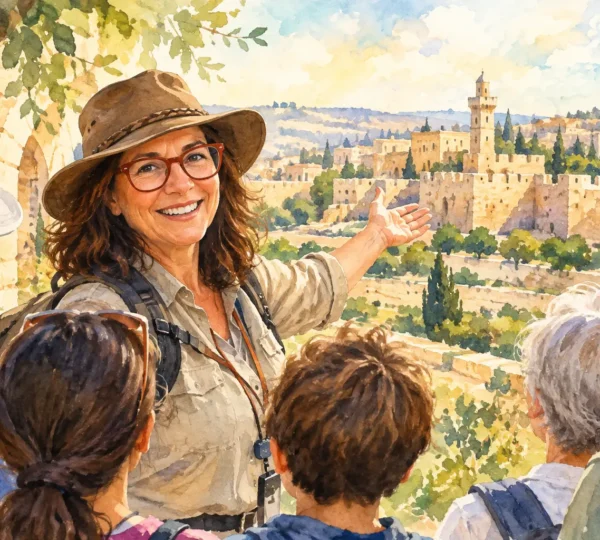
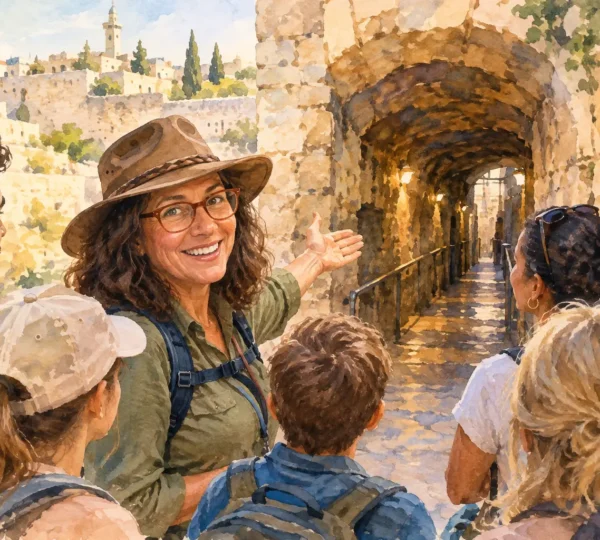
That focus is where the trip begins to feel truly yours. Instead of trying to sample everything, you can follow one thread and see where it leads. A day in the Galilee might become a deeper look at village life, local agriculture, and regional cuisine. A visit to Tel Aviv might shift from landmarks to the city’s architecture, creative energy, and hidden neighborhoods. Jerusalem can move from overview to insight, with time for smaller quarters, quieter churches, local markets at the right hour, or conversations that bring the city into sharper human focus.
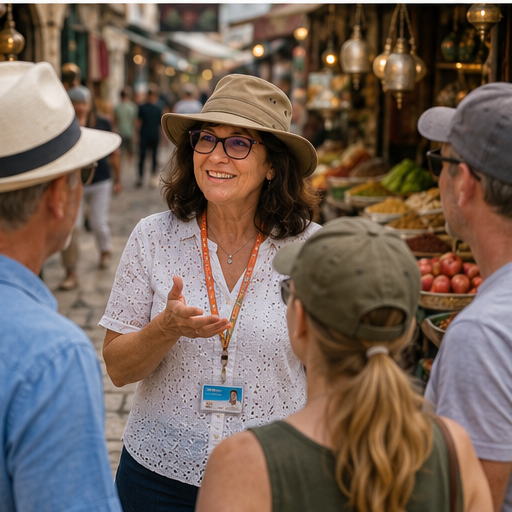
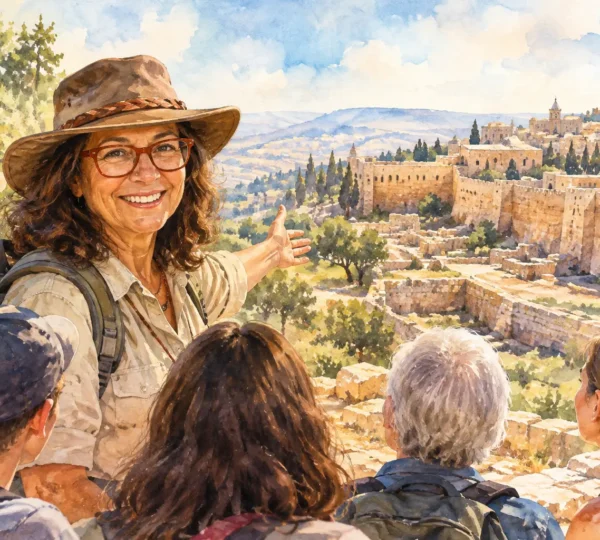
This is also when guided travel becomes more valuable, not less. The more specific your interests, the more important local judgment becomes. Timing, access, pacing, and knowing which places are worth a detour can make the difference between a pleasant day and a day you talk about for years.
What repeat travelers usually want the second time around
Most returning visitors are not looking for more volume. They are looking for more meaning. Sometimes that means revisiting a famous place with context they missed the first time. Caesarea, for example, can be a quick stop on a busy itinerary, or it can become a serious and fascinating encounter with archaeology, landscape, empire, engineering, and coastline when explored more thoughtfully.
In other cases, repeat travelers want a side of Israel that standard group tours rarely show well. That might be a culinary route that goes far beyond restaurant reservations, a desert day that includes real movement and stillness rather than just a scenic photo stop, or encounters with people whose work and daily lives reveal how much variety exists within the country.
There is also a practical side to repeat travel. Many people return with different companions. The first trip may have been heritage-focused with parents, while the next one includes teenagers, adult children, friends, or a spouse who has never been. The itinerary needs to honor what is new for one person without feeling repetitive for another. That balance takes care and creativity.
The best repeat traveler Israel experiences start with a theme
The easiest way to build a stronger return trip is to stop thinking in terms of regions alone and start with a theme. Not because geography stops mattering, but because themes create better days.
A traveler interested in faith might want a quieter and more textured experience than a standard circuit offers. Instead of moving rapidly from one sacred site to the next, the day can be shaped around reflection, tradition, art, music, or the lived rhythm of communities. The same is true for travelers interested in history. A custom day can connect sites in a way that makes a period or story come alive rather than leaving you with isolated facts.
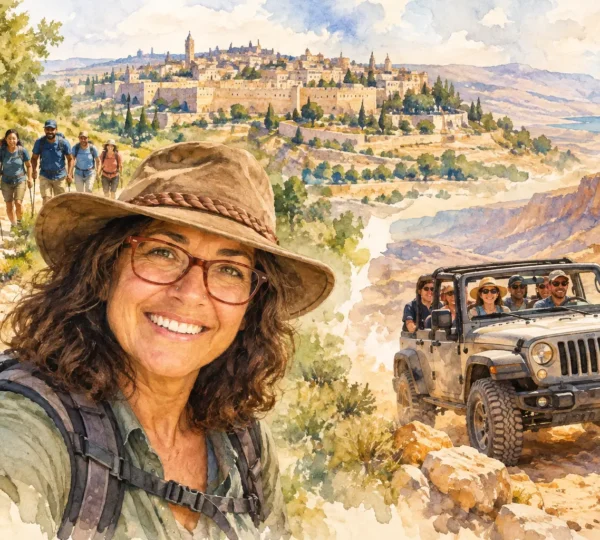
For others, the right theme is active and outdoorsy. Israel’s compact size makes it possible to combine serious scenery with fascinating culture in a single day. Hiking routes, off-road desert tracks, mountain viewpoints, streams, and lesser-known landscapes can shift the whole mood of a trip. If your first visit was mainly urban and historical, this kind of return experience can feel like seeing a different country.
Food is another smart lens. Not just tasting, but understanding. Markets, family kitchens, farms, boutique producers, baking workshops, and regional specialties can tell you as much about a place as any museum. This kind of day also works especially well for mixed-interest groups, because everyone connects through the table.
Hidden gems matter, but not all hidden gems are equal
The phrase gets overused. Some so-called hidden gems are simply minor sites with better marketing. Others are wonderful, but only if they fit your interests and energy.
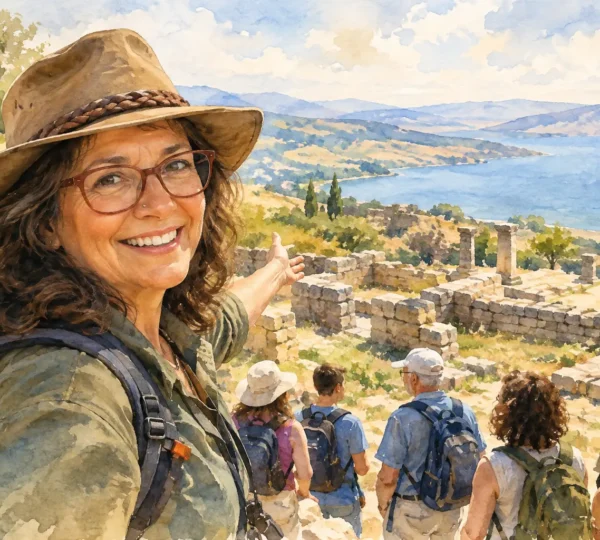
A meaningful return trip is not about collecting obscure stops for bragging rights. It is about choosing places that give you a fuller picture of Israel. Sometimes that is a little-known archaeological site where the setting is half the experience. Sometimes it is a neighborhood with a distinctive story, a forest trail that changes your sense of the land, or a workshop with a local expert where you make, cook, learn, or discuss rather than just observe.
The best lesser-known places also depend on pace. A packed day with five hidden gems can feel strangely generic. One or two carefully chosen experiences, with time to absorb them, usually lands better.
Personalized access changes everything
This is where private travel really shines for returning visitors. On a first trip, transportation and convenience often lead the conversation. On a repeat trip, access becomes more important.
Access does not only mean getting into places. It means getting into better conversations, better timing, better combinations, and better versions of a day. A private guide can shape a route around your curiosity, whether that means architecture in one city, culinary stops in another, or a day that moves from ancient remains to present-day innovation without feeling forced.
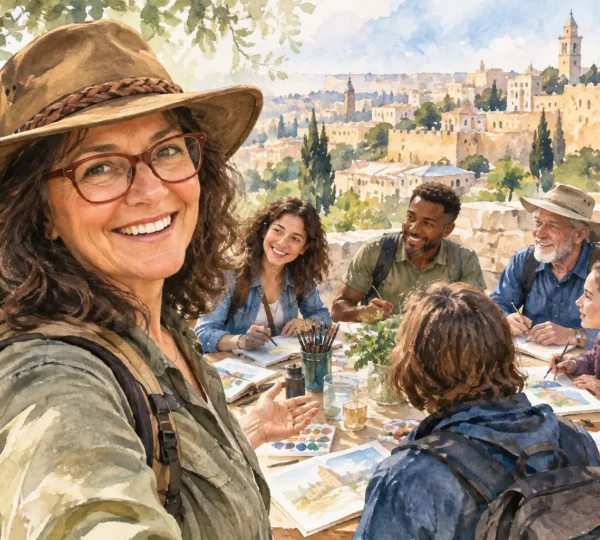
It can also mean experiences that are participatory instead of passive. Mosaic making, cooking, foraging, sailing, hiking, desert driving, or meeting people in their home or work settings all create a different level of connection. You leave with memories of doing and understanding, not just looking.
For business travelers with limited time, this matters even more. A half-day or single-day program can be built to feel substantial rather than rushed, giving space for both insight and enjoyment without defaulting to the nearest landmark.
When revisiting famous sites is still the right choice
Not every repeat trip should avoid the classics. Sometimes the best decision is to return to a major site with fresh eyes.
Jerusalem is the clearest example. No one finishes Jerusalem in one visit. Even travelers who know it well often want to revisit because their interests have changed. One trip may center on sacred geography, another on archaeology, another on food and neighborhoods, and another on the city’s many layers of daily life. The same place can feel entirely different depending on time of day, route, guide, and purpose.
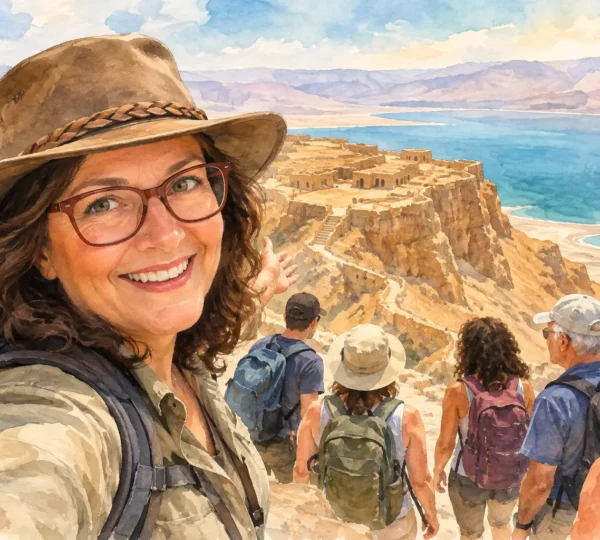
The Dead Sea region also rewards a second look. Many people remember the float and little else. But the wider area can support a much richer day when you add desert landscapes, storytelling, regional context, and active elements that suit your comfort level.
The trade-off is simple. If you revisit a famous place, do it differently. A repeat stop should offer a new angle, not just a replay.
How to know what kind of return trip fits you
Start with what stayed with you from the first trip. Not just what you enjoyed, but what lingered. Was it a desert light at the end of the day? A market conversation? A church, synagogue, or shoreline that felt more personal than expected? Those clues usually point toward the right itinerary.
Then think honestly about pace. Some travelers want depth and stillness. Others want variety and movement. Neither is better, but they produce very different trips. A family with multiple generations needs a different rhythm than a couple of hikers or a small group of friends who want long days and unusual stops.
It also helps to decide what you do not need this time. Letting go of obligation creates room for discovery. That is often the real turning point in a repeat visit.
With a guide who knows how to read both the map and the people in the vehicle, the trip can become something much more precise. Patchwork Israel is especially strong in that space, creating days that feel informed, flexible, and genuinely personal rather than prepackaged with minor edits.
The best return visits are rarely bigger. They are simply closer. Closer to the land, closer to the people, and closer to the version of Israel that speaks to you now.

Repeat Traveler Israel Experiences That Matter
You have already stood at the Western Wall, floated in the Dead Sea, walked the Old City, and checked Masada off the list before breakfast. That is exactly why repeat traveler Israel experiences can be the most rewarding kind of trip. Once the pressure to see the “must-sees” is gone, Israel opens up in a different way – more personal, more layered, and often far more memorable.
A return visit changes the question. It is no longer, “What should I see?” but “What do I want to understand better?” For some travelers, that means spending more time in Jerusalem and less time racing through it. For others, it means stepping away from the headline sites entirely and choosing food, conversation, nature, architecture, spirituality, or contemporary life as the heart of the journey.
Why repeat traveler Israel experiences feel different
First-time trips are often built around coverage. There is a natural desire to fit in the iconic places, especially when travelers are balancing family history, religious interest, and limited time. That approach makes sense. But a second or third visit has the luxury of focus.
That focus is where the trip begins to feel truly yours. Instead of trying to sample everything, you can follow one thread and see where it leads. A day in the Galilee might become a deeper look at village life, local agriculture, and regional cuisine. A visit to Tel Aviv might shift from landmarks to the city’s architecture, creative energy, and hidden neighborhoods. Jerusalem can move from overview to insight, with time for smaller quarters, quieter churches, local markets at the right hour, or conversations that bring the city into sharper human focus.
This is also when guided travel becomes more valuable, not less. The more specific your interests, the more important local judgment becomes. Timing, access, pacing, and knowing which places are worth a detour can make the difference between a pleasant day and a day you talk about for years.
What repeat travelers usually want the second time around
Most returning visitors are not looking for more volume. They are looking for more meaning. Sometimes that means revisiting a famous place with context they missed the first time. Caesarea, for example, can be a quick stop on a busy itinerary, or it can become a serious and fascinating encounter with archaeology, landscape, empire, engineering, and coastline when explored more thoughtfully.
In other cases, repeat travelers want a side of Israel that standard group tours rarely show well. That might be a culinary route that goes far beyond restaurant reservations, a desert day that includes real movement and stillness rather than just a scenic photo stop, or encounters with people whose work and daily lives reveal how much variety exists within the country.
There is also a practical side to repeat travel. Many people return with different companions. The first trip may have been heritage-focused with parents, while the next one includes teenagers, adult children, friends, or a spouse who has never been. The itinerary needs to honor what is new for one person without feeling repetitive for another. That balance takes care and creativity.
The best repeat traveler Israel experiences start with a theme
The easiest way to build a stronger return trip is to stop thinking in terms of regions alone and start with a theme. Not because geography stops mattering, but because themes create better days.
A traveler interested in faith might want a quieter and more textured experience than a standard circuit offers. Instead of moving rapidly from one sacred site to the next, the day can be shaped around reflection, tradition, art, music, or the lived rhythm of communities. The same is true for travelers interested in history. A custom day can connect sites in a way that makes a period or story come alive rather than leaving you with isolated facts.
For others, the right theme is active and outdoorsy. Israel’s compact size makes it possible to combine serious scenery with fascinating culture in a single day. Hiking routes, off-road desert tracks, mountain viewpoints, streams, and lesser-known landscapes can shift the whole mood of a trip. If your first visit was mainly urban and historical, this kind of return experience can feel like seeing a different country.
Food is another smart lens. Not just tasting, but understanding. Markets, family kitchens, farms, boutique producers, baking workshops, and regional specialties can tell you as much about a place as any museum. This kind of day also works especially well for mixed-interest groups, because everyone connects through the table.
Hidden gems matter, but not all hidden gems are equal
The phrase gets overused. Some so-called hidden gems are simply minor sites with better marketing. Others are wonderful, but only if they fit your interests and energy.
A meaningful return trip is not about collecting obscure stops for bragging rights. It is about choosing places that give you a fuller picture of Israel. Sometimes that is a little-known archaeological site where the setting is half the experience. Sometimes it is a neighborhood with a distinctive story, a forest trail that changes your sense of the land, or a workshop with a local expert where you make, cook, learn, or discuss rather than just observe.
The best lesser-known places also depend on pace. A packed day with five hidden gems can feel strangely generic. One or two carefully chosen experiences, with time to absorb them, usually lands better.
Personalized access changes everything
This is where private travel really shines for returning visitors. On a first trip, transportation and convenience often lead the conversation. On a repeat trip, access becomes more important.
Access does not only mean getting into places. It means getting into better conversations, better timing, better combinations, and better versions of a day. A private guide can shape a route around your curiosity, whether that means architecture in one city, culinary stops in another, or a day that moves from ancient remains to present-day innovation without feeling forced.
It can also mean experiences that are participatory instead of passive. Mosaic making, cooking, foraging, sailing, hiking, desert driving, or meeting people in their home or work settings all create a different level of connection. You leave with memories of doing and understanding, not just looking.
For business travelers with limited time, this matters even more. A half-day or single-day program can be built to feel substantial rather than rushed, giving space for both insight and enjoyment without defaulting to the nearest landmark.
When revisiting famous sites is still the right choice
Not every repeat trip should avoid the classics. Sometimes the best decision is to return to a major site with fresh eyes.
Jerusalem is the clearest example. No one finishes Jerusalem in one visit. Even travelers who know it well often want to revisit because their interests have changed. One trip may center on sacred geography, another on archaeology, another on food and neighborhoods, and another on the city’s many layers of daily life. The same place can feel entirely different depending on time of day, route, guide, and purpose.
The Dead Sea region also rewards a second look. Many people remember the float and little else. But the wider area can support a much richer day when you add desert landscapes, storytelling, regional context, and active elements that suit your comfort level.
The trade-off is simple. If you revisit a famous place, do it differently. A repeat stop should offer a new angle, not just a replay.
How to know what kind of return trip fits you
Start with what stayed with you from the first trip. Not just what you enjoyed, but what lingered. Was it a desert light at the end of the day? A market conversation? A church, synagogue, or shoreline that felt more personal than expected? Those clues usually point toward the right itinerary.
Then think honestly about pace. Some travelers want depth and stillness. Others want variety and movement. Neither is better, but they produce very different trips. A family with multiple generations needs a different rhythm than a couple of hikers or a small group of friends who want long days and unusual stops.
It also helps to decide what you do not need this time. Letting go of obligation creates room for discovery. That is often the real turning point in a repeat visit.
With a guide who knows how to read both the map and the people in the vehicle, the trip can become something much more precise. Patchwork Israel is especially strong in that space, creating days that feel informed, flexible, and genuinely personal rather than prepackaged with minor edits.
The best return visits are rarely bigger. They are simply closer. Closer to the land, closer to the people, and closer to the version of Israel that speaks to you now.
Get the latest blog updates in your inbox.