
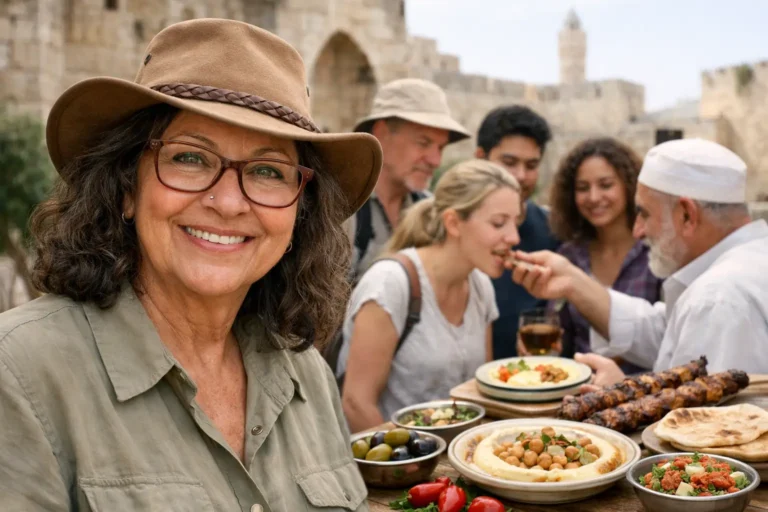
Israel Cuisine Through History
A bite of warm pita with olive oil in the Galilee, a pot of slow-cooked cholent before lunch in Jerusalem, fresh fish near the coast, or cardamom-scented coffee in the desert – food in Israel never tells just one story. Israel cuisine through history is really a record of movement, memory, harvest, and home cooking, shaped by the land itself and by the many communities who have lived here, arrived here, and left their mark.
For travelers, this matters because meals in Israel are not just meals. They are often the most immediate way to feel time layered in one place. A market stall, a bakery, or a family table can reveal as much as an archaeological site, sometimes more.
Israel cuisine through history begins with the land
Long before modern restaurant culture, the basic food pattern of this region was set by geography and climate. The eastern Mediterranean offered olives, grapes, figs, dates, wheat, barley, legumes, herbs, and goat and sheep products. These were not luxury foods. They were the practical grammar of daily life.
Ancient diets in the land of Israel were tied to agricultural cycles and storage. Grain became bread and porridge. Olives became oil for cooking and preservation. Grapes were eaten fresh, dried, or turned into wine. Lentils, chickpeas, and beans provided dependable nourishment. In hill country villages, on coastal plains, and near desert edges, people cooked with what would last, what could travel, and what the season allowed.
That is one reason so many foods that still feel current in Israel are actually very old in spirit. Flatbreads, preserved olives, yogurt-based dishes, pulses, and herb-heavy salads fit modern tastes, but they were also sensible answers to climate and terrain centuries ago.
Sacred rhythms and everyday kitchens
Religion shaped food here not only through symbolism, but through routine. Sabbath meals, festival dishes, fasting periods, pilgrimage traditions, and hospitality customs all influenced what people cooked and when. Bread had ritual meaning, wine had ritual meaning, and shared meals carried moral and social weight.
In Jewish communities, food traditions developed around both law and memory. Some dishes were tied to holidays, others to the practical need to prepare food in advance for sacred rest days. Slow-cooked stews emerged not because they were trendy, but because they solved a religious and domestic challenge beautifully. Over time, those dishes became beloved comfort foods.
Christian communities also preserved culinary rhythms around feast days, fasting, olive harvests, and local celebrations. Muslim culinary traditions likewise shaped the broader food culture through seasonal sweets, grain dishes, stuffed vegetables, grilled meats, coffee rituals, and deeply rooted practices of generosity. What makes the region interesting is that these foodways developed side by side, influencing one another while still keeping distinct identities.
Trade routes changed the table
If you want to understand why food in Israel can feel both local and surprisingly wide-ranging, look at the map. This land sat at the meeting point of Africa, Asia, and Europe. Traders, empires, pilgrims, and migrants passed through for centuries, bringing ingredients, techniques, and tastes.
Spices are one obvious example. Cinnamon, cumin, coriander, black pepper, sumac, turmeric, and later paprika all helped build layers of flavor that go far beyond simple peasant food. Rice, citrus, almonds, eggplant, and sugar each entered local kitchens at different times and in different ways. Some ingredients arrived as luxuries and later became ordinary. Others remained tied to festive meals.
This is also why trying to define one fixed national cuisine can miss the point. The food history of Israel is cumulative. It absorbs and adapts. A dish may have roots in one region, be refined in another, and become iconic in Israel through yet another community’s version.
From village cooking to Ottoman influence
During Ottoman centuries, cooking in this region reflected a larger imperial food world while staying grounded in local ingredients. Stuffed vegetables, rice dishes, pastries, yogurt sauces, grilled meats, and syrup-soaked sweets all became part of a recognizable regional repertoire. Techniques of layering, stuffing, preserving, and slow cooking deepened.
Urban centers and rural communities did not eat exactly the same way, of course. Wealth, access, and geography mattered. Coastal towns had different possibilities than inland villages. Galilee kitchens offered different combinations than the Negev. Even today, one of the pleasures of traveling through Israel is noticing how food changes within a relatively short distance.
What remained constant was the role of hospitality. To be welcomed with coffee, fruit, bread, or sweets was never a small gesture. It still is not.
Immigration made modern Israeli food what it is
The most dramatic chapter in Israel cuisine through history may be the modern one. Jewish communities arriving from North Africa, the Middle East, the Balkans, Eastern Europe, Central Europe, the Caucasus, Ethiopia, and beyond brought family recipes, holiday foods, spice habits, and ways of thinking about a proper meal. That created not a melting pot in the simplistic sense, but a lively, sometimes messy shared kitchen.
This is where the modern Israeli table becomes especially fascinating. A bakery case might hold burekas, rugelach, and yeasted cakes in one neighborhood. A home meal could include schnitzel, tahini, pickles, rice, salad, and a long-simmered stew without anyone finding that unusual. Yemenite breads, Iraqi kubbeh, Moroccan fish, Persian rice traditions, Kurdish soups, and Ashkenazi comfort foods all found a place.
Not every dish blended neatly into something new. Some traditions stayed very specific to certain communities or holidays. Others crossed over fast and became widely loved. The trade-off is that when people search for the single most authentic Israeli food, they can miss the real story. Authenticity here often lives in the overlap.
Markets, farms, and the rise of fresh Israeli cooking
Another turning point came with the strong emphasis on fresh produce, local farming, and open-air market culture. Tomatoes, cucumbers, herbs, citrus, peppers, avocados, and strawberries became central to the everyday visual language of Israeli food. Salads became more than side dishes. Breakfast became a full expression of abundance.
This freshness is one reason visitors often remember Israeli meals so vividly. Even simple food can taste unusually alive when ingredients are in season and handled with confidence rather than fuss. A chopped salad, grilled eggplant, fresh cheese, good olive oil, and warm bread can feel complete.
At the same time, modern Israeli cuisine has become more chef-driven in cities like Tel Aviv and Jerusalem. Contemporary restaurants borrow from grandmothers, street food, nearby regions, wine culture, and global techniques. Sometimes the result is thrilling. Sometimes it can feel a bit polished compared with the warmth of a home kitchen or a market stall. It depends on what kind of food experience you want.
Street food is history in motion
If museums preserve artifacts, street food preserves habits. Falafel, shawarma, sabich, bourekas, knafeh, malabi, jachnun, kubbeh soups, and countless bakery items tell stories of migration and adaptation in a form you can eat while standing.
Street food matters because it shows how traditions become shared public culture. Foods once tied to one community can become part of everyday life for everyone. Yet the best versions still reflect place. One market may be known for a particular pastry, one small town for a specific preparation, one family-run spot for a recipe that has not changed much in decades.
For travelers, this is where guided food experiences become especially valuable. Without local insight, you can eat well. With context, you understand why a food is here, who brought it, how it changed, and what to notice in the flavor.
What travelers taste when they travel well
Food in Israel rewards curiosity. The same traveler can experience ancient agricultural landscapes, monastery-made products, vineyard culture, urban market lunches, desert hospitality, boutique olive oil, and family-style meals across a single trip. That range is part of the appeal.
For people who have already seen the major landmarks, culinary history can open Israel in a new way. A conversation with a baker, a stop at a spice shop, a cooking workshop, or lunch in a lesser-known village can reveal the country’s human texture far better than another rushed checklist day. This is often where a personalized trip shines, and it is very much the kind of layered experience Patchwork Israel loves to build.
Israel cuisine through history is still being written
The story did not stop once familiar classics became popular. Younger chefs, home cooks, farmers, and food artisans keep reworking inherited traditions. Some are reviving old grains and regional herbs. Others are refining grandmother recipes without draining them of soul. There is growing pride in local wine, cheese, bread, and small-scale agriculture, alongside a continued appetite for comfort food and crowded market counters.
That tension is healthy. Food should evolve. But the best meals in Israel still tend to carry a sense of place, memory, and generosity.
If you want to understand Israel more deeply, pay close attention to what arrives on the plate and who is serving it. History here is not tucked away behind glass. Very often, it is simmering in a pot, rising in a bakery, or set out on the table with the simple invitation to taste.

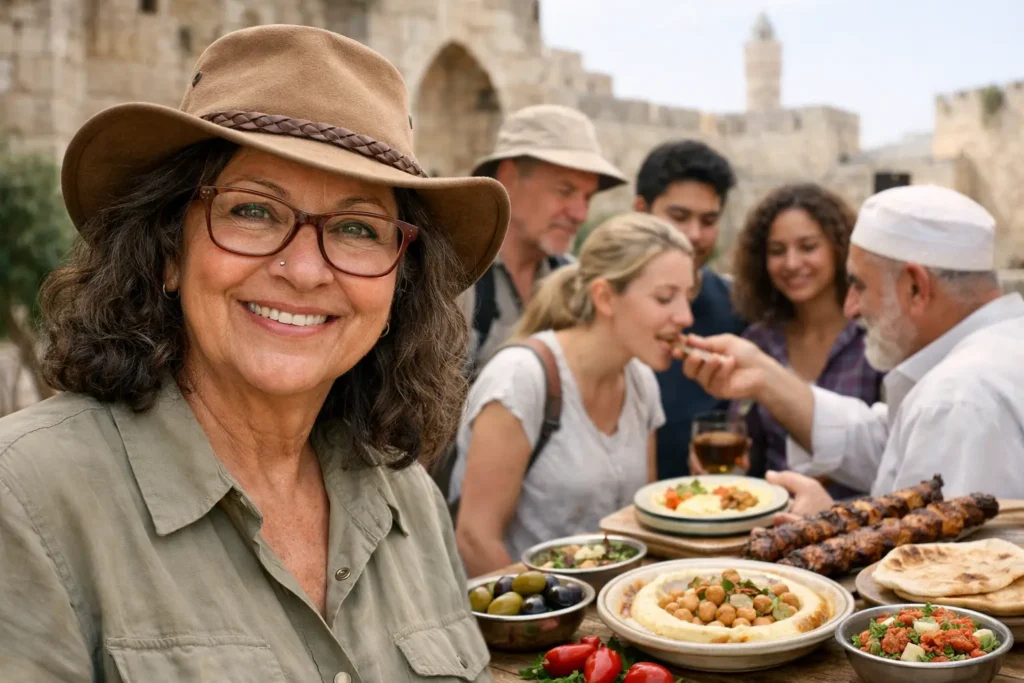
Israel Cuisine Through History
A bite of warm pita with olive oil in the Galilee, a pot of slow-cooked cholent before lunch in Jerusalem, fresh fish near the coast, or cardamom-scented coffee in the desert – food in Israel never tells just one story. Israel cuisine through history is really a record of movement, memory, harvest, and home cooking, shaped by the land itself and by the many communities who have lived here, arrived here, and left their mark.
For travelers, this matters because meals in Israel are not just meals. They are often the most immediate way to feel time layered in one place. A market stall, a bakery, or a family table can reveal as much as an archaeological site, sometimes more.
Israel cuisine through history begins with the land
Long before modern restaurant culture, the basic food pattern of this region was set by geography and climate. The eastern Mediterranean offered olives, grapes, figs, dates, wheat, barley, legumes, herbs, and goat and sheep products. These were not luxury foods. They were the practical grammar of daily life.
Ancient diets in the land of Israel were tied to agricultural cycles and storage. Grain became bread and porridge. Olives became oil for cooking and preservation. Grapes were eaten fresh, dried, or turned into wine. Lentils, chickpeas, and beans provided dependable nourishment. In hill country villages, on coastal plains, and near desert edges, people cooked with what would last, what could travel, and what the season allowed.
That is one reason so many foods that still feel current in Israel are actually very old in spirit. Flatbreads, preserved olives, yogurt-based dishes, pulses, and herb-heavy salads fit modern tastes, but they were also sensible answers to climate and terrain centuries ago.
Sacred rhythms and everyday kitchens
Religion shaped food here not only through symbolism, but through routine. Sabbath meals, festival dishes, fasting periods, pilgrimage traditions, and hospitality customs all influenced what people cooked and when. Bread had ritual meaning, wine had ritual meaning, and shared meals carried moral and social weight.
In Jewish communities, food traditions developed around both law and memory. Some dishes were tied to holidays, others to the practical need to prepare food in advance for sacred rest days. Slow-cooked stews emerged not because they were trendy, but because they solved a religious and domestic challenge beautifully. Over time, those dishes became beloved comfort foods.
Christian communities also preserved culinary rhythms around feast days, fasting, olive harvests, and local celebrations. Muslim culinary traditions likewise shaped the broader food culture through seasonal sweets, grain dishes, stuffed vegetables, grilled meats, coffee rituals, and deeply rooted practices of generosity. What makes the region interesting is that these foodways developed side by side, influencing one another while still keeping distinct identities.
Trade routes changed the table
If you want to understand why food in Israel can feel both local and surprisingly wide-ranging, look at the map. This land sat at the meeting point of Africa, Asia, and Europe. Traders, empires, pilgrims, and migrants passed through for centuries, bringing ingredients, techniques, and tastes.
Spices are one obvious example. Cinnamon, cumin, coriander, black pepper, sumac, turmeric, and later paprika all helped build layers of flavor that go far beyond simple peasant food. Rice, citrus, almonds, eggplant, and sugar each entered local kitchens at different times and in different ways. Some ingredients arrived as luxuries and later became ordinary. Others remained tied to festive meals.
This is also why trying to define one fixed national cuisine can miss the point. The food history of Israel is cumulative. It absorbs and adapts. A dish may have roots in one region, be refined in another, and become iconic in Israel through yet another community’s version.
From village cooking to Ottoman influence
During Ottoman centuries, cooking in this region reflected a larger imperial food world while staying grounded in local ingredients. Stuffed vegetables, rice dishes, pastries, yogurt sauces, grilled meats, and syrup-soaked sweets all became part of a recognizable regional repertoire. Techniques of layering, stuffing, preserving, and slow cooking deepened.
Urban centers and rural communities did not eat exactly the same way, of course. Wealth, access, and geography mattered. Coastal towns had different possibilities than inland villages. Galilee kitchens offered different combinations than the Negev. Even today, one of the pleasures of traveling through Israel is noticing how food changes within a relatively short distance.
What remained constant was the role of hospitality. To be welcomed with coffee, fruit, bread, or sweets was never a small gesture. It still is not.
Immigration made modern Israeli food what it is
The most dramatic chapter in Israel cuisine through history may be the modern one. Jewish communities arriving from North Africa, the Middle East, the Balkans, Eastern Europe, Central Europe, the Caucasus, Ethiopia, and beyond brought family recipes, holiday foods, spice habits, and ways of thinking about a proper meal. That created not a melting pot in the simplistic sense, but a lively, sometimes messy shared kitchen.
This is where the modern Israeli table becomes especially fascinating. A bakery case might hold burekas, rugelach, and yeasted cakes in one neighborhood. A home meal could include schnitzel, tahini, pickles, rice, salad, and a long-simmered stew without anyone finding that unusual. Yemenite breads, Iraqi kubbeh, Moroccan fish, Persian rice traditions, Kurdish soups, and Ashkenazi comfort foods all found a place.
Not every dish blended neatly into something new. Some traditions stayed very specific to certain communities or holidays. Others crossed over fast and became widely loved. The trade-off is that when people search for the single most authentic Israeli food, they can miss the real story. Authenticity here often lives in the overlap.
Markets, farms, and the rise of fresh Israeli cooking
Another turning point came with the strong emphasis on fresh produce, local farming, and open-air market culture. Tomatoes, cucumbers, herbs, citrus, peppers, avocados, and strawberries became central to the everyday visual language of Israeli food. Salads became more than side dishes. Breakfast became a full expression of abundance.
This freshness is one reason visitors often remember Israeli meals so vividly. Even simple food can taste unusually alive when ingredients are in season and handled with confidence rather than fuss. A chopped salad, grilled eggplant, fresh cheese, good olive oil, and warm bread can feel complete.
At the same time, modern Israeli cuisine has become more chef-driven in cities like Tel Aviv and Jerusalem. Contemporary restaurants borrow from grandmothers, street food, nearby regions, wine culture, and global techniques. Sometimes the result is thrilling. Sometimes it can feel a bit polished compared with the warmth of a home kitchen or a market stall. It depends on what kind of food experience you want.
Street food is history in motion
If museums preserve artifacts, street food preserves habits. Falafel, shawarma, sabich, bourekas, knafeh, malabi, jachnun, kubbeh soups, and countless bakery items tell stories of migration and adaptation in a form you can eat while standing.
Street food matters because it shows how traditions become shared public culture. Foods once tied to one community can become part of everyday life for everyone. Yet the best versions still reflect place. One market may be known for a particular pastry, one small town for a specific preparation, one family-run spot for a recipe that has not changed much in decades.
For travelers, this is where guided food experiences become especially valuable. Without local insight, you can eat well. With context, you understand why a food is here, who brought it, how it changed, and what to notice in the flavor.
What travelers taste when they travel well
Food in Israel rewards curiosity. The same traveler can experience ancient agricultural landscapes, monastery-made products, vineyard culture, urban market lunches, desert hospitality, boutique olive oil, and family-style meals across a single trip. That range is part of the appeal.
For people who have already seen the major landmarks, culinary history can open Israel in a new way. A conversation with a baker, a stop at a spice shop, a cooking workshop, or lunch in a lesser-known village can reveal the country’s human texture far better than another rushed checklist day. This is often where a personalized trip shines, and it is very much the kind of layered experience Patchwork Israel loves to build.
Israel cuisine through history is still being written
The story did not stop once familiar classics became popular. Younger chefs, home cooks, farmers, and food artisans keep reworking inherited traditions. Some are reviving old grains and regional herbs. Others are refining grandmother recipes without draining them of soul. There is growing pride in local wine, cheese, bread, and small-scale agriculture, alongside a continued appetite for comfort food and crowded market counters.
That tension is healthy. Food should evolve. But the best meals in Israel still tend to carry a sense of place, memory, and generosity.
If you want to understand Israel more deeply, pay close attention to what arrives on the plate and who is serving it. History here is not tucked away behind glass. Very often, it is simmering in a pot, rising in a bakery, or set out on the table with the simple invitation to taste.





Get the latest blog updates in your inbox.