
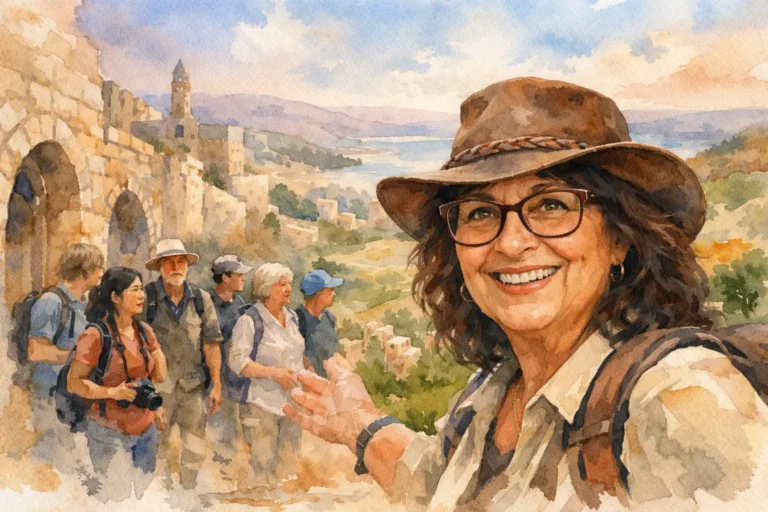
A Repeat Visitor Israel Itinerary Example That Goes Deeper
You have already stood at the Western Wall, floated in the Dead Sea, and taken the classic photo above Masada. Wonderful. A repeat visitor Israel itinerary example should not try to recreate your first trip with different restaurant reservations. It should use the familiarity you have earned to ask better questions: Who lives here? What is being made here? Which landscapes are still under your feet when the tour buses have gone home?
For a return visit, the best itinerary has a point of view. It may follow food, faith, family history, architecture, archaeology, hiking, or the surprisingly varied communities that make up daily life. The goal is not to avoid famous places entirely. It is to revisit them with context, at the right hour, and alongside experiences that could never fit into a standard first-time schedule.
What changes on a second Israel trip
First visits are often about orientation. Jerusalem, the Galilee, the coast, and the desert each deserve their moment. On a second trip, you can slow down without feeling that you have missed the essentials. A quiet alley in Jaffa, an archaeological site with an expert excavator, or a home meal can carry more meaning than trying to collect another ten highlights in a day.
This is also when a private guide becomes particularly valuable. The itinerary can respond to your energy, the season, your walking pace, and the conversations that spark your curiosity. If a visit with a farmer leads to questions about water, innovation, and local ingredients, there is room to stay longer. If your family would rather spend an afternoon on a shaded trail than in another museum, the day can turn accordingly.
The trade-off is simple: depth means choosing. A six-day trip cannot include every region and every interest, so it helps to select two or three threads that genuinely excite you. For some travelers, that means sacred traditions and lesser-known places of worship. For others, it means desert geology, contemporary design, and a very good lunch.
A six-day repeat visitor Israel itinerary example
This sample begins and ends near Tel Aviv, but it is intentionally not a fixed package. It suits travelers who have seen the major icons and want history, people, landscapes, and a few memorable surprises in one well-paced week.
Day 1: Jaffa and Tel Aviv beyond the postcard
Begin in Old Jaffa before the lanes fill, but skip the rushed sweep through its best-known corners. Walk with attention to the layers of port history, changing architecture, artists’ workshops, and the small details that tell you this is a living neighborhood rather than a backdrop.
Continue into Tel Aviv for a neighborhood-focused walk that could center on Bauhaus architecture, food markets, street art, or the evolution of the city’s early communities. A private meeting with a chef, designer, historian, or entrepreneur gives the afternoon a human voice. End with dinner chosen around your tastes: a hands-on cooking experience, a serious tasting menu, or a casual place where the menu needs explaining.
Day 2: Coast, archaeology, and a local table
Head north along the coast, where Caesarea is worth revisiting when it is treated as more than a quick stop for photographs. Look closely at the harbor, water systems, entertainment spaces, and the practical engineering that made an ancient city function. Repeat visitors often enjoy comparing the grand public story with the everyday realities archaeologists uncover.
From there, choose a contrasting encounter. You might visit a small family farm, meet a maker, or explore a coastal nature reserve on foot. The specific choice should depend on the season. Wildflowers, migratory birds, harvest activities, and weather all change the character of this day. A leisurely meal with local ingredients is a much better finish than another long drive.
Day 3: The Galilee at trail level
The Galilee rewards travelers who are prepared to leave the main road. Depending on fitness and interests, this can be a gentle spring walk, a forest hike, an off-road route to a broad viewpoint, or a day built around ancient villages and regional food traditions.
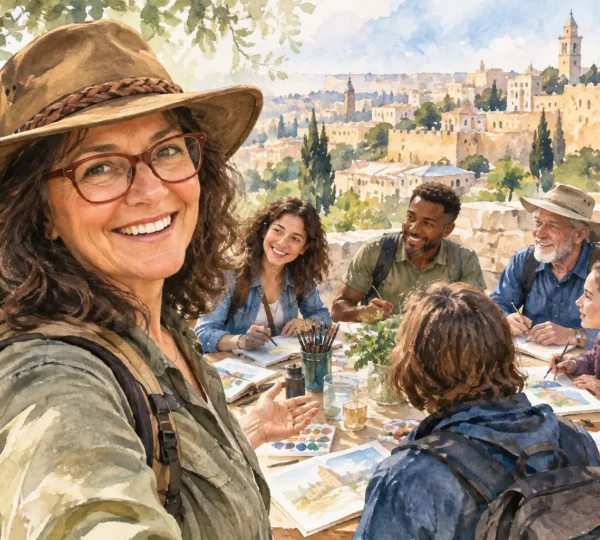
This is an excellent place for a personal visit or a small workshop. You may share coffee with someone whose work is rooted in the landscape, learn to make a regional dish, or spend time with a guide who can explain how geography, agriculture, and faith have shaped the area. These conversations are not decorative additions to the itinerary. They are often what visitors remember most clearly years later.
Stay overnight in the north rather than racing back to the coast. Evening is when the hills grow quiet and the pace of the trip finally changes.
Day 4: A different side of Jerusalem
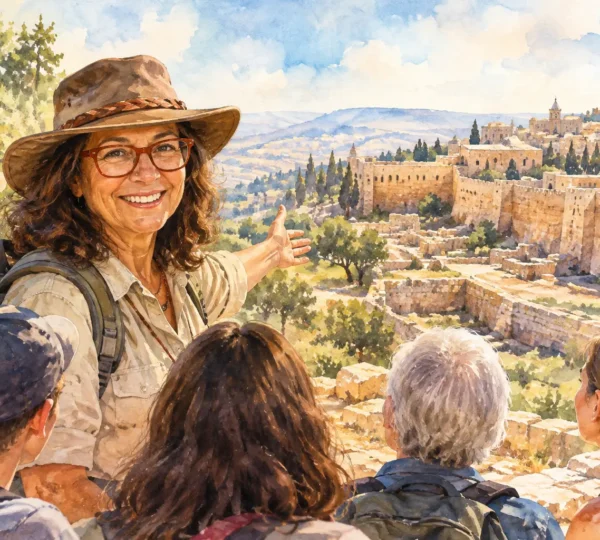
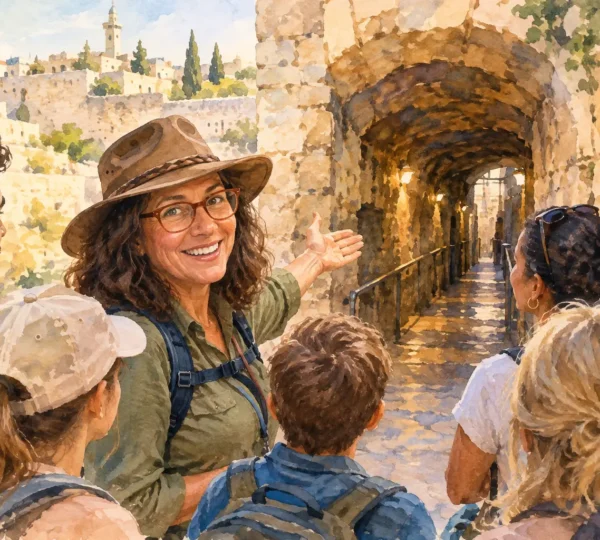
Jerusalem is never finished after one visit. For a return trip, choose one or two focused lenses instead of trying to cover the entire city again. Perhaps that is the city’s lesser-known archaeological layers, its diverse religious architecture, the work of contemporary artists, or a walk through neighborhoods whose stories rarely appear on a first itinerary.
A meaningful Jerusalem day can include a conversation with a scholar, clergy member, artist, or community leader, arranged around your interests and comfort level. It can also be deeply personal: tracing a family connection, examining a particular period of history, or finding a quieter place for reflection.
The key is pacing. Jerusalem carries a great deal of emotional and historical weight. Leave time for a long lunch, a sit-down view, or an unplanned detour. More information is not always more understanding.
Day 5: Desert roads, silence, and the Negev
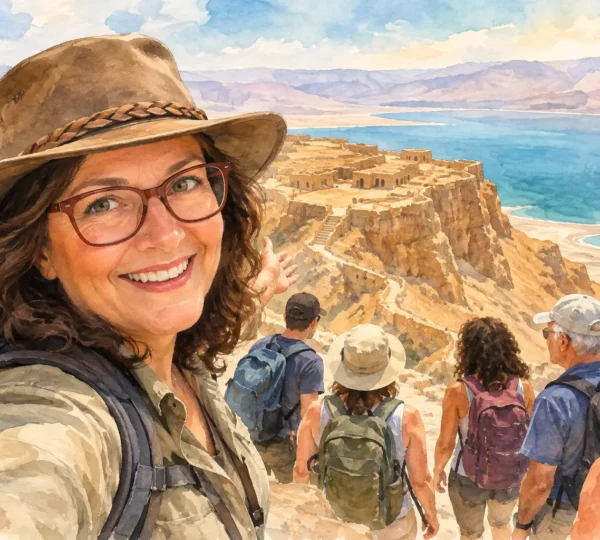
The desert is often where second-time visitors feel the greatest sense of discovery. Rather than repeating the familiar Masada-and-Dead-Sea circuit, travel south for a guided 4×4 route, a desert hike, or a visit that brings the region’s ecology and human ingenuity into focus.
A day in the Negev might include a walk through a crater landscape, a stop at a small agricultural project, and a practical introduction to desert living. Active travelers can choose a more demanding hike; multigenerational families may prefer shorter walks, scenic drives, and a relaxed meal. In hot months, begin early and plan the middle of the day carefully. Desert beauty is generous, but it does not forgive poor timing.
If adventure appeals, add camel riding, a stargazing experience, or an outdoor activity tailored to your group. If quiet is what you need, let the empty horizon do its work.
Day 6: Make the final day personal
Keep the last day flexible. It could be a return to Tel Aviv for a market tour and cooking class, a hands-on mosaic workshop, a visit with an innovator, or a short coastal sail. Business travelers with only one free day can use this model in miniature: choose one neighborhood, one meaningful meeting, and one experience that feels distinctly local.
For families, this is also the right place to add something playful. A wind tunnel, driving experience, food workshop, or F-16 flight simulation can give teenagers and adults alike a shared story that is not another museum visit. The best final activity is the one that reflects how you want to remember the trip.
How to tailor this itinerary to your interests
A repeat visit should begin with the sites you do not need to repeat, not with a list of everything you might see. Tell your guide which moments from your first trip stayed with you and which parts felt rushed. Mention practical preferences too: early starts, dietary needs, mobility considerations, serious hiking ability, favorite foods, or the kind of conversations you hope to have.
Patchwork Israel builds these trips around exactly that kind of detail. With decades of on-the-ground guiding experience, Sharon can connect a classic destination to a more personal encounter, then adjust the rhythm so the day feels generous rather than crammed.
Leave one open window in the schedule. The best repeat visit may be the extra hour spent with a host, the trail you take because the light is perfect, or the neighborhood you return to because it suddenly feels familiar.

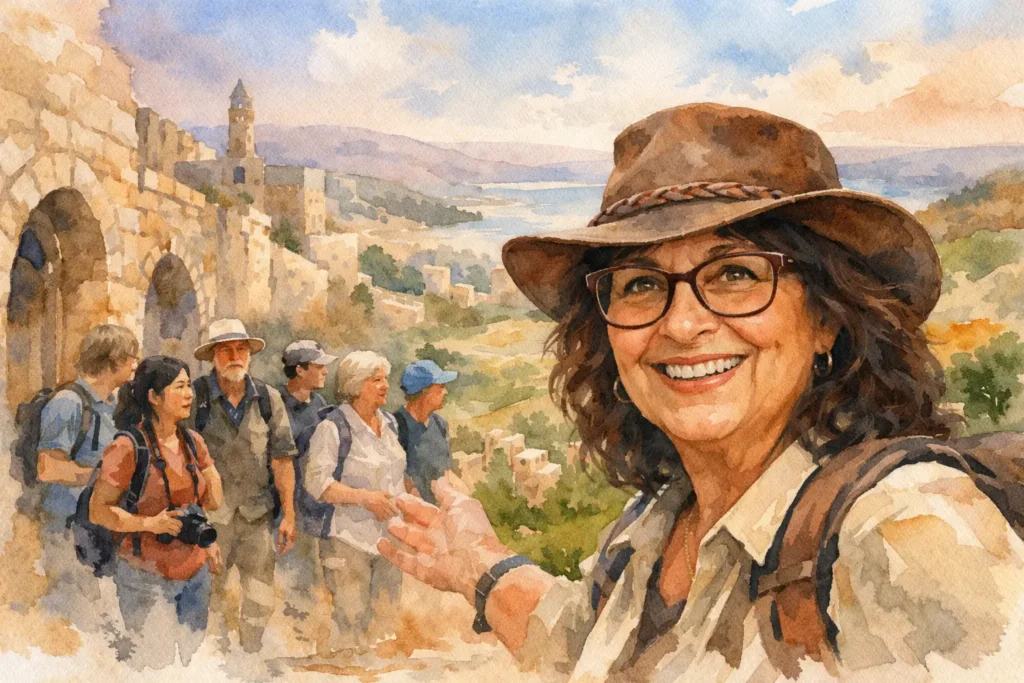
A Repeat Visitor Israel Itinerary Example That Goes Deeper
You have already stood at the Western Wall, floated in the Dead Sea, and taken the classic photo above Masada. Wonderful. A repeat visitor Israel itinerary example should not try to recreate your first trip with different restaurant reservations. It should use the familiarity you have earned to ask better questions: Who lives here? What is being made here? Which landscapes are still under your feet when the tour buses have gone home?
For a return visit, the best itinerary has a point of view. It may follow food, faith, family history, architecture, archaeology, hiking, or the surprisingly varied communities that make up daily life. The goal is not to avoid famous places entirely. It is to revisit them with context, at the right hour, and alongside experiences that could never fit into a standard first-time schedule.
What changes on a second Israel trip
First visits are often about orientation. Jerusalem, the Galilee, the coast, and the desert each deserve their moment. On a second trip, you can slow down without feeling that you have missed the essentials. A quiet alley in Jaffa, an archaeological site with an expert excavator, or a home meal can carry more meaning than trying to collect another ten highlights in a day.
This is also when a private guide becomes particularly valuable. The itinerary can respond to your energy, the season, your walking pace, and the conversations that spark your curiosity. If a visit with a farmer leads to questions about water, innovation, and local ingredients, there is room to stay longer. If your family would rather spend an afternoon on a shaded trail than in another museum, the day can turn accordingly.
The trade-off is simple: depth means choosing. A six-day trip cannot include every region and every interest, so it helps to select two or three threads that genuinely excite you. For some travelers, that means sacred traditions and lesser-known places of worship. For others, it means desert geology, contemporary design, and a very good lunch.
A six-day repeat visitor Israel itinerary example
This sample begins and ends near Tel Aviv, but it is intentionally not a fixed package. It suits travelers who have seen the major icons and want history, people, landscapes, and a few memorable surprises in one well-paced week.
Day 1: Jaffa and Tel Aviv beyond the postcard
Begin in Old Jaffa before the lanes fill, but skip the rushed sweep through its best-known corners. Walk with attention to the layers of port history, changing architecture, artists’ workshops, and the small details that tell you this is a living neighborhood rather than a backdrop.
Continue into Tel Aviv for a neighborhood-focused walk that could center on Bauhaus architecture, food markets, street art, or the evolution of the city’s early communities. A private meeting with a chef, designer, historian, or entrepreneur gives the afternoon a human voice. End with dinner chosen around your tastes: a hands-on cooking experience, a serious tasting menu, or a casual place where the menu needs explaining.
Day 2: Coast, archaeology, and a local table
Head north along the coast, where Caesarea is worth revisiting when it is treated as more than a quick stop for photographs. Look closely at the harbor, water systems, entertainment spaces, and the practical engineering that made an ancient city function. Repeat visitors often enjoy comparing the grand public story with the everyday realities archaeologists uncover.
From there, choose a contrasting encounter. You might visit a small family farm, meet a maker, or explore a coastal nature reserve on foot. The specific choice should depend on the season. Wildflowers, migratory birds, harvest activities, and weather all change the character of this day. A leisurely meal with local ingredients is a much better finish than another long drive.
Day 3: The Galilee at trail level
The Galilee rewards travelers who are prepared to leave the main road. Depending on fitness and interests, this can be a gentle spring walk, a forest hike, an off-road route to a broad viewpoint, or a day built around ancient villages and regional food traditions.
This is an excellent place for a personal visit or a small workshop. You may share coffee with someone whose work is rooted in the landscape, learn to make a regional dish, or spend time with a guide who can explain how geography, agriculture, and faith have shaped the area. These conversations are not decorative additions to the itinerary. They are often what visitors remember most clearly years later.
Stay overnight in the north rather than racing back to the coast. Evening is when the hills grow quiet and the pace of the trip finally changes.
Day 4: A different side of Jerusalem
Jerusalem is never finished after one visit. For a return trip, choose one or two focused lenses instead of trying to cover the entire city again. Perhaps that is the city’s lesser-known archaeological layers, its diverse religious architecture, the work of contemporary artists, or a walk through neighborhoods whose stories rarely appear on a first itinerary.
A meaningful Jerusalem day can include a conversation with a scholar, clergy member, artist, or community leader, arranged around your interests and comfort level. It can also be deeply personal: tracing a family connection, examining a particular period of history, or finding a quieter place for reflection.
The key is pacing. Jerusalem carries a great deal of emotional and historical weight. Leave time for a long lunch, a sit-down view, or an unplanned detour. More information is not always more understanding.
Day 5: Desert roads, silence, and the Negev
The desert is often where second-time visitors feel the greatest sense of discovery. Rather than repeating the familiar Masada-and-Dead-Sea circuit, travel south for a guided 4×4 route, a desert hike, or a visit that brings the region’s ecology and human ingenuity into focus.
A day in the Negev might include a walk through a crater landscape, a stop at a small agricultural project, and a practical introduction to desert living. Active travelers can choose a more demanding hike; multigenerational families may prefer shorter walks, scenic drives, and a relaxed meal. In hot months, begin early and plan the middle of the day carefully. Desert beauty is generous, but it does not forgive poor timing.
If adventure appeals, add camel riding, a stargazing experience, or an outdoor activity tailored to your group. If quiet is what you need, let the empty horizon do its work.
Day 6: Make the final day personal
Keep the last day flexible. It could be a return to Tel Aviv for a market tour and cooking class, a hands-on mosaic workshop, a visit with an innovator, or a short coastal sail. Business travelers with only one free day can use this model in miniature: choose one neighborhood, one meaningful meeting, and one experience that feels distinctly local.
For families, this is also the right place to add something playful. A wind tunnel, driving experience, food workshop, or F-16 flight simulation can give teenagers and adults alike a shared story that is not another museum visit. The best final activity is the one that reflects how you want to remember the trip.
How to tailor this itinerary to your interests
A repeat visit should begin with the sites you do not need to repeat, not with a list of everything you might see. Tell your guide which moments from your first trip stayed with you and which parts felt rushed. Mention practical preferences too: early starts, dietary needs, mobility considerations, serious hiking ability, favorite foods, or the kind of conversations you hope to have.
Patchwork Israel builds these trips around exactly that kind of detail. With decades of on-the-ground guiding experience, Sharon can connect a classic destination to a more personal encounter, then adjust the rhythm so the day feels generous rather than crammed.
Leave one open window in the schedule. The best repeat visit may be the extra hour spent with a host, the trail you take because the light is perfect, or the neighborhood you return to because it suddenly feels familiar.
Get the latest blog updates in your inbox.