
Best Israel Prehistoric Archaeology Sites
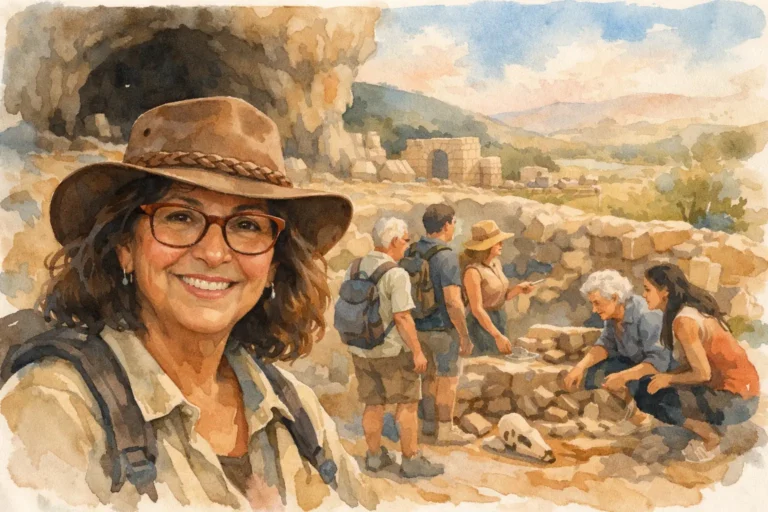
Some places in Israel ask you to look up – at fortresses, churches, skylines, and desert cliffs. Prehistory asks you to look down, into caves, sediment, tool marks, and the quiet traces of people who lived here long before writing, kingdoms, or monuments. That is what makes israel prehistoric archaeology sites so compelling for travelers who want more than the usual highlights. They offer something rarer: a chance to stand where early humans hunted, buried their dead, controlled fire, and slowly shaped daily life in ways that still echo through the landscape.
For many visitors, these are not the first places that make an itinerary. That is understandable. Prehistoric sites are often less visually dramatic than a Roman theater or Crusader wall. But with the right guidance, they become some of the most rewarding stops in the country, especially for returning travelers, families with curious older kids, hikers, and anyone who loves the moment when a landscape suddenly becomes a story.
Why israel prehistoric archaeology sites matter
Israel sits at a natural land bridge between Africa, Asia, and Europe. For prehistory, that matters enormously. Human groups moved through this region, paused here, adapted here, and left behind evidence that helps archaeologists piece together major chapters of human development. You are not just looking at isolated caves and stone tools. You are looking at one of the crossroads of the ancient human journey.
That bigger context changes the experience on the ground. A cave is no longer just a cave when you understand it may preserve evidence of early hunting, seasonal occupation, symbolic behavior, or changing technologies over tens of thousands of years. Even a modest site can carry real weight if it helps explain how people lived before agriculture, before cities, before history was written down.
There is also a practical reason these places matter to travelers. They pair beautifully with Israel’s varied landscapes. A prehistoric visit can fit into a Carmel hike, a Galilee day, a Judean foothills route, or a museum-focused urban itinerary. If you have already seen the headline sites, prehistory adds depth without feeling repetitive.
The most meaningful prehistoric sites to visit
Nahal Me’arot caves on Mount Carmel
If you visit only one cluster of israel prehistoric archaeology sites, Nahal Me’arot is a strong choice. Also known as Wadi el-Mughara, this group of caves on Mount Carmel is one of the most significant prehistoric locations in the region. The importance lies in the long sequence of human occupation preserved there. Archaeologists found evidence spanning hundreds of thousands of years, which allows visitors to grasp change over time rather than seeing just one prehistoric snapshot.
What makes this site work well for travelers is the combination of science and setting. The Carmel landscape is beautiful in its own right, and the caves are approachable for visitors who are interested but not necessarily academic specialists. This is the kind of stop where expert interpretation makes all the difference. Without context, you see openings in rock. With context, you begin to picture shelter, movement, tools, food preparation, and the rhythms of survival.
Qesem Cave
Qesem Cave, not far from central Israel, has transformed scholarly understanding of early human life in the region. It is associated with very early evidence for repeated fire use, animal butchery, and tool production. This is the sort of site that can shift a conversation from “ancient” to “how did people actually live?”
For travelers, Qesem is especially interesting because it speaks to behavior, not just age. The question is not only how old the site is, but what it reveals about planning, cooperation, and adaptation. It is less about monumental remains and more about human habits. That can be a harder story to tell visually, which is why this kind of site is often best appreciated as part of a guided day that builds the narrative carefully.
Kebara Cave
Also in the Carmel region, Kebara Cave is known for major finds connected to Middle Paleolithic human occupation. It has played an important role in the study of prehistoric human anatomy and burial practices. For travelers who are intrigued by human origins and the relationship between different ancient populations, Kebara adds another layer to the Carmel story.
It is worth knowing that not every important archaeological site is equally set up for casual tourism. Some places are best understood from viewpoints, museum interpretation, or a guide’s explanation rather than through extensive on-site infrastructure. That is not a drawback so much as a reminder that prehistoric travel is often about imagination supported by evidence.
Hayonim Cave and the Galilee context
In the Galilee, Hayonim Cave and nearby prehistoric remains help tell the transition from hunter-gatherer life toward more settled patterns. This is one of the most fascinating themes in prehistory because it moves the story closer to recognizable social change. People are no longer only surviving from season to season. They are experimenting, organizing space differently, and laying groundwork for later transformation.
For a traveler, Galilee prehistory works especially well when paired with nature, village life, or other archaeological periods. That contrast is part of the pleasure. In one day, you can move from very early human evidence to later layers of settlement and belief, which is one reason Israel feels so dense with history.
Sha’ar Hagolan and early village life
If caves are one side of prehistoric travel, early settlement sites are the other. Sha’ar Hagolan, in the Jordan Valley, is associated with the Pottery Neolithic period and gives insight into emerging village life, architecture, and material culture. This is where prehistory starts to feel less remote. You begin to sense households, community patterns, and the long shift toward structured settlement.
This kind of site appeals to travelers who enjoy seeing how daily life develops over time. The leap from stone tools to villages did not happen overnight, and places like this help make that gradual change visible.
What visitors often miss about prehistoric travel
The usual mistake is expecting the experience to work like a visit to a palace, fortress, or biblical tel. Prehistoric sites rarely deliver that kind of instant visual impact. Their power is slower. You notice geography, access to water, shelter, migration routes, raw materials, and the practical logic of human choices.
That is why prehistoric sites are ideal for travelers who like layered experiences. If you enjoy hiking, landscape interpretation, wildlife, geology, or archaeology beyond the headline monuments, these places can be a highlight rather than an add-on. They reward patience and curiosity.
They are also excellent for repeat visitors to Israel. Once you have seen Jerusalem’s major landmarks or the better-known classical sites, prehistory opens a quieter and more intimate chapter. It feels fresh because it is not built around the standard checklist.
How to include israel prehistoric archaeology sites in a trip
The best approach depends on your travel style. If you want a half-day focus, Mount Carmel is often the easiest entry point because it combines scenery with major prehistoric importance. If you prefer a broader archaeology theme, prehistoric sites can be folded into a route that also includes later periods, creating a fuller sense of continuity across the land.
Families often do well with sites that combine walking and storytelling. Adults who love museums may want to pair field visits with collections that display tools, burials, or reconstructions. Travelers who enjoy private guiding usually get the most from prehistory because the experience depends so much on interpretation. A good guide translates technical archaeology into lived human reality.
It also helps to set expectations correctly. Some prehistoric locations are visually modest. Some are seasonally better than others because of heat, trail conditions, or general comfort. And some are academically famous but less straightforward for casual touring. That does not make them less valuable. It simply means the itinerary should be built with care.
For guests who travel with Patchwork Israel, this is exactly where customization becomes useful. A prehistoric stop can be woven into a Carmel hike, a northern nature day, or a deeper archaeology route for travelers who have already covered the classics and want something more personal, more thoughtful, and frankly more memorable.
Who will enjoy these sites most
Prehistoric archaeology is a particularly good fit for travelers who like asking big questions. How did people choose where to live? When did they begin to organize space differently? What can a few tools and bones reveal about social life, danger, skill, or belief? You do not need formal archaeological training to enjoy that. You just need curiosity.
These sites also suit visitors who want to experience Israel as a layered human landscape rather than a single-period destination. Prehistory widens the lens. It reminds you that this land has been lived in, crossed, adapted to, and imagined for far longer than most itineraries can show.
And that is the real gift of these places. They do not shout. They sharpen your attention. Once you have stood at a prehistoric site and learned how to read the terrain, even the quieter corners of Israel start to feel fuller, older, and more alive.

Best Israel Prehistoric Archaeology Sites
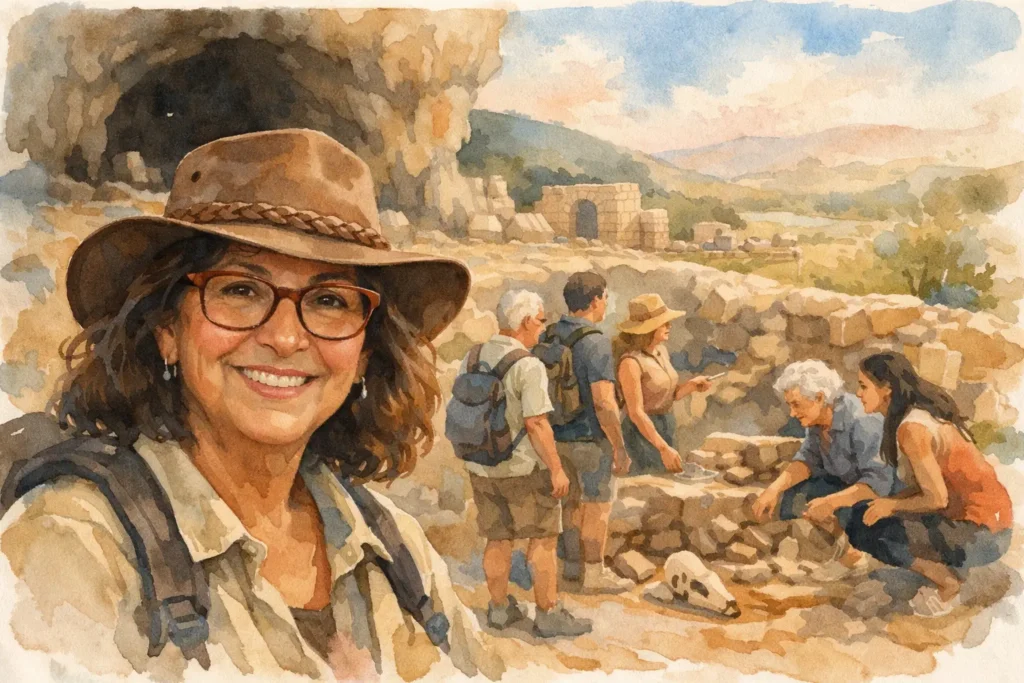
Some places in Israel ask you to look up – at fortresses, churches, skylines, and desert cliffs. Prehistory asks you to look down, into caves, sediment, tool marks, and the quiet traces of people who lived here long before writing, kingdoms, or monuments. That is what makes israel prehistoric archaeology sites so compelling for travelers who want more than the usual highlights. They offer something rarer: a chance to stand where early humans hunted, buried their dead, controlled fire, and slowly shaped daily life in ways that still echo through the landscape.
For many visitors, these are not the first places that make an itinerary. That is understandable. Prehistoric sites are often less visually dramatic than a Roman theater or Crusader wall. But with the right guidance, they become some of the most rewarding stops in the country, especially for returning travelers, families with curious older kids, hikers, and anyone who loves the moment when a landscape suddenly becomes a story.
Why israel prehistoric archaeology sites matter
Israel sits at a natural land bridge between Africa, Asia, and Europe. For prehistory, that matters enormously. Human groups moved through this region, paused here, adapted here, and left behind evidence that helps archaeologists piece together major chapters of human development. You are not just looking at isolated caves and stone tools. You are looking at one of the crossroads of the ancient human journey.
That bigger context changes the experience on the ground. A cave is no longer just a cave when you understand it may preserve evidence of early hunting, seasonal occupation, symbolic behavior, or changing technologies over tens of thousands of years. Even a modest site can carry real weight if it helps explain how people lived before agriculture, before cities, before history was written down.
There is also a practical reason these places matter to travelers. They pair beautifully with Israel’s varied landscapes. A prehistoric visit can fit into a Carmel hike, a Galilee day, a Judean foothills route, or a museum-focused urban itinerary. If you have already seen the headline sites, prehistory adds depth without feeling repetitive.
The most meaningful prehistoric sites to visit
Nahal Me’arot caves on Mount Carmel
If you visit only one cluster of israel prehistoric archaeology sites, Nahal Me’arot is a strong choice. Also known as Wadi el-Mughara, this group of caves on Mount Carmel is one of the most significant prehistoric locations in the region. The importance lies in the long sequence of human occupation preserved there. Archaeologists found evidence spanning hundreds of thousands of years, which allows visitors to grasp change over time rather than seeing just one prehistoric snapshot.
What makes this site work well for travelers is the combination of science and setting. The Carmel landscape is beautiful in its own right, and the caves are approachable for visitors who are interested but not necessarily academic specialists. This is the kind of stop where expert interpretation makes all the difference. Without context, you see openings in rock. With context, you begin to picture shelter, movement, tools, food preparation, and the rhythms of survival.
Qesem Cave
Qesem Cave, not far from central Israel, has transformed scholarly understanding of early human life in the region. It is associated with very early evidence for repeated fire use, animal butchery, and tool production. This is the sort of site that can shift a conversation from “ancient” to “how did people actually live?”
For travelers, Qesem is especially interesting because it speaks to behavior, not just age. The question is not only how old the site is, but what it reveals about planning, cooperation, and adaptation. It is less about monumental remains and more about human habits. That can be a harder story to tell visually, which is why this kind of site is often best appreciated as part of a guided day that builds the narrative carefully.
Kebara Cave
Also in the Carmel region, Kebara Cave is known for major finds connected to Middle Paleolithic human occupation. It has played an important role in the study of prehistoric human anatomy and burial practices. For travelers who are intrigued by human origins and the relationship between different ancient populations, Kebara adds another layer to the Carmel story.
It is worth knowing that not every important archaeological site is equally set up for casual tourism. Some places are best understood from viewpoints, museum interpretation, or a guide’s explanation rather than through extensive on-site infrastructure. That is not a drawback so much as a reminder that prehistoric travel is often about imagination supported by evidence.
Hayonim Cave and the Galilee context
In the Galilee, Hayonim Cave and nearby prehistoric remains help tell the transition from hunter-gatherer life toward more settled patterns. This is one of the most fascinating themes in prehistory because it moves the story closer to recognizable social change. People are no longer only surviving from season to season. They are experimenting, organizing space differently, and laying groundwork for later transformation.
For a traveler, Galilee prehistory works especially well when paired with nature, village life, or other archaeological periods. That contrast is part of the pleasure. In one day, you can move from very early human evidence to later layers of settlement and belief, which is one reason Israel feels so dense with history.
Sha’ar Hagolan and early village life
If caves are one side of prehistoric travel, early settlement sites are the other. Sha’ar Hagolan, in the Jordan Valley, is associated with the Pottery Neolithic period and gives insight into emerging village life, architecture, and material culture. This is where prehistory starts to feel less remote. You begin to sense households, community patterns, and the long shift toward structured settlement.
This kind of site appeals to travelers who enjoy seeing how daily life develops over time. The leap from stone tools to villages did not happen overnight, and places like this help make that gradual change visible.
What visitors often miss about prehistoric travel
The usual mistake is expecting the experience to work like a visit to a palace, fortress, or biblical tel. Prehistoric sites rarely deliver that kind of instant visual impact. Their power is slower. You notice geography, access to water, shelter, migration routes, raw materials, and the practical logic of human choices.
That is why prehistoric sites are ideal for travelers who like layered experiences. If you enjoy hiking, landscape interpretation, wildlife, geology, or archaeology beyond the headline monuments, these places can be a highlight rather than an add-on. They reward patience and curiosity.
They are also excellent for repeat visitors to Israel. Once you have seen Jerusalem’s major landmarks or the better-known classical sites, prehistory opens a quieter and more intimate chapter. It feels fresh because it is not built around the standard checklist.
How to include israel prehistoric archaeology sites in a trip
The best approach depends on your travel style. If you want a half-day focus, Mount Carmel is often the easiest entry point because it combines scenery with major prehistoric importance. If you prefer a broader archaeology theme, prehistoric sites can be folded into a route that also includes later periods, creating a fuller sense of continuity across the land.
Families often do well with sites that combine walking and storytelling. Adults who love museums may want to pair field visits with collections that display tools, burials, or reconstructions. Travelers who enjoy private guiding usually get the most from prehistory because the experience depends so much on interpretation. A good guide translates technical archaeology into lived human reality.
It also helps to set expectations correctly. Some prehistoric locations are visually modest. Some are seasonally better than others because of heat, trail conditions, or general comfort. And some are academically famous but less straightforward for casual touring. That does not make them less valuable. It simply means the itinerary should be built with care.
For guests who travel with Patchwork Israel, this is exactly where customization becomes useful. A prehistoric stop can be woven into a Carmel hike, a northern nature day, or a deeper archaeology route for travelers who have already covered the classics and want something more personal, more thoughtful, and frankly more memorable.
Who will enjoy these sites most
Prehistoric archaeology is a particularly good fit for travelers who like asking big questions. How did people choose where to live? When did they begin to organize space differently? What can a few tools and bones reveal about social life, danger, skill, or belief? You do not need formal archaeological training to enjoy that. You just need curiosity.
These sites also suit visitors who want to experience Israel as a layered human landscape rather than a single-period destination. Prehistory widens the lens. It reminds you that this land has been lived in, crossed, adapted to, and imagined for far longer than most itineraries can show.
And that is the real gift of these places. They do not shout. They sharpen your attention. Once you have stood at a prehistoric site and learned how to read the terrain, even the quieter corners of Israel start to feel fuller, older, and more alive.

Get the latest blog updates in your inbox.