
Best Israel Experiences for Repeat Visitors
You have stood at the Western Wall, floated in the Dead Sea, walked Masada at sunrise, and probably taken the familiar photograph in old Jaffa. So what comes next? The best Israel experiences for repeat visitors are not about checking off a second list of famous places. They are about slowing down, following a personal interest, and meeting the people, landscapes, flavors, and stories that make each region feel different.
A return trip is a wonderful advantage. You already know that Israel can be intense, beautiful, compact, and full of surprises. This time, there is room to trade a packed schedule for a day that feels more personal: a conversation in a working studio, a hike through a quiet canyon, an afternoon cooking with a local expert, or a drive down a rough desert track that tour buses never reach.
Best Israel Experiences for Repeat Visitors: Go Beyond the Highlights
The first visit often follows a logical route. Jerusalem, Tel Aviv, the Galilee, the Dead Sea, and major archaeological sites earn their place because they are extraordinary. On a return visit, these same regions can reveal entirely different layers when viewed through a narrower lens.
Rather than asking, “What have I not seen?” try asking, “What would I like to understand better?” A history-minded traveler may want to spend a full day tracing one era through lesser-known excavations, architecture, and museum collections. A family may prefer a hands-on afternoon making mosaics or baking, followed by a sunset walk. A business traveler with one free day might choose a focused introduction to Israeli innovation, agriculture, design, or food culture.
This approach also gives your itinerary a better rhythm. Israel is small on a map, but a day filled with driving, crowds, and major sites can become tiring. Choosing fewer places with a clear theme often creates a more memorable experience than racing between attractions.
Meet Israel Through Its People
The most lasting travel memories are often conversations rather than views. Repeat visitors have the time to arrange meaningful encounters with people who shape the country in very different ways: growers working the land, chefs preserving family food traditions, artists in their studios, researchers, educators, clergy, architects, archaeologists, and entrepreneurs building new ideas.
These visits work best when they are chosen with care. A traveler interested in family heritage may be drawn to a neighborhood walk and a conversation that adds context to their own story. Someone fascinated by technology may enjoy seeing how practical problem-solving meets local conditions. A curious foodie may learn more in one home kitchen or market tasting than during several restaurant meals.
The value is not simply access. It is having an experienced guide who can frame what you are seeing, ask the right questions, and make room for a genuine exchange without rushing it. It also depends on comfort level. Some travelers love a long, unstructured conversation; others prefer a brief visit combined with sightseeing or an outdoor activity. A tailored day should respect both.
Choose a Theme, Not a Checklist
A strong repeat-visitor itinerary can be built around a single thread. Food and farming might lead from a market through a rural community to a hands-on meal. Faith and architecture might connect quiet chapels, old lanes, contemporary spaces, and conversations about daily practice. Art and design can become a route through galleries, workshops, street art, and neighborhoods that most first-time visitors pass by.
A theme creates connections between stops. It turns a good day out into a story you can carry home.
Take the Scenic Route – Literally
Israel’s landscapes change quickly. Within a few hours, you can move from Mediterranean coast to green hills, basalt plateaus, pine forest, high desert, or broad open crater country. For repeat visitors, getting outdoors is one of the best ways to experience that contrast without another museum-heavy day.
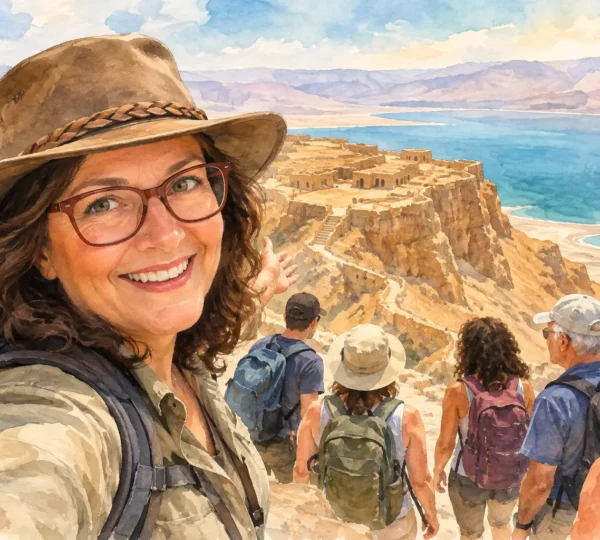
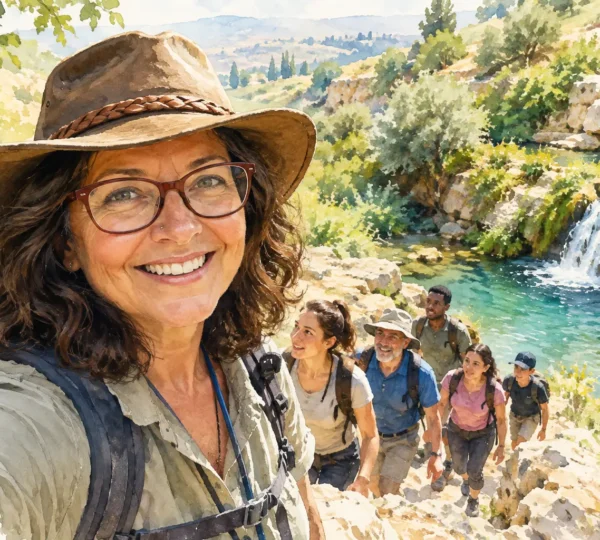
A guided hike can be as gentle or challenging as you want. There are shaded woodland paths, spring walks, coastal trails, rugged ridge routes, and desert hikes where the silence is part of the experience. Timing matters more than many people realize. A trail that feels magical in the cool morning may be uncomfortable at midday, especially in warmer months. Seasonal rain, wind, and daylight hours also shape what is sensible.
For travelers who want to reach more remote terrain without committing to a strenuous hike, a 4×4 day opens a different kind of Israel. Desert tracks, stream crossings when conditions allow, forest roads, and mountain viewpoints can bring you into landscapes that feel far from the usual visitor route. The ride itself is part of the fun, but it should never replace the chance to get out, walk a little, look closely, and understand the terrain.
Adventure can be adapted for different ages and energy levels. One group may want off-roading paired with camel riding and a desert picnic. Another may prefer a short, scenic walk followed by a relaxed winery or farm visit. The right plan is not the most active one. It is the one that leaves everyone feeling engaged rather than exhausted.
Revisit Jerusalem With a Narrower Focus
Jerusalem is never “done” in one trip. It changes with the time of day, the season, and the question you bring to it. Repeat visitors can move beyond the broad overview and spend time on one neighborhood, one historical period, one religious tradition, or one architectural story.
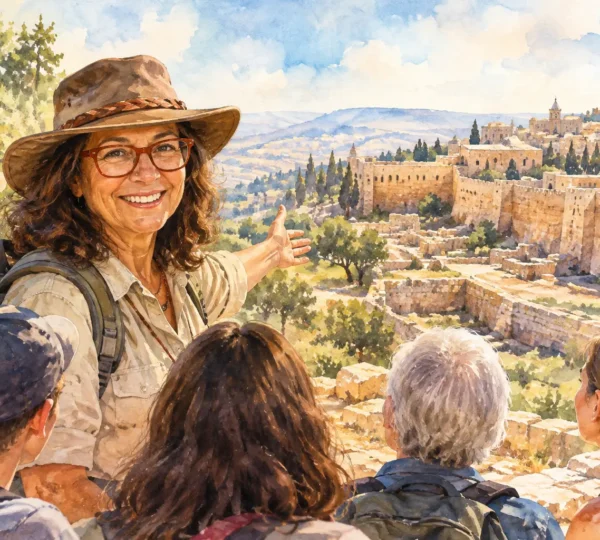
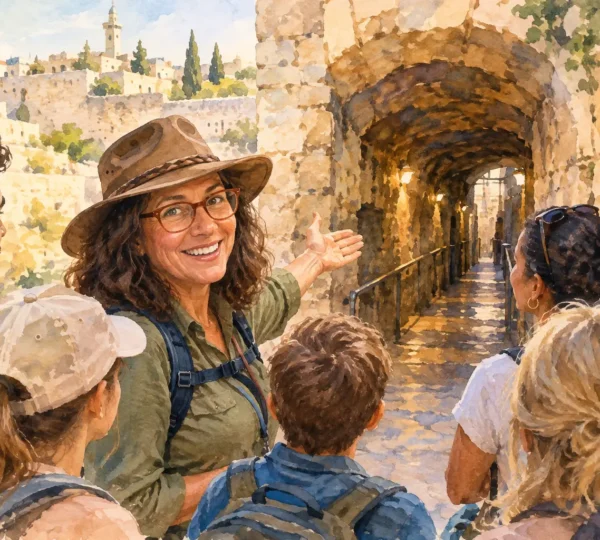
Consider an early morning walk before the busiest hours, when stone courtyards and narrow streets feel more intimate. A culinary-focused visit can connect market flavors with the families and communities behind them. An archaeology-focused day can go deeper than headline sites, looking at how layers of settlement were built, reused, and uncovered over centuries.
There is also value in pairing the old city with modern Jerusalem. Contemporary art, neighborhoods shaped by migration and memory, public spaces, and local food all show a living city rather than a monument. A knowledgeable private guide can help make those contrasts feel connected instead of scattered.
Build in a Hands-On Experience
Seeing is only one way to travel. Making, tasting, moving, and trying something unfamiliar can anchor a day in a way that photographs cannot.
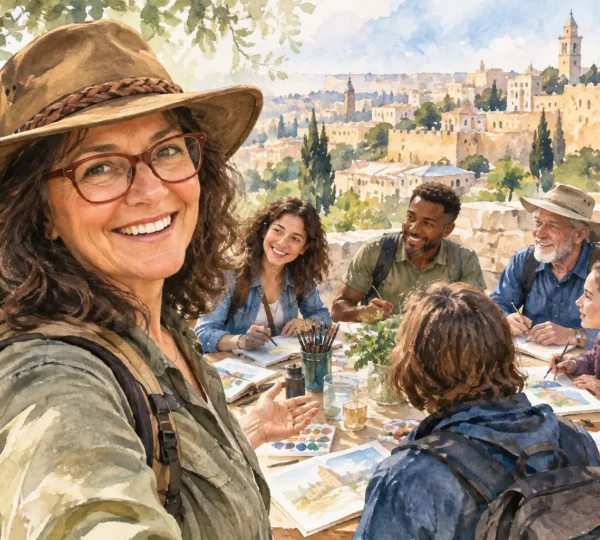
For some travelers, that means learning the patient craft of mosaic making. For others, it is a cooking or baking session where recipes become a doorway into family stories and regional ingredients. More adventurous visitors may enjoy a wind tunnel, car-racing experience, F-16 flight simulation, sailing, scuba diving, skiing when conditions permit, or a foraging walk that changes with the season.
Not every activity belongs in every itinerary. A flight simulation may be perfect for a multigenerational family with teens, while a quiet baking workshop may be the better choice for friends who want a slower afternoon. The goal is not to add novelty for its own sake. It is to choose experiences that fit the people traveling together.
Give Tel Aviv and Jaffa More Time
First-time visitors often see Tel Aviv and Jaffa in a few hours. Returning travelers can let the area breathe. Wander a neighborhood with a focus on architecture, spend time with local food makers, explore the relationship between port, market, and old streets in Jaffa, or build a day around art, design, and urban life.
The coast is especially rewarding when combined with an interest rather than treated as a quick stop. A morning walk, a market visit, a studio appointment, and a meal chosen for a specific regional style can make a familiar city feel freshly personal. If your schedule is tight, even a well-planned half day can offer a meaningful reset between meetings or family commitments.
Let Your Return Trip Be Personal
There is no prize for seeing more sites than you did last time. A better return trip may involve fewer destinations, longer conversations, an unscheduled coffee, or a hike that ends at a viewpoint you did not know existed.
At Patchwork Israel, private touring is built around those choices. Decades of guiding make it possible to balance the places you already love with the hidden corners, local encounters, and active experiences that fit your interests now. Bring one good question to your next visit, and let the route grow from there.

Best Israel Experiences for Repeat Visitors
You have stood at the Western Wall, floated in the Dead Sea, walked Masada at sunrise, and probably taken the familiar photograph in old Jaffa. So what comes next? The best Israel experiences for repeat visitors are not about checking off a second list of famous places. They are about slowing down, following a personal interest, and meeting the people, landscapes, flavors, and stories that make each region feel different.
A return trip is a wonderful advantage. You already know that Israel can be intense, beautiful, compact, and full of surprises. This time, there is room to trade a packed schedule for a day that feels more personal: a conversation in a working studio, a hike through a quiet canyon, an afternoon cooking with a local expert, or a drive down a rough desert track that tour buses never reach.
Best Israel Experiences for Repeat Visitors: Go Beyond the Highlights
The first visit often follows a logical route. Jerusalem, Tel Aviv, the Galilee, the Dead Sea, and major archaeological sites earn their place because they are extraordinary. On a return visit, these same regions can reveal entirely different layers when viewed through a narrower lens.
Rather than asking, “What have I not seen?” try asking, “What would I like to understand better?” A history-minded traveler may want to spend a full day tracing one era through lesser-known excavations, architecture, and museum collections. A family may prefer a hands-on afternoon making mosaics or baking, followed by a sunset walk. A business traveler with one free day might choose a focused introduction to Israeli innovation, agriculture, design, or food culture.
This approach also gives your itinerary a better rhythm. Israel is small on a map, but a day filled with driving, crowds, and major sites can become tiring. Choosing fewer places with a clear theme often creates a more memorable experience than racing between attractions.
Meet Israel Through Its People
The most lasting travel memories are often conversations rather than views. Repeat visitors have the time to arrange meaningful encounters with people who shape the country in very different ways: growers working the land, chefs preserving family food traditions, artists in their studios, researchers, educators, clergy, architects, archaeologists, and entrepreneurs building new ideas.
These visits work best when they are chosen with care. A traveler interested in family heritage may be drawn to a neighborhood walk and a conversation that adds context to their own story. Someone fascinated by technology may enjoy seeing how practical problem-solving meets local conditions. A curious foodie may learn more in one home kitchen or market tasting than during several restaurant meals.
The value is not simply access. It is having an experienced guide who can frame what you are seeing, ask the right questions, and make room for a genuine exchange without rushing it. It also depends on comfort level. Some travelers love a long, unstructured conversation; others prefer a brief visit combined with sightseeing or an outdoor activity. A tailored day should respect both.
Choose a Theme, Not a Checklist
A strong repeat-visitor itinerary can be built around a single thread. Food and farming might lead from a market through a rural community to a hands-on meal. Faith and architecture might connect quiet chapels, old lanes, contemporary spaces, and conversations about daily practice. Art and design can become a route through galleries, workshops, street art, and neighborhoods that most first-time visitors pass by.
A theme creates connections between stops. It turns a good day out into a story you can carry home.
Take the Scenic Route – Literally
Israel’s landscapes change quickly. Within a few hours, you can move from Mediterranean coast to green hills, basalt plateaus, pine forest, high desert, or broad open crater country. For repeat visitors, getting outdoors is one of the best ways to experience that contrast without another museum-heavy day.
A guided hike can be as gentle or challenging as you want. There are shaded woodland paths, spring walks, coastal trails, rugged ridge routes, and desert hikes where the silence is part of the experience. Timing matters more than many people realize. A trail that feels magical in the cool morning may be uncomfortable at midday, especially in warmer months. Seasonal rain, wind, and daylight hours also shape what is sensible.
For travelers who want to reach more remote terrain without committing to a strenuous hike, a 4×4 day opens a different kind of Israel. Desert tracks, stream crossings when conditions allow, forest roads, and mountain viewpoints can bring you into landscapes that feel far from the usual visitor route. The ride itself is part of the fun, but it should never replace the chance to get out, walk a little, look closely, and understand the terrain.
Adventure can be adapted for different ages and energy levels. One group may want off-roading paired with camel riding and a desert picnic. Another may prefer a short, scenic walk followed by a relaxed winery or farm visit. The right plan is not the most active one. It is the one that leaves everyone feeling engaged rather than exhausted.
Revisit Jerusalem With a Narrower Focus
Jerusalem is never “done” in one trip. It changes with the time of day, the season, and the question you bring to it. Repeat visitors can move beyond the broad overview and spend time on one neighborhood, one historical period, one religious tradition, or one architectural story.
Consider an early morning walk before the busiest hours, when stone courtyards and narrow streets feel more intimate. A culinary-focused visit can connect market flavors with the families and communities behind them. An archaeology-focused day can go deeper than headline sites, looking at how layers of settlement were built, reused, and uncovered over centuries.
There is also value in pairing the old city with modern Jerusalem. Contemporary art, neighborhoods shaped by migration and memory, public spaces, and local food all show a living city rather than a monument. A knowledgeable private guide can help make those contrasts feel connected instead of scattered.
Build in a Hands-On Experience
Seeing is only one way to travel. Making, tasting, moving, and trying something unfamiliar can anchor a day in a way that photographs cannot.
For some travelers, that means learning the patient craft of mosaic making. For others, it is a cooking or baking session where recipes become a doorway into family stories and regional ingredients. More adventurous visitors may enjoy a wind tunnel, car-racing experience, F-16 flight simulation, sailing, scuba diving, skiing when conditions permit, or a foraging walk that changes with the season.
Not every activity belongs in every itinerary. A flight simulation may be perfect for a multigenerational family with teens, while a quiet baking workshop may be the better choice for friends who want a slower afternoon. The goal is not to add novelty for its own sake. It is to choose experiences that fit the people traveling together.
Give Tel Aviv and Jaffa More Time
First-time visitors often see Tel Aviv and Jaffa in a few hours. Returning travelers can let the area breathe. Wander a neighborhood with a focus on architecture, spend time with local food makers, explore the relationship between port, market, and old streets in Jaffa, or build a day around art, design, and urban life.
The coast is especially rewarding when combined with an interest rather than treated as a quick stop. A morning walk, a market visit, a studio appointment, and a meal chosen for a specific regional style can make a familiar city feel freshly personal. If your schedule is tight, even a well-planned half day can offer a meaningful reset between meetings or family commitments.
Let Your Return Trip Be Personal
There is no prize for seeing more sites than you did last time. A better return trip may involve fewer destinations, longer conversations, an unscheduled coffee, or a hike that ends at a viewpoint you did not know existed.
At Patchwork Israel, private touring is built around those choices. Decades of guiding make it possible to balance the places you already love with the hidden corners, local encounters, and active experiences that fit your interests now. Bring one good question to your next visit, and let the route grow from there.
Get the latest blog updates in your inbox.