Faith and Culture Israel Itinerary Example
Jerusalem can change the rhythm of a trip in a single morning. You may begin in the quiet of an ancient church, hear the city waking up from a rooftop, and finish lunch in a busy market where spice sellers, bakers, and families keep the streets in motion. That contrast is exactly why a faith and culture Israel itinerary example should leave room for both sacred landmarks and the living places around them.
For travelers who want more than a checklist, the most memorable route pairs places of prayer and heritage with conversations, food, landscape, and time to absorb what they have seen. This seven-day example is designed as a starting point for a private journey. It can be adapted for a couple, a multigenerational family, a small group, or a business traveler with only a few meaningful days available.
A Faith and Culture Israel Itinerary Example for Seven Days
Day 1: Arrive in Tel Aviv and begin with Jaffa
Start gently, especially after an overnight flight. Tel Aviv offers an easy landing point: the Mediterranean air, shaded boulevards, and lively café culture help travelers shift into a new time zone without rushing straight into a major historical site.
In the afternoon, head to ancient Jaffa. Its stone lanes, port views, and layered stories make it an ideal introduction to the country’s long history of trade, pilgrimage, and migration. A private walk can focus on biblical connections, the old port, local artists, or the contrast between the historic town and modern Tel Aviv.
Dinner is a good moment to make culture tangible. Rather than choosing a restaurant solely for its view, consider a food-focused experience that explains the ingredients, traditions, and people behind the plate. A cooking workshop or guided market tasting works especially well for families and travelers who connect through food.
Day 2: Caesarea, the coast, and a different view of history
Travel north along the coast to Caesarea, where a Roman theater, harbor, aqueduct, and archaeological remains sit beside the sea. This is a powerful site for travelers interested in early Christianity, Roman history, Jewish heritage, architecture, or simply the way a landscape can preserve many centuries at once.
Caesarea benefits from expert pacing. The ruins are extensive, and it is easy to walk past details that give the place its human scale. A guide can shape the visit around your interests, whether that means taking time with the theater, tracing the harbor’s engineering, or discussing how people lived and worshiped in the region.
Later, continue through the Carmel area for a village visit, a short nature walk, or a stop with a local maker. This is where a tailor-made trip becomes richer than a standard route. One traveler may prefer a quiet overlook and a winery lunch; another may want a hands-on workshop, a home-hosted meal, or an encounter with a local community leader.
Day 3: The Galilee through faith, water, and daily life
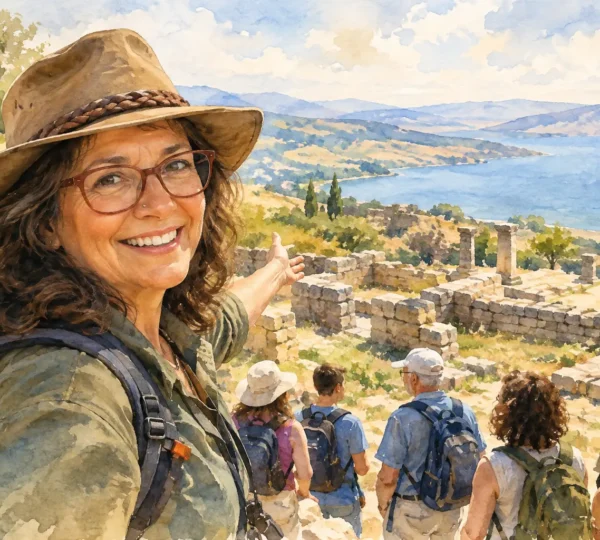
The Galilee invites a slower day. Around the Sea of Galilee, faith-based travelers can visit places connected with the ministry of Jesus, while Jewish heritage travelers may choose ancient synagogues, archaeological sites, and stories of scholars who shaped religious life after the destruction of the Second Temple.
There is no need to treat the day as a competition to see every site. Choose two or three meaningful stops and leave room for the water, the hills, and a relaxed lunch. A boat ride on the lake can be moving for some visitors; for others, a walk along a quiet trail or an agricultural visit creates the stronger connection.
The Galilee is also a wonderful setting for cultural exchange when arranged thoughtfully. Meeting a farmer, chef, educator, artist, or host can turn an interesting day into a personal memory. The best encounters are not performances. They are conversations with enough time for questions, listening, and genuine hospitality.
Day 4: Safed, the Upper Galilee, and creative tradition
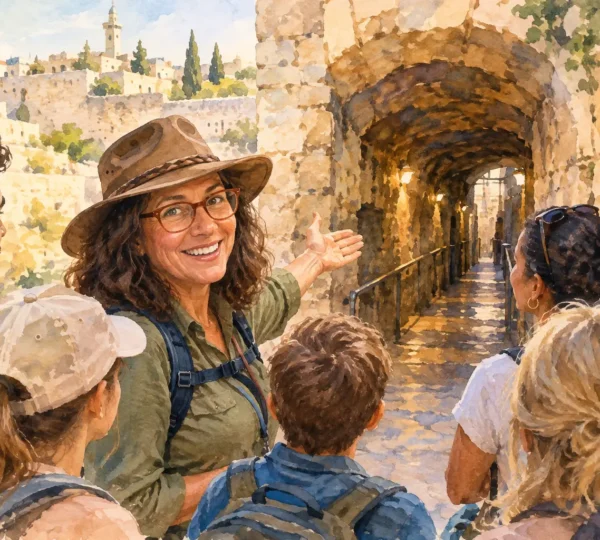
Safed is often associated with mysticism, music, and narrow stone alleys, but it should not be rushed. Its old synagogues, artists’ workshops, and mountain setting encourage visitors to look beyond the postcard view. For some, this is a day for spiritual reflection. For others, it is a chance to explore art, storytelling, and the resilience of a town that has been renewed again and again.
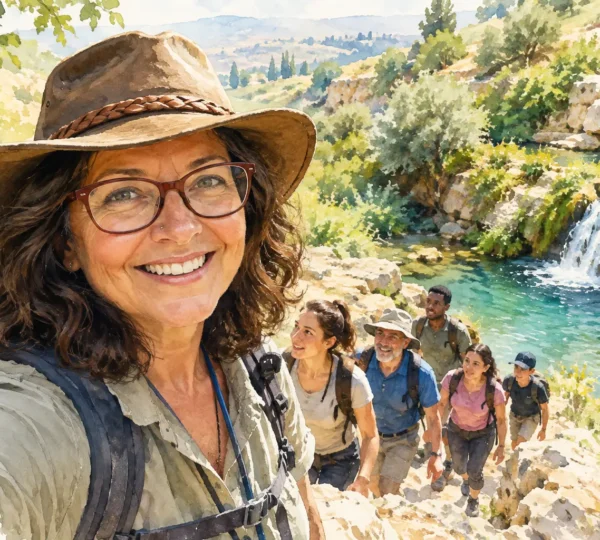
A personalized day here might include an artist studio visit, a cheese-making experience, or a gentle hike in the Upper Galilee. Active travelers can choose a longer trail, while families or guests who prefer a more relaxed pace may enjoy a scenic drive and an unhurried lunch.
This is also a useful reminder that faith and culture do not always sit in separate categories. A melody, a meal, a handwritten blessing, or an old craft can carry meaning just as strongly as a famous monument.
Day 5: Jerusalem’s sacred core, with time to reflect
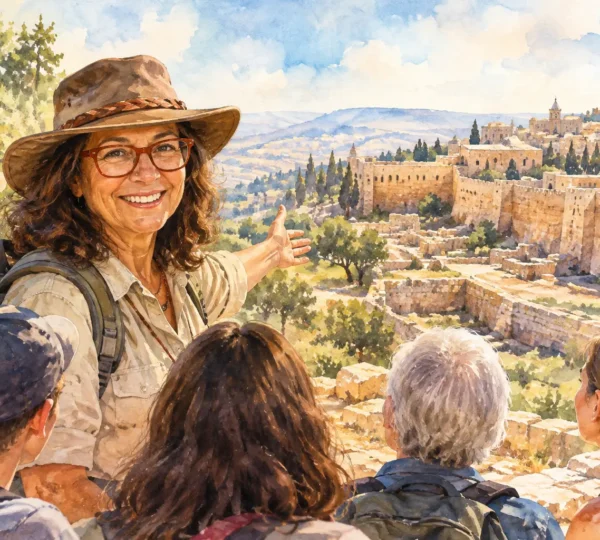
Jerusalem deserves a full day and, ideally, an early start. The Old City is compact on a map but emotionally and historically dense. A thoughtfully planned route can include the Western Wall, the Church of the Holy Sepulchre, the Via Dolorosa, and carefully selected overlooks, while allowing time to understand the significance of each place rather than moving from photo stop to photo stop.
The exact order depends on your interests, mobility, faith tradition, and the day of the week. Some visitors want a deeply devotional experience with time for prayer. Others prefer a historical framework that places the sites within the city’s many archaeological layers. Both approaches are valid, and a private guide can create space for either one.
End outside the Old City in a neighborhood or market setting. Mahane Yehuda is lively and colorful, but it is not the only option. A smaller culinary stop, a bakery visit, or an evening conversation with a Jerusalem resident can offer a more personal finish to a very full day.
Day 6: Jerusalem beyond the famous stones
A meaningful Jerusalem day should include the city beyond its best-known gates. Depending on your interests, this might mean visiting a museum, exploring an archaeological park, walking through a historic neighborhood, or meeting people whose work shapes the city’s daily life.
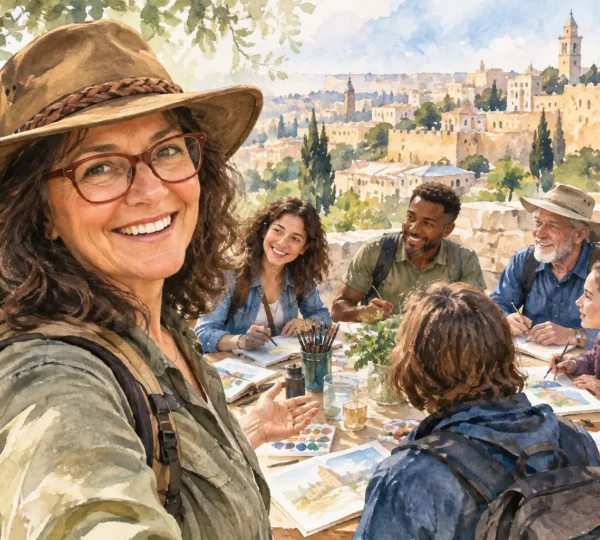
For repeat visitors, this is where deeper customization matters most. Instead of repeating every major highlight, you might arrange a discussion with an academic, visit an architect’s project, take part in a mosaic workshop, or explore a less-visited heritage site. Travelers who have been to Israel before often find that these experiences reveal a more intimate, surprising side of the country.
Keep the evening light. Jerusalem has a way of asking visitors to process what they have encountered. A good dinner, a stroll, and a little unstructured time are often better than adding one more major attraction.
Day 7: Masada and the Dead Sea
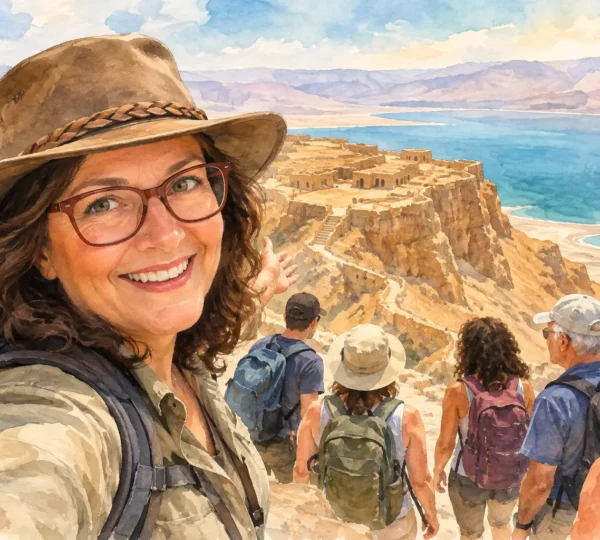
The final day shifts from crowded lanes to wide-open desert. Masada is dramatic not only because of its mountaintop setting, but because reaching it changes your perspective. Take the cable car for a comfortable ascent, or hike the Snake Path if the season, weather, and fitness level are right.
At the summit, the story is as much about water management, ingenuity, and daily life in an extreme environment as it is about the fortress itself. With a knowledgeable guide, the remains become easier to imagine: storerooms, bathhouses, terraces, and the remarkable systems that made survival possible.
Continue to the Dead Sea for a float, a spa stop, or simply the unusual experience of standing at the edge of a mineral-rich landscape. In warmer months, begin early and build in shade, water, and flexibility. Desert beauty is unforgettable, but it asks for sensible planning.
How to Make This Itinerary Feel Like Your Own
The right itinerary is not necessarily the busiest one. If faith is the central purpose of your visit, extend Jerusalem and the Galilee and build in time for worship, reflection, or a focused study theme. If culture is your priority, add home visits, food experiences, studio conversations, and regional communities. If your group includes teenagers or energetic adults, balance heritage sites with hiking, off-road driving, sailing, or another active experience.
Travel dates also shape the route. Religious holidays, weekends, weather, and opening hours can affect both the mood and logistics of a day. A licensed guide with decades of local experience can help you make choices that feel natural rather than overplanned. At Patchwork Israel, that means designing the route around your pace, questions, and curiosity, not asking you to fit into a fixed schedule.
Bring comfortable walking shoes, modest layers for sacred sites, a reusable water bottle, and an open mind. The finest moments may be the ones you did not expect: a conversation over coffee, a hillside view after a short walk, or the sound of a city changing as the day turns to evening. Leave room for those moments. They are often where a journey becomes personal.

Faith and Culture Israel Itinerary Example
Jerusalem can change the rhythm of a trip in a single morning. You may begin in the quiet of an ancient church, hear the city waking up from a rooftop, and finish lunch in a busy market where spice sellers, bakers, and families keep the streets in motion. That contrast is exactly why a faith and culture Israel itinerary example should leave room for both sacred landmarks and the living places around them.
For travelers who want more than a checklist, the most memorable route pairs places of prayer and heritage with conversations, food, landscape, and time to absorb what they have seen. This seven-day example is designed as a starting point for a private journey. It can be adapted for a couple, a multigenerational family, a small group, or a business traveler with only a few meaningful days available.
A Faith and Culture Israel Itinerary Example for Seven Days
Day 1: Arrive in Tel Aviv and begin with Jaffa
Start gently, especially after an overnight flight. Tel Aviv offers an easy landing point: the Mediterranean air, shaded boulevards, and lively café culture help travelers shift into a new time zone without rushing straight into a major historical site.
In the afternoon, head to ancient Jaffa. Its stone lanes, port views, and layered stories make it an ideal introduction to the country’s long history of trade, pilgrimage, and migration. A private walk can focus on biblical connections, the old port, local artists, or the contrast between the historic town and modern Tel Aviv.
Dinner is a good moment to make culture tangible. Rather than choosing a restaurant solely for its view, consider a food-focused experience that explains the ingredients, traditions, and people behind the plate. A cooking workshop or guided market tasting works especially well for families and travelers who connect through food.
Day 2: Caesarea, the coast, and a different view of history
Travel north along the coast to Caesarea, where a Roman theater, harbor, aqueduct, and archaeological remains sit beside the sea. This is a powerful site for travelers interested in early Christianity, Roman history, Jewish heritage, architecture, or simply the way a landscape can preserve many centuries at once.
Caesarea benefits from expert pacing. The ruins are extensive, and it is easy to walk past details that give the place its human scale. A guide can shape the visit around your interests, whether that means taking time with the theater, tracing the harbor’s engineering, or discussing how people lived and worshiped in the region.
Later, continue through the Carmel area for a village visit, a short nature walk, or a stop with a local maker. This is where a tailor-made trip becomes richer than a standard route. One traveler may prefer a quiet overlook and a winery lunch; another may want a hands-on workshop, a home-hosted meal, or an encounter with a local community leader.
Day 3: The Galilee through faith, water, and daily life
The Galilee invites a slower day. Around the Sea of Galilee, faith-based travelers can visit places connected with the ministry of Jesus, while Jewish heritage travelers may choose ancient synagogues, archaeological sites, and stories of scholars who shaped religious life after the destruction of the Second Temple.
There is no need to treat the day as a competition to see every site. Choose two or three meaningful stops and leave room for the water, the hills, and a relaxed lunch. A boat ride on the lake can be moving for some visitors; for others, a walk along a quiet trail or an agricultural visit creates the stronger connection.
The Galilee is also a wonderful setting for cultural exchange when arranged thoughtfully. Meeting a farmer, chef, educator, artist, or host can turn an interesting day into a personal memory. The best encounters are not performances. They are conversations with enough time for questions, listening, and genuine hospitality.
Day 4: Safed, the Upper Galilee, and creative tradition
Safed is often associated with mysticism, music, and narrow stone alleys, but it should not be rushed. Its old synagogues, artists’ workshops, and mountain setting encourage visitors to look beyond the postcard view. For some, this is a day for spiritual reflection. For others, it is a chance to explore art, storytelling, and the resilience of a town that has been renewed again and again.
A personalized day here might include an artist studio visit, a cheese-making experience, or a gentle hike in the Upper Galilee. Active travelers can choose a longer trail, while families or guests who prefer a more relaxed pace may enjoy a scenic drive and an unhurried lunch.
This is also a useful reminder that faith and culture do not always sit in separate categories. A melody, a meal, a handwritten blessing, or an old craft can carry meaning just as strongly as a famous monument.
Day 5: Jerusalem’s sacred core, with time to reflect
Jerusalem deserves a full day and, ideally, an early start. The Old City is compact on a map but emotionally and historically dense. A thoughtfully planned route can include the Western Wall, the Church of the Holy Sepulchre, the Via Dolorosa, and carefully selected overlooks, while allowing time to understand the significance of each place rather than moving from photo stop to photo stop.
The exact order depends on your interests, mobility, faith tradition, and the day of the week. Some visitors want a deeply devotional experience with time for prayer. Others prefer a historical framework that places the sites within the city’s many archaeological layers. Both approaches are valid, and a private guide can create space for either one.
End outside the Old City in a neighborhood or market setting. Mahane Yehuda is lively and colorful, but it is not the only option. A smaller culinary stop, a bakery visit, or an evening conversation with a Jerusalem resident can offer a more personal finish to a very full day.
Day 6: Jerusalem beyond the famous stones
A meaningful Jerusalem day should include the city beyond its best-known gates. Depending on your interests, this might mean visiting a museum, exploring an archaeological park, walking through a historic neighborhood, or meeting people whose work shapes the city’s daily life.
For repeat visitors, this is where deeper customization matters most. Instead of repeating every major highlight, you might arrange a discussion with an academic, visit an architect’s project, take part in a mosaic workshop, or explore a less-visited heritage site. Travelers who have been to Israel before often find that these experiences reveal a more intimate, surprising side of the country.
Keep the evening light. Jerusalem has a way of asking visitors to process what they have encountered. A good dinner, a stroll, and a little unstructured time are often better than adding one more major attraction.
Day 7: Masada and the Dead Sea
The final day shifts from crowded lanes to wide-open desert. Masada is dramatic not only because of its mountaintop setting, but because reaching it changes your perspective. Take the cable car for a comfortable ascent, or hike the Snake Path if the season, weather, and fitness level are right.
At the summit, the story is as much about water management, ingenuity, and daily life in an extreme environment as it is about the fortress itself. With a knowledgeable guide, the remains become easier to imagine: storerooms, bathhouses, terraces, and the remarkable systems that made survival possible.
Continue to the Dead Sea for a float, a spa stop, or simply the unusual experience of standing at the edge of a mineral-rich landscape. In warmer months, begin early and build in shade, water, and flexibility. Desert beauty is unforgettable, but it asks for sensible planning.
How to Make This Itinerary Feel Like Your Own
The right itinerary is not necessarily the busiest one. If faith is the central purpose of your visit, extend Jerusalem and the Galilee and build in time for worship, reflection, or a focused study theme. If culture is your priority, add home visits, food experiences, studio conversations, and regional communities. If your group includes teenagers or energetic adults, balance heritage sites with hiking, off-road driving, sailing, or another active experience.
Travel dates also shape the route. Religious holidays, weekends, weather, and opening hours can affect both the mood and logistics of a day. A licensed guide with decades of local experience can help you make choices that feel natural rather than overplanned. At Patchwork Israel, that means designing the route around your pace, questions, and curiosity, not asking you to fit into a fixed schedule.
Bring comfortable walking shoes, modest layers for sacred sites, a reusable water bottle, and an open mind. The finest moments may be the ones you did not expect: a conversation over coffee, a hillside view after a short walk, or the sound of a city changing as the day turns to evening. Leave room for those moments. They are often where a journey becomes personal.
Get the latest blog updates in your inbox.