Israel Travel Guide for Meaningful Trips
Some trips to Israel feel rushed before they even begin. Jerusalem, Masada, the Dead Sea, Tel Aviv, Jaffa – people often arrive with a long list and leave wishing they had actually absorbed what they saw. A good Israel travel guide should do more than name the highlights. It should help you shape a trip that fits your pace, your interests, and the kind of connection you want to have while you are here.
That matters because Israel is compact, but it is not simple. In one day, you can move from an ancient archaeological site to a lively food market, from a desert overlook to a conversation with locals whose daily lives add depth that no museum label can provide. The best trips are not built around how much you can cram in. They are built around what will stay with you after you return home.
What makes an Israel travel guide actually useful?
A useful guide starts with a basic truth: there is no single right way to see Israel. For some travelers, this is a heritage journey centered on sacred places and historical continuity. For others, it is a cultural trip shaped by food, architecture, neighborhoods, and personal encounters. Some want desert landscapes and hiking trails. Some want a short, meaningful experience added to a business trip. Many want a little of everything, but not in a way that feels generic.
That is where thoughtful planning changes everything. Israel rewards focus. If you try to see every major site in a few days, you may check boxes, but you will miss the rhythm of the country. If you choose a few regions and build your days around your own curiosity, the experience becomes richer. A family might need variety and flexibility. A returning visitor may be ready for hidden corners and more in-depth conversations. A faith-based traveler may want time for reflection, not just transportation between stops.
Israel travel guide: choose your trip by interest, not by checklist
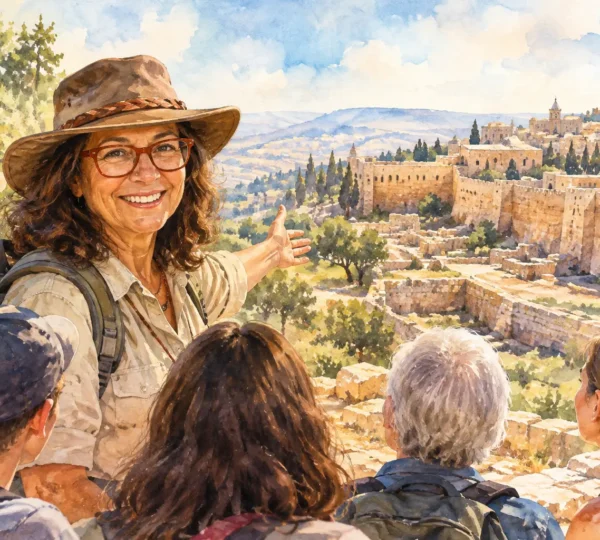
Jerusalem is often the emotional center of a visit, and for good reason. The city holds layers of history, faith, memory, and daily life in a remarkably compact space. But even here, the question is not whether to go. It is how to go. Some travelers want the classic essential sites. Others want to understand the city through neighborhoods, archaeology, food, or the people who live and work there. The difference between a hurried visit and a meaningful one often comes down to context and pacing.
Along the coast, Tel Aviv and Jaffa offer a very different mood. Tel Aviv brings energy, design, beach culture, nightlife, and a food scene that can easily become a highlight of the trip. Jaffa adds old stone alleys, layered history, artists, and sea views. Together, they work especially well for travelers who want to balance heritage with modern Israeli life. If you only think of them as a quick urban stop, you miss much of their appeal.
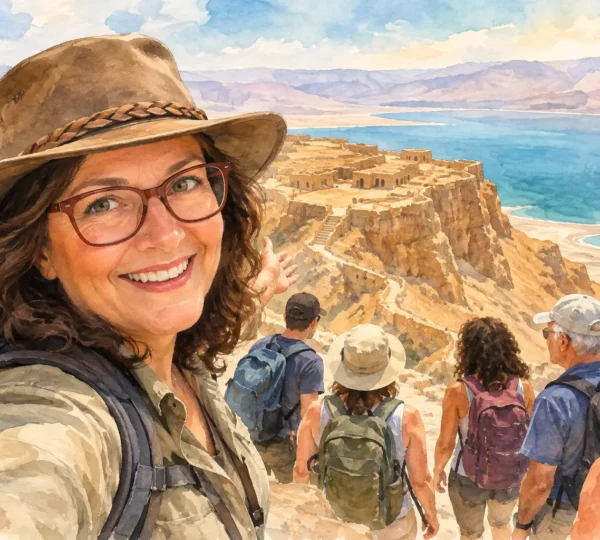
The Judean Desert delivers another side of the country entirely. Masada and the Dead Sea are famous, but the wider desert experience can be much more textured than a simple drive, photo stop, and float. Sunrise timing, hiking level, weather, and your appetite for adventure all matter. Some people are happiest with scenic access and comfortable pacing. Others want off-road routes, desert viewpoints, or time outdoors that feels active rather than passive.
Northern Israel changes the story again. Here, landscapes open up, and the trip can shift toward mountain views, rural settings, boutique wineries, farms, and smaller communities. Travelers who have already seen the best-known landmarks often find that the north gives them room to go deeper. It is less about rushing between icons and more about experiencing atmosphere, conversation, and place.
Build around experiences, not only destinations
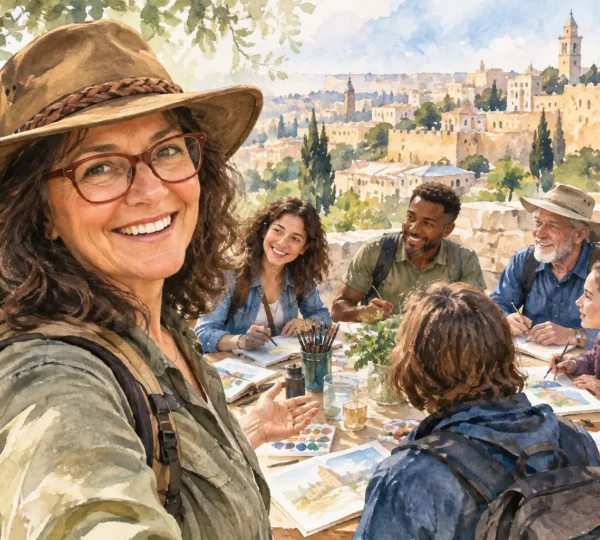
One of the biggest planning mistakes is treating Israel as a series of famous names on a map. In practice, what many travelers remember most are the experiences that happen inside those places. A market visit becomes memorable when it includes tasting, storytelling, and meeting the people behind the food. An archaeological site becomes memorable when the history is explained in a way that feels alive. A desert day becomes memorable when it matches your physical comfort, your timing, and your sense of adventure.
This is especially true for repeat visitors. Once you have seen the headline sites, Israel opens up in a different way. You can spend more time with lesser-known locations, local hosts, workshops, culinary experiences, desert activities, or conversations across different parts of society. That is often where the trip becomes more personal. It stops feeling like tourism and starts feeling like insight.
Families also benefit from this approach. Children and teens rarely connect to a place because they stood still in front of one more old stone wall. They connect through motion, interaction, and story. A well-designed day might include history, but also hands-on activities, nature, food, or a bit of fun that keeps everyone engaged. Adults enjoy the trip more when the pace suits the group rather than fighting against it.
Timing, pace, and the trade-offs that matter
A strong Israel travel guide should be honest about trade-offs. Israel may be small geographically, but travel days can still become tiring if you overbuild the itinerary. Distances are manageable, yet every move has a cost in energy. If you change hotels too often, the trip can feel fragmented. If you try to combine too many themes in one day, nothing has room to breathe.
Season matters too. Spring and fall are often ideal for a mixed itinerary that includes cities, walking, and desert time. Summer can still work beautifully, but it calls for smart planning, earlier starts, water-based or indoor breaks, and caution with midday heat. Winter can be excellent for urban touring, lower desert regions, and dramatic green landscapes in some areas, though it adds weather variables that need flexibility.
The right pace depends on who you are. Travelers with strong mobility can cover more ground, but that does not always mean they should. Older travelers often enjoy deeper, slower days with excellent guiding and fewer transitions. Business travelers may only have half a day or a day and want something concentrated and memorable. Faith-oriented visitors may prefer fewer sites and more time in each one. There is no prize for exhaustion.
Why personalized guiding changes the trip
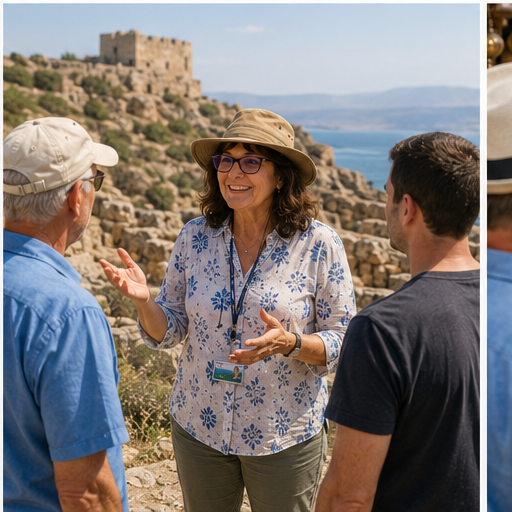
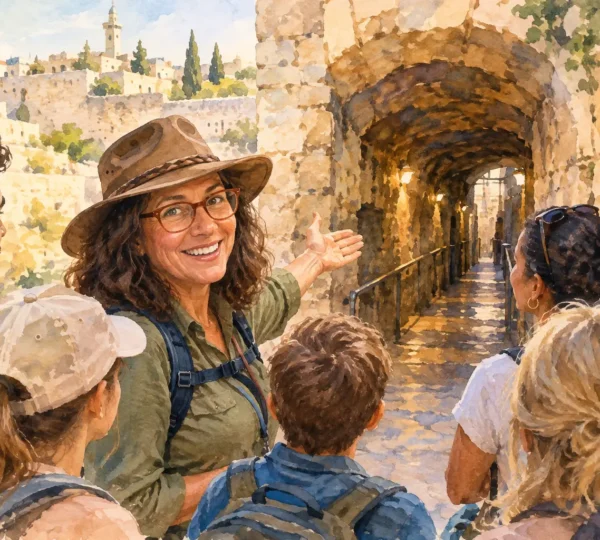
Israel is one of those places where expert guiding is not just a luxury. It can shape the entire quality of the experience. The difference is not only historical knowledge, though that matters. It is also about reading the day, adjusting the route, understanding timing, avoiding common planning mistakes, and knowing when a hidden stop or a local interaction will mean more than another standard attraction.
Personalized guiding is especially valuable for travelers who do not want a rigid package. Maybe you want sacred sites, but also time by the sea. Maybe you want a culinary afternoon, a desert drive, or a closer look at daily life beyond the obvious landmarks. Maybe you have already visited Israel and want to go beyond the expected. A tailor-made approach allows the trip to reflect who you are instead of asking you to fit into somebody else’s program.
That is also where a seasoned local guide brings calm. Israel offers an enormous range of experiences in a very small space, and that abundance can be hard to organize from far away. Working with someone who knows both the classics and the hidden gems helps turn a complicated set of options into a coherent journey. With Patchwork Israel, that often means combining the iconic with the personal in a way that feels natural rather than forced.
How to plan a trip you will still think about years later
Start with what you care about most. Not what you think you are supposed to see, but what truly draws you. History, faith, food, nature, family connection, conversation, adventure – once that is clear, the itinerary gets smarter.
Then protect your time. Leave room for long lunches, scenic pauses, questions, and moments that were not on the original schedule. Some of the most meaningful parts of Israel happen in between the famous stops.
Finally, let the country be layered. You do not need to reduce it to one story or one style of travel. Israel can hold ancient sites, living traditions, urban energy, wild landscapes, and deeply human encounters in the same trip. The art is in choosing the combination that feels right for you.
If you plan with that in mind, your trip will not just be busy. It will feel personal, grounded, and unexpectedly memorable in all the best ways.

Israel Travel Guide for Meaningful Trips
Some trips to Israel feel rushed before they even begin. Jerusalem, Masada, the Dead Sea, Tel Aviv, Jaffa – people often arrive with a long list and leave wishing they had actually absorbed what they saw. A good Israel travel guide should do more than name the highlights. It should help you shape a trip that fits your pace, your interests, and the kind of connection you want to have while you are here.
That matters because Israel is compact, but it is not simple. In one day, you can move from an ancient archaeological site to a lively food market, from a desert overlook to a conversation with locals whose daily lives add depth that no museum label can provide. The best trips are not built around how much you can cram in. They are built around what will stay with you after you return home.
What makes an Israel travel guide actually useful?
A useful guide starts with a basic truth: there is no single right way to see Israel. For some travelers, this is a heritage journey centered on sacred places and historical continuity. For others, it is a cultural trip shaped by food, architecture, neighborhoods, and personal encounters. Some want desert landscapes and hiking trails. Some want a short, meaningful experience added to a business trip. Many want a little of everything, but not in a way that feels generic.
That is where thoughtful planning changes everything. Israel rewards focus. If you try to see every major site in a few days, you may check boxes, but you will miss the rhythm of the country. If you choose a few regions and build your days around your own curiosity, the experience becomes richer. A family might need variety and flexibility. A returning visitor may be ready for hidden corners and more in-depth conversations. A faith-based traveler may want time for reflection, not just transportation between stops.
Israel travel guide: choose your trip by interest, not by checklist
Jerusalem is often the emotional center of a visit, and for good reason. The city holds layers of history, faith, memory, and daily life in a remarkably compact space. But even here, the question is not whether to go. It is how to go. Some travelers want the classic essential sites. Others want to understand the city through neighborhoods, archaeology, food, or the people who live and work there. The difference between a hurried visit and a meaningful one often comes down to context and pacing.
Along the coast, Tel Aviv and Jaffa offer a very different mood. Tel Aviv brings energy, design, beach culture, nightlife, and a food scene that can easily become a highlight of the trip. Jaffa adds old stone alleys, layered history, artists, and sea views. Together, they work especially well for travelers who want to balance heritage with modern Israeli life. If you only think of them as a quick urban stop, you miss much of their appeal.
The Judean Desert delivers another side of the country entirely. Masada and the Dead Sea are famous, but the wider desert experience can be much more textured than a simple drive, photo stop, and float. Sunrise timing, hiking level, weather, and your appetite for adventure all matter. Some people are happiest with scenic access and comfortable pacing. Others want off-road routes, desert viewpoints, or time outdoors that feels active rather than passive.
Northern Israel changes the story again. Here, landscapes open up, and the trip can shift toward mountain views, rural settings, boutique wineries, farms, and smaller communities. Travelers who have already seen the best-known landmarks often find that the north gives them room to go deeper. It is less about rushing between icons and more about experiencing atmosphere, conversation, and place.
Build around experiences, not only destinations
One of the biggest planning mistakes is treating Israel as a series of famous names on a map. In practice, what many travelers remember most are the experiences that happen inside those places. A market visit becomes memorable when it includes tasting, storytelling, and meeting the people behind the food. An archaeological site becomes memorable when the history is explained in a way that feels alive. A desert day becomes memorable when it matches your physical comfort, your timing, and your sense of adventure.
This is especially true for repeat visitors. Once you have seen the headline sites, Israel opens up in a different way. You can spend more time with lesser-known locations, local hosts, workshops, culinary experiences, desert activities, or conversations across different parts of society. That is often where the trip becomes more personal. It stops feeling like tourism and starts feeling like insight.
Families also benefit from this approach. Children and teens rarely connect to a place because they stood still in front of one more old stone wall. They connect through motion, interaction, and story. A well-designed day might include history, but also hands-on activities, nature, food, or a bit of fun that keeps everyone engaged. Adults enjoy the trip more when the pace suits the group rather than fighting against it.
Timing, pace, and the trade-offs that matter
A strong Israel travel guide should be honest about trade-offs. Israel may be small geographically, but travel days can still become tiring if you overbuild the itinerary. Distances are manageable, yet every move has a cost in energy. If you change hotels too often, the trip can feel fragmented. If you try to combine too many themes in one day, nothing has room to breathe.
Season matters too. Spring and fall are often ideal for a mixed itinerary that includes cities, walking, and desert time. Summer can still work beautifully, but it calls for smart planning, earlier starts, water-based or indoor breaks, and caution with midday heat. Winter can be excellent for urban touring, lower desert regions, and dramatic green landscapes in some areas, though it adds weather variables that need flexibility.
The right pace depends on who you are. Travelers with strong mobility can cover more ground, but that does not always mean they should. Older travelers often enjoy deeper, slower days with excellent guiding and fewer transitions. Business travelers may only have half a day or a day and want something concentrated and memorable. Faith-oriented visitors may prefer fewer sites and more time in each one. There is no prize for exhaustion.
Why personalized guiding changes the trip
Israel is one of those places where expert guiding is not just a luxury. It can shape the entire quality of the experience. The difference is not only historical knowledge, though that matters. It is also about reading the day, adjusting the route, understanding timing, avoiding common planning mistakes, and knowing when a hidden stop or a local interaction will mean more than another standard attraction.
Personalized guiding is especially valuable for travelers who do not want a rigid package. Maybe you want sacred sites, but also time by the sea. Maybe you want a culinary afternoon, a desert drive, or a closer look at daily life beyond the obvious landmarks. Maybe you have already visited Israel and want to go beyond the expected. A tailor-made approach allows the trip to reflect who you are instead of asking you to fit into somebody else’s program.
That is also where a seasoned local guide brings calm. Israel offers an enormous range of experiences in a very small space, and that abundance can be hard to organize from far away. Working with someone who knows both the classics and the hidden gems helps turn a complicated set of options into a coherent journey. With Patchwork Israel, that often means combining the iconic with the personal in a way that feels natural rather than forced.
How to plan a trip you will still think about years later
Start with what you care about most. Not what you think you are supposed to see, but what truly draws you. History, faith, food, nature, family connection, conversation, adventure – once that is clear, the itinerary gets smarter.
Then protect your time. Leave room for long lunches, scenic pauses, questions, and moments that were not on the original schedule. Some of the most meaningful parts of Israel happen in between the famous stops.
Finally, let the country be layered. You do not need to reduce it to one story or one style of travel. Israel can hold ancient sites, living traditions, urban energy, wild landscapes, and deeply human encounters in the same trip. The art is in choosing the combination that feels right for you.
If you plan with that in mind, your trip will not just be busy. It will feel personal, grounded, and unexpectedly memorable in all the best ways.
Get the latest blog updates in your inbox.