
How to Plan a Prehistoric Sites Tour in Israel
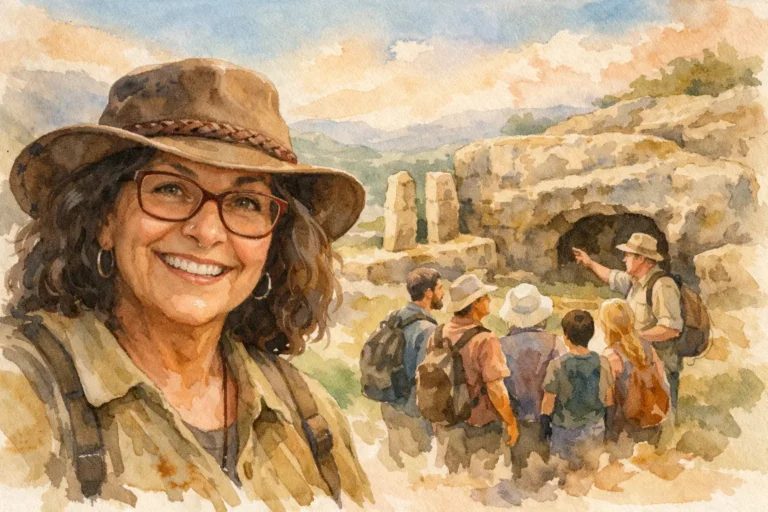
The most extraordinary moments on a prehistoric sites tour in Israel often happen before you enter a cave. You stand on a Carmel ridge, look toward the Mediterranean, and realize why people kept returning here for hundreds of thousands of years: water, shelter, stone, animals, and a wide view of the land below. This is not history preserved behind a rope. It is a landscape that helps the human story make sense.
Israel is often approached through biblical, Roman, Crusader, or modern history. Those eras deserve their place, but the deeper timeline is just as compelling. Long before cities, coins, and written records, early humans left stone tools, hearths, burials, and traces of daily life across this small, varied country. A well-designed day can make that immense span of time feel surprisingly personal.
What Makes a Prehistoric Sites Tour in Israel Different?
Prehistory means the period before written records. It is not one neat chapter, and it cannot be understood through one dramatic ruin. Archaeologists work from layers of soil, fragments of bone, carefully shaped flint, ash from ancient fires, and the position of a cave above a valley. The appeal is in learning to read these small clues.
That is also why this kind of tour benefits from a thoughtful pace. A fortress announces itself from a distance. Prehistoric evidence can be subtle. Without context, a cave may look like a beautiful limestone opening and a flint tool like an ordinary stone. With the right interpretation, both become evidence of choices people made about food, safety, family, movement, and survival.
For travelers who have already visited Israel’s better-known highlights, this is a rewarding way to see the country from a completely different angle. For first-time visitors, it can add depth to a broader itinerary without replacing the places they came to see. The best route depends on whether your interest is early humans, ancient burial customs, cave landscapes, archaeology, hiking, or simply the pleasure of going somewhere quieter.
Mount Carmel: Caves That Changed the Human Story
The Carmel region is the natural heart of many prehistoric itineraries. Its limestone caves, set between the coastal plain and wooded slopes, have sheltered human groups across vast stretches of time. The Nahal Me’arot Nature Reserve is especially significant because its caves preserve evidence associated with different human populations and changing prehistoric cultures.
At Tabun Cave, deep archaeological layers reveal an unusually long sequence of occupation. Nearby Skhul Cave is associated with some of the early remains of modern humans found outside Africa. El-Wad Cave is linked to the Natufian culture, a period when communities began spending longer periods in one place and developed new patterns of settlement before farming was fully established.
Those names can sound technical, but a private guide can turn them into a clear story. Why did people choose this slope? What did the sea and valley offer? How could two different human groups have used the same region at different times? Instead of memorizing dates, you begin to see the practical logic of the landscape.
The reserve works well for curious adults, families with older children, and small groups that enjoy a moderate walk. The paths are generally manageable, though caves, stone steps, and uneven ground require comfortable closed shoes. In warmer months, an early start is far more pleasant and leaves room for a leisurely lunch or another stop later in the day.
Do Not Rush the Caves
A cave visit should not be treated as a quick photo stop between major destinations. Allow time to stand outside the entrance, compare the terrain around each shelter, and consider what is missing as well as what remains. Prehistoric archaeology is full of informed questions rather than simple certainties. Dates are refined, interpretations evolve, and a good guide should be comfortable explaining both what researchers know and what they are still debating.
Beyond the Carmel: Build a Route Around Your Curiosity
Israel’s prehistoric story is much larger than one mountain range. The Jordan Valley has yielded exceptionally early evidence of human presence, including the important site of Ubeidiya near the Sea of Galilee region. Access to certain excavation areas can be restricted or seasonal, so it is wiser to build a visit around what can genuinely be experienced on the ground rather than promise entry to every famous research site.
Central Israel also holds remarkable cave archaeology. Qesem Cave, for example, has transformed scholarly understanding of fire use, hunting, and food preparation in the Lower Paleolithic period. It is not a standard walk-in attraction, but it can be part of the conversation when creating an archaeology-focused day. Sometimes a museum collection, a landscape viewpoint, or an accessible nearby site provides the context that a closed excavation cannot.
This is one of the advantages of a tailor-made itinerary. The goal is not to collect site names. It is to connect places that tell one coherent story. A Carmel cave day might continue with a walk through a forested wadi and a meal in a local village. A northern route may combine prehistoric landscapes with a viewpoint over the Jordan Valley. A traveler with only a free afternoon might choose one excellent site and a focused archaeological conversation rather than spend hours in transit.
Pair Ancient Evidence With the Living Landscape
The most memorable prehistoric tours use more than labels and dates. Flint, for instance, becomes much more interesting when you can see the local rock formations and understand why sharp stone mattered. A hearth becomes meaningful when you talk about warmth, protection, cooking, and gathering after dark. A burial raises enduring questions about memory, community, and ritual.
This approach also gives a prehistoric itinerary a wonderful balance. You may begin with careful observation inside an archaeological reserve, then continue outdoors on a short trail where the geology, vegetation, and views clarify the setting. Israel’s compact geography makes those transitions possible without turning the day into a long drive.
Food can fit naturally too. After a morning considering hunting, gathering, and early settlement, a regional lunch offers a gentle connection to the ways land, season, and ingredients still shape daily life. It is not an attempt to recreate prehistory. It is simply a reminder that landscapes continue to influence how communities eat, travel, and make a home.
Practical Planning for an Archaeology-Focused Day
A full day is usually best for the Carmel caves and surrounding landscape, while a broader prehistoric route may need two days if you want to include substantial driving and other regions. Trying to cover the Carmel, the Jordan Valley, and central sites in one day usually produces more windshield time than insight.
Bring water, sun protection, and shoes with a good grip. A small backpack is more useful than a large one, especially on cave trails. Travelers who use a cane, need minimal stairs, or prefer very short walks can still enjoy a prehistoric theme, but the route should be planned around accessible viewpoints, museums, and easier outdoor stops.
Site conditions matter. Nature reserve hours, weather, conservation work, and archaeological access can change. This is not a disadvantage of private touring; it is exactly where local planning makes a difference. An experienced licensed guide can adjust the day before a closed gate becomes a disappointment, and can choose the right balance of walking, driving, interpretation, and rest.
At Patchwork Israel, I design these days around the questions you want to carry home. Some guests want the scientific story of human evolution. Others are fascinated by caves, early technologies, or the moment people began settling more permanently. A business traveler may want one meaningful half-day beyond a conference schedule, while a family may prefer a slower route with room to explore outdoors.
Choose one question before you go: How did people live here before history was written? Let the route follow that question, and a quiet cave, a chipped flint blade, or a view across the Carmel can become one of the most lasting experiences of your time in Israel.

How to Plan a Prehistoric Sites Tour in Israel
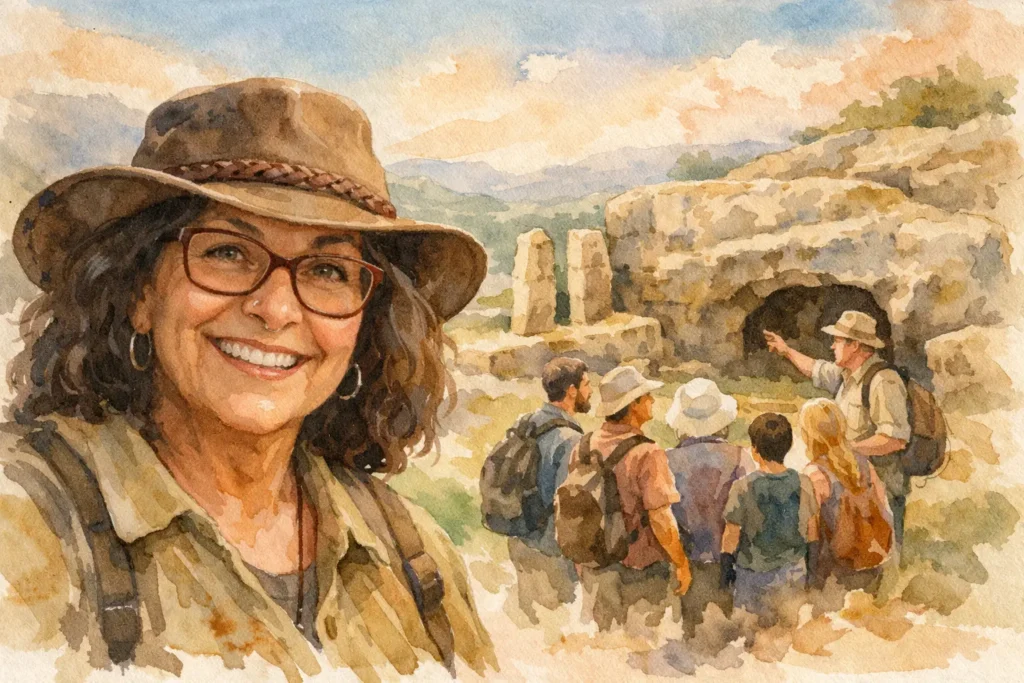
The most extraordinary moments on a prehistoric sites tour in Israel often happen before you enter a cave. You stand on a Carmel ridge, look toward the Mediterranean, and realize why people kept returning here for hundreds of thousands of years: water, shelter, stone, animals, and a wide view of the land below. This is not history preserved behind a rope. It is a landscape that helps the human story make sense.
Israel is often approached through biblical, Roman, Crusader, or modern history. Those eras deserve their place, but the deeper timeline is just as compelling. Long before cities, coins, and written records, early humans left stone tools, hearths, burials, and traces of daily life across this small, varied country. A well-designed day can make that immense span of time feel surprisingly personal.
What Makes a Prehistoric Sites Tour in Israel Different?
Prehistory means the period before written records. It is not one neat chapter, and it cannot be understood through one dramatic ruin. Archaeologists work from layers of soil, fragments of bone, carefully shaped flint, ash from ancient fires, and the position of a cave above a valley. The appeal is in learning to read these small clues.
That is also why this kind of tour benefits from a thoughtful pace. A fortress announces itself from a distance. Prehistoric evidence can be subtle. Without context, a cave may look like a beautiful limestone opening and a flint tool like an ordinary stone. With the right interpretation, both become evidence of choices people made about food, safety, family, movement, and survival.
For travelers who have already visited Israel’s better-known highlights, this is a rewarding way to see the country from a completely different angle. For first-time visitors, it can add depth to a broader itinerary without replacing the places they came to see. The best route depends on whether your interest is early humans, ancient burial customs, cave landscapes, archaeology, hiking, or simply the pleasure of going somewhere quieter.
Mount Carmel: Caves That Changed the Human Story
The Carmel region is the natural heart of many prehistoric itineraries. Its limestone caves, set between the coastal plain and wooded slopes, have sheltered human groups across vast stretches of time. The Nahal Me’arot Nature Reserve is especially significant because its caves preserve evidence associated with different human populations and changing prehistoric cultures.
At Tabun Cave, deep archaeological layers reveal an unusually long sequence of occupation. Nearby Skhul Cave is associated with some of the early remains of modern humans found outside Africa. El-Wad Cave is linked to the Natufian culture, a period when communities began spending longer periods in one place and developed new patterns of settlement before farming was fully established.
Those names can sound technical, but a private guide can turn them into a clear story. Why did people choose this slope? What did the sea and valley offer? How could two different human groups have used the same region at different times? Instead of memorizing dates, you begin to see the practical logic of the landscape.
The reserve works well for curious adults, families with older children, and small groups that enjoy a moderate walk. The paths are generally manageable, though caves, stone steps, and uneven ground require comfortable closed shoes. In warmer months, an early start is far more pleasant and leaves room for a leisurely lunch or another stop later in the day.
Do Not Rush the Caves
A cave visit should not be treated as a quick photo stop between major destinations. Allow time to stand outside the entrance, compare the terrain around each shelter, and consider what is missing as well as what remains. Prehistoric archaeology is full of informed questions rather than simple certainties. Dates are refined, interpretations evolve, and a good guide should be comfortable explaining both what researchers know and what they are still debating.
Beyond the Carmel: Build a Route Around Your Curiosity
Israel’s prehistoric story is much larger than one mountain range. The Jordan Valley has yielded exceptionally early evidence of human presence, including the important site of Ubeidiya near the Sea of Galilee region. Access to certain excavation areas can be restricted or seasonal, so it is wiser to build a visit around what can genuinely be experienced on the ground rather than promise entry to every famous research site.
Central Israel also holds remarkable cave archaeology. Qesem Cave, for example, has transformed scholarly understanding of fire use, hunting, and food preparation in the Lower Paleolithic period. It is not a standard walk-in attraction, but it can be part of the conversation when creating an archaeology-focused day. Sometimes a museum collection, a landscape viewpoint, or an accessible nearby site provides the context that a closed excavation cannot.
This is one of the advantages of a tailor-made itinerary. The goal is not to collect site names. It is to connect places that tell one coherent story. A Carmel cave day might continue with a walk through a forested wadi and a meal in a local village. A northern route may combine prehistoric landscapes with a viewpoint over the Jordan Valley. A traveler with only a free afternoon might choose one excellent site and a focused archaeological conversation rather than spend hours in transit.
Pair Ancient Evidence With the Living Landscape
The most memorable prehistoric tours use more than labels and dates. Flint, for instance, becomes much more interesting when you can see the local rock formations and understand why sharp stone mattered. A hearth becomes meaningful when you talk about warmth, protection, cooking, and gathering after dark. A burial raises enduring questions about memory, community, and ritual.
This approach also gives a prehistoric itinerary a wonderful balance. You may begin with careful observation inside an archaeological reserve, then continue outdoors on a short trail where the geology, vegetation, and views clarify the setting. Israel’s compact geography makes those transitions possible without turning the day into a long drive.
Food can fit naturally too. After a morning considering hunting, gathering, and early settlement, a regional lunch offers a gentle connection to the ways land, season, and ingredients still shape daily life. It is not an attempt to recreate prehistory. It is simply a reminder that landscapes continue to influence how communities eat, travel, and make a home.
Practical Planning for an Archaeology-Focused Day
A full day is usually best for the Carmel caves and surrounding landscape, while a broader prehistoric route may need two days if you want to include substantial driving and other regions. Trying to cover the Carmel, the Jordan Valley, and central sites in one day usually produces more windshield time than insight.
Bring water, sun protection, and shoes with a good grip. A small backpack is more useful than a large one, especially on cave trails. Travelers who use a cane, need minimal stairs, or prefer very short walks can still enjoy a prehistoric theme, but the route should be planned around accessible viewpoints, museums, and easier outdoor stops.
Site conditions matter. Nature reserve hours, weather, conservation work, and archaeological access can change. This is not a disadvantage of private touring; it is exactly where local planning makes a difference. An experienced licensed guide can adjust the day before a closed gate becomes a disappointment, and can choose the right balance of walking, driving, interpretation, and rest.
At Patchwork Israel, I design these days around the questions you want to carry home. Some guests want the scientific story of human evolution. Others are fascinated by caves, early technologies, or the moment people began settling more permanently. A business traveler may want one meaningful half-day beyond a conference schedule, while a family may prefer a slower route with room to explore outdoors.
Choose one question before you go: How did people live here before history was written? Let the route follow that question, and a quiet cave, a chipped flint blade, or a view across the Carmel can become one of the most lasting experiences of your time in Israel.
Get the latest blog updates in your inbox.