
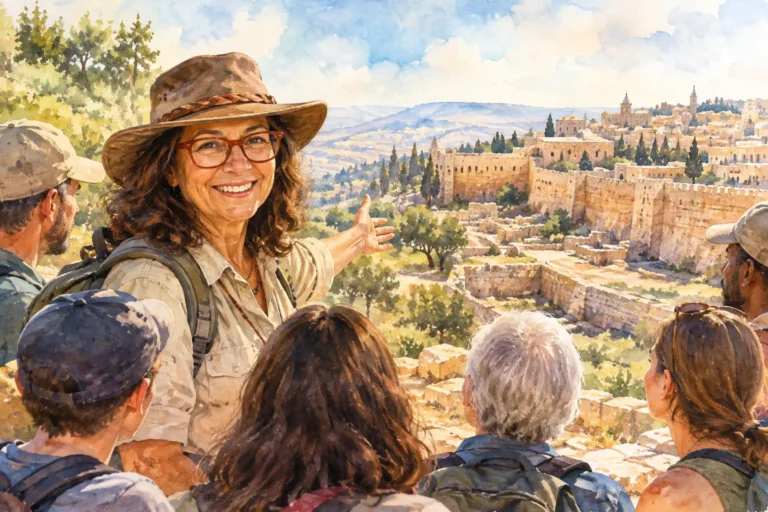
But How Did They Actually Build Ancient Israel?
At the foot of a monumental wall, beside a desert cistern, or looking across an ancient harbor, travelers often ask the question that turns a pleasant visit into real curiosity: but how did they actually build? Not just who commissioned it, or when it was destroyed, but how people moved enormous stone blocks, found water where there was none, and created places that still command attention thousands of years later.
That question is one of the best ways to experience Israel. The country’s archaeology is not a collection of isolated ruins. It is a record of human problem-solving under very different conditions: crowded hilltop cities, dry desert cliffs, coastal storms, fertile valleys, and sacred landscapes shaped over generations. Once you begin looking at a site as a construction project, the stones start telling a far more personal story.
But How Did They Actually Build With Stone?
In many of Israel’s ancient sites, the first answer is local stone. Builders generally worked with what the landscape provided. In the Jerusalem hills, pale limestone was abundant. Along the coast, kurkar, a sandy sandstone, could be quarried. In the north and Golan, dark volcanic basalt gave structures a completely different appearance and demanded different techniques.
Stone was not simply picked up and stacked. Quarry marks, partly cut blocks, and tool traces show a careful sequence. Workers identified a natural seam, cut channels around the intended block, and used wedges or levers to free it. The stone was then shaped close to the quarry whenever possible. Moving a finished block was difficult enough. Moving it uphill or over uneven ground required ramps, rollers, sledges, ropes, teams of workers, and a great deal of planning.
At major Second Temple-period sites, the scale can feel almost impossible. Some of the largest building stones in Jerusalem weigh many tons. Their precisely dressed faces and distinctive margins are evidence of skilled quarrying and masonry, not mystery. Labor was organized, tools were specialized, and the work was measured with remarkable care. A wall that appears simple from a distance may reveal tightly fitted courses, drainage details, retaining systems, and subtle adjustments to the slope beneath it.
The impressive part is not that ancient builders had a secret modern technology. It is that they understood force, friction, balance, geometry, and teamwork exceptionally well. They also had time. A royal project or major religious complex could employ large groups over years, with quarry workers, haulers, stonecutters, surveyors, carpenters, water carriers, cooks, and administrators all contributing to the finished place.
A wall was rarely just a wall
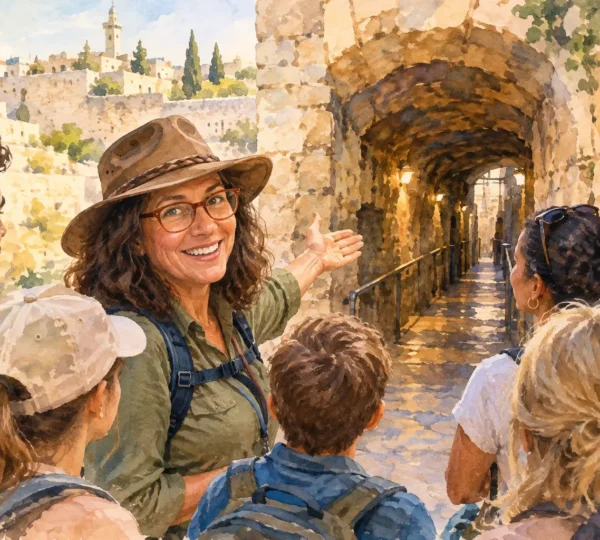
When you stand at an archaeological site, it helps to ask what is behind and beneath the visible stones. Ancient fortifications were often retaining walls as much as defensive walls. They held back fills of earth and smaller stones, creating level platforms where none naturally existed. Staircases followed the terrain. Gates channeled people through controlled entrances. Towers gave visibility across valleys and roads.
Builders also reused materials constantly. A finely cut stone in a later wall may have begun life in an earlier structure. Columns became thresholds. Decorative fragments became building fill. This was practical, economical, and common. Archaeology can therefore feel like reading a manuscript that has been edited many times, with each generation writing over parts of the one before it.
Water Was Part of the Architecture
In a land with long dry seasons, water was not an afterthought. It shaped where people could live and how they built. Many ancient cities were positioned near springs, wells, seasonal streams, or routes that could support trade and travel. Yet natural sources were not always enough, especially during a siege or on a high desert plateau.
That is why cisterns are among the most revealing features at sites such as Masada and in old urban neighborhoods. A cistern is more than a hole in the ground. It is an engineered storage system. Rainwater was directed from roofs, courtyards, slopes, or channels into plastered underground chambers. The plaster helped reduce leakage, while settling areas could keep heavier sediment from reaching the main reservoir.
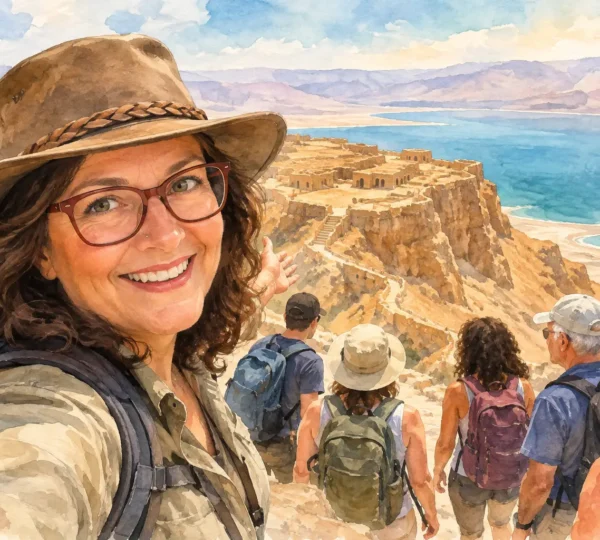
Masada makes this ingenuity especially vivid. The fortress stands above the desert, where the view is dramatic but water is scarce. Its water system collected runoff from surrounding wadis and directed it into large cisterns cut into the cliffside. Water then had to be carried upward and managed carefully. The site’s location offered protection and commanding views, but it also created a daily logistical challenge. That trade-off is central to understanding it.
In Jerusalem, Caesarea, and other major centers, water systems could become even more ambitious. Channels, reservoirs, pools, and aqueducts supplied homes, markets, workshops, bathhouses, gardens, and public spaces. Gravity did much of the work, but only after surveyors established a route with an extremely gentle and consistent slope. Too steep, and the water would damage the channel. Too flat, and it would not flow reliably.
Building at the Coast Meant Working With the Sea
Caesarea offers a different kind of construction lesson. Creating a functioning harbor on an exposed Mediterranean shore required builders to manage waves, currents, and shifting sand. It was a statement of ambition, but it was also an engineering experiment.
Roman builders used a form of concrete that could set in wet conditions, helping them construct large harbor works. Breakwaters protected ships and created calmer water within the port. Warehouses, streets, entertainment spaces, bathhouses, and water infrastructure turned the coastline into a thriving urban center.
The sea, however, never follows a plan forever. Coastal construction is always a negotiation with nature. Storms, erosion, earthquakes, and changing shorelines can alter even the most carefully made harbor. Seeing Caesarea with an experienced guide means noticing both the grand vision and its limits. It is a reminder that ancient engineering was brilliant, but never invincible.
What Ruins Can and Cannot Tell Us
It is tempting to look at a surviving wall and imagine that we are seeing the place exactly as it was. Usually, we are not. Wooden beams decay. Roofs collapse. Plaster fades. Paint disappears. Markets, voices, fabric, food, and smells leave little visible trace. What remains is often the durable skeleton of a much richer world.
Archaeologists reconstruct building methods by combining evidence: quarry scars, unfinished stones, foundation trenches, tool marks, soil layers, ancient written descriptions, and comparisons with similar structures. Sometimes the evidence is wonderfully clear. Sometimes there are several plausible explanations. The honest answer to a good question may be, “We know this part, but the rest is still debated.”
That uncertainty does not make a visit less meaningful. It makes it more human. Ancient builders were not anonymous figures performing miracles. They made decisions based on the materials, money, labor, weather, beliefs, and pressures of their own time. They repaired failures, adapted older structures, and built for needs that were practical as well as symbolic.
See the Work, Not Only the Monument
The most rewarding site visits slow down long enough to notice the details: a drainage channel beside a street, a change in stone size halfway up a wall, a worn threshold, a quarry face, or the cool air inside a water reservoir. These are often the clues that reveal how a place functioned.
A customized journey can connect those clues across very different landscapes. One day might begin among Jerusalem’s monumental stonework, continue with the engineered water systems of the desert, and end on the coast where builders reshaped a shoreline. For travelers who have already seen the headline sites, this construction-focused lens can bring familiar places back to life and lead naturally toward less-visited discoveries.
At Patchwork Israel, I love building an itinerary around the questions you cannot stop asking. Bring your curiosity, comfortable shoes, and willingness to look closely. The ancient builders left more than monuments. They left evidence of patience, skill, and imagination waiting quietly in the stone.

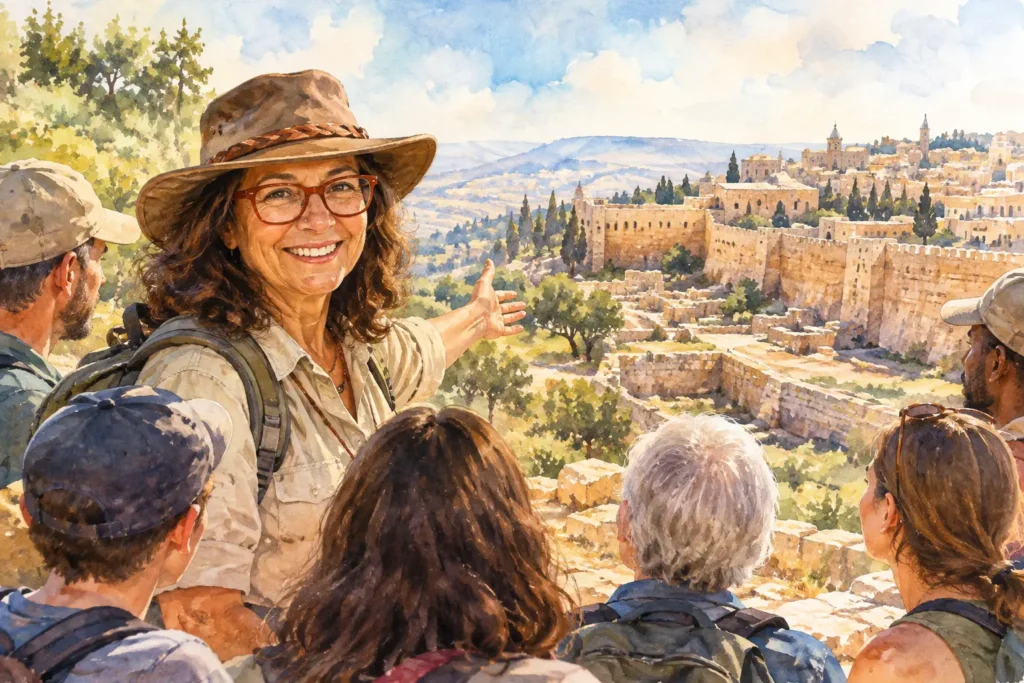
But How Did They Actually Build Ancient Israel?
At the foot of a monumental wall, beside a desert cistern, or looking across an ancient harbor, travelers often ask the question that turns a pleasant visit into real curiosity: but how did they actually build? Not just who commissioned it, or when it was destroyed, but how people moved enormous stone blocks, found water where there was none, and created places that still command attention thousands of years later.
That question is one of the best ways to experience Israel. The country’s archaeology is not a collection of isolated ruins. It is a record of human problem-solving under very different conditions: crowded hilltop cities, dry desert cliffs, coastal storms, fertile valleys, and sacred landscapes shaped over generations. Once you begin looking at a site as a construction project, the stones start telling a far more personal story.
But How Did They Actually Build With Stone?
In many of Israel’s ancient sites, the first answer is local stone. Builders generally worked with what the landscape provided. In the Jerusalem hills, pale limestone was abundant. Along the coast, kurkar, a sandy sandstone, could be quarried. In the north and Golan, dark volcanic basalt gave structures a completely different appearance and demanded different techniques.
Stone was not simply picked up and stacked. Quarry marks, partly cut blocks, and tool traces show a careful sequence. Workers identified a natural seam, cut channels around the intended block, and used wedges or levers to free it. The stone was then shaped close to the quarry whenever possible. Moving a finished block was difficult enough. Moving it uphill or over uneven ground required ramps, rollers, sledges, ropes, teams of workers, and a great deal of planning.
At major Second Temple-period sites, the scale can feel almost impossible. Some of the largest building stones in Jerusalem weigh many tons. Their precisely dressed faces and distinctive margins are evidence of skilled quarrying and masonry, not mystery. Labor was organized, tools were specialized, and the work was measured with remarkable care. A wall that appears simple from a distance may reveal tightly fitted courses, drainage details, retaining systems, and subtle adjustments to the slope beneath it.
The impressive part is not that ancient builders had a secret modern technology. It is that they understood force, friction, balance, geometry, and teamwork exceptionally well. They also had time. A royal project or major religious complex could employ large groups over years, with quarry workers, haulers, stonecutters, surveyors, carpenters, water carriers, cooks, and administrators all contributing to the finished place.
A wall was rarely just a wall
When you stand at an archaeological site, it helps to ask what is behind and beneath the visible stones. Ancient fortifications were often retaining walls as much as defensive walls. They held back fills of earth and smaller stones, creating level platforms where none naturally existed. Staircases followed the terrain. Gates channeled people through controlled entrances. Towers gave visibility across valleys and roads.
Builders also reused materials constantly. A finely cut stone in a later wall may have begun life in an earlier structure. Columns became thresholds. Decorative fragments became building fill. This was practical, economical, and common. Archaeology can therefore feel like reading a manuscript that has been edited many times, with each generation writing over parts of the one before it.
Water Was Part of the Architecture
In a land with long dry seasons, water was not an afterthought. It shaped where people could live and how they built. Many ancient cities were positioned near springs, wells, seasonal streams, or routes that could support trade and travel. Yet natural sources were not always enough, especially during a siege or on a high desert plateau.
That is why cisterns are among the most revealing features at sites such as Masada and in old urban neighborhoods. A cistern is more than a hole in the ground. It is an engineered storage system. Rainwater was directed from roofs, courtyards, slopes, or channels into plastered underground chambers. The plaster helped reduce leakage, while settling areas could keep heavier sediment from reaching the main reservoir.
Masada makes this ingenuity especially vivid. The fortress stands above the desert, where the view is dramatic but water is scarce. Its water system collected runoff from surrounding wadis and directed it into large cisterns cut into the cliffside. Water then had to be carried upward and managed carefully. The site’s location offered protection and commanding views, but it also created a daily logistical challenge. That trade-off is central to understanding it.
In Jerusalem, Caesarea, and other major centers, water systems could become even more ambitious. Channels, reservoirs, pools, and aqueducts supplied homes, markets, workshops, bathhouses, gardens, and public spaces. Gravity did much of the work, but only after surveyors established a route with an extremely gentle and consistent slope. Too steep, and the water would damage the channel. Too flat, and it would not flow reliably.
Building at the Coast Meant Working With the Sea
Caesarea offers a different kind of construction lesson. Creating a functioning harbor on an exposed Mediterranean shore required builders to manage waves, currents, and shifting sand. It was a statement of ambition, but it was also an engineering experiment.
Roman builders used a form of concrete that could set in wet conditions, helping them construct large harbor works. Breakwaters protected ships and created calmer water within the port. Warehouses, streets, entertainment spaces, bathhouses, and water infrastructure turned the coastline into a thriving urban center.
The sea, however, never follows a plan forever. Coastal construction is always a negotiation with nature. Storms, erosion, earthquakes, and changing shorelines can alter even the most carefully made harbor. Seeing Caesarea with an experienced guide means noticing both the grand vision and its limits. It is a reminder that ancient engineering was brilliant, but never invincible.
What Ruins Can and Cannot Tell Us
It is tempting to look at a surviving wall and imagine that we are seeing the place exactly as it was. Usually, we are not. Wooden beams decay. Roofs collapse. Plaster fades. Paint disappears. Markets, voices, fabric, food, and smells leave little visible trace. What remains is often the durable skeleton of a much richer world.
Archaeologists reconstruct building methods by combining evidence: quarry scars, unfinished stones, foundation trenches, tool marks, soil layers, ancient written descriptions, and comparisons with similar structures. Sometimes the evidence is wonderfully clear. Sometimes there are several plausible explanations. The honest answer to a good question may be, “We know this part, but the rest is still debated.”
That uncertainty does not make a visit less meaningful. It makes it more human. Ancient builders were not anonymous figures performing miracles. They made decisions based on the materials, money, labor, weather, beliefs, and pressures of their own time. They repaired failures, adapted older structures, and built for needs that were practical as well as symbolic.
See the Work, Not Only the Monument
The most rewarding site visits slow down long enough to notice the details: a drainage channel beside a street, a change in stone size halfway up a wall, a worn threshold, a quarry face, or the cool air inside a water reservoir. These are often the clues that reveal how a place functioned.
A customized journey can connect those clues across very different landscapes. One day might begin among Jerusalem’s monumental stonework, continue with the engineered water systems of the desert, and end on the coast where builders reshaped a shoreline. For travelers who have already seen the headline sites, this construction-focused lens can bring familiar places back to life and lead naturally toward less-visited discoveries.
At Patchwork Israel, I love building an itinerary around the questions you cannot stop asking. Bring your curiosity, comfortable shoes, and willingness to look closely. The ancient builders left more than monuments. They left evidence of patience, skill, and imagination waiting quietly in the stone.


Get the latest blog updates in your inbox.