
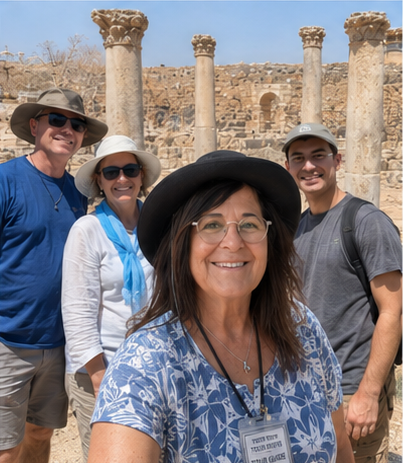
10 Best Archaeological Places in Israel
Some archaeological sites impress you with scale. Others stay with you because a single stone, street, or inscription suddenly makes thousands of years feel close. That is what makes the best archaeological places in Israel so rewarding – they are not just old places. They are places where history still feels active, layered, and surprisingly personal.
If you are planning a trip around archaeology, the real question is not simply which sites are most famous. It is which sites fit your interests, pace, and tolerance for heat, climbing, and crowds. Some travelers want the headline locations. Others have already seen the classics and want a sharper, more in-depth route with lesser-known corners and better context. Israel is excellent for both.
What makes the best archaeological places in Israel worth your time
Israel packs an unusual amount of history into a small geographic space. In a single trip, you can stand in a Bronze Age gate, walk a Roman street, examine Byzantine mosaics, and finish the day in a Crusader city or desert fortress. That variety is part of the appeal, but it also means the “best” site depends on what kind of story you want to follow.
Some places are strongest for biblical history. Others shine because of Roman urban planning, desert engineering, early religious communities, or extraordinary preservation. A smart itinerary balances scale and detail. Too many major sites in a row can start to blur together. Pairing one iconic site with one quieter, more focused stop often creates a much richer day.
1. Jerusalem Archaeological Park and the City of David
If you want archaeology that feels immediate, Jerusalem belongs near the top. The area around the Southern Wall, the Davidson Archaeological Park, and the City of David offers one of the clearest ways to understand how ancient Jerusalem developed across different periods.
This is not a single neat ruin. It is a layered landscape, and that is exactly why it matters. You see monumental stones, drainage channels, ritual baths, stepped structures, and street levels that hint at how people moved, worshiped, and governed here. For many visitors, this is where archaeological evidence stops feeling abstract.
It is also a site where guidance makes a real difference. Without context, you can miss the significance of what looks like broken walls and scattered paving. With the right explanation, the whole area becomes a story about urban growth, pilgrimage, destruction, and continuity.
2. Caesarea National Park
Caesarea works beautifully for travelers who want archaeology without sacrificing comfort or visual drama. Set along the Mediterranean, it combines Roman ambition, Crusader remains, harbor engineering, and sea views that make the site feel open and cinematic.
Herod built on a grand scale here, and you can still sense it. The theater, hippodrome, palace area, bathhouses, and port remains show how power was displayed in stone. Unlike some sites that require a lot of imagination, Caesarea is generous. Its layout is easier to read, and that makes it especially good for families, first-time visitors, and business travelers trying to fit something meaningful into a shorter day.
The trade-off is that it can feel more curated than rugged. If you love raw excavation areas and the thrill of piecing things together, another site may speak to you more deeply. But for sheer clarity and range, Caesarea is one of the best archaeological places in Israel.
3. Masada
Masada is famous for good reason, but it earns its place on more than reputation. The setting above the Dead Sea is unforgettable, and the archaeology is stronger than many people expect. Palaces, storerooms, bathhouses, casemate walls, and camps below the plateau give the story physical weight.
This is a site where landscape and archaeology are inseparable. The desert isolation helps explain why the mountaintop fortress was so strategic, and why the engineering required to build and attack it still impresses people today. If you like places where terrain is part of the interpretation, Masada is hard to beat.
It does, however, require planning. Sunrise visits are beautiful, and cooler months are far more pleasant. If hiking the Snake Path does not suit your group, the cable car keeps the site accessible. That flexibility matters, especially for multi-generational families or travelers who want the experience without a strenuous climb.
4. Beit She’an
For lovers of Roman and Byzantine archaeology, Beit She’an is often the site that surprises people most. The preservation is superb, and the city plan is legible in a way that helps you picture daily life rather than just monumental history.
You can walk colonnaded streets, see the theater, baths, temples, and civic spaces, and understand how a major urban center functioned. The effect is less about one dramatic moment and more about total immersion in an ancient cityscape. For travelers who have seen Roman sites elsewhere, Beit She’an still stands out because the setting and preservation are so strong.
It is also one of the most satisfying sites for people who like photography, wide views, and room to move. You do not feel boxed in. The site opens up slowly, and the lower city with the mound above adds depth to the visit.
5. Tel Megiddo
Megiddo appeals to travelers who enjoy complexity. This is not the easiest site to grasp on your own, but it is one of the most important. Layers from different eras, monumental gates, administrative areas, water systems, and long debates about chronology make it fascinating for anyone drawn to biblical and ancient Near Eastern history.
The challenge at Megiddo is that its significance is not always immediately obvious from the stones alone. This is where explanation matters. When guided well, the site becomes a master class in how archaeologists interpret power, trade, conflict, and urban development over centuries.
If you prefer sites that are instantly visual, Megiddo may feel more intellectual than emotional. But for travelers who want serious archaeological substance, it is an essential stop.
6. Tel Hazor
Hazor does not always make every traveler’s first list, which is a mistake. It was one of the great cities of the region, and the upper and lower city together help convey just how large and important it was. The scale alone tells you this was not a minor settlement.
What makes Hazor especially rewarding is the mix of monumental remains and a quieter atmosphere. You often have more mental space here than at the most famous sites. That can make it easier to absorb what you are seeing and ask better questions.
Hazor pairs well with travelers who have already visited Israel once and want a deeper route beyond the standard highlights. It rewards curiosity and patience.
7. Acre Old City
Acre is not always the first place people think of for archaeology, but it should be. Its underground Crusader halls, tunnels, fortifications, and layered old-city setting create a different kind of archaeological experience – one where the past sits inside a living urban fabric.
That matters because archaeology here does not feel isolated from modern life. You move between excavated spaces and an active city, which gives the visit energy. For travelers who enjoy history but also want atmosphere, food, and a strong sense of place, Acre is an excellent choice.
It is especially good for those who do not want a full day of exposed ruins under intense sun. Much of the experience feels more textured and urban.
8. Sepphoris
Sepphoris is one of Israel’s most rewarding sites if you care about art, daily life, and cultural layering. Its mosaics are a major draw, but the broader site offers streets, villas, water systems, public buildings, and a window into a city that developed across multiple periods.
There is a refinement to Sepphoris that feels different from fortress sites or giant tells. It is a place to slow down. The mosaic work, especially, invites close looking rather than quick box-checking. If your interest leans toward craftsmanship, domestic life, and the meeting of cultures, Sepphoris can be a highlight.
9. Avdat
In the Negev, Avdat gives you Nabataean and Byzantine archaeology in a dramatic desert setting. The church remains, wine presses, terraces, and urban layout reveal how people built sophisticated lives in a landscape that first appears unforgiving.
This is one of those sites that grows stronger when paired with the broader desert context. It is not just about ruins. It is about trade routes, adaptation, water management, and the intelligence required to thrive here. For travelers who want archaeology plus open landscapes and a sense of remoteness, Avdat is a wonderful fit.
10. Bet Guvrin-Maresha
Bet Guvrin-Maresha is ideal for travelers who like archaeology you can physically enter and experience. The underground complexes, caves, bell caves, and burial areas create a visit that feels interactive and memorable.
It is especially good for families and repeat visitors who want something different from the usual monumental ruins. The site has depth, but it also has an element of discovery that keeps the experience lively. You are not only looking out over foundations. You are moving through spaces carved and used by ancient communities.
How to choose the right sites for your trip
If this is your first visit, a combination of Jerusalem, Caesarea, Masada, and Beit She’an gives you a strong foundation and real variety. If you have been to Israel before, adding Hazor, Sepphoris, Avdat, or Bet Guvrin-Maresha can make the trip feel fresh and more personal.
Season matters more than many travelers expect. Desert sites are best approached early and thoughtfully. Some tells demand imagination and explanation. Others are easier for independent visitors. Families may prefer places with visual clarity and room to roam, while serious history lovers often enjoy the more interpretive challenge of multi-layered sites.
This is where a customized route changes everything. The best day is not the one with the most stops. It is the one built around your interests, energy, and curiosity. At Patchwork Israel, that often means mixing a headline archaeological site with a lesser-known place, a scenic drive, or a conversation that brings the ancient and modern landscape into dialogue.
The best archaeological places in Israel are not only where the ruins are biggest or oldest. They are the places that make you look longer, ask better questions, and leave with the feeling that the land still has more to show you.

10 Best Archaeological Places in Israel
Some archaeological sites impress you with scale. Others stay with you because a single stone, street, or inscription suddenly makes thousands of years feel close. That is what makes the best archaeological places in Israel so rewarding – they are not just old places. They are places where history still feels active, layered, and surprisingly personal.
If you are planning a trip around archaeology, the real question is not simply which sites are most famous. It is which sites fit your interests, pace, and tolerance for heat, climbing, and crowds. Some travelers want the headline locations. Others have already seen the classics and want a sharper, more in-depth route with lesser-known corners and better context. Israel is excellent for both.
What makes the best archaeological places in Israel worth your time
Israel packs an unusual amount of history into a small geographic space. In a single trip, you can stand in a Bronze Age gate, walk a Roman street, examine Byzantine mosaics, and finish the day in a Crusader city or desert fortress. That variety is part of the appeal, but it also means the “best” site depends on what kind of story you want to follow.
Some places are strongest for biblical history. Others shine because of Roman urban planning, desert engineering, early religious communities, or extraordinary preservation. A smart itinerary balances scale and detail. Too many major sites in a row can start to blur together. Pairing one iconic site with one quieter, more focused stop often creates a much richer day.
1. Jerusalem Archaeological Park and the City of David
If you want archaeology that feels immediate, Jerusalem belongs near the top. The area around the Southern Wall, the Davidson Archaeological Park, and the City of David offers one of the clearest ways to understand how ancient Jerusalem developed across different periods.
This is not a single neat ruin. It is a layered landscape, and that is exactly why it matters. You see monumental stones, drainage channels, ritual baths, stepped structures, and street levels that hint at how people moved, worshiped, and governed here. For many visitors, this is where archaeological evidence stops feeling abstract.
It is also a site where guidance makes a real difference. Without context, you can miss the significance of what looks like broken walls and scattered paving. With the right explanation, the whole area becomes a story about urban growth, pilgrimage, destruction, and continuity.
2. Caesarea National Park
Caesarea works beautifully for travelers who want archaeology without sacrificing comfort or visual drama. Set along the Mediterranean, it combines Roman ambition, Crusader remains, harbor engineering, and sea views that make the site feel open and cinematic.
Herod built on a grand scale here, and you can still sense it. The theater, hippodrome, palace area, bathhouses, and port remains show how power was displayed in stone. Unlike some sites that require a lot of imagination, Caesarea is generous. Its layout is easier to read, and that makes it especially good for families, first-time visitors, and business travelers trying to fit something meaningful into a shorter day.
The trade-off is that it can feel more curated than rugged. If you love raw excavation areas and the thrill of piecing things together, another site may speak to you more deeply. But for sheer clarity and range, Caesarea is one of the best archaeological places in Israel.
3. Masada
Masada is famous for good reason, but it earns its place on more than reputation. The setting above the Dead Sea is unforgettable, and the archaeology is stronger than many people expect. Palaces, storerooms, bathhouses, casemate walls, and camps below the plateau give the story physical weight.
This is a site where landscape and archaeology are inseparable. The desert isolation helps explain why the mountaintop fortress was so strategic, and why the engineering required to build and attack it still impresses people today. If you like places where terrain is part of the interpretation, Masada is hard to beat.
It does, however, require planning. Sunrise visits are beautiful, and cooler months are far more pleasant. If hiking the Snake Path does not suit your group, the cable car keeps the site accessible. That flexibility matters, especially for multi-generational families or travelers who want the experience without a strenuous climb.
4. Beit She’an
For lovers of Roman and Byzantine archaeology, Beit She’an is often the site that surprises people most. The preservation is superb, and the city plan is legible in a way that helps you picture daily life rather than just monumental history.
You can walk colonnaded streets, see the theater, baths, temples, and civic spaces, and understand how a major urban center functioned. The effect is less about one dramatic moment and more about total immersion in an ancient cityscape. For travelers who have seen Roman sites elsewhere, Beit She’an still stands out because the setting and preservation are so strong.
It is also one of the most satisfying sites for people who like photography, wide views, and room to move. You do not feel boxed in. The site opens up slowly, and the lower city with the mound above adds depth to the visit.
5. Tel Megiddo
Megiddo appeals to travelers who enjoy complexity. This is not the easiest site to grasp on your own, but it is one of the most important. Layers from different eras, monumental gates, administrative areas, water systems, and long debates about chronology make it fascinating for anyone drawn to biblical and ancient Near Eastern history.
The challenge at Megiddo is that its significance is not always immediately obvious from the stones alone. This is where explanation matters. When guided well, the site becomes a master class in how archaeologists interpret power, trade, conflict, and urban development over centuries.
If you prefer sites that are instantly visual, Megiddo may feel more intellectual than emotional. But for travelers who want serious archaeological substance, it is an essential stop.
6. Tel Hazor
Hazor does not always make every traveler’s first list, which is a mistake. It was one of the great cities of the region, and the upper and lower city together help convey just how large and important it was. The scale alone tells you this was not a minor settlement.
What makes Hazor especially rewarding is the mix of monumental remains and a quieter atmosphere. You often have more mental space here than at the most famous sites. That can make it easier to absorb what you are seeing and ask better questions.
Hazor pairs well with travelers who have already visited Israel once and want a deeper route beyond the standard highlights. It rewards curiosity and patience.
7. Acre Old City
Acre is not always the first place people think of for archaeology, but it should be. Its underground Crusader halls, tunnels, fortifications, and layered old-city setting create a different kind of archaeological experience – one where the past sits inside a living urban fabric.
That matters because archaeology here does not feel isolated from modern life. You move between excavated spaces and an active city, which gives the visit energy. For travelers who enjoy history but also want atmosphere, food, and a strong sense of place, Acre is an excellent choice.
It is especially good for those who do not want a full day of exposed ruins under intense sun. Much of the experience feels more textured and urban.
8. Sepphoris
Sepphoris is one of Israel’s most rewarding sites if you care about art, daily life, and cultural layering. Its mosaics are a major draw, but the broader site offers streets, villas, water systems, public buildings, and a window into a city that developed across multiple periods.
There is a refinement to Sepphoris that feels different from fortress sites or giant tells. It is a place to slow down. The mosaic work, especially, invites close looking rather than quick box-checking. If your interest leans toward craftsmanship, domestic life, and the meeting of cultures, Sepphoris can be a highlight.
9. Avdat
In the Negev, Avdat gives you Nabataean and Byzantine archaeology in a dramatic desert setting. The church remains, wine presses, terraces, and urban layout reveal how people built sophisticated lives in a landscape that first appears unforgiving.
This is one of those sites that grows stronger when paired with the broader desert context. It is not just about ruins. It is about trade routes, adaptation, water management, and the intelligence required to thrive here. For travelers who want archaeology plus open landscapes and a sense of remoteness, Avdat is a wonderful fit.
10. Bet Guvrin-Maresha
Bet Guvrin-Maresha is ideal for travelers who like archaeology you can physically enter and experience. The underground complexes, caves, bell caves, and burial areas create a visit that feels interactive and memorable.
It is especially good for families and repeat visitors who want something different from the usual monumental ruins. The site has depth, but it also has an element of discovery that keeps the experience lively. You are not only looking out over foundations. You are moving through spaces carved and used by ancient communities.
How to choose the right sites for your trip
If this is your first visit, a combination of Jerusalem, Caesarea, Masada, and Beit She’an gives you a strong foundation and real variety. If you have been to Israel before, adding Hazor, Sepphoris, Avdat, or Bet Guvrin-Maresha can make the trip feel fresh and more personal.
Season matters more than many travelers expect. Desert sites are best approached early and thoughtfully. Some tells demand imagination and explanation. Others are easier for independent visitors. Families may prefer places with visual clarity and room to roam, while serious history lovers often enjoy the more interpretive challenge of multi-layered sites.
This is where a customized route changes everything. The best day is not the one with the most stops. It is the one built around your interests, energy, and curiosity. At Patchwork Israel, that often means mixing a headline archaeological site with a lesser-known place, a scenic drive, or a conversation that brings the ancient and modern landscape into dialogue.
The best archaeological places in Israel are not only where the ruins are biggest or oldest. They are the places that make you look longer, ask better questions, and leave with the feeling that the land still has more to show you.



Get the latest blog updates in your inbox.