
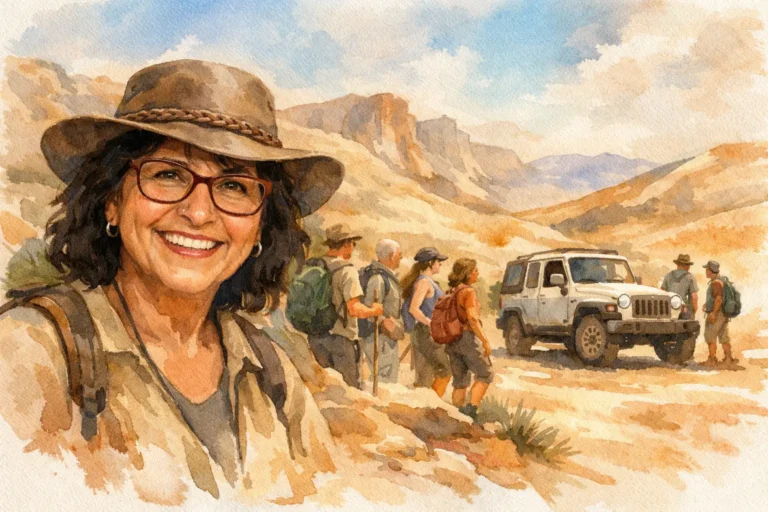
Israel Desert Jeep or Hiking: Which Fits You?
The first light on the Judean Desert can turn a pale ridge rose-gold in minutes. From a jeep, you may watch that change from a high overlook before continuing down an unmarked desert track. On foot, you notice the crunch of limestone, the tiny desert plants between rocks, and the silence that makes a distant bird sound close. For travelers asking Israel desert jeep or hiking, the better answer is rarely about being more adventurous. It is about how you want to experience the landscape, who is traveling with you, and what kind of day will stay with you long after the dust is off your shoes.
Israel’s desert is wonderfully varied. It holds broad craters, cliffside paths, hidden springs, ancient routes, dry riverbeds, and viewpoints that feel far from a busy itinerary. A private day lets you choose the right way into it rather than fitting your expectations around a fixed tour schedule.
Israel Desert Jeep or Hiking: The Real Choice
A desert jeep tour and a desert hike reveal different versions of the same place. A 4×4 gives you range. It can carry you over rough terrain, reach distant overlooks, and connect landscapes that would take hours or days to cover on foot. Hiking gives you intimacy. You move slowly enough to read the ground, feel the contours of a canyon, and understand why a particular spring, pass, or fortress was significant.
Neither option is automatically better. A family with grandparents and teenagers may find that a jeep day keeps everyone comfortable while still feeling genuinely wild. Experienced hikers might prefer the satisfaction of reaching a ridge under their own power. A couple celebrating a special trip may want a gentle sunrise walk followed by a scenic drive and a quiet desert picnic. The desert has room for all of it.
The most useful question is not, “Which activity is more exciting?” Ask instead: “What do I want the day to feel like?” Do you want to cover ground, pause often, and see changing vistas? Or do you want to slow down, challenge yourself a little, and feel immersed in every mile?
When a 4×4 Jeep Tour Is the Better Fit
A jeep is ideal when access is part of the experience. Desert tracks lead toward places that standard vehicles cannot comfortably reach: high plateaus, remote wadis, geological formations, and wide-open overlooks. The route itself becomes part of the story, with the changing terrain under the tires and a guide who knows when to stop for a view most travelers would pass without noticing.
It is also the smarter choice when time is limited. Business travelers with a free afternoon, visitors adding a desert day between Jerusalem and the Dead Sea, or repeat guests who have already seen the classic highlights can cover meaningful ground without spending the entire day walking. You can combine scenery with a short, manageable trail, an archaeological stop, a local food experience, or a swim where conditions permit.
Comfort matters too, and it should not be treated as a lesser form of travel. Desert heat, uneven surfaces, and long distances can make a full hike unsuitable for some visitors. A well-paced jeep tour offers shade, water, flexibility, and the option to enjoy extraordinary terrain without needing to be a serious hiker. It can work particularly well for multigenerational families, travelers recovering from an injury, or anyone who wants adventure without a demanding physical day.
That said, a jeep ride is not a theme-park attraction. The best off-roading is thoughtful and terrain-aware. It respects the landscape, follows appropriate routes, and leaves time to get out of the vehicle. A good guide will not simply drive from viewpoint to viewpoint. She will help you notice the desert’s geology, old travel routes, animal tracks, and the human stories embedded in a place that can look empty at first glance.
What a Jeep Day Feels Like
Expect a day with variety: a scenic climb, a stop above a deep canyon, perhaps tea or coffee in a quiet spot, and short walks tailored to your energy. You may visit areas that would be impractical to reach on a day hike, then step out at precisely the moments when the view calls for stillness. The pace is adjustable, which is its greatest strength.
When Hiking Is the Better Fit
Choose hiking when you want the desert to unfold at human speed. A trail changes your relationship with the landscape. You see the layers in the cliffs instead of just the cliffs themselves. You notice how a dry riverbed curves toward a narrow passage, why shade gathers in one bend of a canyon, and how quickly the light shifts across the rock.
Hiking is also a wonderful way to create a personal sense of achievement. That does not mean every hike needs to be strenuous. Israel offers gentle walks along crater rims, moderate canyon trails, and more challenging routes with elevation, ladders, or rocky descents. The right route depends on fitness, confidence on uneven ground, the season, and the ages of everyone in your party.
For heritage-minded travelers, walking can add emotional depth. Ancient paths were not designed around parking lots. Reaching a viewpoint or historic site by trail can make the setting feel more immediate. For travelers who come to Israel seeking reflection, hiking also creates something increasingly rare: uninterrupted time away from noise, screens, and crowded schedules.
A full hiking day does require more preparation than a jeep outing. Desert temperatures can change the calculation quickly, especially from late spring through early fall. Start times, route length, shade, water, footwear, and an honest assessment of ability all matter. A trail that looks short on a map may include loose stones, exposed climbs, or very little shelter from the sun.
What a Hiking Day Feels Like
A well-designed hike is not a race to a destination. It includes pauses to look, drink, photograph, and listen. It may end with a simple meal, a refreshing swim, or a drive to a sunset viewpoint. The reward is not only the final panorama. It is the accumulated memory of being fully present in the terrain.
The Best Answer May Be Both
For many private groups, the most satisfying desert day combines 4×4 travel with a hike. The jeep handles the long approach or rough access road, then you walk the section that deserves to be experienced slowly. This can mean a short canyon walk, a climb to a lookout, or a peaceful route toward a spring before returning to the vehicle.
This approach is especially useful for groups with different energy levels. One person may be eager for a longer walk while another prefers a short, scenic stroll. With thoughtful planning, no one has to spend the day waiting unhappily or pushing beyond what feels safe. The itinerary can offer a real sense of discovery without forcing every traveler into the same mold.
At Patchwork Israel, I often find that the best desert plans begin with a conversation rather than a route. Are you drawn to wide views or hidden places? Would you rather have an active morning and a relaxed afternoon? Is this your first visit, or are you ready to move beyond the familiar? Those details shape a day far better than choosing “jeep” or “hike” in isolation.
How to Choose for Your Group
Start with mobility and comfort, but do not stop there. A fit traveler may still prefer a jeep because they want to see remote terrain. Someone who does not consider themselves athletic may love a carefully chosen one- or two-hour walk. Consider the season, the length of your overall trip, and whether the desert day should be energizing or restorative.
Be clear about the experience you hope to have. If photography, broad landscapes, and access to less-traveled areas are priorities, a 4×4 often delivers more range. If you want physical engagement, quiet, and the pleasure of arriving somewhere on foot, hiking may be the stronger choice. If your group wants a little of each, build the day around both.
Also leave room for the unexpected. A brief desert rain can transform a route. Wildflowers may appear after a wet season. A particularly beautiful overlook may deserve an extra half hour. Private travel is valuable because it can respond to the day itself, not just a timetable.
The desert does not ask you to prove anything. Come by jeep, come on foot, or let the two meet in the middle. Choose the pace that gives you time to look up, breathe deeply, and recognize that Israel’s most memorable places are often the ones you experience on your own terms.

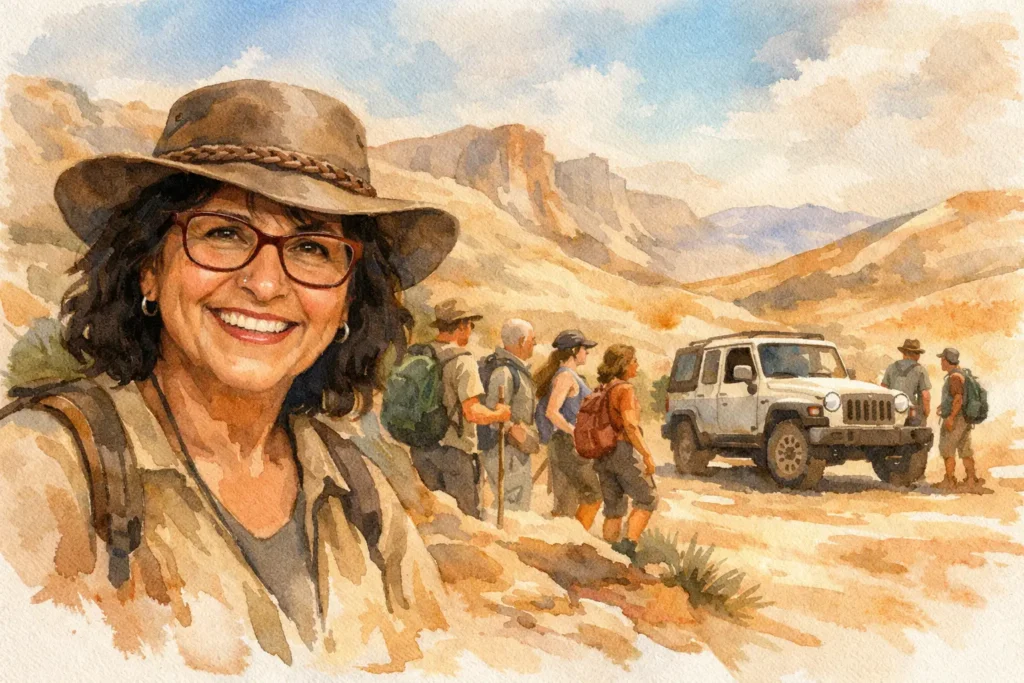
Israel Desert Jeep or Hiking: Which Fits You?
The first light on the Judean Desert can turn a pale ridge rose-gold in minutes. From a jeep, you may watch that change from a high overlook before continuing down an unmarked desert track. On foot, you notice the crunch of limestone, the tiny desert plants between rocks, and the silence that makes a distant bird sound close. For travelers asking Israel desert jeep or hiking, the better answer is rarely about being more adventurous. It is about how you want to experience the landscape, who is traveling with you, and what kind of day will stay with you long after the dust is off your shoes.
Israel’s desert is wonderfully varied. It holds broad craters, cliffside paths, hidden springs, ancient routes, dry riverbeds, and viewpoints that feel far from a busy itinerary. A private day lets you choose the right way into it rather than fitting your expectations around a fixed tour schedule.
Israel Desert Jeep or Hiking: The Real Choice
A desert jeep tour and a desert hike reveal different versions of the same place. A 4×4 gives you range. It can carry you over rough terrain, reach distant overlooks, and connect landscapes that would take hours or days to cover on foot. Hiking gives you intimacy. You move slowly enough to read the ground, feel the contours of a canyon, and understand why a particular spring, pass, or fortress was significant.
Neither option is automatically better. A family with grandparents and teenagers may find that a jeep day keeps everyone comfortable while still feeling genuinely wild. Experienced hikers might prefer the satisfaction of reaching a ridge under their own power. A couple celebrating a special trip may want a gentle sunrise walk followed by a scenic drive and a quiet desert picnic. The desert has room for all of it.
The most useful question is not, “Which activity is more exciting?” Ask instead: “What do I want the day to feel like?” Do you want to cover ground, pause often, and see changing vistas? Or do you want to slow down, challenge yourself a little, and feel immersed in every mile?
When a 4×4 Jeep Tour Is the Better Fit
A jeep is ideal when access is part of the experience. Desert tracks lead toward places that standard vehicles cannot comfortably reach: high plateaus, remote wadis, geological formations, and wide-open overlooks. The route itself becomes part of the story, with the changing terrain under the tires and a guide who knows when to stop for a view most travelers would pass without noticing.
It is also the smarter choice when time is limited. Business travelers with a free afternoon, visitors adding a desert day between Jerusalem and the Dead Sea, or repeat guests who have already seen the classic highlights can cover meaningful ground without spending the entire day walking. You can combine scenery with a short, manageable trail, an archaeological stop, a local food experience, or a swim where conditions permit.
Comfort matters too, and it should not be treated as a lesser form of travel. Desert heat, uneven surfaces, and long distances can make a full hike unsuitable for some visitors. A well-paced jeep tour offers shade, water, flexibility, and the option to enjoy extraordinary terrain without needing to be a serious hiker. It can work particularly well for multigenerational families, travelers recovering from an injury, or anyone who wants adventure without a demanding physical day.
That said, a jeep ride is not a theme-park attraction. The best off-roading is thoughtful and terrain-aware. It respects the landscape, follows appropriate routes, and leaves time to get out of the vehicle. A good guide will not simply drive from viewpoint to viewpoint. She will help you notice the desert’s geology, old travel routes, animal tracks, and the human stories embedded in a place that can look empty at first glance.
What a Jeep Day Feels Like
Expect a day with variety: a scenic climb, a stop above a deep canyon, perhaps tea or coffee in a quiet spot, and short walks tailored to your energy. You may visit areas that would be impractical to reach on a day hike, then step out at precisely the moments when the view calls for stillness. The pace is adjustable, which is its greatest strength.
When Hiking Is the Better Fit
Choose hiking when you want the desert to unfold at human speed. A trail changes your relationship with the landscape. You see the layers in the cliffs instead of just the cliffs themselves. You notice how a dry riverbed curves toward a narrow passage, why shade gathers in one bend of a canyon, and how quickly the light shifts across the rock.
Hiking is also a wonderful way to create a personal sense of achievement. That does not mean every hike needs to be strenuous. Israel offers gentle walks along crater rims, moderate canyon trails, and more challenging routes with elevation, ladders, or rocky descents. The right route depends on fitness, confidence on uneven ground, the season, and the ages of everyone in your party.
For heritage-minded travelers, walking can add emotional depth. Ancient paths were not designed around parking lots. Reaching a viewpoint or historic site by trail can make the setting feel more immediate. For travelers who come to Israel seeking reflection, hiking also creates something increasingly rare: uninterrupted time away from noise, screens, and crowded schedules.
A full hiking day does require more preparation than a jeep outing. Desert temperatures can change the calculation quickly, especially from late spring through early fall. Start times, route length, shade, water, footwear, and an honest assessment of ability all matter. A trail that looks short on a map may include loose stones, exposed climbs, or very little shelter from the sun.
What a Hiking Day Feels Like
A well-designed hike is not a race to a destination. It includes pauses to look, drink, photograph, and listen. It may end with a simple meal, a refreshing swim, or a drive to a sunset viewpoint. The reward is not only the final panorama. It is the accumulated memory of being fully present in the terrain.
The Best Answer May Be Both
For many private groups, the most satisfying desert day combines 4×4 travel with a hike. The jeep handles the long approach or rough access road, then you walk the section that deserves to be experienced slowly. This can mean a short canyon walk, a climb to a lookout, or a peaceful route toward a spring before returning to the vehicle.
This approach is especially useful for groups with different energy levels. One person may be eager for a longer walk while another prefers a short, scenic stroll. With thoughtful planning, no one has to spend the day waiting unhappily or pushing beyond what feels safe. The itinerary can offer a real sense of discovery without forcing every traveler into the same mold.
At Patchwork Israel, I often find that the best desert plans begin with a conversation rather than a route. Are you drawn to wide views or hidden places? Would you rather have an active morning and a relaxed afternoon? Is this your first visit, or are you ready to move beyond the familiar? Those details shape a day far better than choosing “jeep” or “hike” in isolation.
How to Choose for Your Group
Start with mobility and comfort, but do not stop there. A fit traveler may still prefer a jeep because they want to see remote terrain. Someone who does not consider themselves athletic may love a carefully chosen one- or two-hour walk. Consider the season, the length of your overall trip, and whether the desert day should be energizing or restorative.
Be clear about the experience you hope to have. If photography, broad landscapes, and access to less-traveled areas are priorities, a 4×4 often delivers more range. If you want physical engagement, quiet, and the pleasure of arriving somewhere on foot, hiking may be the stronger choice. If your group wants a little of each, build the day around both.
Also leave room for the unexpected. A brief desert rain can transform a route. Wildflowers may appear after a wet season. A particularly beautiful overlook may deserve an extra half hour. Private travel is valuable because it can respond to the day itself, not just a timetable.
The desert does not ask you to prove anything. Come by jeep, come on foot, or let the two meet in the middle. Choose the pace that gives you time to look up, breathe deeply, and recognize that Israel’s most memorable places are often the ones you experience on your own terms.
Get the latest blog updates in your inbox.