Small Group Israel Seminars That Stay With You
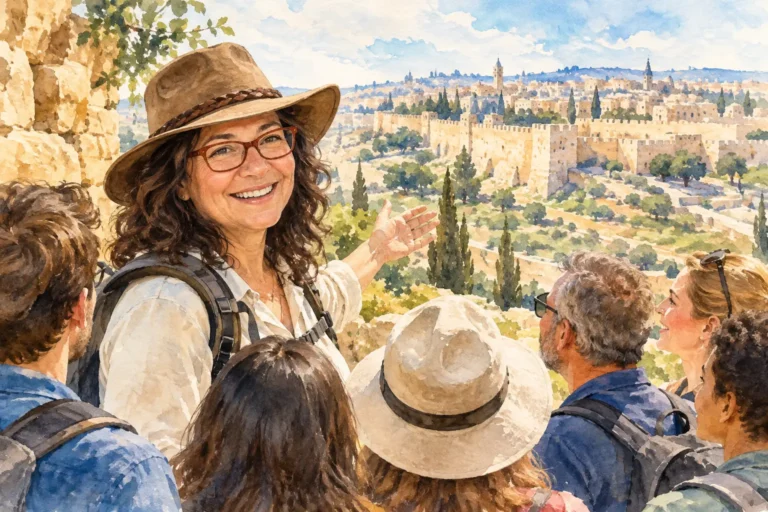
A meaningful Israel visit is rarely defined by how many landmarks you checked off. It is defined by the moment a stone street, a shared meal, a hilltop view, or an honest conversation makes the country feel personal. Small group Israel seminars create room for those moments. They combine guided travel with thoughtful learning, allowing your group to ask better questions, follow its curiosity, and experience Israel as a living, layered place.
For families, friends, congregations, professional visitors, and educational groups, a seminar can be far more memorable than a standard coach itinerary. The difference is not simply group size. It is the ability to shape each day around the people traveling together.
What Makes a Small Group Seminar Different?
A small group seminar is not a lecture attached to a vacation. It is a guided learning experience designed around a shared interest, whether that interest is Jewish heritage, Christian history, archaeology, food, innovation, desert landscapes, contemporary life, or the many communities that give Israel its texture.
With a smaller group, there is time to pause. A question raised at an ancient site can become the theme of the afternoon. A visit to a market can lead to a cooking workshop. A planned walk can become a conversation about the landscape, the people who shaped it, and the traditions that continue there. Rather than moving every 20 minutes because the bus schedule says so, the day can breathe.
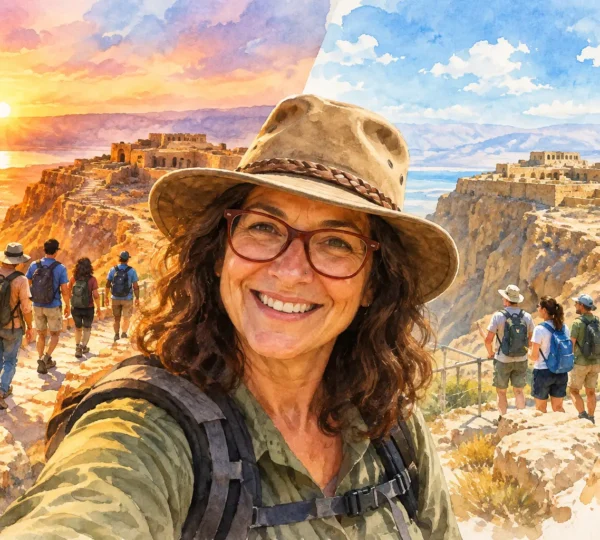
This format works especially well for travelers who have visited Israel before. Jerusalem, Masada, the Dead Sea, Caesarea, Jaffa, and Tel Aviv remain essential for many visitors, but returning travelers often want to go beyond the headline sites. They may be ready for a deeper look at a familiar neighborhood, a less-visited archaeological setting, a farm visit, a local artisan workshop, or a hike that reveals a side of the country most travelers miss.
Start With a Question, Not a Fixed Itinerary
The best seminars begin with a clear question: What does your group want to understand, feel, or do together?
A multigenerational family may want to connect personal heritage with hands-on experiences that keep younger travelers engaged. A church group may want time for reflection at significant places, balanced with a fuller understanding of the land and its everyday rhythms. A business group with only one free day may need an experience that is short, well-paced, and genuinely substantial rather than a rushed highlights tour.
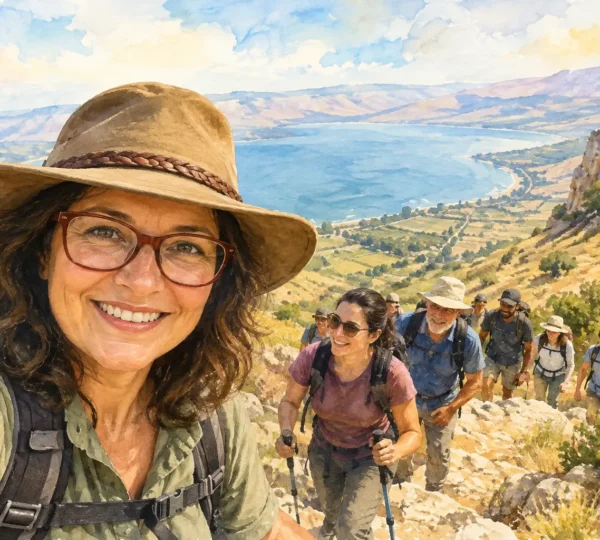
That question guides the itinerary. It determines whether a morning in Jerusalem needs more time for history and spiritual reflection, whether the Galilee should include a nature walk, or whether a coastal day is best centered on food, architecture, and old port cities. It also helps decide what to leave out. A good seminar is not made better by cramming in one more stop.
At Patchwork Israel, customized planning means that the route, pace, and level of discussion can reflect your group. Some travelers want a detailed historical framework. Others prefer learning through stories, landscapes, conversations, and activities. Both approaches can be meaningful when the guide knows how to connect the pieces.
Learning Happens Beyond the Lecture Room
A seminar may include formal talks or discussions, but its strongest lessons often happen in the field. Standing above an ancient route makes geography easier to understand than a map alone. Walking through a neighborhood reveals how architecture, faith, migration, food, and family life intersect. Tasting something made by the person who explains it gives culture a human voice.
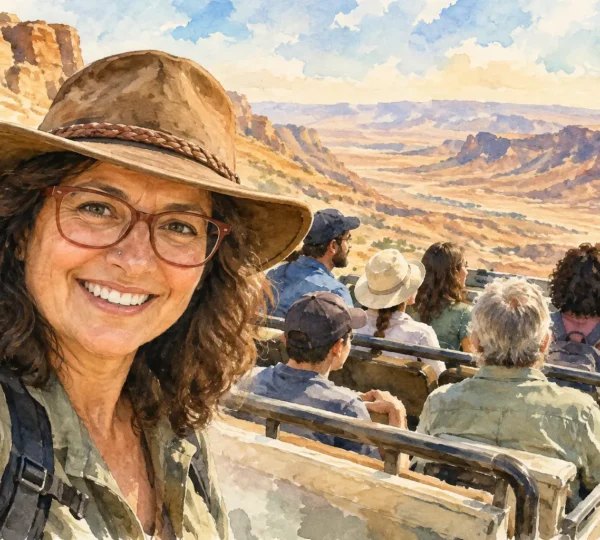
The possibilities are broad, but the right choices depend on the group. A food-focused seminar might pair market exploration with baking, cooking, or foraging. A heritage-centered program might weave together sacred places, museums, archaeological sites, and conversations with people whose daily lives add present-day context. An active group may combine learning with desert hiking, a 4×4 route, sailing, or a visit to a mountain region.
Hands-on activities are not filler between serious sites. A mosaic-making session can illuminate the materials and visual language seen in ancient places. Camel riding can open a practical discussion of desert travel and ecology. A culinary workshop can tell a story of ingredients, seasons, family traditions, and regional influences. The activity should always support the purpose of the day, not distract from it.
The Value of a Guide Who Can Read the Room
Even an excellent itinerary needs a guide who can adapt it in real time. A seminar group may arrive with different levels of knowledge, energy, mobility, and interest. One traveler wants to examine every inscription. Another is moved by the quiet of a chapel, the expanse of the Negev, or a conversation over coffee. The guide’s job is to make room for both without making anyone feel left behind.
That takes more than knowing dates and directions. It takes years of field experience, a confident command of the country’s geography and history, and the judgment to know when to explain, when to ask a question, and when to let a place speak for itself.
It also means being realistic. A small group can be wonderfully flexible, but flexibility is not the same as trying to do everything. Summer heat may call for earlier starts, shaded sites, and a slower afternoon. A family with children or older adults may favor shorter walks and longer stops. A group with strong hikers can take on a more demanding trail. The best plan is one that feels generous, not exhausting.
Create Space for Real Conversation
Many travelers come to Israel with a personal connection, a faith connection, family stories, or a lifetime of questions. Others arrive simply curious and want to understand more than what they can read on a plaque. Small groups make those conversations possible.
Depending on interests and availability, a seminar can include encounters with people working in fields such as agriculture, technology, education, art, culinary craft, archaeology, or architecture. These visits are valuable because they introduce perspectives that cannot be packaged into a museum label. They also require thoughtful planning, clear expectations, and respect for hosts’ time and privacy.
The aim is not to turn people into exhibits. It is to create an informed, human exchange. Sometimes a short visit to a workshop or a conversation around a table becomes the part of the trip people discuss for years afterward.
How Long Should a Seminar Be?
There is no single ideal length. A focused half-day or full-day seminar can add depth to a business trip or extend a family gathering. Two or three days allow a stronger theme to develop, with time to connect city and landscape, ancient history and present-day life, learning and recreation.
For groups staying longer, a seminar can become the organizing idea for an entire journey. One day might begin in Jerusalem, another along the coast, and another in the desert or north. The key is continuity. Each day should add a new layer rather than repeat the same kind of experience in a different location.
A group of eight can move very differently from a group of 20, and that matters. Intimate groups can often enter smaller venues, sit around one table, and make decisions quickly. Larger educational groups need more structure, but they can still have a strong seminar identity when the program is carefully paced and led by experienced professionals.
Plan for the People in Front of You
The most successful small group Israel seminars are personal without being overly programmed. They make room for a favorite family story, a religious observance, a birthday meal, an accessible route, an unexpected interest in local food, or simply an extra half hour at a view that has captured the group’s attention.
When planning, share what your group already knows and what it hopes to explore. Mention physical needs, food preferences, meaningful places, previous visits, and the kind of day everyone enjoys. Those details are not minor logistics. They are the material from which a thoughtful seminar is built.
Israel rewards travelers who slow down enough to notice its many layers. Give your group the space to ask, listen, walk, taste, and reflect, and the journey can become something much more lasting than a collection of photographs.

Small Group Israel Seminars That Stay With You
A meaningful Israel visit is rarely defined by how many landmarks you checked off. It is defined by the moment a stone street, a shared meal, a hilltop view, or an honest conversation makes the country feel personal. Small group Israel seminars create room for those moments. They combine guided travel with thoughtful learning, allowing your group to ask better questions, follow its curiosity, and experience Israel as a living, layered place.
For families, friends, congregations, professional visitors, and educational groups, a seminar can be far more memorable than a standard coach itinerary. The difference is not simply group size. It is the ability to shape each day around the people traveling together.
What Makes a Small Group Seminar Different?
A small group seminar is not a lecture attached to a vacation. It is a guided learning experience designed around a shared interest, whether that interest is Jewish heritage, Christian history, archaeology, food, innovation, desert landscapes, contemporary life, or the many communities that give Israel its texture.
With a smaller group, there is time to pause. A question raised at an ancient site can become the theme of the afternoon. A visit to a market can lead to a cooking workshop. A planned walk can become a conversation about the landscape, the people who shaped it, and the traditions that continue there. Rather than moving every 20 minutes because the bus schedule says so, the day can breathe.
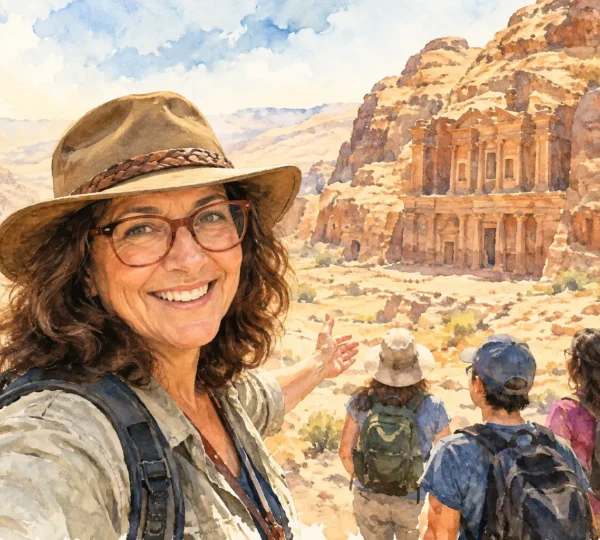
This format works especially well for travelers who have visited Israel before. Jerusalem, Masada, the Dead Sea, Caesarea, Jaffa, and Tel Aviv remain essential for many visitors, but returning travelers often want to go beyond the headline sites. They may be ready for a deeper look at a familiar neighborhood, a less-visited archaeological setting, a farm visit, a local artisan workshop, or a hike that reveals a side of the country most travelers miss.
Start With a Question, Not a Fixed Itinerary
The best seminars begin with a clear question: What does your group want to understand, feel, or do together?
A multigenerational family may want to connect personal heritage with hands-on experiences that keep younger travelers engaged. A church group may want time for reflection at significant places, balanced with a fuller understanding of the land and its everyday rhythms. A business group with only one free day may need an experience that is short, well-paced, and genuinely substantial rather than a rushed highlights tour.
That question guides the itinerary. It determines whether a morning in Jerusalem needs more time for history and spiritual reflection, whether the Galilee should include a nature walk, or whether a coastal day is best centered on food, architecture, and old port cities. It also helps decide what to leave out. A good seminar is not made better by cramming in one more stop.
At Patchwork Israel, customized planning means that the route, pace, and level of discussion can reflect your group. Some travelers want a detailed historical framework. Others prefer learning through stories, landscapes, conversations, and activities. Both approaches can be meaningful when the guide knows how to connect the pieces.
Learning Happens Beyond the Lecture Room
A seminar may include formal talks or discussions, but its strongest lessons often happen in the field. Standing above an ancient route makes geography easier to understand than a map alone. Walking through a neighborhood reveals how architecture, faith, migration, food, and family life intersect. Tasting something made by the person who explains it gives culture a human voice.
The possibilities are broad, but the right choices depend on the group. A food-focused seminar might pair market exploration with baking, cooking, or foraging. A heritage-centered program might weave together sacred places, museums, archaeological sites, and conversations with people whose daily lives add present-day context. An active group may combine learning with desert hiking, a 4×4 route, sailing, or a visit to a mountain region.
Hands-on activities are not filler between serious sites. A mosaic-making session can illuminate the materials and visual language seen in ancient places. Camel riding can open a practical discussion of desert travel and ecology. A culinary workshop can tell a story of ingredients, seasons, family traditions, and regional influences. The activity should always support the purpose of the day, not distract from it.
The Value of a Guide Who Can Read the Room
Even an excellent itinerary needs a guide who can adapt it in real time. A seminar group may arrive with different levels of knowledge, energy, mobility, and interest. One traveler wants to examine every inscription. Another is moved by the quiet of a chapel, the expanse of the Negev, or a conversation over coffee. The guide’s job is to make room for both without making anyone feel left behind.
That takes more than knowing dates and directions. It takes years of field experience, a confident command of the country’s geography and history, and the judgment to know when to explain, when to ask a question, and when to let a place speak for itself.
It also means being realistic. A small group can be wonderfully flexible, but flexibility is not the same as trying to do everything. Summer heat may call for earlier starts, shaded sites, and a slower afternoon. A family with children or older adults may favor shorter walks and longer stops. A group with strong hikers can take on a more demanding trail. The best plan is one that feels generous, not exhausting.
Create Space for Real Conversation
Many travelers come to Israel with a personal connection, a faith connection, family stories, or a lifetime of questions. Others arrive simply curious and want to understand more than what they can read on a plaque. Small groups make those conversations possible.
Depending on interests and availability, a seminar can include encounters with people working in fields such as agriculture, technology, education, art, culinary craft, archaeology, or architecture. These visits are valuable because they introduce perspectives that cannot be packaged into a museum label. They also require thoughtful planning, clear expectations, and respect for hosts’ time and privacy.
The aim is not to turn people into exhibits. It is to create an informed, human exchange. Sometimes a short visit to a workshop or a conversation around a table becomes the part of the trip people discuss for years afterward.
How Long Should a Seminar Be?
There is no single ideal length. A focused half-day or full-day seminar can add depth to a business trip or extend a family gathering. Two or three days allow a stronger theme to develop, with time to connect city and landscape, ancient history and present-day life, learning and recreation.
For groups staying longer, a seminar can become the organizing idea for an entire journey. One day might begin in Jerusalem, another along the coast, and another in the desert or north. The key is continuity. Each day should add a new layer rather than repeat the same kind of experience in a different location.
A group of eight can move very differently from a group of 20, and that matters. Intimate groups can often enter smaller venues, sit around one table, and make decisions quickly. Larger educational groups need more structure, but they can still have a strong seminar identity when the program is carefully paced and led by experienced professionals.
Plan for the People in Front of You
The most successful small group Israel seminars are personal without being overly programmed. They make room for a favorite family story, a religious observance, a birthday meal, an accessible route, an unexpected interest in local food, or simply an extra half hour at a view that has captured the group’s attention.
When planning, share what your group already knows and what it hopes to explore. Mention physical needs, food preferences, meaningful places, previous visits, and the kind of day everyone enjoys. Those details are not minor logistics. They are the material from which a thoughtful seminar is built.
Israel rewards travelers who slow down enough to notice its many layers. Give your group the space to ask, listen, walk, taste, and reflect, and the journey can become something much more lasting than a collection of photographs.
Get the latest blog updates in your inbox.