
Mount Arbel Hiking: A Galilee Trail Worth Taking
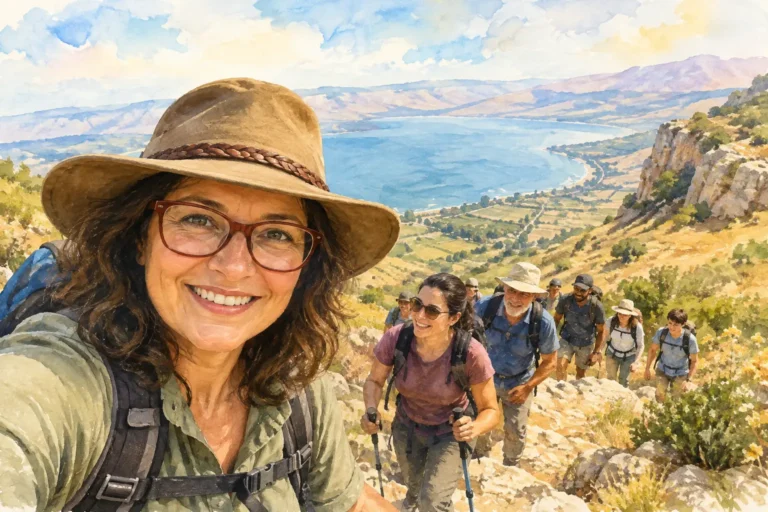
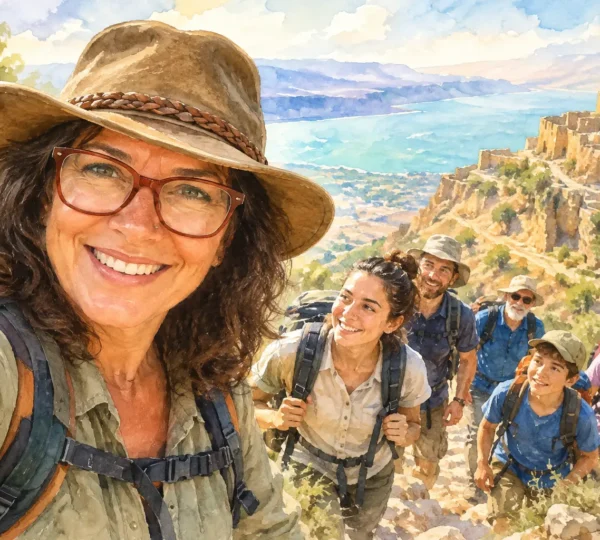
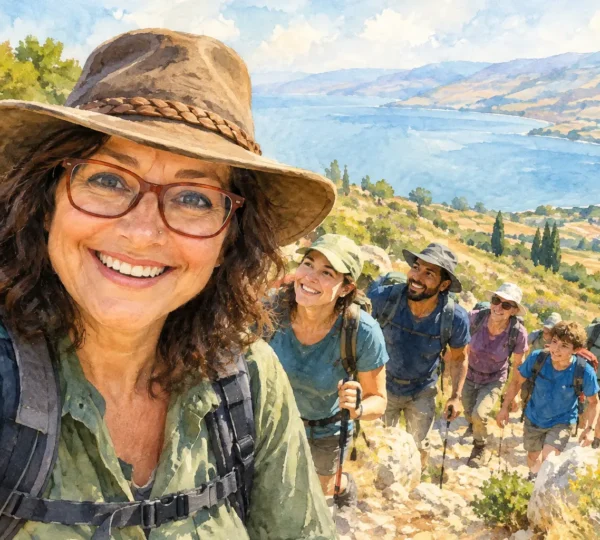
The first look down from Mount Arbel can stop a conversation mid-sentence. Far below, the Sea of Galilee catches the light; beyond it, the hills of the Golan rise on a clear day. Mount Arbel hiking is not simply a pleasant walk with a view. It is a short, memorable encounter with the dramatic geography, ancient stories, and working landscape of the Galilee.
For travelers who have already seen some of Israel’s headline sites, this is exactly the kind of place that adds another layer to a trip. It rewards curiosity, a little effort, and a willingness to trade a museum floor for limestone paths, birdsong, and a wide northern horizon.
Why Mount Arbel Feels Bigger Than Its Distance
Mount Arbel is a rocky ridge on the western side of the Sea of Galilee, near Tiberias. Its summit is not exceptionally high by global mountain standards, but its cliffs drop sharply toward the lake. That sudden change in elevation is what makes the viewpoint so powerful.
The mountain also carries an extraordinary sense of time. The area includes caves once used as hiding places, remains of an ancient synagogue in nearby Arbel village, and paths that reflect how people have moved through this landscape for centuries. A hike here can be shaped around scenery alone, but it becomes far richer when you pause to consider the communities, travelers, farmers, and pilgrims who have known these hills before us.
This is a particularly satisfying choice for families with active older children, couples looking for a half-day outdoors, heritage travelers, and business visitors with one free morning who want something more meaningful than another hotel breakfast. It can also fit beautifully into a Galilee day that includes a local meal, a lakeside stop, or an archaeological site.
Choosing Your Mount Arbel Hiking Route
There is no single Mount Arbel experience. The right route depends on your comfort with heights, fitness level, available time, weather, and whether you want a scenic walk or a more physical descent.
The summit viewpoint walk
The gentlest option begins at the national park area and follows relatively accessible paths toward the clifftop overlooks. This route is ideal for travelers who want the famous panorama without committing to a steep downhill hike. You can take your time, enjoy the views over the Sea of Galilee, and learn about the landscape without feeling rushed.
It is still a natural trail, not a city sidewalk. Sturdy shoes matter, and uneven stone can be slippery after rain. But for many visitors, this is the best balance of effort and reward.
The cliff descent
The descent from the upper ridge toward the valley is the more adventurous choice. In sections, hikers use fixed handholds and metal rungs to negotiate steep rock. It is exciting, scenic, and absolutely not the right place to test a fear of heights.
This route is best for confident hikers with good balance, proper footwear, and enough water. It works especially well when arranged as a point-to-point hike with transportation waiting at the lower end. Going down may sound easier than climbing, but on Mount Arbel the descent asks for concentration, strong knees, and careful pacing.
A customized Galilee hiking day
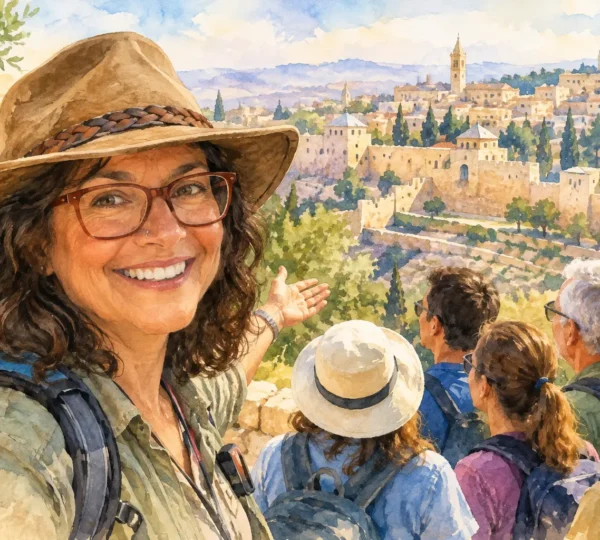
For some guests, the best route is neither the shortest nor the steepest. It may be a scenic ridge walk followed by a visit to the ancient synagogue, a quieter trail through nearby agricultural landscapes, or a combination of hiking and regional food. A private day makes it possible to adjust the pace for grandparents, teenagers, experienced walkers, or travelers who simply want more time to photograph the view.
At Patchwork Israel, I often see that the details make the day: starting early to avoid heat, choosing a trail that suits the group rather than a brochure, and leaving room for an unexpected stop that gives the Galilee its character.
What the Trail Asks of You
Mount Arbel is manageable for many travelers, but it should not be treated casually. The exposed rock holds heat, shade can be limited, and the more challenging routes are steep. In summer, an early start is far more comfortable and safer. In winter, rain can make limestone slick and trail conditions can change quickly.
Wear closed-toe hiking shoes or trail shoes with grip. Bring more water than you think you will need, along with sun protection, a hat, and a small snack. A walking pole can be helpful on the descent, although hands need to remain free on the sections with fixed aids.
There is also a practical question of direction. Some people prefer to descend the steep sections because it creates a dramatic finish and avoids an uphill scramble. Others find going down more intimidating and would rather climb with the rock in front of them. There is no universal answer. A guide who knows the trail can help determine which approach makes sense for your group on that particular day.
If anyone in your party has a significant fear of heights, limited mobility, or a knee injury, choose the summit walk and viewpoints rather than the cliff descent. The views are still magnificent. A good day outdoors should leave you exhilarated, not pressured into a route that does not fit.
When to Hike Mount Arbel
Spring is especially lovely, when the Galilee is green and wildflowers may brighten the slopes. It is also a popular season, so beginning early creates a quieter experience. Autumn brings clearer hiking weather after the summer heat begins to fade, while winter can offer crisp air and vivid views after rain, provided trail conditions are suitable.
Summer is possible, but timing is everything. Begin near sunrise, hike at an unhurried pace, and save the middle of the day for a shaded lunch or an indoor visit. The Sea of Galilee may look inviting from above, but the mountain itself can become very warm.
Visibility is part of the magic here. On a hazy day, you will still understand the drama of the cliffs. On a clear day, the landscape opens like a relief map: the lake, the surrounding ridges, cultivated fields, and distant peaks all become part of the story.
Looking Beyond the View
It is easy to arrive at Mount Arbel, take photographs, and leave with beautiful images. Yet the more lasting experience comes from reading the landscape. The Sea of Galilee below is not merely a postcard. It is a source of water, livelihood, travel, faith, and settlement. The cultivated patches on the slopes and valley floor are part of a region where people have adapted to changing terrain and climate for generations.
The mountain’s caves add another human dimension. They invite questions about shelter, survival, and the difficult realities of life in earlier periods. The nearby synagogue remains are equally moving in a quieter way: stones arranged for communal life, study, prayer, and gathering. Taken together, these places make Mount Arbel feel less like a scenic stop and more like a conversation between land and memory.
A guided hike can bring those connections into focus without turning the trail into a lecture. Sometimes the most memorable moment is simply stopping at an overlook, identifying the lines of the landscape, and letting the silence do some of the work.
Pairing Mount Arbel With the Right Day
Mount Arbel fits naturally into a northern itinerary, but it should not be overpacked. The hike itself deserves time. A rushed visit can turn a remarkable place into a box checked between destinations.
For a half-day, pair the mountain with Tiberias or a relaxed lunch nearby. For a fuller day, consider the ancient village remains, a short lakeside walk, or a culinary experience that introduces the ingredients and traditions of the Galilee. Travelers interested in spiritual history may wish to shape the day around meaningful places near the lake, while repeat visitors may prefer a quieter village, farm, or hidden viewpoint.
The best version of Mount Arbel hiking is the one that matches your travel style. Choose the cliff descent if you want a challenge, the summit trail if you want a glorious view with less exposure, or a custom route if your group has its own rhythm. Come prepared, give the mountain your attention, and leave enough space in the day for the view to stay with you long after the trail ends.

Mount Arbel Hiking: A Galilee Trail Worth Taking
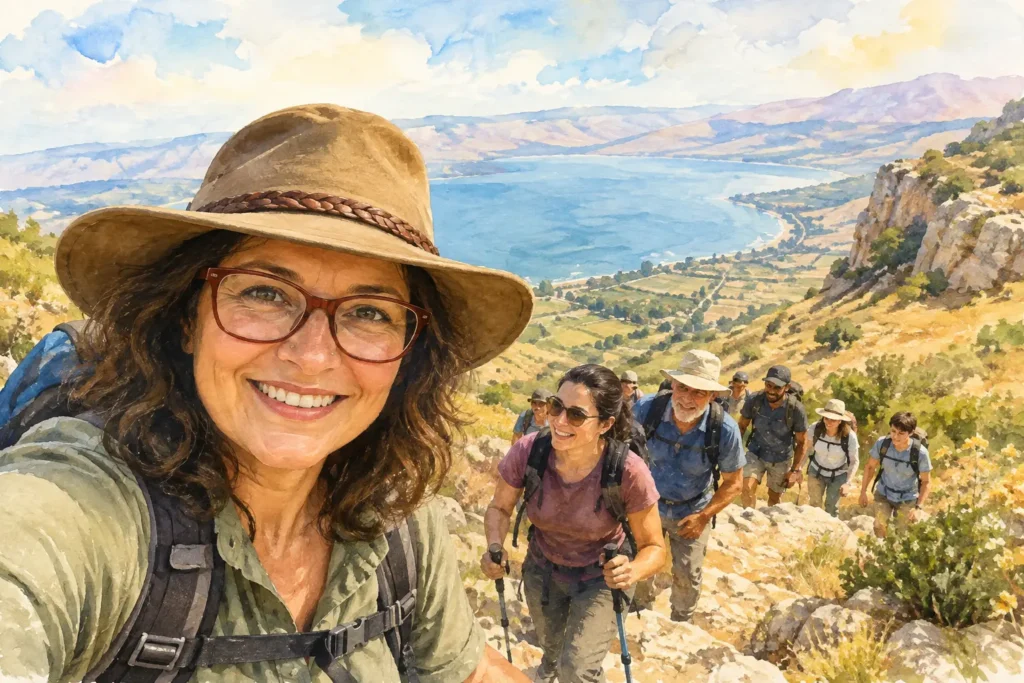
The first look down from Mount Arbel can stop a conversation mid-sentence. Far below, the Sea of Galilee catches the light; beyond it, the hills of the Golan rise on a clear day. Mount Arbel hiking is not simply a pleasant walk with a view. It is a short, memorable encounter with the dramatic geography, ancient stories, and working landscape of the Galilee.
For travelers who have already seen some of Israel’s headline sites, this is exactly the kind of place that adds another layer to a trip. It rewards curiosity, a little effort, and a willingness to trade a museum floor for limestone paths, birdsong, and a wide northern horizon.
Why Mount Arbel Feels Bigger Than Its Distance
Mount Arbel is a rocky ridge on the western side of the Sea of Galilee, near Tiberias. Its summit is not exceptionally high by global mountain standards, but its cliffs drop sharply toward the lake. That sudden change in elevation is what makes the viewpoint so powerful.
The mountain also carries an extraordinary sense of time. The area includes caves once used as hiding places, remains of an ancient synagogue in nearby Arbel village, and paths that reflect how people have moved through this landscape for centuries. A hike here can be shaped around scenery alone, but it becomes far richer when you pause to consider the communities, travelers, farmers, and pilgrims who have known these hills before us.
This is a particularly satisfying choice for families with active older children, couples looking for a half-day outdoors, heritage travelers, and business visitors with one free morning who want something more meaningful than another hotel breakfast. It can also fit beautifully into a Galilee day that includes a local meal, a lakeside stop, or an archaeological site.
Choosing Your Mount Arbel Hiking Route
There is no single Mount Arbel experience. The right route depends on your comfort with heights, fitness level, available time, weather, and whether you want a scenic walk or a more physical descent.
The summit viewpoint walk
The gentlest option begins at the national park area and follows relatively accessible paths toward the clifftop overlooks. This route is ideal for travelers who want the famous panorama without committing to a steep downhill hike. You can take your time, enjoy the views over the Sea of Galilee, and learn about the landscape without feeling rushed.
It is still a natural trail, not a city sidewalk. Sturdy shoes matter, and uneven stone can be slippery after rain. But for many visitors, this is the best balance of effort and reward.
The cliff descent
The descent from the upper ridge toward the valley is the more adventurous choice. In sections, hikers use fixed handholds and metal rungs to negotiate steep rock. It is exciting, scenic, and absolutely not the right place to test a fear of heights.
This route is best for confident hikers with good balance, proper footwear, and enough water. It works especially well when arranged as a point-to-point hike with transportation waiting at the lower end. Going down may sound easier than climbing, but on Mount Arbel the descent asks for concentration, strong knees, and careful pacing.
A customized Galilee hiking day
For some guests, the best route is neither the shortest nor the steepest. It may be a scenic ridge walk followed by a visit to the ancient synagogue, a quieter trail through nearby agricultural landscapes, or a combination of hiking and regional food. A private day makes it possible to adjust the pace for grandparents, teenagers, experienced walkers, or travelers who simply want more time to photograph the view.
At Patchwork Israel, I often see that the details make the day: starting early to avoid heat, choosing a trail that suits the group rather than a brochure, and leaving room for an unexpected stop that gives the Galilee its character.
What the Trail Asks of You
Mount Arbel is manageable for many travelers, but it should not be treated casually. The exposed rock holds heat, shade can be limited, and the more challenging routes are steep. In summer, an early start is far more comfortable and safer. In winter, rain can make limestone slick and trail conditions can change quickly.
Wear closed-toe hiking shoes or trail shoes with grip. Bring more water than you think you will need, along with sun protection, a hat, and a small snack. A walking pole can be helpful on the descent, although hands need to remain free on the sections with fixed aids.
There is also a practical question of direction. Some people prefer to descend the steep sections because it creates a dramatic finish and avoids an uphill scramble. Others find going down more intimidating and would rather climb with the rock in front of them. There is no universal answer. A guide who knows the trail can help determine which approach makes sense for your group on that particular day.
If anyone in your party has a significant fear of heights, limited mobility, or a knee injury, choose the summit walk and viewpoints rather than the cliff descent. The views are still magnificent. A good day outdoors should leave you exhilarated, not pressured into a route that does not fit.
When to Hike Mount Arbel
Spring is especially lovely, when the Galilee is green and wildflowers may brighten the slopes. It is also a popular season, so beginning early creates a quieter experience. Autumn brings clearer hiking weather after the summer heat begins to fade, while winter can offer crisp air and vivid views after rain, provided trail conditions are suitable.
Summer is possible, but timing is everything. Begin near sunrise, hike at an unhurried pace, and save the middle of the day for a shaded lunch or an indoor visit. The Sea of Galilee may look inviting from above, but the mountain itself can become very warm.
Visibility is part of the magic here. On a hazy day, you will still understand the drama of the cliffs. On a clear day, the landscape opens like a relief map: the lake, the surrounding ridges, cultivated fields, and distant peaks all become part of the story.
Looking Beyond the View
It is easy to arrive at Mount Arbel, take photographs, and leave with beautiful images. Yet the more lasting experience comes from reading the landscape. The Sea of Galilee below is not merely a postcard. It is a source of water, livelihood, travel, faith, and settlement. The cultivated patches on the slopes and valley floor are part of a region where people have adapted to changing terrain and climate for generations.
The mountain’s caves add another human dimension. They invite questions about shelter, survival, and the difficult realities of life in earlier periods. The nearby synagogue remains are equally moving in a quieter way: stones arranged for communal life, study, prayer, and gathering. Taken together, these places make Mount Arbel feel less like a scenic stop and more like a conversation between land and memory.
A guided hike can bring those connections into focus without turning the trail into a lecture. Sometimes the most memorable moment is simply stopping at an overlook, identifying the lines of the landscape, and letting the silence do some of the work.
Pairing Mount Arbel With the Right Day
Mount Arbel fits naturally into a northern itinerary, but it should not be overpacked. The hike itself deserves time. A rushed visit can turn a remarkable place into a box checked between destinations.
For a half-day, pair the mountain with Tiberias or a relaxed lunch nearby. For a fuller day, consider the ancient village remains, a short lakeside walk, or a culinary experience that introduces the ingredients and traditions of the Galilee. Travelers interested in spiritual history may wish to shape the day around meaningful places near the lake, while repeat visitors may prefer a quieter village, farm, or hidden viewpoint.
The best version of Mount Arbel hiking is the one that matches your travel style. Choose the cliff descent if you want a challenge, the summit trail if you want a glorious view with less exposure, or a custom route if your group has its own rhythm. Come prepared, give the mountain your attention, and leave enough space in the day for the view to stay with you long after the trail ends.
Get the latest blog updates in your inbox.