
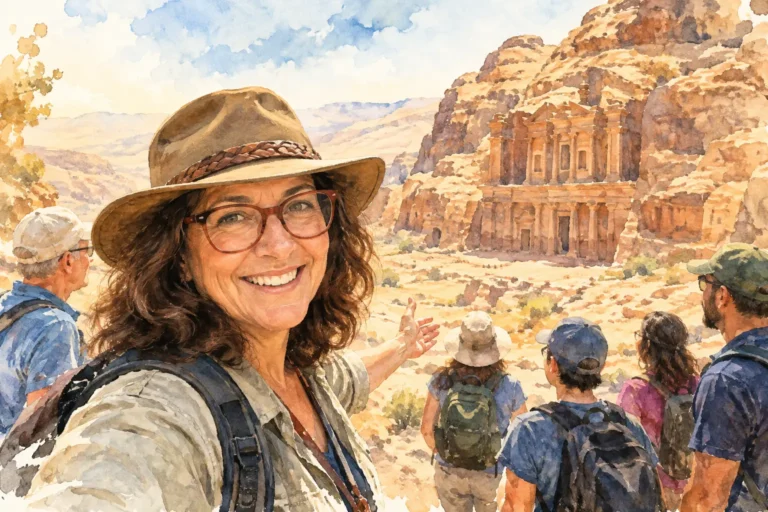
Plan a Nabataean Ruins Tour in Israel’s Negev
A Nabataean ruins tour is not simply a visit to old stone buildings in the desert. It is a chance to stand inside a civilization that made a seemingly harsh landscape productive, connected, and unexpectedly sophisticated. In the Negev, a cistern carved into rock, a winepress beside a ruined home, or a broad Roman-era road can turn a beautiful desert drive into a story of ingenuity, trade, faith, and daily life.
For travelers who have already seen Israel’s headline sites, the Nabataean world offers a different kind of day: quieter, more spacious, and full of details that are easy to miss without context. For first-time visitors, it is an excellent counterpoint to the busy streets and layered sacred history of Jerusalem. The desert asks you to slow down and look closely.
What a Nabataean Ruins Tour Reveals
The Nabataeans are often associated with Petra in Jordan, but their story extends across the Negev. They were master traders, moving valuable goods through desert routes that linked Arabia, the Mediterranean world, and beyond. Frankincense and myrrh are the famous examples, but the real achievement was the network itself: roads, caravan stops, water systems, farms, and towns that supported movement across long dry distances.
Their desert settlements were not accidents. They were carefully chosen places where people could collect rainfall, store water, cultivate crops, rest animals, and exchange goods. Later, under Roman and Byzantine influence, several towns grew into thriving communities with churches, public buildings, homes, workshops, and agricultural installations.
That changing history is part of what makes these sites so rewarding. You are not looking at one frozen moment in time. You are tracing how a trading people adapted, settled, and made the desert home.
The Negev Sites Worth Building Around
A private day can be shaped around your pace, interests, and starting point. The most memorable itineraries usually focus on two or three places rather than trying to race across every ruin on the map.
Avdat: A Desert City Above the Wadi
Avdat is often the strongest choice for travelers who want a dramatic introduction. Perched on a ridge above the Zin Valley, it has wide views that immediately explain why location mattered. The site began as a Nabataean way station and developed into a substantial town over the centuries.
Walking through Avdat, you can see the remains of homes, storerooms, a bathhouse, churches, and winepresses. The water systems are especially revealing. Rain was never taken for granted here, and the channels, cisterns, and reservoirs show how carefully every drop was managed.
Avdat works well for people who enjoy archaeology with a big visual payoff. It also pairs naturally with a scenic desert drive or a short walk overlooking the Zin Valley. On a hot day, however, the exposed paths require sensible timing, water, and sun protection.
Shivta: The Quiet Detail of a Desert Town
Shivta feels different. Its ruins are spread across a tranquil desert setting, and the experience is less about one grand viewpoint than about entering the rhythm of an old community. Streets, domestic spaces, churches, farm structures, and winepresses make it easier to imagine ordinary life.
This is a wonderful site for travelers who enjoy asking how people lived rather than only what rulers built. Where did water come from? How did farming work with so little rainfall? Why were winepresses so central? A thoughtful guided visit can turn a collection of pale stone walls into an intimate portrait of desert resilience.
Because Shivta rewards observation, it is especially good for return visitors to Israel, curious families, and anyone who prefers hidden gems to crowded must-see stops.
Mamshit: Caravans, Homes, and a Different Desert Landscape
Near Dimona, Mamshit offers another perspective on Nabataean life. It was positioned along a branch of the ancient trade routes and is known for its well-preserved domestic structures. Here, the scale of private homes can be striking. These were not temporary tents beside a road, but built spaces created by people who expected a settled life.
Mamshit is a useful choice when you want to focus on caravans, commerce, and the transition from mobility to permanence. It can also fit well into a route that includes a desert overlook, a local lunch, or a hands-on activity, depending on the season and your interests.
Haluza: For Travelers Who Like the Bigger Picture
Haluza is more expansive and less immediately legible than Avdat or Shivta. That is precisely its appeal for some visitors. It asks you to imagine a large settlement across an open landscape, where trade routes, agriculture, and community life intersected.
This is not always the best choice for a first archaeological stop, especially if your time is limited. But for travelers who enjoy landscape archaeology, or those returning for a more in-depth Negev experience, Haluza can be deeply rewarding. The trade-off is that it needs more interpretation and imagination to reveal its story.
How to Shape the Right Day
The best Nabataean itinerary depends less on a fixed checklist and more on the kind of experience you want. A history-focused day might combine Avdat and Shivta, allowing time to compare a ridge-top city with a quieter settlement. A family day may work better with one major site, a manageable walk, a picnic or desert meal, and room for unhurried questions.
Business travelers with only a free half-day can still have a meaningful experience. Avdat, paired with a scenic drive through the high desert, gives a powerful sense of the Negev without requiring an exhausting schedule. Travelers who love hiking can add a trail in the Zin Valley, while those drawn to landscapes and adventure may prefer to reach selected areas by 4×4.
A good guide will also adjust for weather. Summer heat makes early starts essential, and shade is limited at many ruins. Winter can be ideal for walking, though occasional rain changes trail conditions. Spring often brings the most inviting temperatures, but popular weekends may require earlier planning.
The Details That Bring the Stones to Life
Ancient ruins are rarely self-explanatory. A wall is more interesting when you understand whether it enclosed a home, a stable, a storeroom, or a church. A shallow depression in the ground becomes memorable when you recognize a winepress. A low channel cut into stone tells a story about rainwater capture and the skill required to farm in an arid land.
This is where a personalized tour matters. Some guests want the archaeological evidence and the changing architectural styles. Others are fascinated by food, desert ecology, trade, or the practical challenge of traveling without modern roads and plumbing. The same site can be approached through any of those lenses.
At Patchwork Israel, I shape the day around those questions rather than delivering a memorized script. If you want to spend extra time at a church apse, examine agricultural terraces, take photographs in the softer afternoon light, or stop for a desert coffee after a walk, the itinerary can make space for it.
What to Bring and What to Expect
Comfortable closed shoes, a hat, sunscreen, and more water than you think you need are basic essentials. Desert ruins often involve uneven ground, loose stones, and little shade. Most visitors do not need to be serious hikers, but it is wise to be honest about mobility needs so the route can be chosen accordingly.
Bring curiosity, too. The most satisfying moments are often small: the outline of a doorway, the curve of an ancient cistern, the unexpected green of a cultivated valley below a dry ridge. These places do not compete for attention. They reward it.
If your Israel trip needs a day that feels spacious, intelligent, and far from a standard sightseeing circuit, let the Negev set the pace. The Nabataean ruins are still there, waiting quietly in the desert, with more to say to travelers willing to pause and listen.

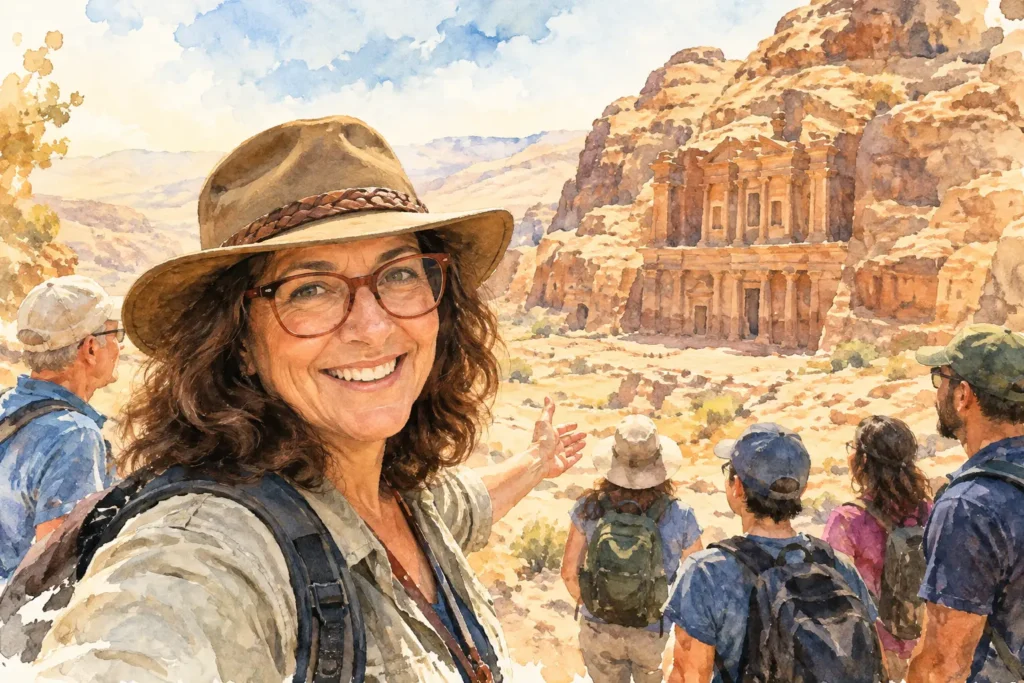
Plan a Nabataean Ruins Tour in Israel’s Negev
A Nabataean ruins tour is not simply a visit to old stone buildings in the desert. It is a chance to stand inside a civilization that made a seemingly harsh landscape productive, connected, and unexpectedly sophisticated. In the Negev, a cistern carved into rock, a winepress beside a ruined home, or a broad Roman-era road can turn a beautiful desert drive into a story of ingenuity, trade, faith, and daily life.
For travelers who have already seen Israel’s headline sites, the Nabataean world offers a different kind of day: quieter, more spacious, and full of details that are easy to miss without context. For first-time visitors, it is an excellent counterpoint to the busy streets and layered sacred history of Jerusalem. The desert asks you to slow down and look closely.
What a Nabataean Ruins Tour Reveals
The Nabataeans are often associated with Petra in Jordan, but their story extends across the Negev. They were master traders, moving valuable goods through desert routes that linked Arabia, the Mediterranean world, and beyond. Frankincense and myrrh are the famous examples, but the real achievement was the network itself: roads, caravan stops, water systems, farms, and towns that supported movement across long dry distances.
Their desert settlements were not accidents. They were carefully chosen places where people could collect rainfall, store water, cultivate crops, rest animals, and exchange goods. Later, under Roman and Byzantine influence, several towns grew into thriving communities with churches, public buildings, homes, workshops, and agricultural installations.
That changing history is part of what makes these sites so rewarding. You are not looking at one frozen moment in time. You are tracing how a trading people adapted, settled, and made the desert home.
The Negev Sites Worth Building Around
A private day can be shaped around your pace, interests, and starting point. The most memorable itineraries usually focus on two or three places rather than trying to race across every ruin on the map.
Avdat: A Desert City Above the Wadi
Avdat is often the strongest choice for travelers who want a dramatic introduction. Perched on a ridge above the Zin Valley, it has wide views that immediately explain why location mattered. The site began as a Nabataean way station and developed into a substantial town over the centuries.
Walking through Avdat, you can see the remains of homes, storerooms, a bathhouse, churches, and winepresses. The water systems are especially revealing. Rain was never taken for granted here, and the channels, cisterns, and reservoirs show how carefully every drop was managed.
Avdat works well for people who enjoy archaeology with a big visual payoff. It also pairs naturally with a scenic desert drive or a short walk overlooking the Zin Valley. On a hot day, however, the exposed paths require sensible timing, water, and sun protection.
Shivta: The Quiet Detail of a Desert Town
Shivta feels different. Its ruins are spread across a tranquil desert setting, and the experience is less about one grand viewpoint than about entering the rhythm of an old community. Streets, domestic spaces, churches, farm structures, and winepresses make it easier to imagine ordinary life.
This is a wonderful site for travelers who enjoy asking how people lived rather than only what rulers built. Where did water come from? How did farming work with so little rainfall? Why were winepresses so central? A thoughtful guided visit can turn a collection of pale stone walls into an intimate portrait of desert resilience.
Because Shivta rewards observation, it is especially good for return visitors to Israel, curious families, and anyone who prefers hidden gems to crowded must-see stops.
Mamshit: Caravans, Homes, and a Different Desert Landscape
Near Dimona, Mamshit offers another perspective on Nabataean life. It was positioned along a branch of the ancient trade routes and is known for its well-preserved domestic structures. Here, the scale of private homes can be striking. These were not temporary tents beside a road, but built spaces created by people who expected a settled life.
Mamshit is a useful choice when you want to focus on caravans, commerce, and the transition from mobility to permanence. It can also fit well into a route that includes a desert overlook, a local lunch, or a hands-on activity, depending on the season and your interests.
Haluza: For Travelers Who Like the Bigger Picture
Haluza is more expansive and less immediately legible than Avdat or Shivta. That is precisely its appeal for some visitors. It asks you to imagine a large settlement across an open landscape, where trade routes, agriculture, and community life intersected.
This is not always the best choice for a first archaeological stop, especially if your time is limited. But for travelers who enjoy landscape archaeology, or those returning for a more in-depth Negev experience, Haluza can be deeply rewarding. The trade-off is that it needs more interpretation and imagination to reveal its story.
How to Shape the Right Day
The best Nabataean itinerary depends less on a fixed checklist and more on the kind of experience you want. A history-focused day might combine Avdat and Shivta, allowing time to compare a ridge-top city with a quieter settlement. A family day may work better with one major site, a manageable walk, a picnic or desert meal, and room for unhurried questions.
Business travelers with only a free half-day can still have a meaningful experience. Avdat, paired with a scenic drive through the high desert, gives a powerful sense of the Negev without requiring an exhausting schedule. Travelers who love hiking can add a trail in the Zin Valley, while those drawn to landscapes and adventure may prefer to reach selected areas by 4×4.
A good guide will also adjust for weather. Summer heat makes early starts essential, and shade is limited at many ruins. Winter can be ideal for walking, though occasional rain changes trail conditions. Spring often brings the most inviting temperatures, but popular weekends may require earlier planning.
The Details That Bring the Stones to Life
Ancient ruins are rarely self-explanatory. A wall is more interesting when you understand whether it enclosed a home, a stable, a storeroom, or a church. A shallow depression in the ground becomes memorable when you recognize a winepress. A low channel cut into stone tells a story about rainwater capture and the skill required to farm in an arid land.
This is where a personalized tour matters. Some guests want the archaeological evidence and the changing architectural styles. Others are fascinated by food, desert ecology, trade, or the practical challenge of traveling without modern roads and plumbing. The same site can be approached through any of those lenses.
At Patchwork Israel, I shape the day around those questions rather than delivering a memorized script. If you want to spend extra time at a church apse, examine agricultural terraces, take photographs in the softer afternoon light, or stop for a desert coffee after a walk, the itinerary can make space for it.
What to Bring and What to Expect
Comfortable closed shoes, a hat, sunscreen, and more water than you think you need are basic essentials. Desert ruins often involve uneven ground, loose stones, and little shade. Most visitors do not need to be serious hikers, but it is wise to be honest about mobility needs so the route can be chosen accordingly.
Bring curiosity, too. The most satisfying moments are often small: the outline of a doorway, the curve of an ancient cistern, the unexpected green of a cultivated valley below a dry ridge. These places do not compete for attention. They reward it.
If your Israel trip needs a day that feels spacious, intelligent, and far from a standard sightseeing circuit, let the Negev set the pace. The Nabataean ruins are still there, waiting quietly in the desert, with more to say to travelers willing to pause and listen.



Get the latest blog updates in your inbox.