
Jerusalem Sacred Sites Itinerary That Works
You can feel the difference between a rushed day in Jerusalem and a meaningful one within the first hour. If your Jerusalem sacred sites itinerary tries to do too much, the city starts to feel like a checklist. If it is paced well, with the right sequence and a little room to breathe, Jerusalem becomes what it should be – layered, moving, and deeply personal.
That is especially true here, where sacred places are not neatly separated from daily life. A prayer service may shape the rhythm of a visit. A narrow lane can suddenly open to a view that puts centuries into perspective. The best itinerary is not the one with the most stops. It is the one that matches your interests, your walking pace, and the kind of connection you want to have with the city.
How to shape a Jerusalem sacred sites itinerary
For most travelers, one full day in the Old City and its immediate surroundings is enough for a strong first experience. Two days is better if you want time for reflection, photography, or a deeper look at Christian, Jewish, and Muslim heritage without feeling hurried. Business travelers with only a few hours can still have a very worthwhile visit, but that requires tighter planning and realistic expectations.
Jerusalem is compact on a map and demanding on foot. Distances look short, yet security checks, uneven stone streets, steps, crowds, and opening-hour variations all affect the day. Modest dress is wise, comfortable shoes are not optional, and early starts are worth it. Morning light is also kinder for both photos and energy levels.
If this is your first visit, I usually recommend building the day around geography rather than around a long wish list. Start at one gate, move through the Old City in a logical flow, and avoid crossing back and forth more than necessary. That simple choice makes the day calmer.
A one-day route that feels full, not frantic
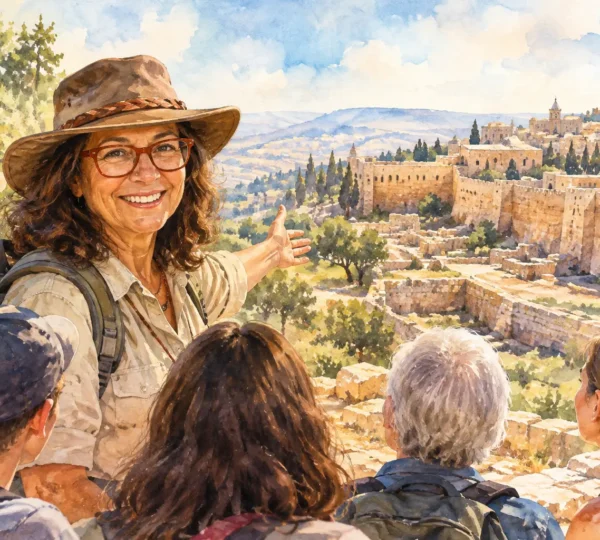
A practical and meaningful route often begins at the Mount of Olives. Starting here gives you what many travelers need before entering the details – a sense of the whole. The panoramic view over Jerusalem helps orient the city physically and spiritually. You see the walls, the domes, the slopes, the cemeteries, and the way sacred memory is written into the landscape.
From there, continue to the Garden of Gethsemane and the Church of All Nations. Even travelers who are not especially religious often find this area unexpectedly powerful. The ancient olive trees, the setting at the foot of the hill, and the proximity to major Christian traditions make this a place where the emotional tone of the day can begin to settle.
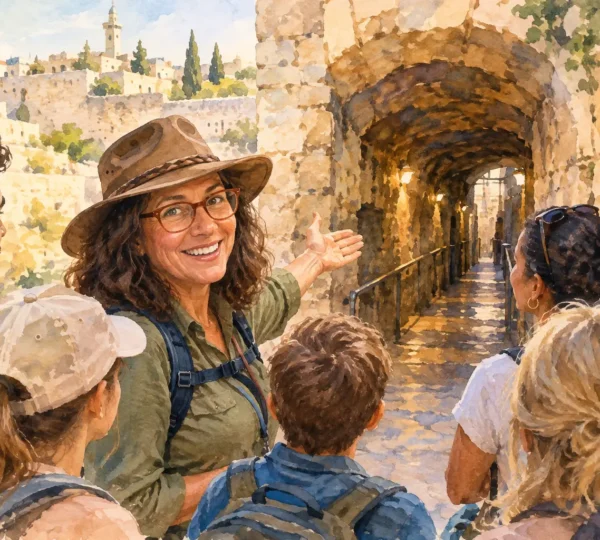
Next, enter the Old City, often through the Lions’ Gate if you are coming from that side. This sets up a natural path toward the Via Dolorosa. Some visitors want to walk every Station of the Cross with care and time. Others prefer a shorter interpretive visit that focuses on the broader significance of the route and the Church of the Holy Sepulchre. Both approaches are valid. It depends on whether your visit is devotional, historical, or a blend of both.
The Church of the Holy Sepulchre deserves more than a quick photo stop. It is one of those places where complexity is part of the experience. Architecturally, spiritually, and emotionally, it asks for patience. If you can visit before the biggest crowds gather, you will feel the difference.
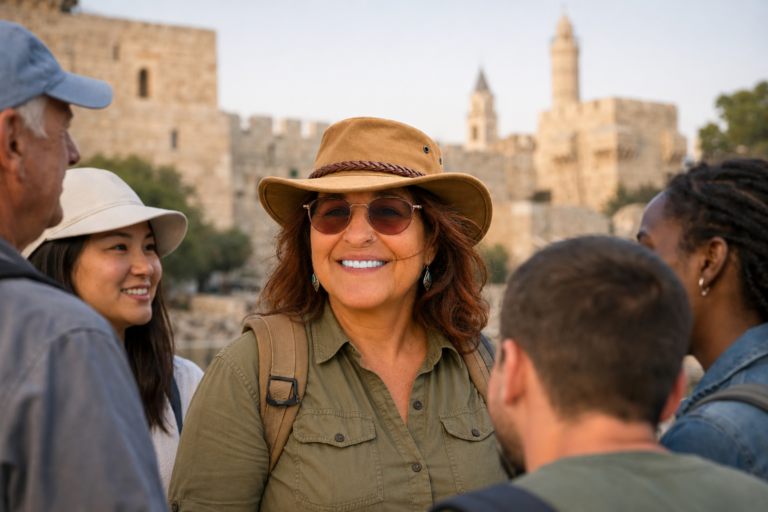
From the Christian Quarter, continue toward the Jewish Quarter and the Western Wall. This transition is one of the reasons Jerusalem is unlike anywhere else. Within a relatively short walk, you move through different sacred languages, memories, and rituals, all still alive in the present tense. At the Wall, some travelers want quiet time. Others appreciate context about the Temple period, the retaining walls, and the traditions that shape the plaza today. A guide can make this stop much richer without making it feel academic.
If conditions and visiting arrangements allow, the Temple Mount or Haram al-Sharif may be part of the day as well. This is a site of immense spiritual significance and one where timing, access windows, dress standards, and visitor protocols matter. It is never a place to treat casually. Some days, including it works beautifully. On other days, trying to force it into the schedule creates stress and cuts into the rest of the experience. This is one of the clearest examples of why flexibility matters in Jerusalem.
By late afternoon, many visitors benefit from stepping just outside the Old City intensity. The Davidson Archaeological Park area or a gentle walk with a view back toward the walls can help tie the day together. If you still have energy, ending in the City of David area can add an archaeological layer that connects biblical memory with physical remains in a compelling way. But this is where honesty helps. After a long sacred-sites day, some travelers are ready for a good meal and a seat in the shade, not another excavation overview.
When one day is not enough
A deeper Jerusalem sacred sites itinerary often works best over two days. The first day can focus on the classic core – Mount of Olives, Gethsemane, the Via Dolorosa, the Holy Sepulchre, the Western Wall, and key Old City quarters. The second day can open up the city’s wider spiritual and historical landscape.
That might include the Israel Museum for those who want context before or after visiting sacred places, especially if the Shrine of the Book and archaeology matter to you. It might include Mount Zion, with sites connected to Christian tradition and Jewish memory. For some travelers, Yad Vashem is an essential part of understanding Jewish history and the emotional framework many visitors bring with them to Jerusalem, though it is not a sacred site in the formal sense.
This second day can also be more personal in tone. Families may want a slower morning and fewer churches. Returning visitors may prefer lesser-known chapels, archaeological corners, or neighborhood encounters that reveal how Jerusalem is lived today, not only revered. That is where a tailor-made approach makes all the difference.
What to prioritize based on your interests
If your trip is primarily Christian, give more time to the Mount of Olives, Gethsemane, the Via Dolorosa, and the Church of the Holy Sepulchre. If your trip is centered on Jewish heritage, build more space around the Western Wall, the Jewish Quarter, Davidson Archaeological Park, and Temple-era context. If you are culturally curious rather than strictly faith-driven, combine major sacred landmarks with strong historical framing and one or two quieter places that are less crowded and easier to absorb.
For travelers who are not highly observant, Jerusalem can still be deeply meaningful. You do not need to arrive with a formal religious agenda to be moved here. What helps is clarity about what you want from the day. Reflection, history, architecture, family roots, sacred art, archaeology, or simply a better understanding of the city all lead to slightly different itineraries.
Practical choices that improve the day
The biggest mistake I see is overloading the schedule. Jerusalem rewards attention more than speed. Three or four major sacred stops with proper context often leave a stronger impression than eight rushed ones.
Timing matters too. Fridays, Saturdays, and religious holidays can shift access and atmosphere. That does not always mean avoid them. Sometimes the lived rhythm of the city is exactly what makes the day memorable. But it does mean planning accordingly.
Private guiding is especially useful in Jerusalem because the city is dense with meaning, not just monuments. A good guide helps with route logic, timing, etiquette, historical framing, and those small adjustments that keep the day comfortable. At Patchwork Israel, that usually means shaping the route around the traveler rather than forcing the traveler into a standard route.
A sacred itinerary should still feel human
The most successful Jerusalem day usually includes one or two unscheduled moments. A pause for coffee after an intense morning. A rooftop view that reframes the city. A quiet corner in a church courtyard. A conversation sparked by a question you did not know you would ask.
That is the real balance to aim for. Not just seeing Jerusalem’s sacred sites, but letting them register. Build your itinerary with care, keep it realistic, and leave room for the city to surprise you.

Jerusalem Sacred Sites Itinerary That Works
You can feel the difference between a rushed day in Jerusalem and a meaningful one within the first hour. If your Jerusalem sacred sites itinerary tries to do too much, the city starts to feel like a checklist. If it is paced well, with the right sequence and a little room to breathe, Jerusalem becomes what it should be – layered, moving, and deeply personal.
That is especially true here, where sacred places are not neatly separated from daily life. A prayer service may shape the rhythm of a visit. A narrow lane can suddenly open to a view that puts centuries into perspective. The best itinerary is not the one with the most stops. It is the one that matches your interests, your walking pace, and the kind of connection you want to have with the city.
How to shape a Jerusalem sacred sites itinerary
For most travelers, one full day in the Old City and its immediate surroundings is enough for a strong first experience. Two days is better if you want time for reflection, photography, or a deeper look at Christian, Jewish, and Muslim heritage without feeling hurried. Business travelers with only a few hours can still have a very worthwhile visit, but that requires tighter planning and realistic expectations.
Jerusalem is compact on a map and demanding on foot. Distances look short, yet security checks, uneven stone streets, steps, crowds, and opening-hour variations all affect the day. Modest dress is wise, comfortable shoes are not optional, and early starts are worth it. Morning light is also kinder for both photos and energy levels.
If this is your first visit, I usually recommend building the day around geography rather than around a long wish list. Start at one gate, move through the Old City in a logical flow, and avoid crossing back and forth more than necessary. That simple choice makes the day calmer.
A one-day route that feels full, not frantic
A practical and meaningful route often begins at the Mount of Olives. Starting here gives you what many travelers need before entering the details – a sense of the whole. The panoramic view over Jerusalem helps orient the city physically and spiritually. You see the walls, the domes, the slopes, the cemeteries, and the way sacred memory is written into the landscape.
From there, continue to the Garden of Gethsemane and the Church of All Nations. Even travelers who are not especially religious often find this area unexpectedly powerful. The ancient olive trees, the setting at the foot of the hill, and the proximity to major Christian traditions make this a place where the emotional tone of the day can begin to settle.
Next, enter the Old City, often through the Lions’ Gate if you are coming from that side. This sets up a natural path toward the Via Dolorosa. Some visitors want to walk every Station of the Cross with care and time. Others prefer a shorter interpretive visit that focuses on the broader significance of the route and the Church of the Holy Sepulchre. Both approaches are valid. It depends on whether your visit is devotional, historical, or a blend of both.
The Church of the Holy Sepulchre deserves more than a quick photo stop. It is one of those places where complexity is part of the experience. Architecturally, spiritually, and emotionally, it asks for patience. If you can visit before the biggest crowds gather, you will feel the difference.
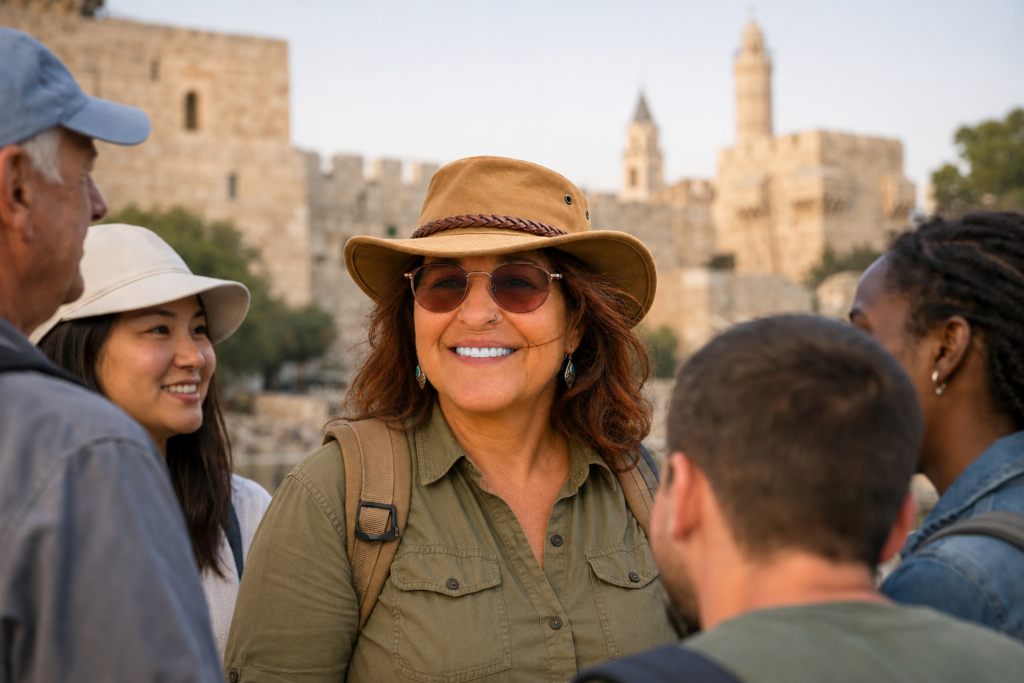
From the Christian Quarter, continue toward the Jewish Quarter and the Western Wall. This transition is one of the reasons Jerusalem is unlike anywhere else. Within a relatively short walk, you move through different sacred languages, memories, and rituals, all still alive in the present tense. At the Wall, some travelers want quiet time. Others appreciate context about the Temple period, the retaining walls, and the traditions that shape the plaza today. A guide can make this stop much richer without making it feel academic.
If conditions and visiting arrangements allow, the Temple Mount or Haram al-Sharif may be part of the day as well. This is a site of immense spiritual significance and one where timing, access windows, dress standards, and visitor protocols matter. It is never a place to treat casually. Some days, including it works beautifully. On other days, trying to force it into the schedule creates stress and cuts into the rest of the experience. This is one of the clearest examples of why flexibility matters in Jerusalem.
By late afternoon, many visitors benefit from stepping just outside the Old City intensity. The Davidson Archaeological Park area or a gentle walk with a view back toward the walls can help tie the day together. If you still have energy, ending in the City of David area can add an archaeological layer that connects biblical memory with physical remains in a compelling way. But this is where honesty helps. After a long sacred-sites day, some travelers are ready for a good meal and a seat in the shade, not another excavation overview.
When one day is not enough
A deeper Jerusalem sacred sites itinerary often works best over two days. The first day can focus on the classic core – Mount of Olives, Gethsemane, the Via Dolorosa, the Holy Sepulchre, the Western Wall, and key Old City quarters. The second day can open up the city’s wider spiritual and historical landscape.
That might include the Israel Museum for those who want context before or after visiting sacred places, especially if the Shrine of the Book and archaeology matter to you. It might include Mount Zion, with sites connected to Christian tradition and Jewish memory. For some travelers, Yad Vashem is an essential part of understanding Jewish history and the emotional framework many visitors bring with them to Jerusalem, though it is not a sacred site in the formal sense.
This second day can also be more personal in tone. Families may want a slower morning and fewer churches. Returning visitors may prefer lesser-known chapels, archaeological corners, or neighborhood encounters that reveal how Jerusalem is lived today, not only revered. That is where a tailor-made approach makes all the difference.
What to prioritize based on your interests
If your trip is primarily Christian, give more time to the Mount of Olives, Gethsemane, the Via Dolorosa, and the Church of the Holy Sepulchre. If your trip is centered on Jewish heritage, build more space around the Western Wall, the Jewish Quarter, Davidson Archaeological Park, and Temple-era context. If you are culturally curious rather than strictly faith-driven, combine major sacred landmarks with strong historical framing and one or two quieter places that are less crowded and easier to absorb.
For travelers who are not highly observant, Jerusalem can still be deeply meaningful. You do not need to arrive with a formal religious agenda to be moved here. What helps is clarity about what you want from the day. Reflection, history, architecture, family roots, sacred art, archaeology, or simply a better understanding of the city all lead to slightly different itineraries.
Practical choices that improve the day
The biggest mistake I see is overloading the schedule. Jerusalem rewards attention more than speed. Three or four major sacred stops with proper context often leave a stronger impression than eight rushed ones.
Timing matters too. Fridays, Saturdays, and religious holidays can shift access and atmosphere. That does not always mean avoid them. Sometimes the lived rhythm of the city is exactly what makes the day memorable. But it does mean planning accordingly.
Private guiding is especially useful in Jerusalem because the city is dense with meaning, not just monuments. A good guide helps with route logic, timing, etiquette, historical framing, and those small adjustments that keep the day comfortable. At Patchwork Israel, that usually means shaping the route around the traveler rather than forcing the traveler into a standard route.
A sacred itinerary should still feel human
The most successful Jerusalem day usually includes one or two unscheduled moments. A pause for coffee after an intense morning. A rooftop view that reframes the city. A quiet corner in a church courtyard. A conversation sparked by a question you did not know you would ask.
That is the real balance to aim for. Not just seeing Jerusalem’s sacred sites, but letting them register. Build your itinerary with care, keep it realistic, and leave room for the city to surprise you.
Get the latest blog updates in your inbox.