Israel Biblical Sites Tour That Feels Personal
Some travelers arrive with a marked-up Bible. Others come with a short list – Jerusalem, the Sea of Galilee, maybe Masada – and a quiet hope that the places will feel real once they stand there. A well-planned israel biblical sites tour should do more than move you from one famous stop to the next. It should help the land make sense, connect stories to geography, and leave room for the moments that stay with you long after the trip ends.
That is where a private, thoughtfully built itinerary changes everything. Israel is compact, but it is not simple. Distances may look short on a map, yet every region carries layers of text, tradition, archaeology, and lived culture. The difference between a rushed checklist and a meaningful journey often comes down to pacing, context, and having a guide who knows when to explain, when to pause, and when to take the scenic road because the landscape itself is part of the story.
What makes an Israel biblical sites tour worth taking
The obvious answer is access to places that matter deeply – Jerusalem, Bethlehem’s traditional setting in the broader biblical imagination, the Galilee, the Judean Desert, Caesarea, Jericho’s regional context, and the Jordan River area. But the real value is not just reaching those names. It is understanding why they mattered then and why they still matter now.
Jerusalem alone can fill days without feeling repetitive. The City of David, the Mount of Olives, the Western Wall area, the Southern Steps, the Israel Museum, and the Old City quarters each speak in a different register. Some visitors want to focus on the Hebrew Bible. Others are drawn mainly to the life of Jesus and early Christianity. Many want both. A personalized tour makes that possible without forcing every site into the same script.
The north offers a completely different rhythm. Around the Sea of Galilee, the terrain softens, the views widen, and the New Testament becomes easier to picture in physical terms. Capernaum, Tabgha, the Mount of Beatitudes, Magdala, and boat views across the water are often central. Yet even here, it helps to slow down. A shoreline stop at the right hour can say more than a long lecture.
Then there is the desert. The Judean Desert, Masada, Qumran, and the Dead Sea are not simply add-ons. They ground biblical history in a harsh, dramatic landscape where survival, kingship, rebellion, retreat, and revelation all feel more tangible. For many travelers, this part of the trip provides the strongest sense of the land itself shaping the text.
The best itinerary depends on why you are coming
This is where standard packages often fall short. Not every traveler wants the same balance of sacred sites, archaeology, walking, reflection, and modern cultural context. A Catholic couple may want more time in churches and devotional settings. A Jewish family may want biblical depth, Second Temple history, and opportunities for shared discussion. A repeat visitor may want to go beyond the headline stops and see places that are rarely included in large coach tours.
A business traveler with one free day needs a very different plan from a multigenerational family visiting for ten days. Someone who loves archaeology may want to compare excavation layers and historical periods. Someone else may care less about pottery and more about standing quietly in a landscape tied to a familiar passage. Neither approach is better. They simply require different guiding.
That is why customization matters so much on an israel biblical sites tour. It lets the trip reflect your interests rather than forcing your interests to fit a fixed route.
A strong biblical tour balances landmark sites with breathing room
There is a temptation to overpack Israel. On paper, it seems efficient to see Jerusalem, Caesarea, Nazareth, the Galilee, Masada, the Dead Sea, and Jaffa in a very short span. Sometimes that works, especially for travelers with limited time and high energy. More often, a better trip comes from choosing a few anchors each day and giving them proper attention.
Take Caesarea as an example. It is famous for its Roman remains and its significance in early Christian history, but it also works beautifully as a transitional site. It connects empires, ports, governance, and movement across the region. If you pair it with a rushed lunch stop and two more major archaeological parks, it becomes just another ancient ruin. If you pair it thoughtfully with a coastal drive or a quieter stop, it begins to tell a fuller story.
The same goes for Jerusalem. Trying to do every major site in one day usually leaves people tired and slightly blurred. Splitting the city by theme or geography tends to work better. One day might focus on the Old City and key biblical and Second Temple connections. Another might move outward to the Mount of Olives, the City of David, and a museum visit that pulls the threads together.
Hidden depth matters, especially for repeat visitors
Many travelers have already seen the major sites on a previous trip. They do not need another hurried photo stop. They want interpretation, nuance, and places that most visitors miss.
That can mean approaching a familiar site from a different angle. It can also mean adding lesser-known locations that illuminate the better-known ones. A biblical journey can deepen dramatically when it includes conversations, regional food, local encounters, or a walk through a landscape instead of only a bus-to-entrance sequence. Scripture did not happen in a vacuum. It unfolded among farmers, traders, pilgrims, rulers, fishermen, shepherds, and city dwellers. The more texture a trip has, the more believable the world of the text becomes.
For some guests, that deeper layer is spiritual. For others, it is historical or cultural. For many, it is all three at once. That is one reason Patchwork Israel builds tours around the traveler rather than around a standard brochure route.
Comfort, pacing, and logistics are part of the experience
People sometimes talk about biblical travel as if meaning alone is enough. In reality, comfort matters. So does traffic, weather, walking distance, shade, restrooms, lunch timing, and how much uphill walking your group can happily manage.
A great guide pays attention to all of it. The best day is not the one with the most pins on the map. It is the one where the group stays engaged, asks good questions, and still has energy for sunset at the end. Older travelers may want gentler pacing and close vehicle access. Families may need a mix of serious content and breaks that keep children interested. Active travelers may be thrilled by a desert hike that frames a biblical discussion in the landscape itself.
Israel rewards that kind of flexibility. The same core itinerary can be adapted in practical ways without losing depth.
How to choose the right guide for an Israel biblical sites tour
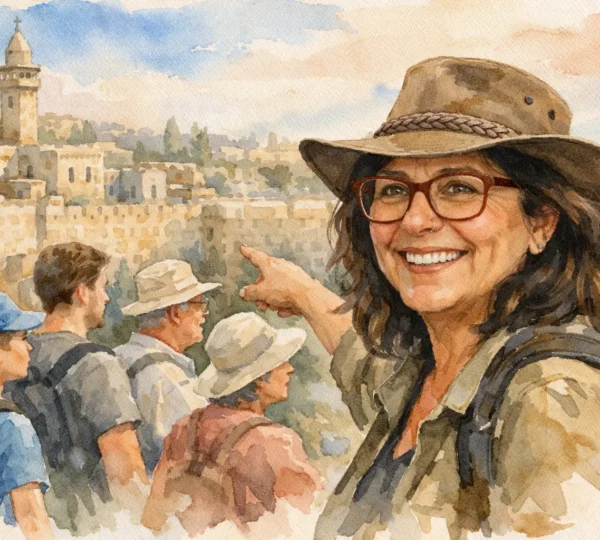
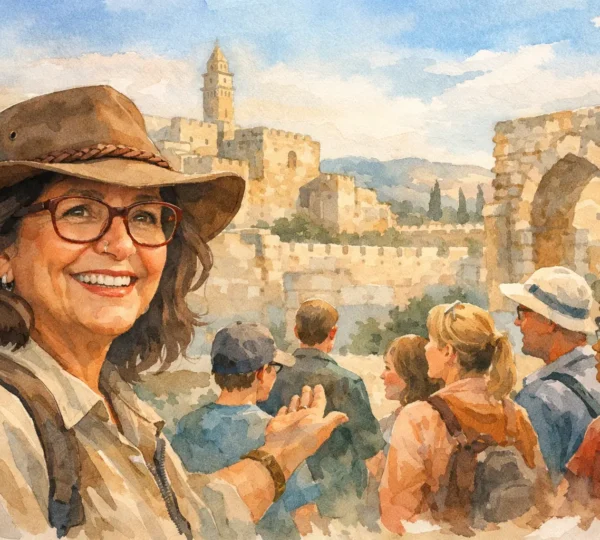
Credentials matter, but style matters too. You want someone who knows the texts, the archaeology, the geography, and the roads. You also want someone who can read the group in real time. If the mood calls for explanation, you need substance. If the moment calls for silence, you need restraint.
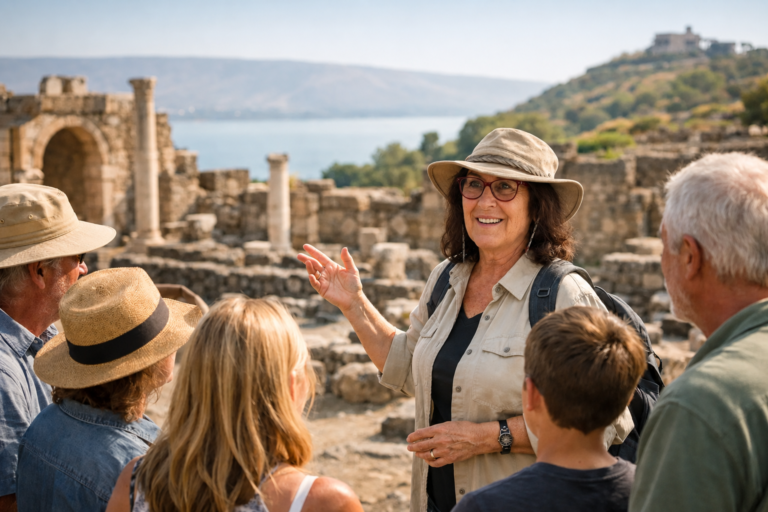
The right guide does not overwhelm every stop with facts. She shapes a day so that information lands at the right moment. She knows which stories belong on a hilltop overlook, which belong beside excavated stones, and which are better discussed over lunch when everyone can absorb what they have seen.
That human element is especially important in Israel because the country carries so many layers at once. Visitors often arrive with expectations formed by faith, family memory, education, or previous travel. Good guiding respects that while still opening fresh perspectives.
One trip, many ways to experience the land
A biblical itinerary does not have to be limited to churches, synagogues, and archaeological parks. Sometimes a cooking workshop after a day in Jerusalem adds warmth and context. Sometimes a gentle hike in the north helps a family connect more deeply than another indoor exhibit. Sometimes a desert drive or overlook turns a historical discussion into something vivid and memorable.
That does not dilute the biblical focus. Done well, it strengthens it. The Bible is full of meals, roads, mountains, vineyards, wells, storms, fishing, harvests, and wilderness. When a tour includes the textures of the land, not just its monuments, the stories become less distant.
If you are planning an Israel biblical sites tour, the best question is not simply which sites to include. Ask what kind of experience you want when you stand there. Do you want a fast overview, a faith-centered journey, an archaeology-rich trip, or a layered itinerary that blends sacred places with local insight and breathing room? Once that is clear, the route begins to shape itself.
The land has a way of meeting people differently than they expected. Give it enough time, the right guidance, and a little space between the famous stops, and it often speaks most clearly there.

Israel Biblical Sites Tour That Feels Personal
Some travelers arrive with a marked-up Bible. Others come with a short list – Jerusalem, the Sea of Galilee, maybe Masada – and a quiet hope that the places will feel real once they stand there. A well-planned israel biblical sites tour should do more than move you from one famous stop to the next. It should help the land make sense, connect stories to geography, and leave room for the moments that stay with you long after the trip ends.
That is where a private, thoughtfully built itinerary changes everything. Israel is compact, but it is not simple. Distances may look short on a map, yet every region carries layers of text, tradition, archaeology, and lived culture. The difference between a rushed checklist and a meaningful journey often comes down to pacing, context, and having a guide who knows when to explain, when to pause, and when to take the scenic road because the landscape itself is part of the story.
What makes an Israel biblical sites tour worth taking
The obvious answer is access to places that matter deeply – Jerusalem, Bethlehem’s traditional setting in the broader biblical imagination, the Galilee, the Judean Desert, Caesarea, Jericho’s regional context, and the Jordan River area. But the real value is not just reaching those names. It is understanding why they mattered then and why they still matter now.
Jerusalem alone can fill days without feeling repetitive. The City of David, the Mount of Olives, the Western Wall area, the Southern Steps, the Israel Museum, and the Old City quarters each speak in a different register. Some visitors want to focus on the Hebrew Bible. Others are drawn mainly to the life of Jesus and early Christianity. Many want both. A personalized tour makes that possible without forcing every site into the same script.
The north offers a completely different rhythm. Around the Sea of Galilee, the terrain softens, the views widen, and the New Testament becomes easier to picture in physical terms. Capernaum, Tabgha, the Mount of Beatitudes, Magdala, and boat views across the water are often central. Yet even here, it helps to slow down. A shoreline stop at the right hour can say more than a long lecture.
Then there is the desert. The Judean Desert, Masada, Qumran, and the Dead Sea are not simply add-ons. They ground biblical history in a harsh, dramatic landscape where survival, kingship, rebellion, retreat, and revelation all feel more tangible. For many travelers, this part of the trip provides the strongest sense of the land itself shaping the text.
The best itinerary depends on why you are coming
This is where standard packages often fall short. Not every traveler wants the same balance of sacred sites, archaeology, walking, reflection, and modern cultural context. A Catholic couple may want more time in churches and devotional settings. A Jewish family may want biblical depth, Second Temple history, and opportunities for shared discussion. A repeat visitor may want to go beyond the headline stops and see places that are rarely included in large coach tours.
A business traveler with one free day needs a very different plan from a multigenerational family visiting for ten days. Someone who loves archaeology may want to compare excavation layers and historical periods. Someone else may care less about pottery and more about standing quietly in a landscape tied to a familiar passage. Neither approach is better. They simply require different guiding.
That is why customization matters so much on an israel biblical sites tour. It lets the trip reflect your interests rather than forcing your interests to fit a fixed route.
A strong biblical tour balances landmark sites with breathing room
There is a temptation to overpack Israel. On paper, it seems efficient to see Jerusalem, Caesarea, Nazareth, the Galilee, Masada, the Dead Sea, and Jaffa in a very short span. Sometimes that works, especially for travelers with limited time and high energy. More often, a better trip comes from choosing a few anchors each day and giving them proper attention.
Take Caesarea as an example. It is famous for its Roman remains and its significance in early Christian history, but it also works beautifully as a transitional site. It connects empires, ports, governance, and movement across the region. If you pair it with a rushed lunch stop and two more major archaeological parks, it becomes just another ancient ruin. If you pair it thoughtfully with a coastal drive or a quieter stop, it begins to tell a fuller story.
The same goes for Jerusalem. Trying to do every major site in one day usually leaves people tired and slightly blurred. Splitting the city by theme or geography tends to work better. One day might focus on the Old City and key biblical and Second Temple connections. Another might move outward to the Mount of Olives, the City of David, and a museum visit that pulls the threads together.
Hidden depth matters, especially for repeat visitors
Many travelers have already seen the major sites on a previous trip. They do not need another hurried photo stop. They want interpretation, nuance, and places that most visitors miss.
That can mean approaching a familiar site from a different angle. It can also mean adding lesser-known locations that illuminate the better-known ones. A biblical journey can deepen dramatically when it includes conversations, regional food, local encounters, or a walk through a landscape instead of only a bus-to-entrance sequence. Scripture did not happen in a vacuum. It unfolded among farmers, traders, pilgrims, rulers, fishermen, shepherds, and city dwellers. The more texture a trip has, the more believable the world of the text becomes.
For some guests, that deeper layer is spiritual. For others, it is historical or cultural. For many, it is all three at once. That is one reason Patchwork Israel builds tours around the traveler rather than around a standard brochure route.
Comfort, pacing, and logistics are part of the experience
People sometimes talk about biblical travel as if meaning alone is enough. In reality, comfort matters. So does traffic, weather, walking distance, shade, restrooms, lunch timing, and how much uphill walking your group can happily manage.
A great guide pays attention to all of it. The best day is not the one with the most pins on the map. It is the one where the group stays engaged, asks good questions, and still has energy for sunset at the end. Older travelers may want gentler pacing and close vehicle access. Families may need a mix of serious content and breaks that keep children interested. Active travelers may be thrilled by a desert hike that frames a biblical discussion in the landscape itself.
Israel rewards that kind of flexibility. The same core itinerary can be adapted in practical ways without losing depth.
How to choose the right guide for an Israel biblical sites tour
Credentials matter, but style matters too. You want someone who knows the texts, the archaeology, the geography, and the roads. You also want someone who can read the group in real time. If the mood calls for explanation, you need substance. If the moment calls for silence, you need restraint.
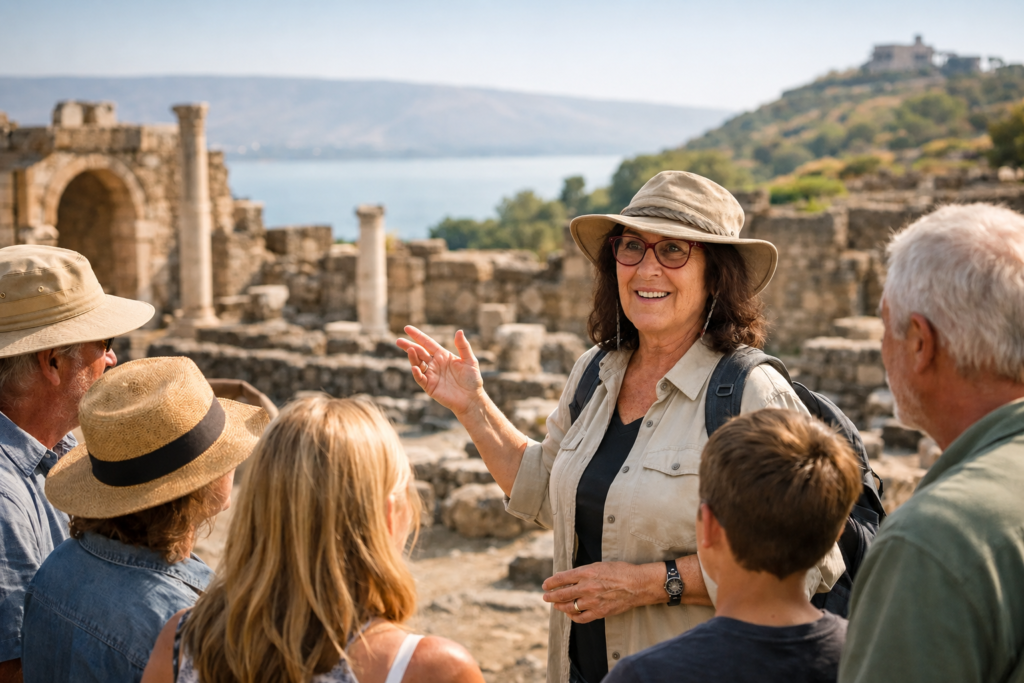
The right guide does not overwhelm every stop with facts. She shapes a day so that information lands at the right moment. She knows which stories belong on a hilltop overlook, which belong beside excavated stones, and which are better discussed over lunch when everyone can absorb what they have seen.
That human element is especially important in Israel because the country carries so many layers at once. Visitors often arrive with expectations formed by faith, family memory, education, or previous travel. Good guiding respects that while still opening fresh perspectives.
One trip, many ways to experience the land
A biblical itinerary does not have to be limited to churches, synagogues, and archaeological parks. Sometimes a cooking workshop after a day in Jerusalem adds warmth and context. Sometimes a gentle hike in the north helps a family connect more deeply than another indoor exhibit. Sometimes a desert drive or overlook turns a historical discussion into something vivid and memorable.
That does not dilute the biblical focus. Done well, it strengthens it. The Bible is full of meals, roads, mountains, vineyards, wells, storms, fishing, harvests, and wilderness. When a tour includes the textures of the land, not just its monuments, the stories become less distant.
If you are planning an Israel biblical sites tour, the best question is not simply which sites to include. Ask what kind of experience you want when you stand there. Do you want a fast overview, a faith-centered journey, an archaeology-rich trip, or a layered itinerary that blends sacred places with local insight and breathing room? Once that is clear, the route begins to shape itself.
The land has a way of meeting people differently than they expected. Give it enough time, the right guidance, and a little space between the famous stops, and it often speaks most clearly there.
Get the latest blog updates in your inbox.