
Judean Lowlands Cave Exploration Tips
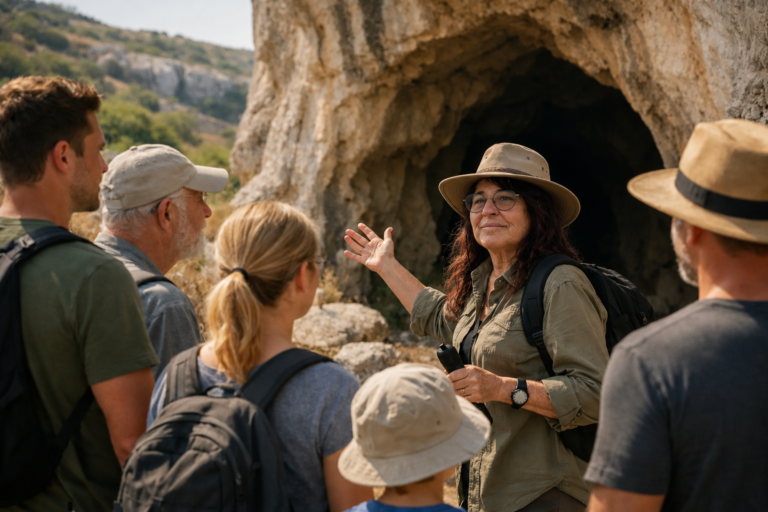
A cave entrance in the Judean foothills rarely announces itself with drama. You notice a low opening in soft chalk, a breeze where there should be none, or a cluster of bell-shaped chambers hidden just below a quiet field. That is part of what makes Judean lowlands cave exploration so memorable. It is not only about what you see, but about what gradually reveals itself as you move through a landscape layered with farming, ancient industry, refuge, ritual, and everyday life.
For travelers who have already visited Jerusalem, Masada, or the Sea of Galilee, the Judean Lowlands can feel like a different kind of discovery. The region does not push itself forward. It rewards curiosity. For families, heritage travelers, hikers, and visitors who want a day with substance but without an overwhelming physical challenge, cave country offers one of the most satisfying experiences in Israel.
Why Judean lowlands cave exploration feels different
The Judean Lowlands, known in Hebrew as the Shephelah, sit between the coastal plain and the Jerusalem hills. This in-between geography matters. Armies passed through here, villages flourished here, roads connected larger centers through here, and the soft local stone made underground excavation practical for generations.
That is why cave exploration in this region is never just cave exploration. One site may include ancient storage chambers, another may reveal burial spaces, another may preserve olive presses, columbaria, cistern systems, or hiding complexes connected by narrow passages. Some caves were cut for industry, some for water, some for daily use, and some were adapted over time as needs changed. In the Judean Lowlands, the underground world often tells the most human part of the story.
What many visitors appreciate is the scale. These are not giant, theatrical caverns where you stand at a railing and snap a photo. They are intimate spaces. You walk into them, sometimes crouch, sometimes feel the temperature change, and often come away with a clearer sense of how people actually lived in this landscape. It feels tactile and personal.
What you can expect on a cave-focused day
A good day in the Judean Lowlands usually blends underground spaces with the above-ground story. That balance matters. If you only visit one chamber after another, the experience can blur. When the caves are paired with a short hike, a lookout, an archaeological mound, fields, forests, or seasonal wildflowers, the whole region begins to make sense.
Some travelers want a soft adventure with easy walking and a few accessible chambers. Others enjoy a more active route with uneven paths, ladders, stooping, and a bit of dust. Both are possible, but this is where planning makes a real difference. The right route depends on age, mobility, comfort in enclosed spaces, and whether your group is more interested in archaeology, landscape, or hands-on adventure.
Families often do well with a site that includes spacious bell caves or broad chambers where children can feel the thrill of being underground without a long technical route. Adult travelers sometimes prefer the more complex hiding systems, especially when guided with context. Those narrow passages are not for everyone, and that is perfectly fine. In this part of Israel, there is usually more than one way to engage deeply with the story.
Not all caves offer the same experience
This is the biggest misconception I see. Travelers hear the word cave and imagine one category. In reality, a bell cave carved into chalk feels completely different from a man-made labyrinth of interconnected chambers. A cool cistern has a different atmosphere than a burial cave. Some sites are visually striking. Others are less dramatic at first glance, but richer once the historical context is explained.
That is one reason guided planning is so valuable here. The best cave visit is not necessarily the most famous one. It is the one that fits your group.
The appeal for repeat visitors to Israel
If you have been to Israel before, Judean lowlands cave exploration can open a part of the country that many standard itineraries barely touch. The Lowlands are ideal for travelers who want hidden gems without giving up historical depth. You are still engaging with major themes of the land – settlement, agriculture, belief, resilience, trade, and adaptation – but in a setting that feels quieter and more personal.
This region also works beautifully for people who are not looking for a full desert day or a demanding mountain hike. It offers a middle ground: textured, scenic, historically rich, and active without needing to be extreme. For business travelers with limited time, for multigenerational families, or for visitors who want one day that feels both thoughtful and fun, the Lowlands can be a smart choice.
There is also something refreshing about the pace. The caves invite attention. You naturally slow down. Instead of racing from landmark to landmark, you start asking different questions. Why was this chamber cut this way? How was it used? Who passed through here? What changed over the centuries? Those are the kinds of questions that turn a trip into a memory with staying power.
What to know before you go underground
Comfort matters more than people expect. Even on a mild day, caves can be slippery, dusty, or cooler than the surface. Closed shoes are the easy answer. A hat is still useful for the walk between sites, and water is essential year-round. If your route includes tighter passages, clothing you do not mind brushing against stone is a better choice than anything delicate.
Claustrophobia is worth discussing honestly before the day begins. Some visitors love the idea of a hiding complex until they see the entrance. Others are hesitant and end up enjoying it more than expected. There is no badge for squeezing through every tunnel. A well-built itinerary leaves room for options, so nobody feels pushed beyond what is enjoyable.
Timing matters too. Summer can still work, especially with early starts and shaded components, but spring and fall are particularly lovely in the Lowlands. Winter days can be excellent as well, depending on trail conditions. The region changes with the seasons, and that is part of its charm.
Why guidance changes the experience
Without context, a cave can feel like an empty hole in the ground. With the right guide, the same cave becomes a story of engineering, survival, trade, or devotion. This is especially true in the Judean Lowlands, where the visible details can be subtle. Chisel marks, ventilation shafts, carved niches, and unusual chamber shapes all mean something.
A strong guide also helps with flow. Some sites are best visited in a particular order. Some pair beautifully with nearby food stops, scenic overlooks, forest walks, or hands-on experiences. A personalized day can lean more archaeological, more adventurous, or more scenic depending on your interests. That flexibility is where a private tour really shines.
Pairing caves with the rest of the day
One of my favorite things about this region is how well it combines with other experiences. A cave morning can be followed by a winery visit, a local food stop, a nature walk, an archaeology-focused site, or a family-friendly activity that keeps the day varied. You do not have to choose between substance and enjoyment. In the Judean Lowlands, those usually belong together.
For travelers who enjoy photography, the contrast is especially rewarding. You move from wide open views and soft hills to carved subterranean spaces with texture and shadow. For those interested in heritage, the caves offer a grounded way to connect with the daily realities behind the bigger historical narratives. For hikers, the region gives enough movement to feel active without turning the day into a test of endurance.
This is also a wonderful area for travelers who want Israel beyond the headline sites. Not instead of them, but alongside them. The Lowlands add dimension. They show how much of the country’s story happened not only in famous capitals and dramatic fortresses, but in working landscapes where ordinary life left extraordinary traces.
Is Judean lowlands cave exploration right for your trip?
Usually, yes – but the shape of the day should match you. If you love hidden places, archaeology, short hikes, and meaningful landscapes, this region is an easy fit. If you are traveling with children, the right site selection is everything. If you are uneasy in tight spaces, that does not rule the area out at all. It simply means choosing broader chambers and skipping the narrower systems.
At Patchwork Israel, this kind of day works especially well for travelers who want to move beyond the standard checklist and experience a quieter, richer side of the country. The caves are fascinating, but what stays with people is often the feeling of entering a landscape that still keeps some of its best stories below the surface.
If your Israel trip needs one day that feels curious, grounded, and a little unexpected, the Judean Lowlands are a very good place to start.

Judean Lowlands Cave Exploration Tips
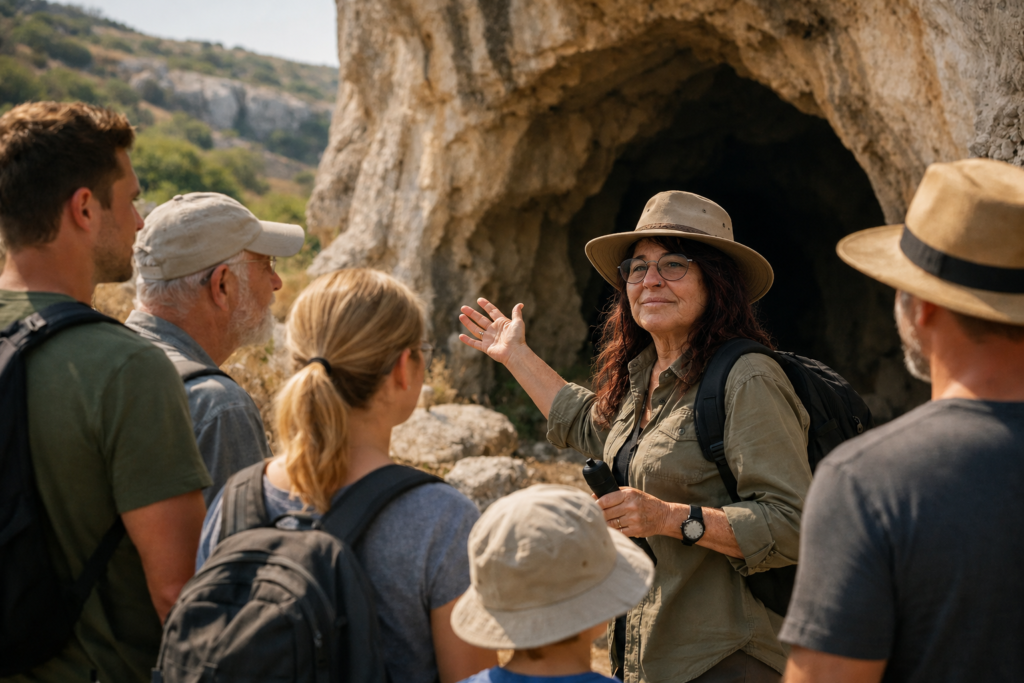
A cave entrance in the Judean foothills rarely announces itself with drama. You notice a low opening in soft chalk, a breeze where there should be none, or a cluster of bell-shaped chambers hidden just below a quiet field. That is part of what makes Judean lowlands cave exploration so memorable. It is not only about what you see, but about what gradually reveals itself as you move through a landscape layered with farming, ancient industry, refuge, ritual, and everyday life.
For travelers who have already visited Jerusalem, Masada, or the Sea of Galilee, the Judean Lowlands can feel like a different kind of discovery. The region does not push itself forward. It rewards curiosity. For families, heritage travelers, hikers, and visitors who want a day with substance but without an overwhelming physical challenge, cave country offers one of the most satisfying experiences in Israel.
Why Judean lowlands cave exploration feels different
The Judean Lowlands, known in Hebrew as the Shephelah, sit between the coastal plain and the Jerusalem hills. This in-between geography matters. Armies passed through here, villages flourished here, roads connected larger centers through here, and the soft local stone made underground excavation practical for generations.
That is why cave exploration in this region is never just cave exploration. One site may include ancient storage chambers, another may reveal burial spaces, another may preserve olive presses, columbaria, cistern systems, or hiding complexes connected by narrow passages. Some caves were cut for industry, some for water, some for daily use, and some were adapted over time as needs changed. In the Judean Lowlands, the underground world often tells the most human part of the story.
What many visitors appreciate is the scale. These are not giant, theatrical caverns where you stand at a railing and snap a photo. They are intimate spaces. You walk into them, sometimes crouch, sometimes feel the temperature change, and often come away with a clearer sense of how people actually lived in this landscape. It feels tactile and personal.
What you can expect on a cave-focused day
A good day in the Judean Lowlands usually blends underground spaces with the above-ground story. That balance matters. If you only visit one chamber after another, the experience can blur. When the caves are paired with a short hike, a lookout, an archaeological mound, fields, forests, or seasonal wildflowers, the whole region begins to make sense.
Some travelers want a soft adventure with easy walking and a few accessible chambers. Others enjoy a more active route with uneven paths, ladders, stooping, and a bit of dust. Both are possible, but this is where planning makes a real difference. The right route depends on age, mobility, comfort in enclosed spaces, and whether your group is more interested in archaeology, landscape, or hands-on adventure.
Families often do well with a site that includes spacious bell caves or broad chambers where children can feel the thrill of being underground without a long technical route. Adult travelers sometimes prefer the more complex hiding systems, especially when guided with context. Those narrow passages are not for everyone, and that is perfectly fine. In this part of Israel, there is usually more than one way to engage deeply with the story.
Not all caves offer the same experience
This is the biggest misconception I see. Travelers hear the word cave and imagine one category. In reality, a bell cave carved into chalk feels completely different from a man-made labyrinth of interconnected chambers. A cool cistern has a different atmosphere than a burial cave. Some sites are visually striking. Others are less dramatic at first glance, but richer once the historical context is explained.
That is one reason guided planning is so valuable here. The best cave visit is not necessarily the most famous one. It is the one that fits your group.
The appeal for repeat visitors to Israel
If you have been to Israel before, Judean lowlands cave exploration can open a part of the country that many standard itineraries barely touch. The Lowlands are ideal for travelers who want hidden gems without giving up historical depth. You are still engaging with major themes of the land – settlement, agriculture, belief, resilience, trade, and adaptation – but in a setting that feels quieter and more personal.
This region also works beautifully for people who are not looking for a full desert day or a demanding mountain hike. It offers a middle ground: textured, scenic, historically rich, and active without needing to be extreme. For business travelers with limited time, for multigenerational families, or for visitors who want one day that feels both thoughtful and fun, the Lowlands can be a smart choice.
There is also something refreshing about the pace. The caves invite attention. You naturally slow down. Instead of racing from landmark to landmark, you start asking different questions. Why was this chamber cut this way? How was it used? Who passed through here? What changed over the centuries? Those are the kinds of questions that turn a trip into a memory with staying power.
What to know before you go underground
Comfort matters more than people expect. Even on a mild day, caves can be slippery, dusty, or cooler than the surface. Closed shoes are the easy answer. A hat is still useful for the walk between sites, and water is essential year-round. If your route includes tighter passages, clothing you do not mind brushing against stone is a better choice than anything delicate.
Claustrophobia is worth discussing honestly before the day begins. Some visitors love the idea of a hiding complex until they see the entrance. Others are hesitant and end up enjoying it more than expected. There is no badge for squeezing through every tunnel. A well-built itinerary leaves room for options, so nobody feels pushed beyond what is enjoyable.
Timing matters too. Summer can still work, especially with early starts and shaded components, but spring and fall are particularly lovely in the Lowlands. Winter days can be excellent as well, depending on trail conditions. The region changes with the seasons, and that is part of its charm.
Why guidance changes the experience
Without context, a cave can feel like an empty hole in the ground. With the right guide, the same cave becomes a story of engineering, survival, trade, or devotion. This is especially true in the Judean Lowlands, where the visible details can be subtle. Chisel marks, ventilation shafts, carved niches, and unusual chamber shapes all mean something.
A strong guide also helps with flow. Some sites are best visited in a particular order. Some pair beautifully with nearby food stops, scenic overlooks, forest walks, or hands-on experiences. A personalized day can lean more archaeological, more adventurous, or more scenic depending on your interests. That flexibility is where a private tour really shines.
Pairing caves with the rest of the day
One of my favorite things about this region is how well it combines with other experiences. A cave morning can be followed by a winery visit, a local food stop, a nature walk, an archaeology-focused site, or a family-friendly activity that keeps the day varied. You do not have to choose between substance and enjoyment. In the Judean Lowlands, those usually belong together.
For travelers who enjoy photography, the contrast is especially rewarding. You move from wide open views and soft hills to carved subterranean spaces with texture and shadow. For those interested in heritage, the caves offer a grounded way to connect with the daily realities behind the bigger historical narratives. For hikers, the region gives enough movement to feel active without turning the day into a test of endurance.
This is also a wonderful area for travelers who want Israel beyond the headline sites. Not instead of them, but alongside them. The Lowlands add dimension. They show how much of the country’s story happened not only in famous capitals and dramatic fortresses, but in working landscapes where ordinary life left extraordinary traces.
Is Judean lowlands cave exploration right for your trip?
Usually, yes – but the shape of the day should match you. If you love hidden places, archaeology, short hikes, and meaningful landscapes, this region is an easy fit. If you are traveling with children, the right site selection is everything. If you are uneasy in tight spaces, that does not rule the area out at all. It simply means choosing broader chambers and skipping the narrower systems.
At Patchwork Israel, this kind of day works especially well for travelers who want to move beyond the standard checklist and experience a quieter, richer side of the country. The caves are fascinating, but what stays with people is often the feeling of entering a landscape that still keeps some of its best stories below the surface.
If your Israel trip needs one day that feels curious, grounded, and a little unexpected, the Judean Lowlands are a very good place to start.





Get the latest blog updates in your inbox.