
Jerusalem Tunnel Tour Review – Is It Worth It?
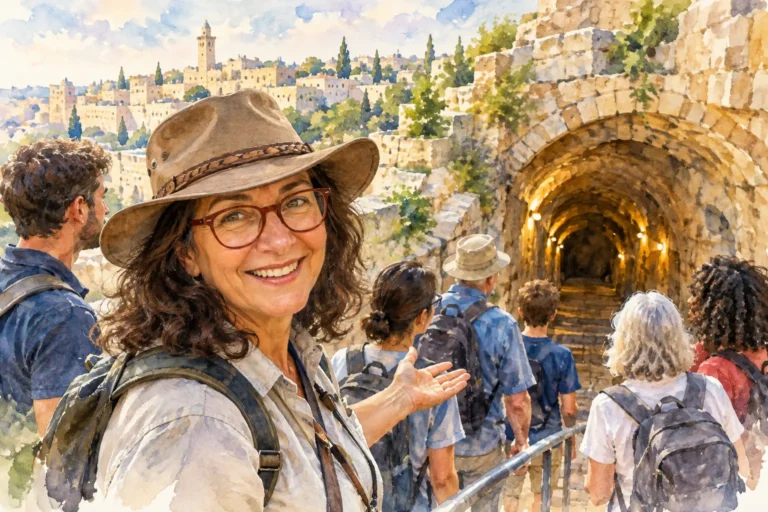
The moment you leave the bright stone lanes of Jerusalem’s Old City and step below ground, the city changes scale. Enormous dressed stones, vaulted passages, and water channels reveal how much of Jerusalem’s story lies beneath the streets. This Jerusalem tunnel tour review focuses on the experience most visitors mean by the phrase: the Western Wall Tunnels, an absorbing visit that can be one of the strongest historical stops in the city if it suits your interests and pace.
It is not a general sightseeing attraction, and that is exactly its strength. The tour asks you to slow down, look closely, and imagine a living ancient city built, rebuilt, and reshaped over centuries. For travelers who want more than a photograph at a famous site, it offers a rare sense of physical connection to Jerusalem’s layers.
Jerusalem Tunnel Tour Review: What You Actually See
The Western Wall Tunnels follow portions of the Western Wall that continue underground beyond the open prayer plaza. The route generally includes massive stone courses from the time of the Second Temple, sections of ancient streets and arches, archaeological remains, and interpretive displays that help make sense of what is otherwise a remarkably complex site.
The scale is often the first surprise. Some of the foundation stones are so large that it is difficult to grasp how they were quarried, moved, and set in place without modern machinery. Seeing them at close range changes the experience from a history lesson into something much more immediate. You are not simply looking at an old wall. You are standing beside the engineering decisions of an ancient city.
Many tours also include the area known as Wilson’s Arch, spaces connected with ancient approaches to the Temple Mount, and a model or multimedia presentation. The exact path and elements can vary with conservation work, religious observance, group flow, and site operations, so it is best not to plan around one specific feature alone. The enduring value is the overall perspective: Jerusalem below Jerusalem.
This is a guided experience, and the guide matters. Without clear storytelling, a corridor of stone can feel repetitive. With a knowledgeable guide, each change in stonework, elevation, and architectural style becomes a clue to a different chapter of the city. The best visits balance facts with pauses to absorb the atmosphere rather than rushing visitors from one numbered stop to the next.
Who Will Find It Most Meaningful?
This tour is especially rewarding for heritage travelers, curious families with older children, faith-based visitors, and anyone drawn to archaeology or urban history. It also works beautifully for a business traveler with limited time who wants one concentrated, memorable Jerusalem experience rather than a broad overview of every major landmark.
For Jewish visitors, the underground sections can bring new depth to a place that may already be emotionally familiar. Christian visitors often appreciate the wider setting of the Old City and the chance to understand the physical landscape of Jerusalem in the centuries surrounding their own sacred traditions. Travelers without a religious connection can find the engineering, archaeology, and density of human history just as compelling.
It is also a good choice for repeat visitors who have already stood at the Western Wall, walked the Old City lanes, and visited the major viewpoints. The tunnels offer a more focused, less obvious angle. They are a reminder that Jerusalem is not experienced only across a map. It is experienced vertically, layer by layer.
That said, the tour is not ideal for everyone. The passages can feel enclosed, and the visit involves standing and walking on uneven surfaces. Anyone with significant mobility limitations, a strong discomfort with confined spaces, or very young children who need room to move may prefer a different archaeological site. There are usually no long, strenuous climbs, but this is not a sit-down museum visit.
The Difference Between the Western Wall Tunnels and Hezekiah’s Tunnel
A quick clarification can save a disappointing booking. When people search for a Jerusalem tunnel tour, they may also mean Hezekiah’s Tunnel in the City of David. These are very different experiences.
The Western Wall Tunnels are a guided archaeological route beneath the Old City, with stone passages, monumental remains, and a strong historical narrative. You stay dry, move through a managed visitor route, and focus on Jerusalem’s built environment.
Hezekiah’s Tunnel is an ancient water tunnel and a far more physical adventure. Depending on conditions and the chosen route, visitors may walk through water in a narrow, dark passage. It is memorable, fun for active travelers, and a wonderful option for adventurous families, but it is not the same type of visit. Shoes that can get wet, a flashlight, and a willingness to wade are part of the experience.
If your time permits, the two can complement each other. One reveals monumental stonework and the city’s underground architecture; the other brings you into an ancient water system. If you only choose one, let your comfort level guide you. Choose the Western Wall Tunnels for interpretation and historical depth. Choose Hezekiah’s Tunnel for movement, water, and a more adventurous feel.
Practical Details That Shape the Experience
Advance planning is essential. Entry is typically timed, places can fill quickly during busy travel seasons and holidays, and late arrivals may not be accommodated. A private guide can help shape the wider day around the fixed entry time, but admission arrangements should still be confirmed well ahead of your visit.
Dress modestly and comfortably for a sacred area and for walking. Closed-toe shoes with a good grip are sensible, especially if you are combining the tunnels with the Old City’s polished stone lanes. Bring water in warm weather, although the underground spaces themselves are often cooler than the streets above.
Photography rules can vary by section, and it is wise to be present rather than trying to capture every wall on a phone. Light is limited, spaces are narrow, and the most powerful part of the visit is often the feeling of standing quietly beside stones that have witnessed so much.
The visit generally takes around an hour to an hour and a half, but allow more time in your schedule. Getting through the Old City, passing through entry procedures, and simply pausing afterward at the Western Wall Plaza can extend the experience. A rushed gap between two appointments is not the best way to approach it.
Is the Jerusalem Tunnel Tour Worth It?
For the right traveler, absolutely. The tour delivers something that many famous sites cannot: a close, tangible encounter with Jerusalem’s hidden physical history. It is not flashy, and it does not rely on sweeping views or dramatic landscapes. Its impact comes from detail, scale, and the realization that the city you see above ground is only part of the story.
The trade-off is that it can feel dense. Visitors expecting an open-air attraction, a broad introduction to every era of Jerusalem, or a highly interactive activity may find it more specialized than anticipated. A strong itinerary pairs it with something that offers contrast, perhaps a walk through the Old City markets, a quiet rooftop view, a food stop, or an outdoor archaeological visit.
At Patchwork Israel, a private day can be planned around that contrast rather than treating the tunnels as an isolated checkbox. Some travelers want to follow the visit with a deeper Old City walk; others prefer a culinary pause or a neighborhood that reveals another side of the city. Your pace, interests, and energy should determine what comes next.
The most rewarding way to leave the tunnels is not to hurry toward the next attraction. Step back into the daylight, look at the stone streets with fresh eyes, and give yourself a few minutes to consider what still lies beneath your feet.

Jerusalem Tunnel Tour Review – Is It Worth It?
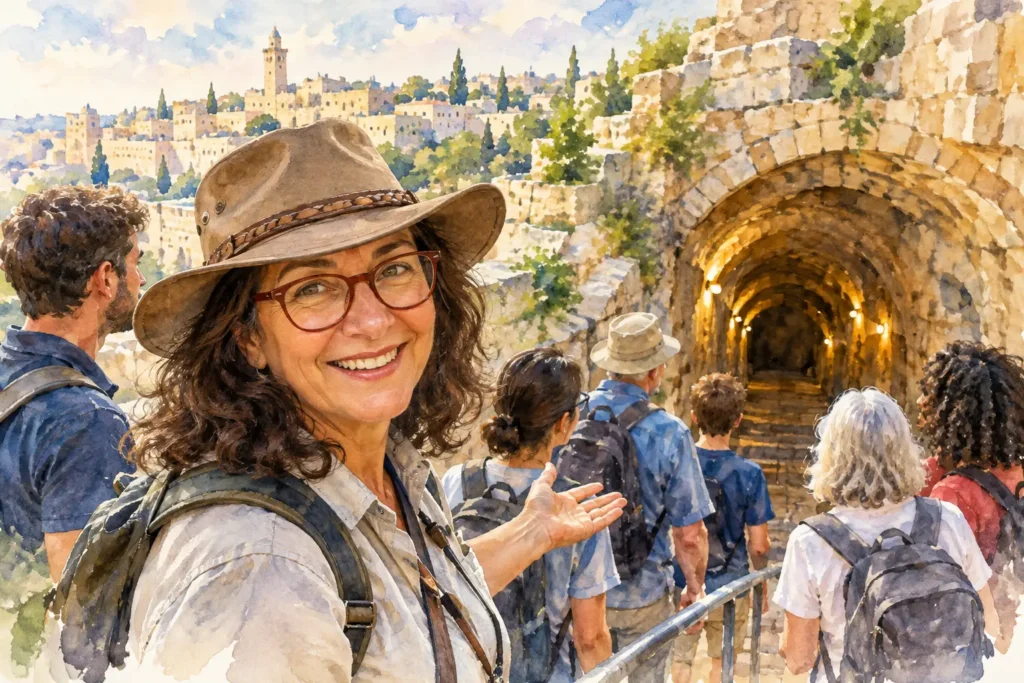
The moment you leave the bright stone lanes of Jerusalem’s Old City and step below ground, the city changes scale. Enormous dressed stones, vaulted passages, and water channels reveal how much of Jerusalem’s story lies beneath the streets. This Jerusalem tunnel tour review focuses on the experience most visitors mean by the phrase: the Western Wall Tunnels, an absorbing visit that can be one of the strongest historical stops in the city if it suits your interests and pace.
It is not a general sightseeing attraction, and that is exactly its strength. The tour asks you to slow down, look closely, and imagine a living ancient city built, rebuilt, and reshaped over centuries. For travelers who want more than a photograph at a famous site, it offers a rare sense of physical connection to Jerusalem’s layers.
Jerusalem Tunnel Tour Review: What You Actually See
The Western Wall Tunnels follow portions of the Western Wall that continue underground beyond the open prayer plaza. The route generally includes massive stone courses from the time of the Second Temple, sections of ancient streets and arches, archaeological remains, and interpretive displays that help make sense of what is otherwise a remarkably complex site.
The scale is often the first surprise. Some of the foundation stones are so large that it is difficult to grasp how they were quarried, moved, and set in place without modern machinery. Seeing them at close range changes the experience from a history lesson into something much more immediate. You are not simply looking at an old wall. You are standing beside the engineering decisions of an ancient city.
Many tours also include the area known as Wilson’s Arch, spaces connected with ancient approaches to the Temple Mount, and a model or multimedia presentation. The exact path and elements can vary with conservation work, religious observance, group flow, and site operations, so it is best not to plan around one specific feature alone. The enduring value is the overall perspective: Jerusalem below Jerusalem.
This is a guided experience, and the guide matters. Without clear storytelling, a corridor of stone can feel repetitive. With a knowledgeable guide, each change in stonework, elevation, and architectural style becomes a clue to a different chapter of the city. The best visits balance facts with pauses to absorb the atmosphere rather than rushing visitors from one numbered stop to the next.
Who Will Find It Most Meaningful?
This tour is especially rewarding for heritage travelers, curious families with older children, faith-based visitors, and anyone drawn to archaeology or urban history. It also works beautifully for a business traveler with limited time who wants one concentrated, memorable Jerusalem experience rather than a broad overview of every major landmark.
For Jewish visitors, the underground sections can bring new depth to a place that may already be emotionally familiar. Christian visitors often appreciate the wider setting of the Old City and the chance to understand the physical landscape of Jerusalem in the centuries surrounding their own sacred traditions. Travelers without a religious connection can find the engineering, archaeology, and density of human history just as compelling.
It is also a good choice for repeat visitors who have already stood at the Western Wall, walked the Old City lanes, and visited the major viewpoints. The tunnels offer a more focused, less obvious angle. They are a reminder that Jerusalem is not experienced only across a map. It is experienced vertically, layer by layer.
That said, the tour is not ideal for everyone. The passages can feel enclosed, and the visit involves standing and walking on uneven surfaces. Anyone with significant mobility limitations, a strong discomfort with confined spaces, or very young children who need room to move may prefer a different archaeological site. There are usually no long, strenuous climbs, but this is not a sit-down museum visit.
The Difference Between the Western Wall Tunnels and Hezekiah’s Tunnel
A quick clarification can save a disappointing booking. When people search for a Jerusalem tunnel tour, they may also mean Hezekiah’s Tunnel in the City of David. These are very different experiences.
The Western Wall Tunnels are a guided archaeological route beneath the Old City, with stone passages, monumental remains, and a strong historical narrative. You stay dry, move through a managed visitor route, and focus on Jerusalem’s built environment.
Hezekiah’s Tunnel is an ancient water tunnel and a far more physical adventure. Depending on conditions and the chosen route, visitors may walk through water in a narrow, dark passage. It is memorable, fun for active travelers, and a wonderful option for adventurous families, but it is not the same type of visit. Shoes that can get wet, a flashlight, and a willingness to wade are part of the experience.
If your time permits, the two can complement each other. One reveals monumental stonework and the city’s underground architecture; the other brings you into an ancient water system. If you only choose one, let your comfort level guide you. Choose the Western Wall Tunnels for interpretation and historical depth. Choose Hezekiah’s Tunnel for movement, water, and a more adventurous feel.
Practical Details That Shape the Experience
Advance planning is essential. Entry is typically timed, places can fill quickly during busy travel seasons and holidays, and late arrivals may not be accommodated. A private guide can help shape the wider day around the fixed entry time, but admission arrangements should still be confirmed well ahead of your visit.
Dress modestly and comfortably for a sacred area and for walking. Closed-toe shoes with a good grip are sensible, especially if you are combining the tunnels with the Old City’s polished stone lanes. Bring water in warm weather, although the underground spaces themselves are often cooler than the streets above.
Photography rules can vary by section, and it is wise to be present rather than trying to capture every wall on a phone. Light is limited, spaces are narrow, and the most powerful part of the visit is often the feeling of standing quietly beside stones that have witnessed so much.
The visit generally takes around an hour to an hour and a half, but allow more time in your schedule. Getting through the Old City, passing through entry procedures, and simply pausing afterward at the Western Wall Plaza can extend the experience. A rushed gap between two appointments is not the best way to approach it.
Is the Jerusalem Tunnel Tour Worth It?
For the right traveler, absolutely. The tour delivers something that many famous sites cannot: a close, tangible encounter with Jerusalem’s hidden physical history. It is not flashy, and it does not rely on sweeping views or dramatic landscapes. Its impact comes from detail, scale, and the realization that the city you see above ground is only part of the story.
The trade-off is that it can feel dense. Visitors expecting an open-air attraction, a broad introduction to every era of Jerusalem, or a highly interactive activity may find it more specialized than anticipated. A strong itinerary pairs it with something that offers contrast, perhaps a walk through the Old City markets, a quiet rooftop view, a food stop, or an outdoor archaeological visit.
At Patchwork Israel, a private day can be planned around that contrast rather than treating the tunnels as an isolated checkbox. Some travelers want to follow the visit with a deeper Old City walk; others prefer a culinary pause or a neighborhood that reveals another side of the city. Your pace, interests, and energy should determine what comes next.
The most rewarding way to leave the tunnels is not to hurry toward the next attraction. Step back into the daylight, look at the stone streets with fresh eyes, and give yourself a few minutes to consider what still lies beneath your feet.





Get the latest blog updates in your inbox.