Best Israel Sites Beyond Landmarks
You can stand at a famous overlook, take the photo, and still feel like you barely touched Israel. That is exactly why the best Israel sites beyond landmarks are often the places people remember most – the hillside village where lunch turns into a conversation, the desert track reached by 4×4, the market corner where flavors tell as much history as stones do.
For many travelers, especially those who have already seen Jerusalem, Masada, or Caesarea, the next trip needs to feel more personal. Even for first-time visitors, there is a big difference between seeing a country and getting a sense of how people live, cook, pray, build, farm, hike, and create within it. Israel is small, but it is layered. Once you move beyond the headline sites, the country becomes richer and far more human.
What makes the best Israel sites beyond landmarks worth your time
A landmark gives you context. A lesser-known site gives you texture. That is the difference.
Some travelers want archaeology and biblical history, while others want food, landscapes, or encounters with different communities. Most actually want a bit of everything. The strongest itineraries usually mix famous places with experiences that are harder to find on your own. That might mean a culinary stop in a market neighborhood, a quiet monastery setting, an artist village, a desert farm, or a hike that opens up the land in a way no bus window can.
There is also a practical advantage. Major landmarks can be crowded, timed, and somewhat fixed in how you experience them. Beyond-landmark travel gives you more room to adjust the pace. If you love conversation, you can build around people. If you are traveling with teenagers, you can add active elements. If you are returning to Israel after years away, you can focus on what has changed and what still feels timeless.
Best Israel sites beyond landmarks for travelers who want more depth
The Galilee backroads and village life
The Galilee is often treated as a region you pass through on the way to a handful of known religious stops. That is a mistake. The quieter roads, forested ridges, agricultural areas, and small communities are often where the region becomes memorable.
This is a good area for travelers who enjoy scenery but do not want a purely outdoor day. You can pair a gentle hike with a home-hosted meal, a winery visit, or a conversation with someone whose work is rooted in the land. The Galilee rewards curiosity. A morning might begin with a panoramic viewpoint and end with local cheese, olive oil, or a workshop that gives the landscape context.
It also suits mixed-interest families because no one has to spend the whole day in one mode. You can weave together nature, food, and culture without long travel times between stops.
Desert experiences that go beyond Masada
Yes, Masada is iconic. But the desert itself is much larger than any one site. If you want quiet, scale, and a stronger sense of Israel’s southern landscapes, the Negev offers some of the best beyond-landmark experiences in the country.
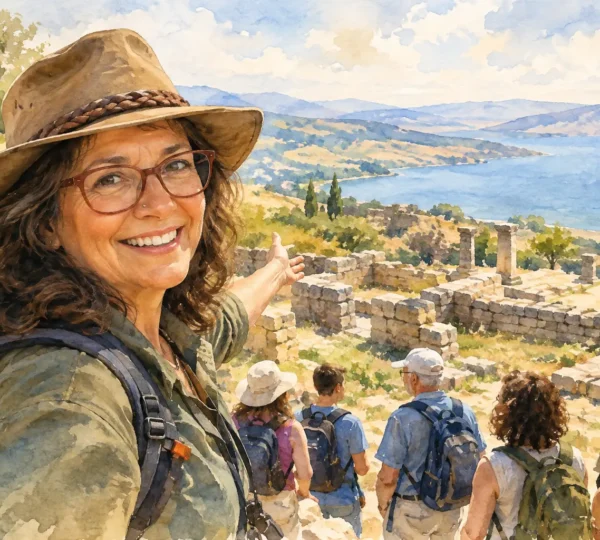
A jeep route, a crater overlook at the right hour, a desert farm, or a short hike in a dramatic wadi can shift the whole tone of a trip. The desert has a way of slowing people down. It is less about checking off and more about noticing.
This is especially valuable for travelers who think they are not hikers. You do not need to be an athlete to enjoy desert terrain. The key is matching the route to the group. Some want an active trek. Others want a scenic drive with select walks and time for coffee in the open air. Both can work beautifully.
Jaffa and Tel Aviv beyond the obvious
Many visitors know the postcard version of Jaffa and the broad strokes of Tel Aviv. What they miss are the smaller layers – neighborhoods where architecture tells the story, workshops where craft is still alive, culinary stops that reveal migration through flavor, or conversations that bring social history into focus.
This part of the country is ideal for business travelers with limited time, couples who want a lighter urban day, or returning visitors who want something less formal than a museum schedule. Food tours, street art, design-focused walks, and market visits work well here because they feel lively without being superficial.
If you enjoy city energy but dislike touristy pacing, this is where customization matters most. One person wants Bauhaus and urban planning. Another wants spice markets and bakeries. Another wants to understand the startup culture through a short, meaningful visit. A well-built day can combine those threads instead of forcing one theme.
The best Israel sites beyond landmarks are often built around people
Some of the most meaningful days in Israel do not center on a site at all. They center on access.
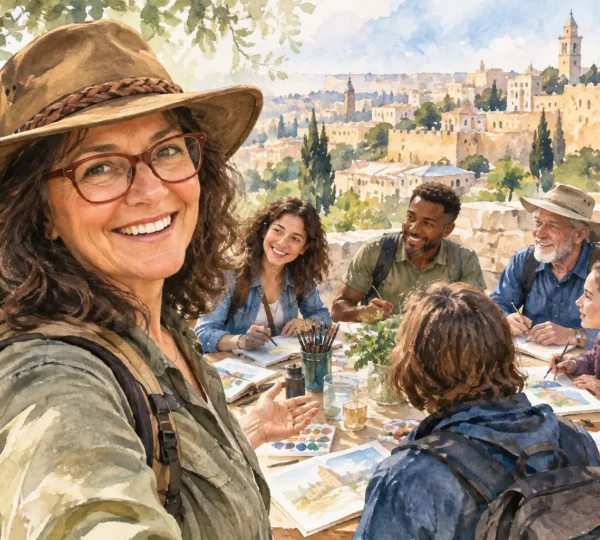
That can mean meeting a farmer, an archaeologist, an artist, a culinary expert, a clergy member, or a local educator. It can mean joining a hands-on activity rather than watching from the side. Mosaic making, baking, foraging, off-road driving, or even a flight simulation can sound unrelated on paper, but in practice they create something similar: participation.
Travelers often tell me that these are the moments that stay with them because they are not passive. You are not just hearing information. You are doing something, tasting something, asking questions, and seeing how present-day life connects with history, faith, landscape, and daily routine.
For families, this kind of day can be a lifesaver. Children and teens are far more engaged when a trip gives them movement and interaction. For adults, especially those who have visited before, people-centered experiences can open Israel in a fresh way.
How to choose the right beyond-landmark itinerary
The best choice depends less on what is famous and more on how you like to travel.
If you are drawn to reflection and scenery, the desert or the north may be the better fit. If you enjoy conversation, food, and urban energy, the center of the country can offer more variety in a shorter span. If your trip has religious meaning, adding one or two lesser-known spiritual or community-based stops can deepen the more recognized pilgrimage sites rather than compete with them.
Pacing matters too. A common mistake is trying to add hidden gems on top of a packed classic itinerary. That usually turns meaningful places into quick stops. It is better to do fewer things well. One major site and two well-chosen experiences will often feel fuller than five rushed attractions.
Season also matters. Summer can favor early starts, shaded markets, or higher elevations. Winter can be excellent for green landscapes and certain hikes, but some desert plans need flexibility if weather shifts. This is where local guidance makes a difference. The best itinerary is not only interesting. It is realistic for the day, the season, and the people traveling.
Why guided access changes the experience
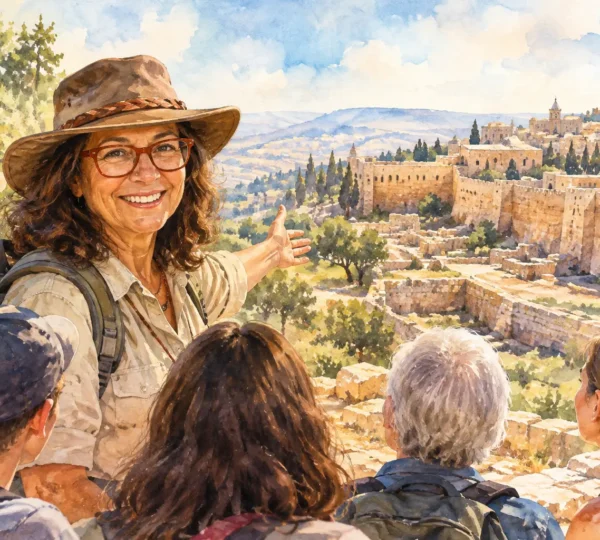
Israel is dense with meaning, but that does not mean every meaningful place is easy to find or interpret on your own. Some locations look simple until someone explains what you are seeing. Others are not really about the location at all, but about knowing who to meet, when to go, and how to connect experiences into a coherent day.
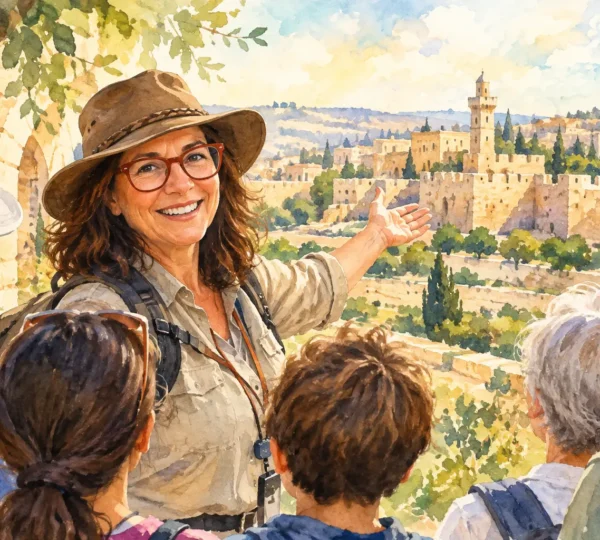
That is why a personalized approach works so well here. A licensed guide with decades of experience can read the group, adjust for weather, energy, traffic, and interests, and turn a good day into one that feels unusually well matched. Patchwork Israel does this especially well for travelers who do not want a standard package and for returning visitors who are ready to go deeper.
The value is not just convenience. It is discernment. Not every hidden place is worth the detour. The best ones are the sites and experiences that fit your trip’s purpose.
Best Israel sites beyond landmarks for second-time visitors
If you have already covered the major highlights, your second or third trip is where Israel can become more interesting. You can spend less time on orientation and more time on specificity.
Maybe that means tracing food traditions across regions. Maybe it means a full day in the north focused on landscape and small producers. Maybe it means combining a familiar city with neighborhoods, galleries, and people you would never reach alone. Maybe it means trading one more museum for a desert drive, a farm visit, or a conversation that changes how you understand the country.
That is often the turning point. Israel stops feeling like a set of sites and starts feeling like a living place with many voices and rhythms.
If you are planning a trip and wondering what to add after the landmarks, start with what you want to feel at the end of the day. More connected, more informed, more grounded, more surprised – that is usually where the right itinerary begins.

Best Israel Sites Beyond Landmarks
You can stand at a famous overlook, take the photo, and still feel like you barely touched Israel. That is exactly why the best Israel sites beyond landmarks are often the places people remember most – the hillside village where lunch turns into a conversation, the desert track reached by 4×4, the market corner where flavors tell as much history as stones do.
For many travelers, especially those who have already seen Jerusalem, Masada, or Caesarea, the next trip needs to feel more personal. Even for first-time visitors, there is a big difference between seeing a country and getting a sense of how people live, cook, pray, build, farm, hike, and create within it. Israel is small, but it is layered. Once you move beyond the headline sites, the country becomes richer and far more human.
What makes the best Israel sites beyond landmarks worth your time
A landmark gives you context. A lesser-known site gives you texture. That is the difference.
Some travelers want archaeology and biblical history, while others want food, landscapes, or encounters with different communities. Most actually want a bit of everything. The strongest itineraries usually mix famous places with experiences that are harder to find on your own. That might mean a culinary stop in a market neighborhood, a quiet monastery setting, an artist village, a desert farm, or a hike that opens up the land in a way no bus window can.
There is also a practical advantage. Major landmarks can be crowded, timed, and somewhat fixed in how you experience them. Beyond-landmark travel gives you more room to adjust the pace. If you love conversation, you can build around people. If you are traveling with teenagers, you can add active elements. If you are returning to Israel after years away, you can focus on what has changed and what still feels timeless.
Best Israel sites beyond landmarks for travelers who want more depth
The Galilee backroads and village life
The Galilee is often treated as a region you pass through on the way to a handful of known religious stops. That is a mistake. The quieter roads, forested ridges, agricultural areas, and small communities are often where the region becomes memorable.
This is a good area for travelers who enjoy scenery but do not want a purely outdoor day. You can pair a gentle hike with a home-hosted meal, a winery visit, or a conversation with someone whose work is rooted in the land. The Galilee rewards curiosity. A morning might begin with a panoramic viewpoint and end with local cheese, olive oil, or a workshop that gives the landscape context.
It also suits mixed-interest families because no one has to spend the whole day in one mode. You can weave together nature, food, and culture without long travel times between stops.
Desert experiences that go beyond Masada
Yes, Masada is iconic. But the desert itself is much larger than any one site. If you want quiet, scale, and a stronger sense of Israel’s southern landscapes, the Negev offers some of the best beyond-landmark experiences in the country.
A jeep route, a crater overlook at the right hour, a desert farm, or a short hike in a dramatic wadi can shift the whole tone of a trip. The desert has a way of slowing people down. It is less about checking off and more about noticing.
This is especially valuable for travelers who think they are not hikers. You do not need to be an athlete to enjoy desert terrain. The key is matching the route to the group. Some want an active trek. Others want a scenic drive with select walks and time for coffee in the open air. Both can work beautifully.
Jaffa and Tel Aviv beyond the obvious
Many visitors know the postcard version of Jaffa and the broad strokes of Tel Aviv. What they miss are the smaller layers – neighborhoods where architecture tells the story, workshops where craft is still alive, culinary stops that reveal migration through flavor, or conversations that bring social history into focus.
This part of the country is ideal for business travelers with limited time, couples who want a lighter urban day, or returning visitors who want something less formal than a museum schedule. Food tours, street art, design-focused walks, and market visits work well here because they feel lively without being superficial.
If you enjoy city energy but dislike touristy pacing, this is where customization matters most. One person wants Bauhaus and urban planning. Another wants spice markets and bakeries. Another wants to understand the startup culture through a short, meaningful visit. A well-built day can combine those threads instead of forcing one theme.
The best Israel sites beyond landmarks are often built around people
Some of the most meaningful days in Israel do not center on a site at all. They center on access.
That can mean meeting a farmer, an archaeologist, an artist, a culinary expert, a clergy member, or a local educator. It can mean joining a hands-on activity rather than watching from the side. Mosaic making, baking, foraging, off-road driving, or even a flight simulation can sound unrelated on paper, but in practice they create something similar: participation.
Travelers often tell me that these are the moments that stay with them because they are not passive. You are not just hearing information. You are doing something, tasting something, asking questions, and seeing how present-day life connects with history, faith, landscape, and daily routine.
For families, this kind of day can be a lifesaver. Children and teens are far more engaged when a trip gives them movement and interaction. For adults, especially those who have visited before, people-centered experiences can open Israel in a fresh way.
How to choose the right beyond-landmark itinerary
The best choice depends less on what is famous and more on how you like to travel.
If you are drawn to reflection and scenery, the desert or the north may be the better fit. If you enjoy conversation, food, and urban energy, the center of the country can offer more variety in a shorter span. If your trip has religious meaning, adding one or two lesser-known spiritual or community-based stops can deepen the more recognized pilgrimage sites rather than compete with them.
Pacing matters too. A common mistake is trying to add hidden gems on top of a packed classic itinerary. That usually turns meaningful places into quick stops. It is better to do fewer things well. One major site and two well-chosen experiences will often feel fuller than five rushed attractions.
Season also matters. Summer can favor early starts, shaded markets, or higher elevations. Winter can be excellent for green landscapes and certain hikes, but some desert plans need flexibility if weather shifts. This is where local guidance makes a difference. The best itinerary is not only interesting. It is realistic for the day, the season, and the people traveling.
Why guided access changes the experience
Israel is dense with meaning, but that does not mean every meaningful place is easy to find or interpret on your own. Some locations look simple until someone explains what you are seeing. Others are not really about the location at all, but about knowing who to meet, when to go, and how to connect experiences into a coherent day.
That is why a personalized approach works so well here. A licensed guide with decades of experience can read the group, adjust for weather, energy, traffic, and interests, and turn a good day into one that feels unusually well matched. Patchwork Israel does this especially well for travelers who do not want a standard package and for returning visitors who are ready to go deeper.
The value is not just convenience. It is discernment. Not every hidden place is worth the detour. The best ones are the sites and experiences that fit your trip’s purpose.
Best Israel sites beyond landmarks for second-time visitors
If you have already covered the major highlights, your second or third trip is where Israel can become more interesting. You can spend less time on orientation and more time on specificity.
Maybe that means tracing food traditions across regions. Maybe it means a full day in the north focused on landscape and small producers. Maybe it means combining a familiar city with neighborhoods, galleries, and people you would never reach alone. Maybe it means trading one more museum for a desert drive, a farm visit, or a conversation that changes how you understand the country.
That is often the turning point. Israel stops feeling like a set of sites and starts feeling like a living place with many voices and rhythms.
If you are planning a trip and wondering what to add after the landmarks, start with what you want to feel at the end of the day. More connected, more informed, more grounded, more surprised – that is usually where the right itinerary begins.
Get the latest blog updates in your inbox.