
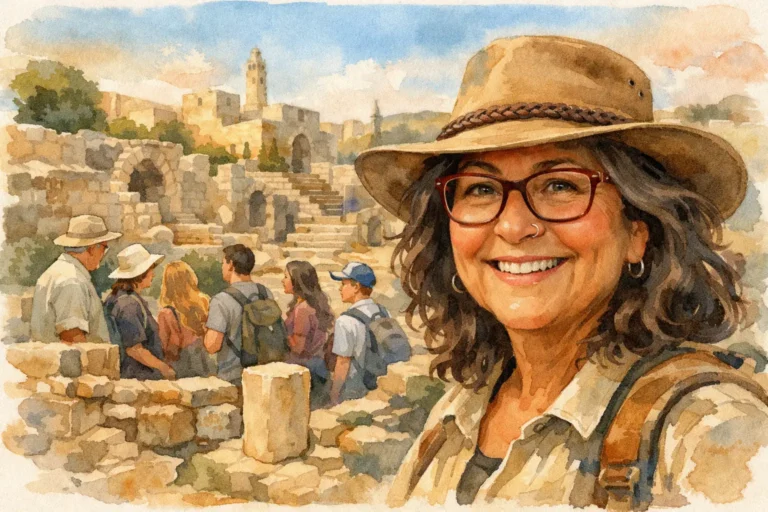
Jerusalem Archaeological Tour Ideas That Go Deeper
Some places in Jerusalem ask you to look twice. A wall segment tucked behind a busy street, a set of ancient steps worn hollow by centuries of feet, a layer of stone that quietly changes the story you thought you knew. A Jerusalem archaeological tour is at its best when it helps you notice those details, then connects them to the bigger human story of the city.
That is what makes archaeology in Jerusalem different from archaeology almost anywhere else. You are not looking at one civilization neatly preserved in one moment. You are reading a city that has been built, destroyed, rebuilt, adapted, and reimagined again and again. The stones matter, of course. But so do the questions they raise, the debates they invite, and the way one excavation can sit just steps from a living neighborhood, an active place of worship, or a family bakery that has its own long memory of the street.
What makes a Jerusalem archaeological tour worth your time
A good tour is not a race between famous names. Jerusalem rewards slower travel and thoughtful interpretation. The most memorable experiences usually come when the guide knows how to balance major sites with smaller moments that many visitors would otherwise walk past.
That balance matters because Jerusalem can be overwhelming. You may arrive with a clear interest in biblical history, Second Temple period remains, Roman layers, Byzantine churches, early Islamic architecture, Crusader traces, or Ottoman city life. Very quickly, you realize all of these periods overlap in ways that are fascinating but not always easy to follow on your own.
With the right guide, the city becomes legible. You begin to understand why a particular street line still follows an ancient route, why one stone type signals a different building phase, or why a site that looks modest at first glance is actually one of the keys to the entire urban story. This is especially valuable for travelers who have already visited Israel once and do not need a basic highlights tour. Often, what they want now is context, nuance, and access to places that add depth rather than volume.
Start with the Old City, but do not stop there
Most Jerusalem archaeology tours begin in or around the Old City, and for good reason. The concentration of history is extraordinary. Within a relatively compact area, you can encounter remains and traditions from multiple eras layered tightly together.
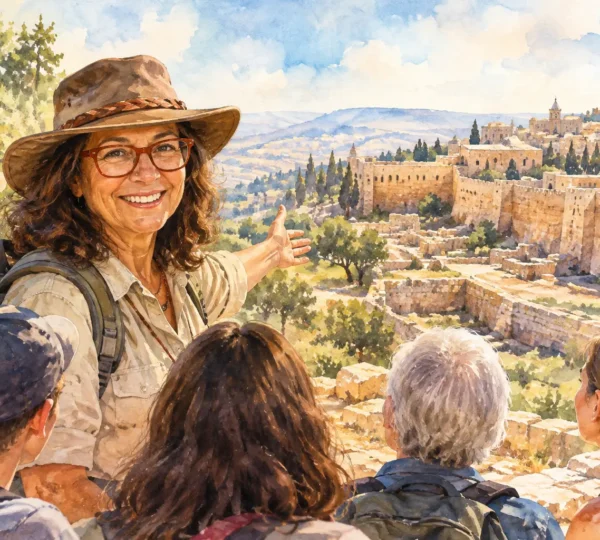
The Southern Wall area is often one of the strongest places to begin. Here, archaeology is not abstract. You see monumental stones, stairways, street levels, and architectural fragments that help you imagine the scale of ancient Jerusalem. The experience works well for heritage travelers, faith-based visitors, and culturally curious guests alike because it offers both physical remains and broader historical framing.
The Jewish Quarter can add another dimension, especially for visitors interested in urban continuity, destruction, and rebuilding. Depending on your pace and interests, a guide may focus on domestic life, ritual spaces, fortifications, or the relationship between excavated remains and the living city above them. This is where a personalized approach matters. Some travelers want more emphasis on religious history, others on architecture, daily life, or the archaeology of war and recovery.
The City of David often appears on a Jerusalem archaeological tour, and it can be a powerful stop when approached thoughtfully. It offers dramatic material, important debates, and a strong sense of terrain. But it is not a one-size-fits-all site. Some guests love the physicality of walking the slopes or water systems. Others prefer a more measured route with time to discuss what is established, what is interpreted, and where scholars still disagree. A skilled guide can shape that experience to fit the traveler rather than forcing the traveler into a fixed program.
The best tours connect archaeology to real life
One of the mistakes visitors sometimes make is treating archaeology as separate from the present-day city. In Jerusalem, that approach never quite works. The most rewarding tours show how excavation, memory, worship, daily routine, and neighborhood identity all exist side by side.
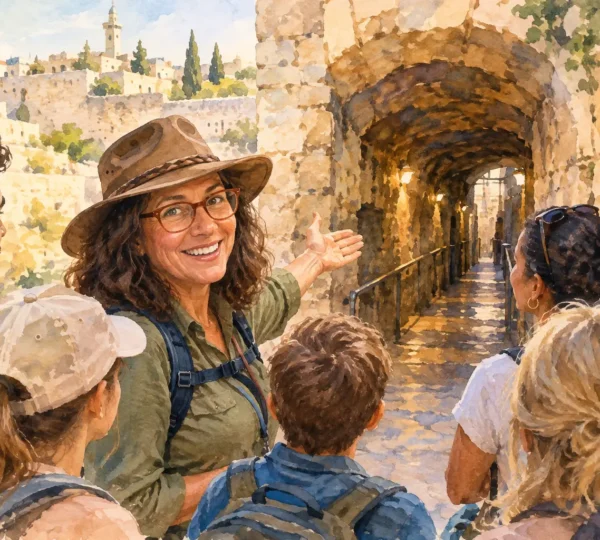
That might mean stepping out of an archaeological park and into a local market for a short break, then returning to the conversation with fresh energy. It might mean pairing major ruins with a quieter museum visit, where smaller artifacts reveal details the monumental sites cannot. Or it might mean walking through a less obvious area where the street itself tells a story once you know what to look for.
This is where private guiding really changes the day. You are not just being moved from site to site. You are building a conversation. If your family includes teenagers, the route can become more hands-on and visual. If you are a repeat visitor with serious interest, the focus can shift toward interpretation, excavation history, and lesser-known corners. If you have only half a day before a business commitment, a short but meaningful route can still give you something substantial rather than rushed.
A Jerusalem archaeological tour should be paced, not packed
Jerusalem invites ambition. Visitors often want to fit in every famous excavation, every overlook, every museum, and every sacred landmark in a single day. Usually, that leads to fatigue more than insight.
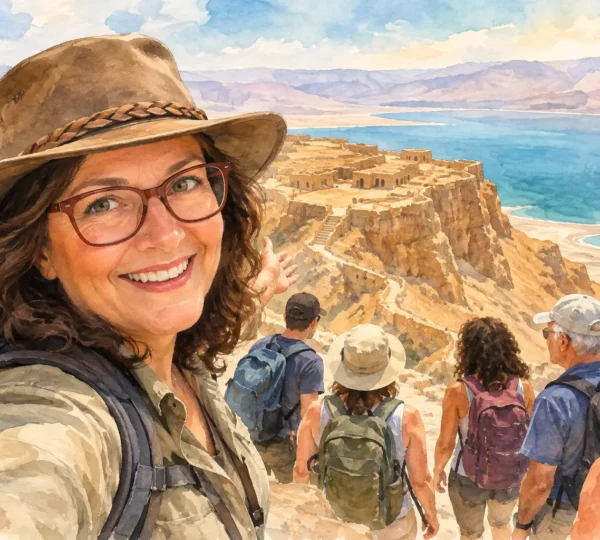
A better plan is to choose a strong arc. One day might focus on the development of ancient Jerusalem around the Old City and the City of David. Another might pair archaeological sites with museum collections that help you read the material more clearly. A third could branch outward into related historical landscapes elsewhere in the country if your trip allows for it.
Pacing also depends on practical things people tend to underestimate. Jerusalem has stairs, slopes, crowds, heat, and sensory intensity. Some sites are easy to visit. Others require more stamina or comfort with uneven ground. None of that is a problem when planned properly, but it should shape the itinerary. Personalized touring is not just a luxury here. It is often the difference between a day that feels meaningful and a day that feels like work.
Who gets the most from this kind of experience
You do not need to be an archaeologist to enjoy an archaeology-focused day in Jerusalem. In fact, many of the best guests are simply curious travelers who want more than surface-level sightseeing. Some come because of family heritage, some because of faith, some because they love ancient cities, and some because they are returning to Israel and want to see what they missed the first time.
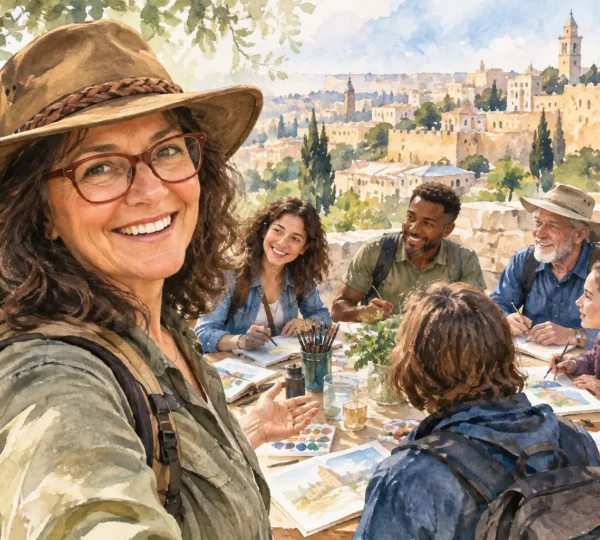
Families often do better with a route that mixes big visual sites, short walking sections, and time to absorb. Adult travelers usually appreciate deeper interpretation and the chance to ask detailed questions. Small groups with shared interests can go much further into specific periods or themes than they would on a standard coach tour.
This is also one of the strongest options for travelers who care about the many layers of life in Israel. Jerusalem is not meaningful only because of what stood here long ago. It is meaningful because the past still shapes the way people understand place, belonging, and continuity. A thoughtful archaeological tour helps you sense that without turning the day into a lecture.
How to choose the right guide and route
If you are planning a Jerusalem archaeological tour, look for someone who can do more than recite dates. You want a licensed guide with strong historical knowledge, yes, but also someone who can read the group, adjust the pace, and make complex material feel clear without flattening it.
Ask how customizable the day is. Can the route be adapted for mobility, heat, children, or prior knowledge? Can the tour lean more biblical, more urban, more architectural, or more off-the-beaten-path? These questions matter because Jerusalem does not offer just one archaeological experience. It offers dozens, and the best one is the one shaped around your interests.
This is one reason travelers choose a company like Patchwork Israel. The value is not only in knowing the major sites. It is in knowing how to weave together the right sites, the right rhythm, and the right level of depth for each guest. Sometimes that means visiting the classics with fresh eyes. Sometimes it means adding a quieter place that transforms your understanding of the whole city.
The real gift of Jerusalem archaeology is not that it gives you all the answers. It is that it teaches you how to see a city made of layers, questions, and memory – and once you start seeing it that way, every stone begins to speak.

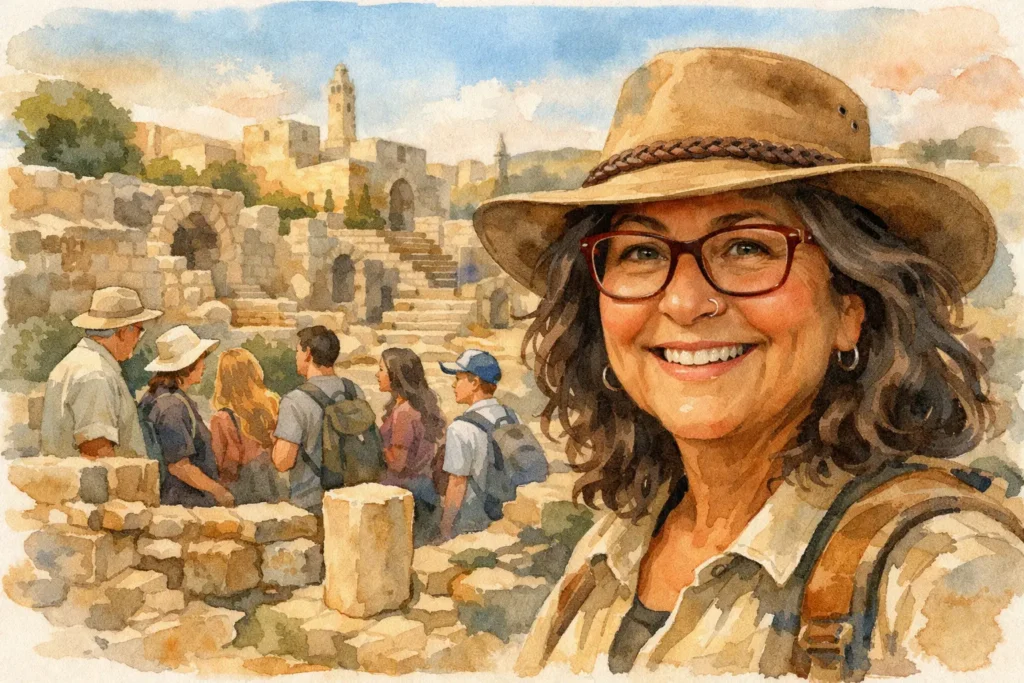
Jerusalem Archaeological Tour Ideas That Go Deeper
Some places in Jerusalem ask you to look twice. A wall segment tucked behind a busy street, a set of ancient steps worn hollow by centuries of feet, a layer of stone that quietly changes the story you thought you knew. A Jerusalem archaeological tour is at its best when it helps you notice those details, then connects them to the bigger human story of the city.
That is what makes archaeology in Jerusalem different from archaeology almost anywhere else. You are not looking at one civilization neatly preserved in one moment. You are reading a city that has been built, destroyed, rebuilt, adapted, and reimagined again and again. The stones matter, of course. But so do the questions they raise, the debates they invite, and the way one excavation can sit just steps from a living neighborhood, an active place of worship, or a family bakery that has its own long memory of the street.
What makes a Jerusalem archaeological tour worth your time
A good tour is not a race between famous names. Jerusalem rewards slower travel and thoughtful interpretation. The most memorable experiences usually come when the guide knows how to balance major sites with smaller moments that many visitors would otherwise walk past.
That balance matters because Jerusalem can be overwhelming. You may arrive with a clear interest in biblical history, Second Temple period remains, Roman layers, Byzantine churches, early Islamic architecture, Crusader traces, or Ottoman city life. Very quickly, you realize all of these periods overlap in ways that are fascinating but not always easy to follow on your own.
With the right guide, the city becomes legible. You begin to understand why a particular street line still follows an ancient route, why one stone type signals a different building phase, or why a site that looks modest at first glance is actually one of the keys to the entire urban story. This is especially valuable for travelers who have already visited Israel once and do not need a basic highlights tour. Often, what they want now is context, nuance, and access to places that add depth rather than volume.
Start with the Old City, but do not stop there
Most Jerusalem archaeology tours begin in or around the Old City, and for good reason. The concentration of history is extraordinary. Within a relatively compact area, you can encounter remains and traditions from multiple eras layered tightly together.
The Southern Wall area is often one of the strongest places to begin. Here, archaeology is not abstract. You see monumental stones, stairways, street levels, and architectural fragments that help you imagine the scale of ancient Jerusalem. The experience works well for heritage travelers, faith-based visitors, and culturally curious guests alike because it offers both physical remains and broader historical framing.
The Jewish Quarter can add another dimension, especially for visitors interested in urban continuity, destruction, and rebuilding. Depending on your pace and interests, a guide may focus on domestic life, ritual spaces, fortifications, or the relationship between excavated remains and the living city above them. This is where a personalized approach matters. Some travelers want more emphasis on religious history, others on architecture, daily life, or the archaeology of war and recovery.
The City of David often appears on a Jerusalem archaeological tour, and it can be a powerful stop when approached thoughtfully. It offers dramatic material, important debates, and a strong sense of terrain. But it is not a one-size-fits-all site. Some guests love the physicality of walking the slopes or water systems. Others prefer a more measured route with time to discuss what is established, what is interpreted, and where scholars still disagree. A skilled guide can shape that experience to fit the traveler rather than forcing the traveler into a fixed program.
The best tours connect archaeology to real life
One of the mistakes visitors sometimes make is treating archaeology as separate from the present-day city. In Jerusalem, that approach never quite works. The most rewarding tours show how excavation, memory, worship, daily routine, and neighborhood identity all exist side by side.
That might mean stepping out of an archaeological park and into a local market for a short break, then returning to the conversation with fresh energy. It might mean pairing major ruins with a quieter museum visit, where smaller artifacts reveal details the monumental sites cannot. Or it might mean walking through a less obvious area where the street itself tells a story once you know what to look for.
This is where private guiding really changes the day. You are not just being moved from site to site. You are building a conversation. If your family includes teenagers, the route can become more hands-on and visual. If you are a repeat visitor with serious interest, the focus can shift toward interpretation, excavation history, and lesser-known corners. If you have only half a day before a business commitment, a short but meaningful route can still give you something substantial rather than rushed.
A Jerusalem archaeological tour should be paced, not packed
Jerusalem invites ambition. Visitors often want to fit in every famous excavation, every overlook, every museum, and every sacred landmark in a single day. Usually, that leads to fatigue more than insight.
A better plan is to choose a strong arc. One day might focus on the development of ancient Jerusalem around the Old City and the City of David. Another might pair archaeological sites with museum collections that help you read the material more clearly. A third could branch outward into related historical landscapes elsewhere in the country if your trip allows for it.
Pacing also depends on practical things people tend to underestimate. Jerusalem has stairs, slopes, crowds, heat, and sensory intensity. Some sites are easy to visit. Others require more stamina or comfort with uneven ground. None of that is a problem when planned properly, but it should shape the itinerary. Personalized touring is not just a luxury here. It is often the difference between a day that feels meaningful and a day that feels like work.
Who gets the most from this kind of experience
You do not need to be an archaeologist to enjoy an archaeology-focused day in Jerusalem. In fact, many of the best guests are simply curious travelers who want more than surface-level sightseeing. Some come because of family heritage, some because of faith, some because they love ancient cities, and some because they are returning to Israel and want to see what they missed the first time.
Families often do better with a route that mixes big visual sites, short walking sections, and time to absorb. Adult travelers usually appreciate deeper interpretation and the chance to ask detailed questions. Small groups with shared interests can go much further into specific periods or themes than they would on a standard coach tour.
This is also one of the strongest options for travelers who care about the many layers of life in Israel. Jerusalem is not meaningful only because of what stood here long ago. It is meaningful because the past still shapes the way people understand place, belonging, and continuity. A thoughtful archaeological tour helps you sense that without turning the day into a lecture.
How to choose the right guide and route
If you are planning a Jerusalem archaeological tour, look for someone who can do more than recite dates. You want a licensed guide with strong historical knowledge, yes, but also someone who can read the group, adjust the pace, and make complex material feel clear without flattening it.
Ask how customizable the day is. Can the route be adapted for mobility, heat, children, or prior knowledge? Can the tour lean more biblical, more urban, more architectural, or more off-the-beaten-path? These questions matter because Jerusalem does not offer just one archaeological experience. It offers dozens, and the best one is the one shaped around your interests.
This is one reason travelers choose a company like Patchwork Israel. The value is not only in knowing the major sites. It is in knowing how to weave together the right sites, the right rhythm, and the right level of depth for each guest. Sometimes that means visiting the classics with fresh eyes. Sometimes it means adding a quieter place that transforms your understanding of the whole city.
The real gift of Jerusalem archaeology is not that it gives you all the answers. It is that it teaches you how to see a city made of layers, questions, and memory – and once you start seeing it that way, every stone begins to speak.

Get the latest blog updates in your inbox.