
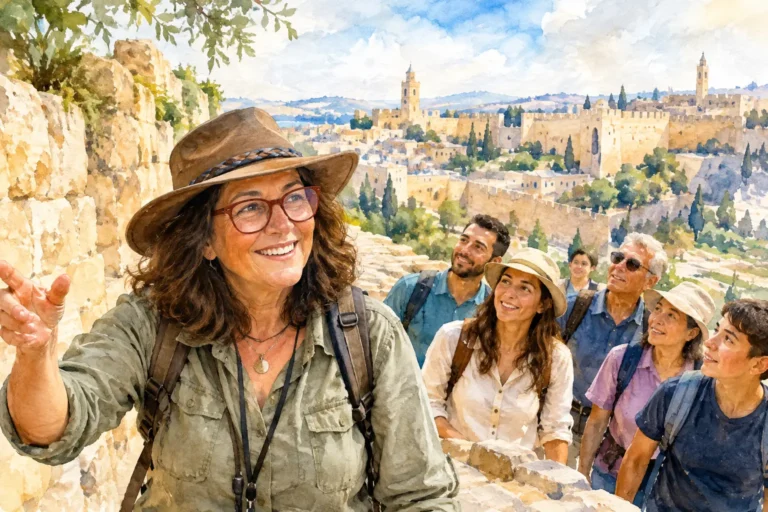
Israel History Through the Places You Can Walk
A Jerusalem stone can hold marks from a Roman road beside a doorway used every morning by a local family. That closeness is what makes Israel history so compelling: it is not arranged neatly behind museum glass. It is underfoot, carved into hillsides, layered beneath city streets, and still present in the food, faith, architecture, and daily rhythms of the places you visit.
For travelers, the challenge is not finding historic sites. Israel has an extraordinary concentration of them. The real opportunity is to understand how the places connect – and to leave enough space to notice the human stories between the famous stops.
Israel History Is a Story of Layers
This small stretch of land has been a meeting place for peoples, traders, pilgrims, armies, farmers, and empires for thousands of years. Its geography helps explain why. The Mediterranean coast opened routes to the wider world; the Jordan Valley formed a natural corridor; the Judean hills offered defensible settlements; and the Negev demanded ingenuity from anyone who hoped to live there.
The earliest chapters begin long before the great biblical kingdoms. Archaeological sites reveal Bronze Age cities, early farming communities, and trade networks that crossed deserts and seas. Then come the eras familiar to many visitors through biblical tradition: the kingdoms of Israel and Judah, Jerusalem’s First Temple period, and the profound memory of exile and return.
The Second Temple period brought a renewed Jerusalem, major building projects, and a religious and cultural world that shaped Judaism and early Christianity. Later, Roman and Byzantine rule left roads, theaters, bathhouses, churches, mosaics, and administrative cities. Islamic dynasties, Crusader rulers, Mamluk builders, and Ottoman communities each added their own material and spiritual imprint. The result is not a simple timeline. It is a landscape where one era often sits directly above another.
That is why a good visit should not feel like a race through dates. A date matters when it helps you see what changed: why a harbor was built, why a fortress rose above the desert, why a market developed beside a sacred site, or why a village used local stone in one particular way.
Jerusalem: A City Best Read Slowly
Jerusalem is often the first place travelers think of, and rightly so. Few cities allow you to walk through so many centuries within such a compact area. Yet Jerusalem rewards a slower pace more than an ambitious checklist.
Start by noticing its geography. The ridges and valleys are not just scenery; they shaped settlement, water collection, routes of approach, and the location of sacred and civic spaces. In the Old City, paving stones, gateways, rooflines, and narrow passages carry clues from successive periods. A few blocks can move you from the remnant of a grand ancient street to a medieval market or a quiet courtyard whose story is easy to miss.
Look Beyond the Major Viewpoints
The famous overlooks and holy places deserve time, especially for first-time visitors. But Israel history becomes more personal when the day also includes a lesser-known neighborhood, an archaeological garden, a small museum collection, or a conversation with someone whose work is rooted in the city.
For some travelers, that might mean tracing the engineering behind ancient water systems. For others, it may be following the artistic details in a church, tasting a traditional dish in a family-run kitchen, or considering how a historic building has found a new use. The best choice depends on your interests, energy level, and the questions you brought with you.
From Coastal Ports to Roman Cities
Along the coast, history feels more open and outward-looking. Jaffa, one of the world’s oldest ports, has watched ships arrive for millennia. Its winding lanes and sea views offer a vivid setting for discussing ancient maritime trade, pilgrimage routes, and the long relationship between the coast and inland Jerusalem.
Farther north, Caesarea presents another scale entirely. Built as a major harbor city during the Herodian period, it still shows the ambition of Roman urban planning. Visitors can see the theater, aqueduct, hippodrome, harbor installations, and layers of later settlement. It is an excellent place to understand that archaeology is not only about sacred sites. It is also about entertainment, water, commerce, engineering, and ordinary urban life.
A visit here benefits from asking practical questions. How did water reach the city? Who sat in the theater? What did it take to operate a port? These details bring an ancient city back to human proportions.
The Desert Makes History Physical
In the Judean Desert and the Negev, the landscape itself becomes part of the lesson. The heat, elevation, distance, and scarcity of water explain choices that can seem mysterious when read on a page.
Masada is perhaps the clearest example. Reaching its summit, whether by cable car or on foot when conditions allow, makes its position immediately understandable. The storerooms, water system, defensive walls, and sweeping desert view reveal remarkable planning in an unforgiving setting. It is a powerful site, but its impact is greater when there is time to look beyond the central story and consider the practical reality of life on that isolated plateau.
The Dead Sea region adds another dimension. Its dramatic geology, mineral-rich water, and nearby desert caves place natural history beside human history. A day in this area can combine an ancient fortress, a short desert walk, and a pause at the shore. It is a reminder that landscapes were never just backdrops. They determined where people traveled, traded, prayed, sheltered, and survived.
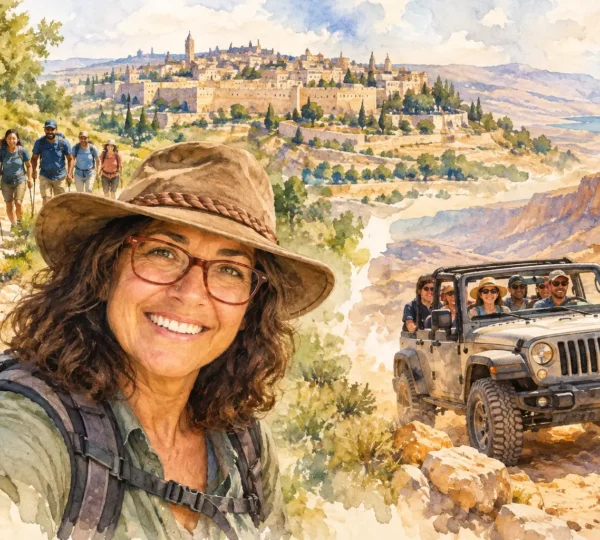
For active travelers, hiking or a carefully chosen 4×4 route can reveal terrain that is invisible from the main roads. This is not about adding adventure for its own sake. It is about seeing the ridges, wadis, terraces, and distant routes that gave historical places their meaning.
History Also Lives in Everyday Encounters
A meaningful historical itinerary should make room for the present. Not because today is separate from the past, but because living communities carry traditions, crafts, foods, languages, religious practices, and memories that give the landscape texture.
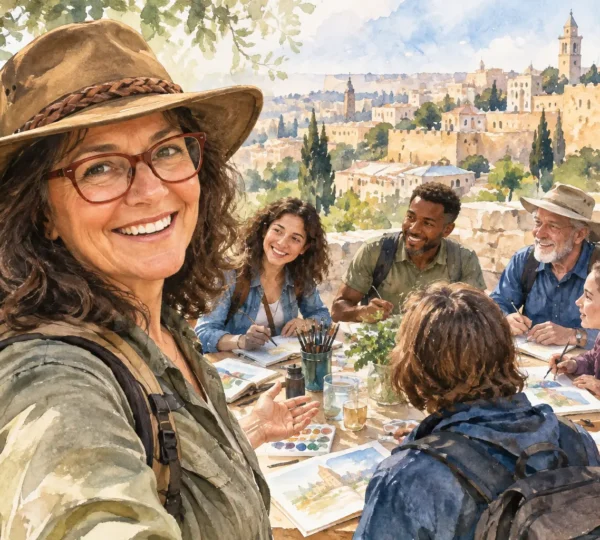
This does not mean treating people as exhibits. The most respectful experiences are rooted in genuine exchange: a host sharing a meal, an artist explaining a process, a farmer describing the land, an archaeologist discussing how a site is interpreted, or a local expert opening a window into a neighborhood. These encounters can be especially valuable for returning visitors who have already seen the headline sites and want a more personal perspective.
Israel’s history is often taught through monumental events. Travel offers another way in: the story of a well, a vineyard terrace, a fishing harbor, a hand-laid mosaic, a family recipe, or a restored railway station. Small details are not distractions from the big picture. They are often how the big picture becomes memorable.
How to Build a Historical Journey That Feels Like Yours
A strong itinerary has rhythm. Jerusalem may call for a full day, or several days, because the density can be overwhelming when compressed. Caesarea pairs naturally with the coast. Masada and the Dead Sea belong together geographically, but a pre-dawn hike is not the right choice for every traveler. Families, business travelers with one open day, heritage visitors, and experienced hikers may all want very different versions of the same region.
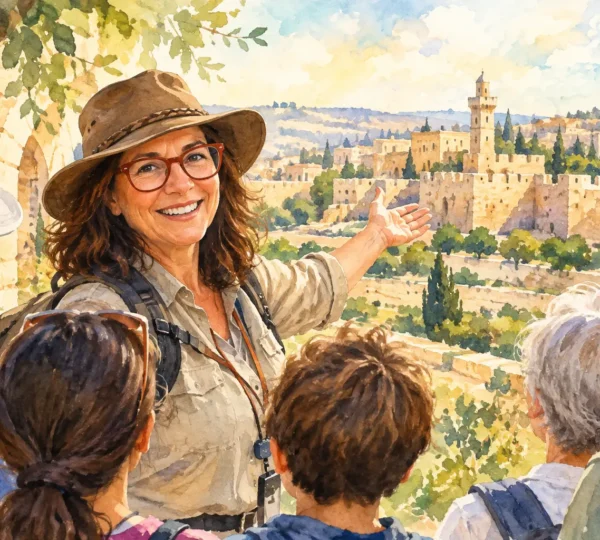
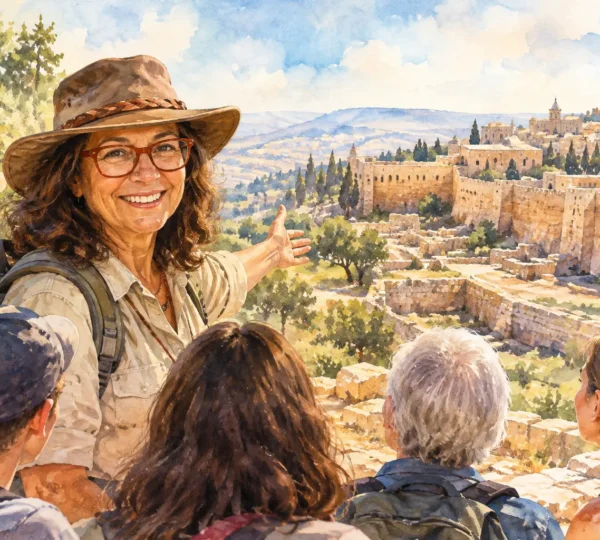
Think first about the kind of connection you want. Are you drawn to biblical periods, early Christianity, archaeology, architecture, food, desert landscapes, or family heritage? Do you prefer major sites with clear context, or quiet places where the story unfolds more gradually? A private guide can shape the route around those answers, adjust the pace when a conversation runs long, and make room for the unexpected roadside view or hidden courtyard that no fixed group schedule can accommodate.
At Patchwork Israel, that flexibility is part of the experience. A day can move from an iconic site to a hands-on activity, a scenic trail, or a local meeting that adds a fresh perspective. The goal is not to collect landmarks. It is to create a journey that feels connected to you.
When you plan your visit, choose one historical question to carry with you each day. It might be as broad as how people found water here, or as personal as what a place of worship means to the people who care for it now. The answer may be waiting in a fortress, a market lane, a desert path, or a conversation you did not expect.

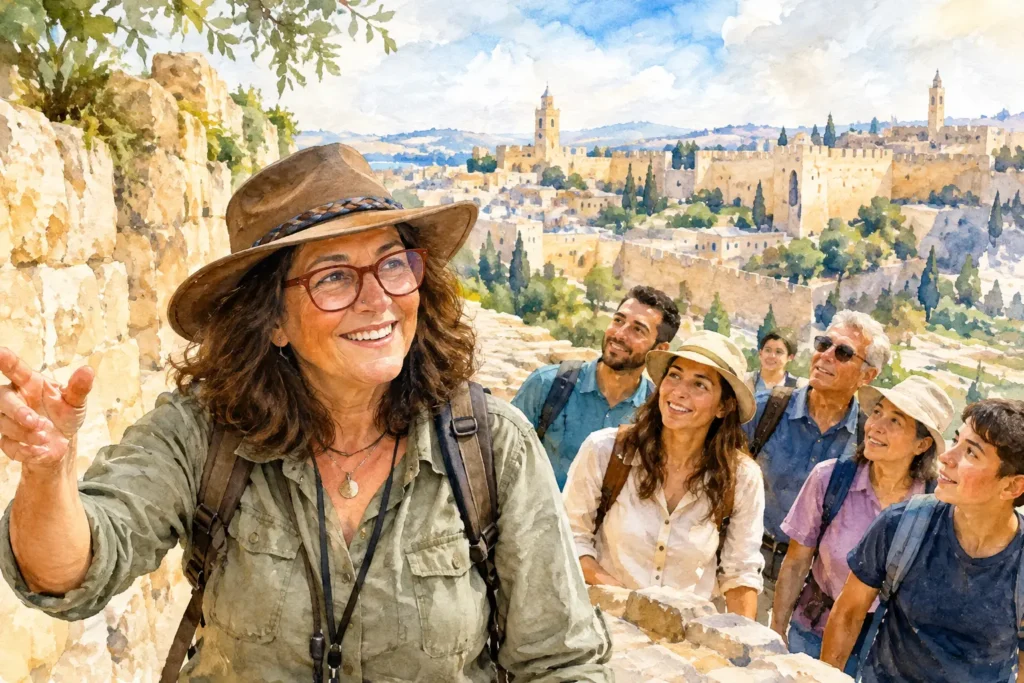
Israel History Through the Places You Can Walk
A Jerusalem stone can hold marks from a Roman road beside a doorway used every morning by a local family. That closeness is what makes Israel history so compelling: it is not arranged neatly behind museum glass. It is underfoot, carved into hillsides, layered beneath city streets, and still present in the food, faith, architecture, and daily rhythms of the places you visit.
For travelers, the challenge is not finding historic sites. Israel has an extraordinary concentration of them. The real opportunity is to understand how the places connect – and to leave enough space to notice the human stories between the famous stops.
Israel History Is a Story of Layers
This small stretch of land has been a meeting place for peoples, traders, pilgrims, armies, farmers, and empires for thousands of years. Its geography helps explain why. The Mediterranean coast opened routes to the wider world; the Jordan Valley formed a natural corridor; the Judean hills offered defensible settlements; and the Negev demanded ingenuity from anyone who hoped to live there.
The earliest chapters begin long before the great biblical kingdoms. Archaeological sites reveal Bronze Age cities, early farming communities, and trade networks that crossed deserts and seas. Then come the eras familiar to many visitors through biblical tradition: the kingdoms of Israel and Judah, Jerusalem’s First Temple period, and the profound memory of exile and return.
The Second Temple period brought a renewed Jerusalem, major building projects, and a religious and cultural world that shaped Judaism and early Christianity. Later, Roman and Byzantine rule left roads, theaters, bathhouses, churches, mosaics, and administrative cities. Islamic dynasties, Crusader rulers, Mamluk builders, and Ottoman communities each added their own material and spiritual imprint. The result is not a simple timeline. It is a landscape where one era often sits directly above another.
That is why a good visit should not feel like a race through dates. A date matters when it helps you see what changed: why a harbor was built, why a fortress rose above the desert, why a market developed beside a sacred site, or why a village used local stone in one particular way.
Jerusalem: A City Best Read Slowly
Jerusalem is often the first place travelers think of, and rightly so. Few cities allow you to walk through so many centuries within such a compact area. Yet Jerusalem rewards a slower pace more than an ambitious checklist.
Start by noticing its geography. The ridges and valleys are not just scenery; they shaped settlement, water collection, routes of approach, and the location of sacred and civic spaces. In the Old City, paving stones, gateways, rooflines, and narrow passages carry clues from successive periods. A few blocks can move you from the remnant of a grand ancient street to a medieval market or a quiet courtyard whose story is easy to miss.
Look Beyond the Major Viewpoints
The famous overlooks and holy places deserve time, especially for first-time visitors. But Israel history becomes more personal when the day also includes a lesser-known neighborhood, an archaeological garden, a small museum collection, or a conversation with someone whose work is rooted in the city.
For some travelers, that might mean tracing the engineering behind ancient water systems. For others, it may be following the artistic details in a church, tasting a traditional dish in a family-run kitchen, or considering how a historic building has found a new use. The best choice depends on your interests, energy level, and the questions you brought with you.
From Coastal Ports to Roman Cities
Along the coast, history feels more open and outward-looking. Jaffa, one of the world’s oldest ports, has watched ships arrive for millennia. Its winding lanes and sea views offer a vivid setting for discussing ancient maritime trade, pilgrimage routes, and the long relationship between the coast and inland Jerusalem.
Farther north, Caesarea presents another scale entirely. Built as a major harbor city during the Herodian period, it still shows the ambition of Roman urban planning. Visitors can see the theater, aqueduct, hippodrome, harbor installations, and layers of later settlement. It is an excellent place to understand that archaeology is not only about sacred sites. It is also about entertainment, water, commerce, engineering, and ordinary urban life.
A visit here benefits from asking practical questions. How did water reach the city? Who sat in the theater? What did it take to operate a port? These details bring an ancient city back to human proportions.
The Desert Makes History Physical
In the Judean Desert and the Negev, the landscape itself becomes part of the lesson. The heat, elevation, distance, and scarcity of water explain choices that can seem mysterious when read on a page.
Masada is perhaps the clearest example. Reaching its summit, whether by cable car or on foot when conditions allow, makes its position immediately understandable. The storerooms, water system, defensive walls, and sweeping desert view reveal remarkable planning in an unforgiving setting. It is a powerful site, but its impact is greater when there is time to look beyond the central story and consider the practical reality of life on that isolated plateau.
The Dead Sea region adds another dimension. Its dramatic geology, mineral-rich water, and nearby desert caves place natural history beside human history. A day in this area can combine an ancient fortress, a short desert walk, and a pause at the shore. It is a reminder that landscapes were never just backdrops. They determined where people traveled, traded, prayed, sheltered, and survived.
For active travelers, hiking or a carefully chosen 4×4 route can reveal terrain that is invisible from the main roads. This is not about adding adventure for its own sake. It is about seeing the ridges, wadis, terraces, and distant routes that gave historical places their meaning.
History Also Lives in Everyday Encounters
A meaningful historical itinerary should make room for the present. Not because today is separate from the past, but because living communities carry traditions, crafts, foods, languages, religious practices, and memories that give the landscape texture.
This does not mean treating people as exhibits. The most respectful experiences are rooted in genuine exchange: a host sharing a meal, an artist explaining a process, a farmer describing the land, an archaeologist discussing how a site is interpreted, or a local expert opening a window into a neighborhood. These encounters can be especially valuable for returning visitors who have already seen the headline sites and want a more personal perspective.
Israel’s history is often taught through monumental events. Travel offers another way in: the story of a well, a vineyard terrace, a fishing harbor, a hand-laid mosaic, a family recipe, or a restored railway station. Small details are not distractions from the big picture. They are often how the big picture becomes memorable.
How to Build a Historical Journey That Feels Like Yours
A strong itinerary has rhythm. Jerusalem may call for a full day, or several days, because the density can be overwhelming when compressed. Caesarea pairs naturally with the coast. Masada and the Dead Sea belong together geographically, but a pre-dawn hike is not the right choice for every traveler. Families, business travelers with one open day, heritage visitors, and experienced hikers may all want very different versions of the same region.
Think first about the kind of connection you want. Are you drawn to biblical periods, early Christianity, archaeology, architecture, food, desert landscapes, or family heritage? Do you prefer major sites with clear context, or quiet places where the story unfolds more gradually? A private guide can shape the route around those answers, adjust the pace when a conversation runs long, and make room for the unexpected roadside view or hidden courtyard that no fixed group schedule can accommodate.
At Patchwork Israel, that flexibility is part of the experience. A day can move from an iconic site to a hands-on activity, a scenic trail, or a local meeting that adds a fresh perspective. The goal is not to collect landmarks. It is to create a journey that feels connected to you.
When you plan your visit, choose one historical question to carry with you each day. It might be as broad as how people found water here, or as personal as what a place of worship means to the people who care for it now. The answer may be waiting in a fortress, a market lane, a desert path, or a conversation you did not expect.
Get the latest blog updates in your inbox.