
Israel Tour Costs for a Private, Personal Trip
A sunrise over the Judean Desert, a quiet chapel in Jerusalem, a family meal in a village, and a swim in the Dead Sea can all fit into one Israel trip. The question behind the itinerary is usually practical: what will it cost? Israel tour costs can vary widely because a private journey is built around your pace, interests, accommodation style, and the experiences that matter most to you.
A meaningful trip does not have to mean choosing the most expensive option at every turn. It does mean understanding where your money goes, where flexibility adds value, and which choices can make a short visit feel genuinely personal rather than rushed.
What Shapes Israel Tour Costs?
The largest factors are usually the number of travel days, the size of your party, the season, hotel standard, and whether you need a guide, driver, or both. A couple traveling privately will share the cost of guiding and transportation between two people. A family or a small group can often make a private day feel considerably more economical per person, even while enjoying the same level of attention.
Your route matters, too. Jerusalem, Tel Aviv, Jaffa, Caesarea, Masada, and the Dead Sea are all reachable within a well-planned itinerary, but frequent hotel changes, long driving days, or a desire to cover every region can increase transportation and luggage-handling needs. Sometimes staying an extra night in one place is both less expensive and far more relaxing.
The time of year can be just as influential. Holiday periods and popular travel months tend to bring higher hotel demand. Summer may offer long days and lively coastal evenings, while cooler months are especially appealing for hiking, desert walks, and outdoor exploration. The best value is not always the lowest nightly rate. A slightly higher-priced hotel in the right location can save driving time and leave room for an unplanned market stop, a good coffee, or a sunset viewpoint.
Typical Costs for a Private Israel Trip
Every itinerary should be priced individually, but broad planning ranges can help set expectations. These are useful starting points rather than fixed quotes, since supplier rates, dates, room preferences, and activity availability change.
For comfortable mid-range to upscale accommodation, travelers often budget roughly $180 to $500 or more per room, per night. Boutique hotels in central locations, properties with special character, and peak-season stays can exceed that range. Simple guesthouses and carefully chosen smaller hotels may reduce the nightly cost without making the trip feel basic.
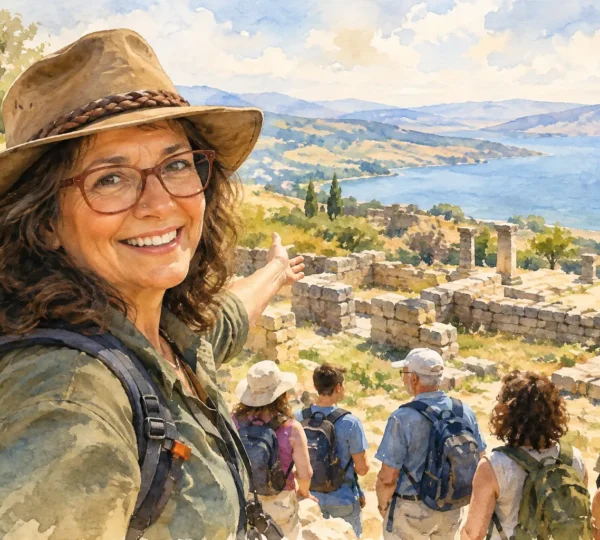
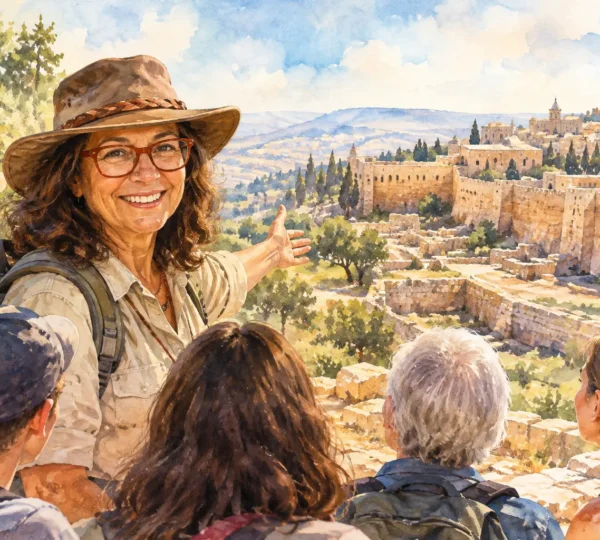
A full day with a licensed private guide commonly represents a meaningful part of the trip budget, often around $550 to $900 or more depending on the day’s length, group size, route, and specialty. A guide brings far more than directions. The right guide can adjust the rhythm when a site is crowded, explain the human stories behind ancient stones, know when to pause for lunch, and introduce places that do not appear on a standard checklist.
If your itinerary requires a separate private driver and vehicle, expect an additional daily cost. This can be especially worthwhile for larger families, multigenerational travelers, or groups who want everyone to relax between stops. For some smaller groups, a guide who also drives is a sensible, more streamlined arrangement. The best choice depends on luggage, mobility needs, desired comfort, and how much time will be spent on the road.
Meals can be wonderfully flexible. A casual lunch of falafel, fresh salads, or bakery specialties may be quite modest, while a chef-led meal, winery visit, or memorable restaurant dinner will naturally raise the daily spend. Entrance fees, cable cars, museums, nature reserves, and special activities should be budgeted separately. They are not merely extras when they are the reason you came.
Where Private Touring Delivers Real Value
A standard bus itinerary can be attractive on paper, especially when the headline price bundles many basics. The trade-off is that the schedule belongs to the group. A private tour costs more upfront, but it can make better use of precious vacation days by focusing only on what interests you.
For a first visit, that might mean pairing the essential heritage sites with an afternoon in a neighborhood that reveals daily life. For returning visitors, it might mean skipping familiar highlights in favor of a behind-the-scenes conversation, a farm visit, a cooking workshop, an archaeological walk, or a 4×4 route through a dramatic landscape.
This is where customization changes the calculation. A day designed around your family’s energy, your faith journey, your love of food, or your curiosity about the country’s many communities can feel far more valuable than a long list of included stops. Children may remember making mosaics or riding camels more clearly than another museum. Adults may find that an hour with a local expert becomes the most lasting part of the trip.
Patchwork Israel plans private days with this kind of intention, combining well-known places with hidden corners and experiences that fit the travelers in the vehicle. The goal is not to fill every hour. It is to make each day feel like it could only have belonged to you.
How to Set a Budget Without Losing the Experience
Start with your non-negotiables. Perhaps you want time in Jerusalem, a desert overnight, a few days by the sea, or a meaningful visit tied to family history. Once those anchors are clear, it becomes easier to decide where to spend and where to simplify.
A useful approach is to prioritize a knowledgeable guide for the days that have the most historical depth or logistical complexity. A guided day in Jerusalem, a route through the desert, or a full-day journey to Masada and the Dead Sea can be an excellent investment. On another day, you may prefer an unhurried stroll, beach time, or independent wandering in a walkable neighborhood.
Be honest about your preferred travel rhythm. Trying to see the north, south, coast, and central cities in a handful of days can create high transportation costs and little time to absorb any of it. A tighter geographic focus often creates a richer experience and a better budget. One thoughtfully paced region can offer history, nature, food, spirituality, and unexpected encounters.
Accommodation is another area where small choices matter. You may decide that one exceptional hotel night is worth it, perhaps near the desert or in a historic setting, while choosing simpler, clean, well-located stays on other nights. Similarly, one special culinary experience can be more satisfying than trying to make every meal an event.
Questions to Ask Before Comparing Tour Quotes
When comparing Israel tour costs, make sure you are comparing like with like. A lower price may exclude entrance fees, meals, a vehicle, parking, guide expenses, hotel taxes, or a driver’s overnight accommodation on multi-day routes. It may also reflect fewer hours, a different hotel category, or a more rigid schedule.
Ask whether the quote identifies what is included each day, how many guiding hours are planned, whether transportation is private, and how adjustments are handled if weather or timing changes. If an activity is important to you, confirm it early. Some experiences require advance reservations or have limited availability.
It also helps to share your approximate budget from the beginning. That is not a limitation. It gives your planner the information needed to recommend realistic alternatives: a lesser-known viewpoint instead of an expensive attraction, a family-run lunch instead of a formal restaurant, or a two-night stay that removes an unnecessary transfer.
The Cost of a Trip You Will Actually Remember
The most satisfying Israel itinerary is rarely the one with the most pins on a map. It is the one that leaves enough room to listen, taste, walk, ask questions, and be surprised. Build your budget around the experiences that matter to you, then let the rest of the journey breathe.

Israel Tour Costs for a Private, Personal Trip
A sunrise over the Judean Desert, a quiet chapel in Jerusalem, a family meal in a village, and a swim in the Dead Sea can all fit into one Israel trip. The question behind the itinerary is usually practical: what will it cost? Israel tour costs can vary widely because a private journey is built around your pace, interests, accommodation style, and the experiences that matter most to you.
A meaningful trip does not have to mean choosing the most expensive option at every turn. It does mean understanding where your money goes, where flexibility adds value, and which choices can make a short visit feel genuinely personal rather than rushed.
What Shapes Israel Tour Costs?
The largest factors are usually the number of travel days, the size of your party, the season, hotel standard, and whether you need a guide, driver, or both. A couple traveling privately will share the cost of guiding and transportation between two people. A family or a small group can often make a private day feel considerably more economical per person, even while enjoying the same level of attention.
Your route matters, too. Jerusalem, Tel Aviv, Jaffa, Caesarea, Masada, and the Dead Sea are all reachable within a well-planned itinerary, but frequent hotel changes, long driving days, or a desire to cover every region can increase transportation and luggage-handling needs. Sometimes staying an extra night in one place is both less expensive and far more relaxing.
The time of year can be just as influential. Holiday periods and popular travel months tend to bring higher hotel demand. Summer may offer long days and lively coastal evenings, while cooler months are especially appealing for hiking, desert walks, and outdoor exploration. The best value is not always the lowest nightly rate. A slightly higher-priced hotel in the right location can save driving time and leave room for an unplanned market stop, a good coffee, or a sunset viewpoint.
Typical Costs for a Private Israel Trip
Every itinerary should be priced individually, but broad planning ranges can help set expectations. These are useful starting points rather than fixed quotes, since supplier rates, dates, room preferences, and activity availability change.
For comfortable mid-range to upscale accommodation, travelers often budget roughly $180 to $500 or more per room, per night. Boutique hotels in central locations, properties with special character, and peak-season stays can exceed that range. Simple guesthouses and carefully chosen smaller hotels may reduce the nightly cost without making the trip feel basic.
A full day with a licensed private guide commonly represents a meaningful part of the trip budget, often around $550 to $900 or more depending on the day’s length, group size, route, and specialty. A guide brings far more than directions. The right guide can adjust the rhythm when a site is crowded, explain the human stories behind ancient stones, know when to pause for lunch, and introduce places that do not appear on a standard checklist.
If your itinerary requires a separate private driver and vehicle, expect an additional daily cost. This can be especially worthwhile for larger families, multigenerational travelers, or groups who want everyone to relax between stops. For some smaller groups, a guide who also drives is a sensible, more streamlined arrangement. The best choice depends on luggage, mobility needs, desired comfort, and how much time will be spent on the road.
Meals can be wonderfully flexible. A casual lunch of falafel, fresh salads, or bakery specialties may be quite modest, while a chef-led meal, winery visit, or memorable restaurant dinner will naturally raise the daily spend. Entrance fees, cable cars, museums, nature reserves, and special activities should be budgeted separately. They are not merely extras when they are the reason you came.
Where Private Touring Delivers Real Value
A standard bus itinerary can be attractive on paper, especially when the headline price bundles many basics. The trade-off is that the schedule belongs to the group. A private tour costs more upfront, but it can make better use of precious vacation days by focusing only on what interests you.
For a first visit, that might mean pairing the essential heritage sites with an afternoon in a neighborhood that reveals daily life. For returning visitors, it might mean skipping familiar highlights in favor of a behind-the-scenes conversation, a farm visit, a cooking workshop, an archaeological walk, or a 4×4 route through a dramatic landscape.
This is where customization changes the calculation. A day designed around your family’s energy, your faith journey, your love of food, or your curiosity about the country’s many communities can feel far more valuable than a long list of included stops. Children may remember making mosaics or riding camels more clearly than another museum. Adults may find that an hour with a local expert becomes the most lasting part of the trip.
Patchwork Israel plans private days with this kind of intention, combining well-known places with hidden corners and experiences that fit the travelers in the vehicle. The goal is not to fill every hour. It is to make each day feel like it could only have belonged to you.
How to Set a Budget Without Losing the Experience
Start with your non-negotiables. Perhaps you want time in Jerusalem, a desert overnight, a few days by the sea, or a meaningful visit tied to family history. Once those anchors are clear, it becomes easier to decide where to spend and where to simplify.
A useful approach is to prioritize a knowledgeable guide for the days that have the most historical depth or logistical complexity. A guided day in Jerusalem, a route through the desert, or a full-day journey to Masada and the Dead Sea can be an excellent investment. On another day, you may prefer an unhurried stroll, beach time, or independent wandering in a walkable neighborhood.
Be honest about your preferred travel rhythm. Trying to see the north, south, coast, and central cities in a handful of days can create high transportation costs and little time to absorb any of it. A tighter geographic focus often creates a richer experience and a better budget. One thoughtfully paced region can offer history, nature, food, spirituality, and unexpected encounters.
Accommodation is another area where small choices matter. You may decide that one exceptional hotel night is worth it, perhaps near the desert or in a historic setting, while choosing simpler, clean, well-located stays on other nights. Similarly, one special culinary experience can be more satisfying than trying to make every meal an event.
Questions to Ask Before Comparing Tour Quotes
When comparing Israel tour costs, make sure you are comparing like with like. A lower price may exclude entrance fees, meals, a vehicle, parking, guide expenses, hotel taxes, or a driver’s overnight accommodation on multi-day routes. It may also reflect fewer hours, a different hotel category, or a more rigid schedule.
Ask whether the quote identifies what is included each day, how many guiding hours are planned, whether transportation is private, and how adjustments are handled if weather or timing changes. If an activity is important to you, confirm it early. Some experiences require advance reservations or have limited availability.
It also helps to share your approximate budget from the beginning. That is not a limitation. It gives your planner the information needed to recommend realistic alternatives: a lesser-known viewpoint instead of an expensive attraction, a family-run lunch instead of a formal restaurant, or a two-night stay that removes an unnecessary transfer.
The Cost of a Trip You Will Actually Remember
The most satisfying Israel itinerary is rarely the one with the most pins on a map. It is the one that leaves enough room to listen, taste, walk, ask questions, and be surprised. Build your budget around the experiences that matter to you, then let the rest of the journey breathe.



Get the latest blog updates in your inbox.