
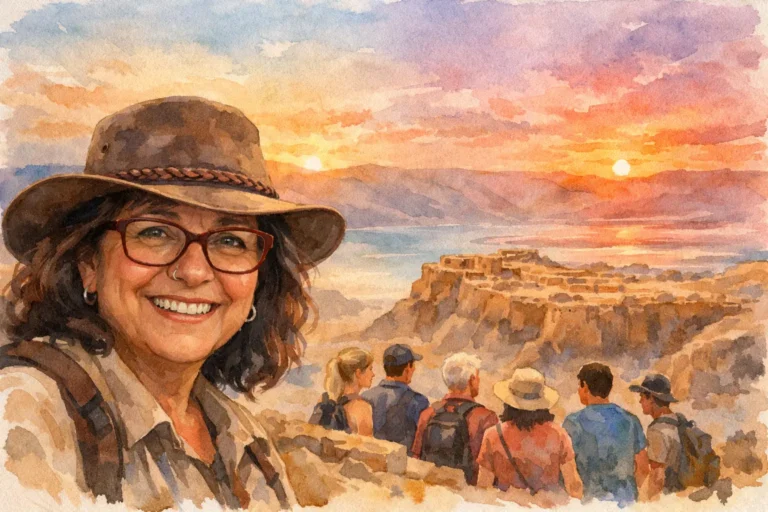
Masada Sunrise or Sunset Tour: Which Is Best?
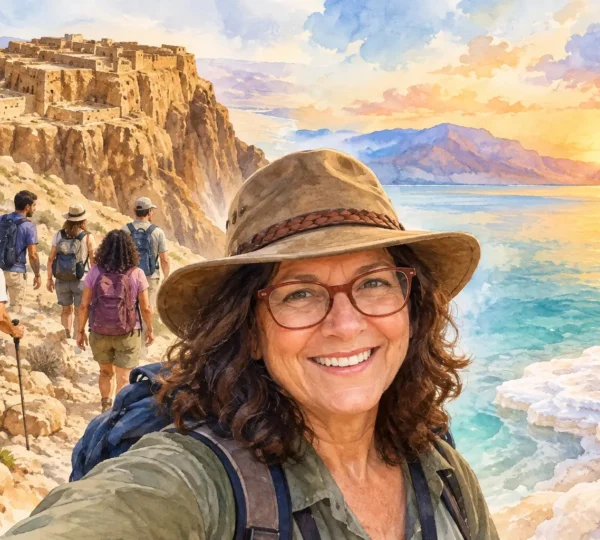
The first light reaches the Moab Mountains across the Dead Sea before it reaches Masada’s stone walls. That is the magic people hope for when they ask about a Masada sunrise or sunset tour. Yet the better choice is not simply the one with prettier photos. It depends on how you like to travel, whether you want to hike, how much desert heat you enjoy, where you are staying, and what you hope to feel when you arrive at this extraordinary mountaintop.
Masada deserves more than a rushed stop between breakfast and a Dead Sea float. Built as a desert refuge by King Herod and later associated with a dramatic first-century revolt, the site holds architecture, landscape, memory, and difficult human questions in one remarkably compact place. A private tour lets the day follow your pace – early and active, relaxed and golden, or a thoughtful combination of both.
Masada Sunrise or Sunset Tour: The Short Answer
Choose sunrise if you want the classic Snake Path hike, cooler walking conditions, and the unforgettable experience of watching the desert wake up from the summit. It is the right fit for travelers who do not mind a very early start and enjoy earning a view with their feet.
Choose sunset if you prefer a gentler schedule, softer light, fewer alarms, and a desert experience that can unfold gradually through the afternoon. It is often especially appealing for families with younger children, business travelers with a limited window, or anyone who wants Masada without beginning the day in the middle of the night.
Neither is automatically better. Sunrise feels energetic and elemental. Sunset feels spacious, reflective, and often more comfortable logistically. The season makes a real difference too. A summer sunrise hike can be wise because temperatures rise quickly after morning. In winter, sunrise may be chilly and windy, while a sunset visit can leave you descending in the dark and cooler air.
Why Sunrise at Masada Is So Memorable
A sunrise tour usually begins long before daylight. There is something wonderfully honest about that early departure: coffee in hand, hiking shoes on, desert silence outside the vehicle. The Snake Path climbs the eastern side of Masada in a steady series of switchbacks. It is not technical climbing, but it is a genuine uphill walk, and the pace should be adjusted to the group rather than dictated by a crowd.
Reaching the summit before sunrise changes the experience of the site. The mountain is still quiet. Then the horizon slowly gains color, the Dead Sea begins to shine, and the broad desert becomes visible layer by layer. The light is beautiful, of course, but the stronger impression is the sense of scale. From above, you can understand why this isolated plateau was chosen as a fortress and why water storage, food supply, and careful planning mattered so much here.
After sunrise, there is time to explore beyond the viewpoint. Herod’s Northern Palace, the bathhouse, storerooms, ritual baths, synagogue, and Roman siege works each reveal a different chapter of Masada. The familiar account of the siege comes primarily from the historian Josephus, and a good visit should make room for both the power of that story and the questions scholars continue to discuss. History becomes much more interesting when it is not treated as a script.
The trade-off is simple: sunrise requires commitment. Pickup times are very early, especially from Jerusalem or the coastal cities, and the hike is not ideal for every knee, ankle, or fitness level. Travelers who want the sunrise atmosphere but not the full climb may be able to use the cable car when operating hours allow, though schedules vary by season and should always be confirmed close to the date.
Who Should Choose the Sunrise Hike?
Sunrise is particularly rewarding for active adults, teens, hikers, and travelers who want a meaningful outdoor challenge rather than a standard sightseeing stop. It also works beautifully for families with older children who enjoy a shared accomplishment. If a member of your group has limited mobility, prefers a slower morning, or simply wants to avoid a pre-dawn wake-up call, there are better ways to experience Masada.
What a Sunset Visit Offers Instead
A sunset Masada tour trades the dramatic early climb for a more relaxed desert rhythm. You can begin the day with a late breakfast, visit another nearby highlight, enjoy time at the Dead Sea, or explore a desert landscape before ascending Masada in the afternoon. The low light brings warmth to the stone, softens the hard edges of the cliffs, and gives photographers a more forgiving palette than the bright midday sun.
Sunset is also a strong choice for travelers who value interpretation as much as exertion. With less pressure to beat the dawn, there is room to linger at the palace terraces, notice the engineering of the cisterns, or talk about the Roman camps visible below. I often find that late-day groups are more ready to ask thoughtful questions. They have settled into the desert rather than racing through it.
The main consideration is the descent. If you hike, you need enough time and daylight to come down safely, so the route and timing must be planned carefully. A cable car visit is often the easiest sunset option, but its operating hours are not the same throughout the year. In some cases, the best sunset view may be from another carefully chosen desert overlook rather than from Masada itself.
Sunset Is Not Always Cooler
Many visitors assume sunset means cool temperatures. In the Judean Desert, that is not always true. On a hot day, late afternoon can still be intense, especially on exposed stone with little shade. Spring and fall are often lovely, while summer calls for water, sun protection, and realistic expectations. A private guide can shift the schedule, choose the right ascent method, and build in shade and breaks instead of forcing everyone into one fixed plan.
Build the Day Around Your Kind of Israel
The best Masada experience rarely stands alone. After a sunrise hike, floating in the mineral-rich Dead Sea can feel like an earned reward. A stop for breakfast, a quiet desert drive, or time at a nature reserve can turn an early morning into a full but balanced day.
For a sunset plan, the earlier hours offer more flexibility. You might combine Masada with a short desert walk, a scenic drive, an easy swim, or a visit focused on the region’s geology and water systems. Travelers returning to Israel after having seen the major highlights may prefer a less obvious route: a remote overlook, a seasonal stream when conditions permit, or a conversation centered on how people have adapted to life in this demanding landscape.
This is where tailoring matters. A multigenerational family may need a cable car, short walks, snacks, and an unhurried pace. A couple celebrating a milestone may want a quiet sunrise with time for photographs. A small group of friends may be happiest with hiking, a desert picnic, and a swim afterward. The same destination can feel entirely different depending on the people standing beside you.
Practical Details That Make the Difference
Footwear matters more than people expect. Wear closed-toe walking shoes with grip, especially for the Snake Path, and bring a warm layer for a winter sunrise or a light layer for after sunset. Carry more water than you think you will need, along with sunscreen, a hat, and a small snack. The summit is exposed, and desert conditions can change quickly.
Masada’s opening times, cable car service, trail access, and weather conditions can vary. Extreme heat, wind, rain, or flood risk in the region may require a route adjustment. That is not a disappointment when the day is designed well; it is an opportunity to choose the safest and most rewarding version of the desert. An experienced licensed guide should be watching those details before they become problems.
Patchwork Israel plans private Masada days around your energy, interests, accommodations, and preferred level of adventure. Whether you arrive by foot at first light or ride up for the final glow of the day, the goal is not to check off a famous site. It is to leave with a memory that belongs to your group alone.
When you picture yourself at Masada, notice what you are drawn to: the first quiet colors of morning, or the slow glow of evening. That instinct is usually the best place to begin planning.

Masada Sunrise or Sunset Tour: Which Is Best?
The first light reaches the Moab Mountains across the Dead Sea before it reaches Masada’s stone walls. That is the magic people hope for when they ask about a Masada sunrise or sunset tour. Yet the better choice is not simply the one with prettier photos. It depends on how you like to travel, whether you want to hike, how much desert heat you enjoy, where you are staying, and what you hope to feel when you arrive at this extraordinary mountaintop.
Masada deserves more than a rushed stop between breakfast and a Dead Sea float. Built as a desert refuge by King Herod and later associated with a dramatic first-century revolt, the site holds architecture, landscape, memory, and difficult human questions in one remarkably compact place. A private tour lets the day follow your pace – early and active, relaxed and golden, or a thoughtful combination of both.
Masada Sunrise or Sunset Tour: The Short Answer
Choose sunrise if you want the classic Snake Path hike, cooler walking conditions, and the unforgettable experience of watching the desert wake up from the summit. It is the right fit for travelers who do not mind a very early start and enjoy earning a view with their feet.
Choose sunset if you prefer a gentler schedule, softer light, fewer alarms, and a desert experience that can unfold gradually through the afternoon. It is often especially appealing for families with younger children, business travelers with a limited window, or anyone who wants Masada without beginning the day in the middle of the night.
Neither is automatically better. Sunrise feels energetic and elemental. Sunset feels spacious, reflective, and often more comfortable logistically. The season makes a real difference too. A summer sunrise hike can be wise because temperatures rise quickly after morning. In winter, sunrise may be chilly and windy, while a sunset visit can leave you descending in the dark and cooler air.
Why Sunrise at Masada Is So Memorable
A sunrise tour usually begins long before daylight. There is something wonderfully honest about that early departure: coffee in hand, hiking shoes on, desert silence outside the vehicle. The Snake Path climbs the eastern side of Masada in a steady series of switchbacks. It is not technical climbing, but it is a genuine uphill walk, and the pace should be adjusted to the group rather than dictated by a crowd.
Reaching the summit before sunrise changes the experience of the site. The mountain is still quiet. Then the horizon slowly gains color, the Dead Sea begins to shine, and the broad desert becomes visible layer by layer. The light is beautiful, of course, but the stronger impression is the sense of scale. From above, you can understand why this isolated plateau was chosen as a fortress and why water storage, food supply, and careful planning mattered so much here.
After sunrise, there is time to explore beyond the viewpoint. Herod’s Northern Palace, the bathhouse, storerooms, ritual baths, synagogue, and Roman siege works each reveal a different chapter of Masada. The familiar account of the siege comes primarily from the historian Josephus, and a good visit should make room for both the power of that story and the questions scholars continue to discuss. History becomes much more interesting when it is not treated as a script.
The trade-off is simple: sunrise requires commitment. Pickup times are very early, especially from Jerusalem or the coastal cities, and the hike is not ideal for every knee, ankle, or fitness level. Travelers who want the sunrise atmosphere but not the full climb may be able to use the cable car when operating hours allow, though schedules vary by season and should always be confirmed close to the date.
Who Should Choose the Sunrise Hike?
Sunrise is particularly rewarding for active adults, teens, hikers, and travelers who want a meaningful outdoor challenge rather than a standard sightseeing stop. It also works beautifully for families with older children who enjoy a shared accomplishment. If a member of your group has limited mobility, prefers a slower morning, or simply wants to avoid a pre-dawn wake-up call, there are better ways to experience Masada.
What a Sunset Visit Offers Instead
A sunset Masada tour trades the dramatic early climb for a more relaxed desert rhythm. You can begin the day with a late breakfast, visit another nearby highlight, enjoy time at the Dead Sea, or explore a desert landscape before ascending Masada in the afternoon. The low light brings warmth to the stone, softens the hard edges of the cliffs, and gives photographers a more forgiving palette than the bright midday sun.
Sunset is also a strong choice for travelers who value interpretation as much as exertion. With less pressure to beat the dawn, there is room to linger at the palace terraces, notice the engineering of the cisterns, or talk about the Roman camps visible below. I often find that late-day groups are more ready to ask thoughtful questions. They have settled into the desert rather than racing through it.
The main consideration is the descent. If you hike, you need enough time and daylight to come down safely, so the route and timing must be planned carefully. A cable car visit is often the easiest sunset option, but its operating hours are not the same throughout the year. In some cases, the best sunset view may be from another carefully chosen desert overlook rather than from Masada itself.
Sunset Is Not Always Cooler
Many visitors assume sunset means cool temperatures. In the Judean Desert, that is not always true. On a hot day, late afternoon can still be intense, especially on exposed stone with little shade. Spring and fall are often lovely, while summer calls for water, sun protection, and realistic expectations. A private guide can shift the schedule, choose the right ascent method, and build in shade and breaks instead of forcing everyone into one fixed plan.
Build the Day Around Your Kind of Israel
The best Masada experience rarely stands alone. After a sunrise hike, floating in the mineral-rich Dead Sea can feel like an earned reward. A stop for breakfast, a quiet desert drive, or time at a nature reserve can turn an early morning into a full but balanced day.
For a sunset plan, the earlier hours offer more flexibility. You might combine Masada with a short desert walk, a scenic drive, an easy swim, or a visit focused on the region’s geology and water systems. Travelers returning to Israel after having seen the major highlights may prefer a less obvious route: a remote overlook, a seasonal stream when conditions permit, or a conversation centered on how people have adapted to life in this demanding landscape.
This is where tailoring matters. A multigenerational family may need a cable car, short walks, snacks, and an unhurried pace. A couple celebrating a milestone may want a quiet sunrise with time for photographs. A small group of friends may be happiest with hiking, a desert picnic, and a swim afterward. The same destination can feel entirely different depending on the people standing beside you.
Practical Details That Make the Difference
Footwear matters more than people expect. Wear closed-toe walking shoes with grip, especially for the Snake Path, and bring a warm layer for a winter sunrise or a light layer for after sunset. Carry more water than you think you will need, along with sunscreen, a hat, and a small snack. The summit is exposed, and desert conditions can change quickly.
Masada’s opening times, cable car service, trail access, and weather conditions can vary. Extreme heat, wind, rain, or flood risk in the region may require a route adjustment. That is not a disappointment when the day is designed well; it is an opportunity to choose the safest and most rewarding version of the desert. An experienced licensed guide should be watching those details before they become problems.
Patchwork Israel plans private Masada days around your energy, interests, accommodations, and preferred level of adventure. Whether you arrive by foot at first light or ride up for the final glow of the day, the goal is not to check off a famous site. It is to leave with a memory that belongs to your group alone.
When you picture yourself at Masada, notice what you are drawn to: the first quiet colors of morning, or the slow glow of evening. That instinct is usually the best place to begin planning.

Get the latest blog updates in your inbox.