
7 Hidden Archaeology Routes in Israel Worth Taking
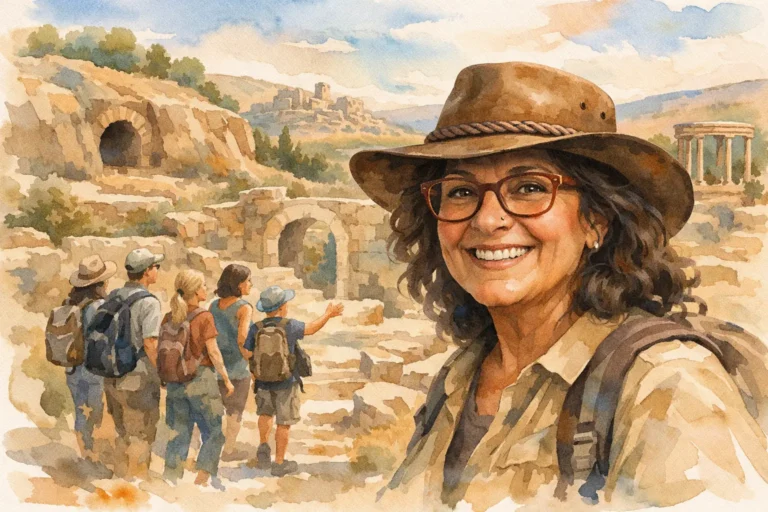
The most memorable ruins are not always the ones with the biggest visitor centers. On hidden archaeology routes in Israel, a worn threshold, a buried winepress, or a line of ancient stones on a hillside can make the past feel unexpectedly close. These are places where the landscape still does part of the storytelling – and where a thoughtfully paced private day can reveal far more than a quick stop at a famous site.
For travelers who have already seen the headline destinations, archaeology offers a different kind of return visit. It can also be the heart of a first trip, especially when the day is shaped around your interests: ancient engineering, early religious life, desert settlement, mosaics, farming, or simply a good walk followed by a memorable local meal.
What Makes an Archaeology Route Feel Hidden?
“Hidden” does not have to mean remote, difficult, or undiscovered. In Israel, it often means a site just beyond the standard coach itinerary, a lesser-visited section of a well-known national park, or several small places connected into one meaningful route. The pleasure lies in context. A cistern means more after you have walked the ridge that once collected its rainwater; a synagogue floor becomes more vivid when you understand who lived in the nearby village.
These days work best when there is room to linger. A route can combine a short hike, an excavated town, a shaded picnic stop, and a conversation about the people who made a landscape productive thousands of years ago. The right balance depends on the season, walking ability, and whether your group wants more stones, more scenery, or a little of both.
1. The Underground World of the Judean Lowlands
The rolling hills between the coastal plain and the Jerusalem corridor hold one of Israel’s most surprising archaeological landscapes. Around the Beit Guvrin and Maresha area, the visible hills conceal an astonishing subterranean world: water cisterns, storage chambers, columbaria once used for raising doves, olive presses, and cave complexes carved and adapted over generations.
This is an excellent route for families and returning visitors because it feels hands-on without requiring a major hike. The underground spaces also make the story tangible. You are not just looking at a display case of ancient daily life; you are standing inside the infrastructure that supported it.
A good guide can help distinguish what you are seeing rather than treating every chamber as simply “an old cave.” Some spaces were practical, others ceremonial, and many changed function over time. The trade-off is that steps, uneven ground, and low ceilings are common, so this is not the best choice for everyone.
2. Beit She’arim and the Hills of Memory
Near the Lower Galilee, Beit She’arim offers a quieter, more reflective archaeological experience. Its famous burial caves, carved with inscriptions and elaborate stone sarcophagi, tell a wide-ranging story of Jewish life in the Roman period. Visitors came here from communities well beyond the immediate area, making the site feel both local and connected to a much larger world.
The route is especially rewarding for travelers interested in identity, language, and the way communities remember their dead. The caves are powerful, but the surrounding landscape matters too. A wider day can include a drive through the Galilean hills, a village-style lunch, or another small archaeological stop chosen for your specific interests.
Because much of the visit is underground, lighting and mobility deserve attention. It is also a site where interpretation matters deeply. The carved names, symbols, and stonework can easily blur together without someone to explain what makes each detail significant.
3. Mosaic Country Around the Galilee
Some of Israel’s finest archaeological surprises are underfoot. A mosaic-focused route in the Galilee can connect sites such as Tzippori with smaller regional stops, creating a day about art, domestic life, public buildings, and the extraordinary skill required to turn tiny colored stones into lasting images.
Tzippori is better known than some of the other places on this list, but it rewards travelers who move beyond the headline mosaic. Its streets, water systems, homes, and public spaces show a city shaped by changing tastes and practical needs. Paired with a more modest ruin or a countryside walk, it becomes less of a checklist destination and more of a living urban story.
This route suits visitors who enjoy visual detail and do not want a strenuous day. It also works beautifully with a culinary element. The Galilee’s archaeological record is full of evidence of agriculture, trade, and food production, so a meal or tasting can feel like a natural continuation of the conversation rather than an unrelated break.
4. Desert Towns Beyond the Main Road
The Negev is often introduced through Masada and the Dead Sea, but the desert has many more layers. A route toward Avdat, Shivta, or Mamshit can reveal settlements that depended on sophisticated water management, trade connections, farming techniques, and remarkable persistence in a demanding climate.
At Avdat, the high desert setting is part of the experience. The ruins rise above the surrounding open country, making it easier to understand why location, water, and movement through the landscape mattered so much. Shivta has a more secluded feeling, with streets, homes, and religious buildings that invite a slower reading of the site. Mamshit offers another perspective, including its relationship to ancient trade routes.
These are not interchangeable stops. Choose Avdat for a dramatic setting and a broader regional story; Shivta for atmosphere and a quieter walk among the remains; Mamshit for a compact, richly layered desert town. In summer, start early and build in shade, water, and a realistic pace. Desert archaeology is magnificent, but heat can turn a fascinating day into an exhausting one if the itinerary is too ambitious.
5. Tel Dor: Archaeology Beside the Sea
On the Mediterranean coast south of Haifa, Tel Dor is a compelling choice for travelers drawn to maritime history. The combination of ruins, shoreline, and open sky gives the visit a different rhythm from inland tells. Ancient communities here looked outward as well as inward, connected to seafaring, trade, and the changing fortunes of a coastal settlement.
This is a fine route for a short but meaningful day, particularly for business travelers with limited time or families who want history without committing to a full museum schedule. The coastal setting also leaves room for a relaxed lunch or a walk along the water.
The site can feel less polished than a major urban attraction, which is precisely part of its appeal. It asks visitors to use their imagination. A guide helps turn scattered foundations and shoreline features into a coherent picture of a place shaped by the sea.
6. A Hilltop Walk at Horvat Midras
For those who prefer archaeology with movement, Horvat Midras in the Judean foothills is a strong option. The landscape includes ruins, burial features, agricultural remains, and underground spaces connected by paths through low, rolling terrain. In spring, the setting can be especially lovely, with wildflowers and green hills softening the limestone scenery.
This is not a route for rushing. The details are modest compared with a grand fortress, yet that is the point. You can read an ancient rural landscape through terraces, presses, pathways, and the placement of structures. It is archaeology at a human scale.
Plan carefully around rain, mud, and the comfort level of your group. A private itinerary can make the difference here: one family may want a longer hike and cave visit, while another may prefer a gentler walk paired with a nearby wine country stop.
7. Caesarea’s Quieter Corners
Caesarea belongs on many classic itineraries, but it still has hidden routes within it. Rather than racing from the theater to the harbor, take time to follow the less obvious edges: water systems, residential areas, defensive structures, and sections where the scale of the ancient city emerges gradually.
For travelers who have visited before, this approach changes the experience entirely. Caesarea becomes a case study in how a city was planned, supplied, entertained, defended, and repeatedly reshaped. It is also an ideal place to compare dramatic public monuments with the quieter systems that made daily life possible.
The key is timing. Early morning or later afternoon can make a substantial difference, both for comfort and for the pleasure of seeing details without heavy crowds. A focused private visit can be much more satisfying than trying to cover every corner.
Planning Hidden Archaeology Routes in Israel
The best archaeological day is rarely the one with the most sites. Two carefully chosen stops often tell a stronger story than five rushed ones. Consider how much walking you enjoy, whether underground spaces appeal to you, the season, drive times, and the kind of history that pulls you in most strongly.
Access conditions can change because of weather, conservation work, or site operations, so flexibility is valuable. Some ruins are perfect for independent wandering; others become meaningful only when their landscape, chronology, and small clues are woven together by someone who knows the ground well.
At Patchwork Israel, I build archaeology days around the questions you bring with you – whether that means desert ingenuity, ancient food, sacred spaces, or a quiet hill where history is still written into the stone. Leave a little room in the schedule for the unexpected: the shaded path, the overlooked inscription, and the moment a ruin stops feeling distant and begins to feel personal.

7 Hidden Archaeology Routes in Israel Worth Taking
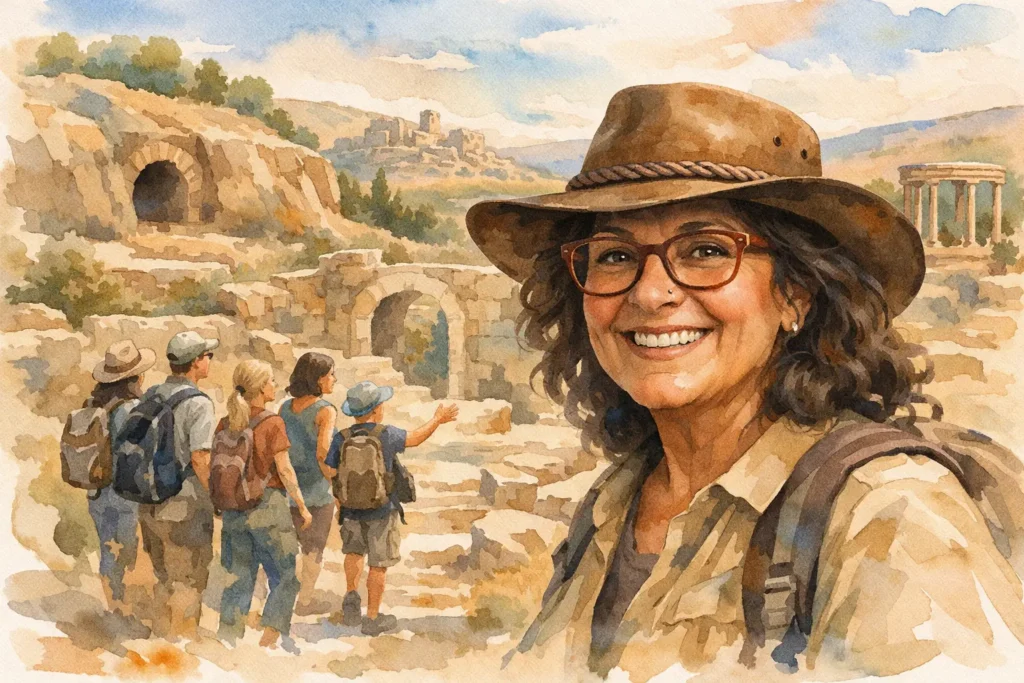
The most memorable ruins are not always the ones with the biggest visitor centers. On hidden archaeology routes in Israel, a worn threshold, a buried winepress, or a line of ancient stones on a hillside can make the past feel unexpectedly close. These are places where the landscape still does part of the storytelling – and where a thoughtfully paced private day can reveal far more than a quick stop at a famous site.
For travelers who have already seen the headline destinations, archaeology offers a different kind of return visit. It can also be the heart of a first trip, especially when the day is shaped around your interests: ancient engineering, early religious life, desert settlement, mosaics, farming, or simply a good walk followed by a memorable local meal.
What Makes an Archaeology Route Feel Hidden?
“Hidden” does not have to mean remote, difficult, or undiscovered. In Israel, it often means a site just beyond the standard coach itinerary, a lesser-visited section of a well-known national park, or several small places connected into one meaningful route. The pleasure lies in context. A cistern means more after you have walked the ridge that once collected its rainwater; a synagogue floor becomes more vivid when you understand who lived in the nearby village.
These days work best when there is room to linger. A route can combine a short hike, an excavated town, a shaded picnic stop, and a conversation about the people who made a landscape productive thousands of years ago. The right balance depends on the season, walking ability, and whether your group wants more stones, more scenery, or a little of both.
1. The Underground World of the Judean Lowlands
The rolling hills between the coastal plain and the Jerusalem corridor hold one of Israel’s most surprising archaeological landscapes. Around the Beit Guvrin and Maresha area, the visible hills conceal an astonishing subterranean world: water cisterns, storage chambers, columbaria once used for raising doves, olive presses, and cave complexes carved and adapted over generations.
This is an excellent route for families and returning visitors because it feels hands-on without requiring a major hike. The underground spaces also make the story tangible. You are not just looking at a display case of ancient daily life; you are standing inside the infrastructure that supported it.
A good guide can help distinguish what you are seeing rather than treating every chamber as simply “an old cave.” Some spaces were practical, others ceremonial, and many changed function over time. The trade-off is that steps, uneven ground, and low ceilings are common, so this is not the best choice for everyone.
2. Beit She’arim and the Hills of Memory
Near the Lower Galilee, Beit She’arim offers a quieter, more reflective archaeological experience. Its famous burial caves, carved with inscriptions and elaborate stone sarcophagi, tell a wide-ranging story of Jewish life in the Roman period. Visitors came here from communities well beyond the immediate area, making the site feel both local and connected to a much larger world.
The route is especially rewarding for travelers interested in identity, language, and the way communities remember their dead. The caves are powerful, but the surrounding landscape matters too. A wider day can include a drive through the Galilean hills, a village-style lunch, or another small archaeological stop chosen for your specific interests.
Because much of the visit is underground, lighting and mobility deserve attention. It is also a site where interpretation matters deeply. The carved names, symbols, and stonework can easily blur together without someone to explain what makes each detail significant.
3. Mosaic Country Around the Galilee
Some of Israel’s finest archaeological surprises are underfoot. A mosaic-focused route in the Galilee can connect sites such as Tzippori with smaller regional stops, creating a day about art, domestic life, public buildings, and the extraordinary skill required to turn tiny colored stones into lasting images.
Tzippori is better known than some of the other places on this list, but it rewards travelers who move beyond the headline mosaic. Its streets, water systems, homes, and public spaces show a city shaped by changing tastes and practical needs. Paired with a more modest ruin or a countryside walk, it becomes less of a checklist destination and more of a living urban story.
This route suits visitors who enjoy visual detail and do not want a strenuous day. It also works beautifully with a culinary element. The Galilee’s archaeological record is full of evidence of agriculture, trade, and food production, so a meal or tasting can feel like a natural continuation of the conversation rather than an unrelated break.
4. Desert Towns Beyond the Main Road
The Negev is often introduced through Masada and the Dead Sea, but the desert has many more layers. A route toward Avdat, Shivta, or Mamshit can reveal settlements that depended on sophisticated water management, trade connections, farming techniques, and remarkable persistence in a demanding climate.
At Avdat, the high desert setting is part of the experience. The ruins rise above the surrounding open country, making it easier to understand why location, water, and movement through the landscape mattered so much. Shivta has a more secluded feeling, with streets, homes, and religious buildings that invite a slower reading of the site. Mamshit offers another perspective, including its relationship to ancient trade routes.
These are not interchangeable stops. Choose Avdat for a dramatic setting and a broader regional story; Shivta for atmosphere and a quieter walk among the remains; Mamshit for a compact, richly layered desert town. In summer, start early and build in shade, water, and a realistic pace. Desert archaeology is magnificent, but heat can turn a fascinating day into an exhausting one if the itinerary is too ambitious.
5. Tel Dor: Archaeology Beside the Sea
On the Mediterranean coast south of Haifa, Tel Dor is a compelling choice for travelers drawn to maritime history. The combination of ruins, shoreline, and open sky gives the visit a different rhythm from inland tells. Ancient communities here looked outward as well as inward, connected to seafaring, trade, and the changing fortunes of a coastal settlement.
This is a fine route for a short but meaningful day, particularly for business travelers with limited time or families who want history without committing to a full museum schedule. The coastal setting also leaves room for a relaxed lunch or a walk along the water.
The site can feel less polished than a major urban attraction, which is precisely part of its appeal. It asks visitors to use their imagination. A guide helps turn scattered foundations and shoreline features into a coherent picture of a place shaped by the sea.
6. A Hilltop Walk at Horvat Midras
For those who prefer archaeology with movement, Horvat Midras in the Judean foothills is a strong option. The landscape includes ruins, burial features, agricultural remains, and underground spaces connected by paths through low, rolling terrain. In spring, the setting can be especially lovely, with wildflowers and green hills softening the limestone scenery.
This is not a route for rushing. The details are modest compared with a grand fortress, yet that is the point. You can read an ancient rural landscape through terraces, presses, pathways, and the placement of structures. It is archaeology at a human scale.
Plan carefully around rain, mud, and the comfort level of your group. A private itinerary can make the difference here: one family may want a longer hike and cave visit, while another may prefer a gentler walk paired with a nearby wine country stop.
7. Caesarea’s Quieter Corners
Caesarea belongs on many classic itineraries, but it still has hidden routes within it. Rather than racing from the theater to the harbor, take time to follow the less obvious edges: water systems, residential areas, defensive structures, and sections where the scale of the ancient city emerges gradually.
For travelers who have visited before, this approach changes the experience entirely. Caesarea becomes a case study in how a city was planned, supplied, entertained, defended, and repeatedly reshaped. It is also an ideal place to compare dramatic public monuments with the quieter systems that made daily life possible.
The key is timing. Early morning or later afternoon can make a substantial difference, both for comfort and for the pleasure of seeing details without heavy crowds. A focused private visit can be much more satisfying than trying to cover every corner.
Planning Hidden Archaeology Routes in Israel
The best archaeological day is rarely the one with the most sites. Two carefully chosen stops often tell a stronger story than five rushed ones. Consider how much walking you enjoy, whether underground spaces appeal to you, the season, drive times, and the kind of history that pulls you in most strongly.
Access conditions can change because of weather, conservation work, or site operations, so flexibility is valuable. Some ruins are perfect for independent wandering; others become meaningful only when their landscape, chronology, and small clues are woven together by someone who knows the ground well.
At Patchwork Israel, I build archaeology days around the questions you bring with you – whether that means desert ingenuity, ancient food, sacred spaces, or a quiet hill where history is still written into the stone. Leave a little room in the schedule for the unexpected: the shaded path, the overlooked inscription, and the moment a ruin stops feeling distant and begins to feel personal.

Get the latest blog updates in your inbox.