
Susita: An Ancient City Above the Galilee
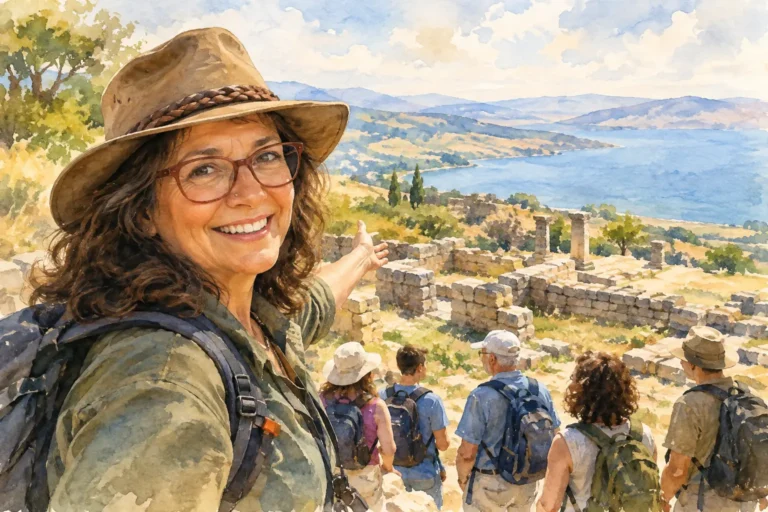
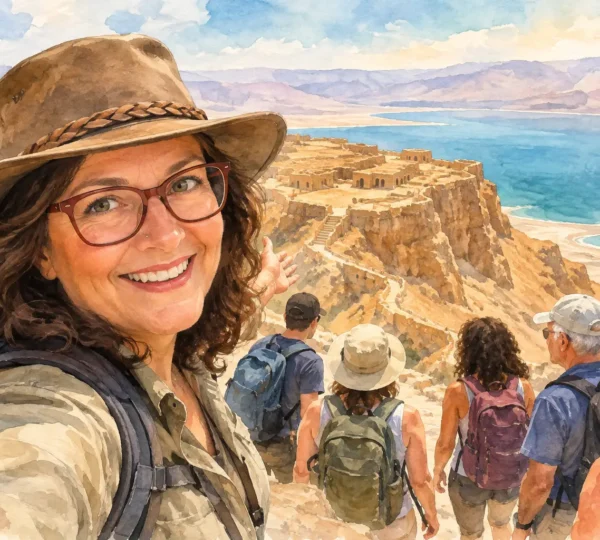
A road winds upward from the eastern side of the Sea of Galilee, then the landscape suddenly opens wide: blue water below, the soft hills of the Galilee beyond, and the broken stone outlines of Susita underfoot. This is not a site that competes for attention with grand gates or towering monuments. Its power comes from its position, its scale, and the feeling that an entire city once looked out from this ridge.
Known in Greek as Hippos, meaning horse, Susita was a flourishing city for many centuries. Today, it offers one of Israel’s most compelling archaeological walks for travelers who enjoy history in context – with room to imagine daily life, faith, commerce, water management, and the practical demands of living high above the lake.
Why Susita Feels Different
Many ancient sites are experienced from a single overlook or along a short, carefully defined path. Susita feels more like entering a place that still has a street plan, neighborhoods, and a horizon. The city sits on a long, narrow hilltop east of the Sea of Galilee. Its elevated location made it defensible, but it also made water a constant concern and gave its residents extraordinary views.
The approach matters. As you walk toward the excavated areas, the modern world falls away more gradually than at a museum. There is open sky, grass and stone, and an exposed plateau shaped by wind and weather. On a clear day, the Sea of Galilee is present almost everywhere you turn. That visual connection helps explain why this city mattered.
Susita is especially rewarding for travelers who have already visited Israel’s better-known highlights and want to encounter a less crowded story. It is also a strong choice for first-time visitors who prefer an archaeological site with atmosphere over a fast-moving checklist.
The Story of Susita Through the Centuries
Susita developed in the Hellenistic period and grew into an important city in the Roman era. It was part of the Decapolis, a group of cities that shared strong Greco-Roman cultural influences. Its name reflects that heritage: Hippos in Greek and Susita in Aramaic both refer to a horse.
The city did not remain frozen in one identity. Over time, it changed with the region around it. Roman urban planning left its mark in streets, public structures, and monumental building traditions. Later, during the Byzantine period, Susita became an important Christian center, with several churches built within the city.
That layered history is what makes a visit so satisfying. You are not simply looking at “Roman ruins” or “a Byzantine church.” You are tracing a community that adapted over generations. Its people built public spaces, worshipped, traded, collected water, repaired structures after earthquakes, and made decisions about where and how to live on a demanding hilltop.
A major earthquake in the eighth century brought the city’s long urban life to an end. Unlike many places that were rebuilt again and again, Susita was largely abandoned. This has left archaeologists with a remarkable urban landscape and visitors with a rare sense of a city paused in time.
A City Built Around Water
The most surprising part of Susita’s story may be water. The city overlooked one of Israel’s most famous freshwater lakes, yet its hilltop position meant that getting water into the city was no simple matter.
Engineers created systems to bring water from springs farther away, using channels and carefully planned routes. Large cisterns stored water within the city. When standing among these remains, it becomes clear that ancient urban life depended as much on engineering as it did on beautiful columns and public buildings.
This is one reason an experienced guide adds real value at Susita. Some of the most meaningful details are not immediately obvious. A low wall, a channel, or a change in ground level can reveal how the city functioned. The stones begin to tell a more human story when someone can point out what you are seeing and why it mattered.
What to Look for on a Visit to Susita
Susita is best explored slowly. The remains are spread across the hilltop, and the experience improves when there is time to stop, look outward, and connect one area to another.
The main street is a natural place to begin. Its broad route gives a sense of the city’s civic heart and the order of its public spaces. Along the way, you may see remnants of columns, buildings, and stone-paved areas that once carried residents and visitors through the city.
The churches are another highlight. Their plans, mosaic fragments, and architectural remains speak to Susita’s later centuries as a significant Christian community. Even for travelers without a particular religious focus, these spaces are moving because they show how belief was woven into the fabric of the city.
Look also for the smaller details: thresholds worn smooth by countless feet, reused stones, storage areas, and traces of domestic life. Archaeology is not always dramatic at first glance. At Susita, it rewards curiosity. A guide can help distinguish between an ancient street, a later repair, and a modern conservation effort without taking away the pleasure of personal discovery.
Then there are the views. They are not an extra feature. The view is part of the site’s historical meaning. From the ridge, you can understand why people chose this location, how they watched routes below, and how closely the life of the city was tied to the Galilee landscape.
Planning a Comfortable Susita Visit
Susita is an outdoor archaeological site, so timing and pace make a difference. Spring and fall are especially pleasant, with gentler temperatures and greener surroundings. Winter can bring dramatic skies and fresh air, although paths may be muddy after rain. Summer visits are possible, but an early start is wise because the hilltop offers limited shade.
Wear closed walking shoes with a good grip. The terrain can be uneven, and ancient stones are not always level. Bring water, sunscreen, and a hat, even on days that begin cool. A light snack is useful for travelers who want to take their time rather than rush back to the car.
The site can be adapted to different interests. A family may focus on the big-picture story, the views, and the idea of an ancient city with its own water system. Travelers interested in early Christianity can spend longer with the churches and the Byzantine period. Those who love archaeology may want a more detailed conversation about excavation, preservation, urban design, and the questions that remain unanswered.
Physical comfort should guide the plan. Some visitors are happy with a longer walk across the plateau, while others may prefer a more focused route with frequent stops. A private itinerary makes that flexibility possible. There is no prize for seeing every stone if doing so means missing the experience.
Pairing Susita With the Galilee
Susita works beautifully as part of a day that balances history with the living landscape around it. The Sea of Galilee, rural viewpoints, local food, and nearby nature can create a day with changing textures rather than one long sequence of ruins.
For a heritage-focused itinerary, Susita can add depth to a Galilee visit by placing familiar places in a wider historical setting. For an active day, it can be paired with a scenic walk, a short hike, or a relaxed lakeside stop. For returning visitors, it is an excellent anchor for a less predictable route through northern Israel.
The right combination depends on your interests, your energy, and the season. A hot summer day may call for an early archaeological visit followed by a shaded culinary experience. A cool spring day leaves more room for walking and lingering at viewpoints. Good planning is not about filling every hour. It is about allowing each place to have its own character.
A Hilltop Worth Taking Slowly
Susita does not ask visitors to be experts before they arrive. It simply asks for attention. Stand on its main street, look toward the Sea of Galilee, and picture the effort it took to build, supply, worship, and raise families on this ridge.
If you are planning a private Galilee journey, give Susita enough time to breathe. With thoughtful pacing and local interpretation, this quiet hilltop can become one of the days you remember most clearly long after the trip is over.

Susita: An Ancient City Above the Galilee
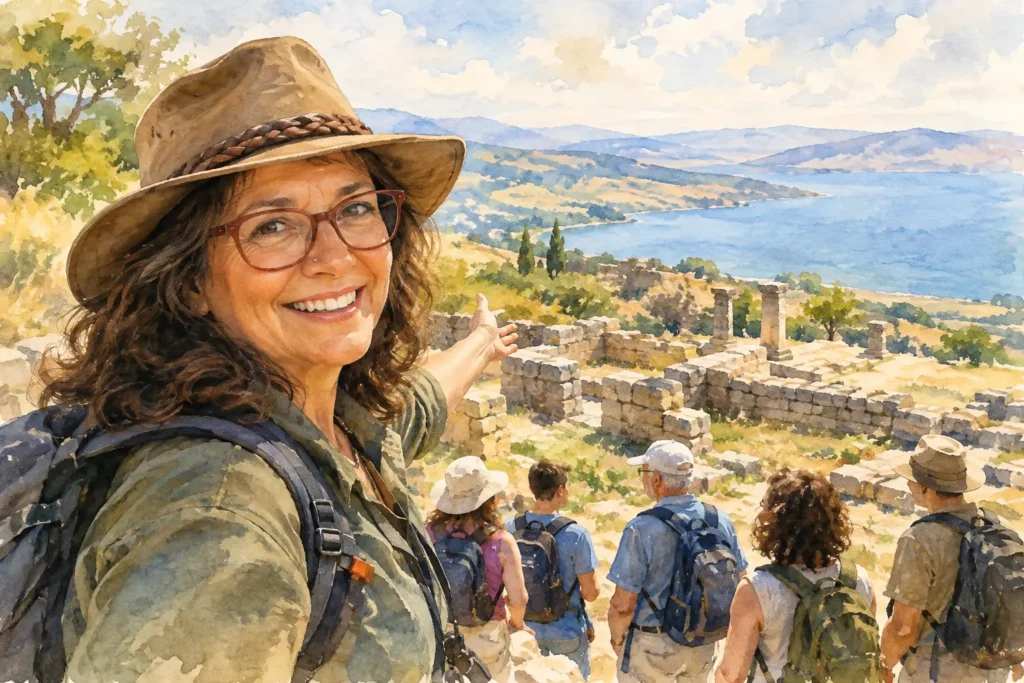
A road winds upward from the eastern side of the Sea of Galilee, then the landscape suddenly opens wide: blue water below, the soft hills of the Galilee beyond, and the broken stone outlines of Susita underfoot. This is not a site that competes for attention with grand gates or towering monuments. Its power comes from its position, its scale, and the feeling that an entire city once looked out from this ridge.
Known in Greek as Hippos, meaning horse, Susita was a flourishing city for many centuries. Today, it offers one of Israel’s most compelling archaeological walks for travelers who enjoy history in context – with room to imagine daily life, faith, commerce, water management, and the practical demands of living high above the lake.
Why Susita Feels Different
Many ancient sites are experienced from a single overlook or along a short, carefully defined path. Susita feels more like entering a place that still has a street plan, neighborhoods, and a horizon. The city sits on a long, narrow hilltop east of the Sea of Galilee. Its elevated location made it defensible, but it also made water a constant concern and gave its residents extraordinary views.
The approach matters. As you walk toward the excavated areas, the modern world falls away more gradually than at a museum. There is open sky, grass and stone, and an exposed plateau shaped by wind and weather. On a clear day, the Sea of Galilee is present almost everywhere you turn. That visual connection helps explain why this city mattered.
Susita is especially rewarding for travelers who have already visited Israel’s better-known highlights and want to encounter a less crowded story. It is also a strong choice for first-time visitors who prefer an archaeological site with atmosphere over a fast-moving checklist.
The Story of Susita Through the Centuries
Susita developed in the Hellenistic period and grew into an important city in the Roman era. It was part of the Decapolis, a group of cities that shared strong Greco-Roman cultural influences. Its name reflects that heritage: Hippos in Greek and Susita in Aramaic both refer to a horse.
The city did not remain frozen in one identity. Over time, it changed with the region around it. Roman urban planning left its mark in streets, public structures, and monumental building traditions. Later, during the Byzantine period, Susita became an important Christian center, with several churches built within the city.
That layered history is what makes a visit so satisfying. You are not simply looking at “Roman ruins” or “a Byzantine church.” You are tracing a community that adapted over generations. Its people built public spaces, worshipped, traded, collected water, repaired structures after earthquakes, and made decisions about where and how to live on a demanding hilltop.
A major earthquake in the eighth century brought the city’s long urban life to an end. Unlike many places that were rebuilt again and again, Susita was largely abandoned. This has left archaeologists with a remarkable urban landscape and visitors with a rare sense of a city paused in time.
A City Built Around Water
The most surprising part of Susita’s story may be water. The city overlooked one of Israel’s most famous freshwater lakes, yet its hilltop position meant that getting water into the city was no simple matter.
Engineers created systems to bring water from springs farther away, using channels and carefully planned routes. Large cisterns stored water within the city. When standing among these remains, it becomes clear that ancient urban life depended as much on engineering as it did on beautiful columns and public buildings.
This is one reason an experienced guide adds real value at Susita. Some of the most meaningful details are not immediately obvious. A low wall, a channel, or a change in ground level can reveal how the city functioned. The stones begin to tell a more human story when someone can point out what you are seeing and why it mattered.
What to Look for on a Visit to Susita
Susita is best explored slowly. The remains are spread across the hilltop, and the experience improves when there is time to stop, look outward, and connect one area to another.
The main street is a natural place to begin. Its broad route gives a sense of the city’s civic heart and the order of its public spaces. Along the way, you may see remnants of columns, buildings, and stone-paved areas that once carried residents and visitors through the city.
The churches are another highlight. Their plans, mosaic fragments, and architectural remains speak to Susita’s later centuries as a significant Christian community. Even for travelers without a particular religious focus, these spaces are moving because they show how belief was woven into the fabric of the city.
Look also for the smaller details: thresholds worn smooth by countless feet, reused stones, storage areas, and traces of domestic life. Archaeology is not always dramatic at first glance. At Susita, it rewards curiosity. A guide can help distinguish between an ancient street, a later repair, and a modern conservation effort without taking away the pleasure of personal discovery.
Then there are the views. They are not an extra feature. The view is part of the site’s historical meaning. From the ridge, you can understand why people chose this location, how they watched routes below, and how closely the life of the city was tied to the Galilee landscape.
Planning a Comfortable Susita Visit
Susita is an outdoor archaeological site, so timing and pace make a difference. Spring and fall are especially pleasant, with gentler temperatures and greener surroundings. Winter can bring dramatic skies and fresh air, although paths may be muddy after rain. Summer visits are possible, but an early start is wise because the hilltop offers limited shade.
Wear closed walking shoes with a good grip. The terrain can be uneven, and ancient stones are not always level. Bring water, sunscreen, and a hat, even on days that begin cool. A light snack is useful for travelers who want to take their time rather than rush back to the car.
The site can be adapted to different interests. A family may focus on the big-picture story, the views, and the idea of an ancient city with its own water system. Travelers interested in early Christianity can spend longer with the churches and the Byzantine period. Those who love archaeology may want a more detailed conversation about excavation, preservation, urban design, and the questions that remain unanswered.
Physical comfort should guide the plan. Some visitors are happy with a longer walk across the plateau, while others may prefer a more focused route with frequent stops. A private itinerary makes that flexibility possible. There is no prize for seeing every stone if doing so means missing the experience.
Pairing Susita With the Galilee
Susita works beautifully as part of a day that balances history with the living landscape around it. The Sea of Galilee, rural viewpoints, local food, and nearby nature can create a day with changing textures rather than one long sequence of ruins.
For a heritage-focused itinerary, Susita can add depth to a Galilee visit by placing familiar places in a wider historical setting. For an active day, it can be paired with a scenic walk, a short hike, or a relaxed lakeside stop. For returning visitors, it is an excellent anchor for a less predictable route through northern Israel.
The right combination depends on your interests, your energy, and the season. A hot summer day may call for an early archaeological visit followed by a shaded culinary experience. A cool spring day leaves more room for walking and lingering at viewpoints. Good planning is not about filling every hour. It is about allowing each place to have its own character.
A Hilltop Worth Taking Slowly
Susita does not ask visitors to be experts before they arrive. It simply asks for attention. Stand on its main street, look toward the Sea of Galilee, and picture the effort it took to build, supply, worship, and raise families on this ridge.
If you are planning a private Galilee journey, give Susita enough time to breathe. With thoughtful pacing and local interpretation, this quiet hilltop can become one of the days you remember most clearly long after the trip is over.



Get the latest blog updates in your inbox.