
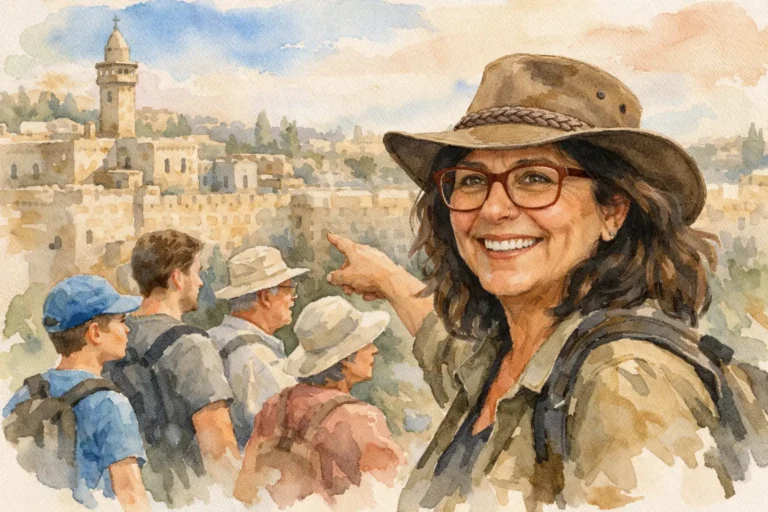
An 8-Day Family Israel Tour Itinerary Example
A good family Israel tour itinerary example should not feel like a race between famous places. Israel is compact, but its stories are dense, its weather changes by region, and children do better when every day includes room to move, eat, ask questions, and simply enjoy being together. This eight-day outline combines major highlights with hands-on moments, while leaving enough flexibility for the family’s own pace.
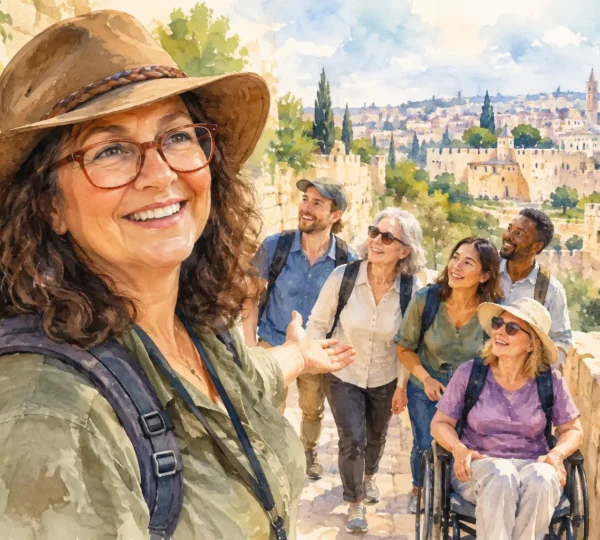
It is designed for a private family trip with a mix of school-age children, teens, parents, and grandparents. With younger children, shorten museum time and add more active stops. With teens, add a food workshop, 4×4 excursion, snorkeling, or a visit shaped around their interests. The route can also begin in the north or be adjusted around a family celebration, faith-based focus, or a return visit that calls for more hidden corners.
Why an Eight-Day Family Israel Itinerary Works
Eight days allows families to experience Jerusalem, the coast, the desert, and the north without changing hotels every night. A practical rhythm is three nights in Jerusalem, two nights near the Sea of Galilee, one night in the desert, and two nights in Tel Aviv or Jaffa. Some families prefer fewer hotel changes, especially when traveling with small children, while others enjoy waking up in a new landscape.
Private guiding makes the difference between an itinerary that looks good on paper and a trip that feels good in real life. A late breakfast, a longer stop at a market, an unexpected favorite site, or an afternoon swim can all become part of the day. At Patchwork Israel, that flexibility is built around the people traveling, not a fixed coach-tour schedule.
Day 1: Settle Into Jerusalem Through Its Stories and Flavors
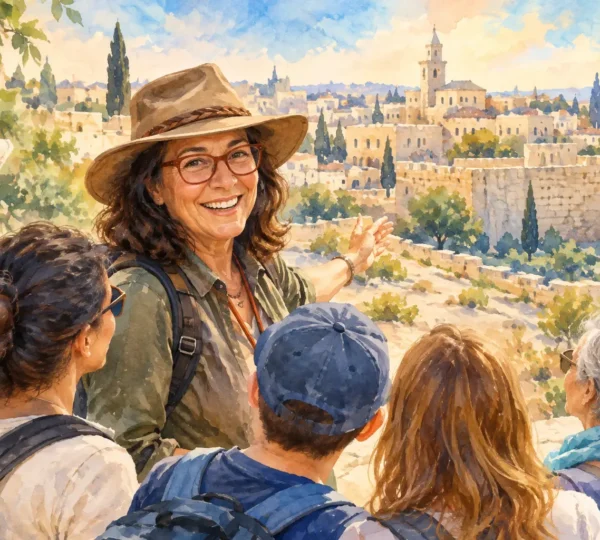
Begin gently. After arrival and time to settle into the hotel, spend the late afternoon walking through the lanes of the Old City. The goal is orientation, not trying to see every sacred site at once. Walk its stone alleyways, notice the changes in architecture and atmosphere, and pause at viewpoints that help children understand why Jerusalem has mattered to so many people for so long.
Finish with an early dinner at Mahane Yehuda Market. In the daytime it is a lively place for fresh juice, baked goods, spices, and casual meals. Let each family member choose something unfamiliar to taste. It is an easy, delicious first lesson in how many food traditions meet in one small city.
Day 2: Jerusalem’s Big Sites, Made Family-Friendly
Start early at the Western Wall area, then continue through the Jewish Quarter and its archaeological remains. A good guide will turn stones, gates, and old street levels into a story with characters, choices, and surprising details rather than a long history lecture.
In the afternoon, choose one substantial indoor experience rather than packing in several. The Israel Museum works well for families who enjoy art, archaeology, and the model of ancient Jerusalem. Families with older children may prefer a carefully paced visit to Yad Vashem, while families with young children can choose a more active option such as exploring the tunnels beneath the city or a hands-on craft workshop.
This is a day where it pays to be selective. Jerusalem deserves curiosity and breathing room. It does not reward rushing.
A Note for Sabbath and Holiday Timing
The city’s weekly rhythm can shape restaurant hours, transportation, and the feel of particular neighborhoods. This can be a meaningful part of the experience, but it requires thoughtful planning. A private itinerary can shift museum visits, walks, meals, and hotel choices so the day remains enjoyable rather than complicated.
Day 3: From Jerusalem to the Judean Desert
Leave Jerusalem after breakfast and head toward Masada, the dramatic mountaintop fortress above the Dead Sea. Families can ascend by cable car or hike the Snake Path in the cooler early morning, depending on fitness, season, and the ages of the children. The hike is memorable, but it is not a badge of honor. In hot months, the cable car is often the smarter choice.
After hearing Masada’s story, continue to the Dead Sea for a float. Children love the strange sensation of buoyancy, though very young children need close supervision and everyone should avoid splashing. A freshwater shower afterward is essential.
For families who want more adventure, add a short desert walk, camel experience, or 4×4 drive through open desert terrain. Stay overnight in the Negev or return toward Jerusalem if changing hotels feels like too much.
Day 4: The Negev’s Wide-Open Classroom
The desert is where many families finally slow down. A morning hike in Makhtesh Ramon, the vast erosion crater in the Negev, offers colors, rock formations, and open horizons that feel completely different from Jerusalem. Choose a trail suited to your group, with plenty of water, hats, and an early start in warmer seasons.
A family can also visit a small farm, meet a local maker, or take part in a workshop that connects food, landscape, and ingenuity. These personal encounters often become the stories children repeat when they get home. They make room for conversation and show that Israel is not only a collection of ancient monuments.
Drive north in the afternoon, perhaps breaking up the journey with a coastal stop or a relaxed picnic. Arrive near the Sea of Galilee in time for dinner and an evening by the water.
Day 5: Sea of Galilee, Ancient Villages, and Water Time
The Galilee offers an appealing mix of heritage and outdoors. Begin at Capernaum and nearby sites connected to the early Christian story, especially meaningful for faith-based families. The setting beside the lake helps bring the landscape behind familiar texts into focus.
Then shift the day toward fun. Take a boat ride on the Sea of Galilee, swim from a permitted beach, or choose kayaking or another age-appropriate water activity. A good itinerary lets a spiritual or historical morning lead naturally into an afternoon where everyone can play.
If your family’s interests lean more Jewish, archaeological, or cultural, replace some of the Christian heritage sites with an ancient synagogue, a local food experience, or a visit to a regional village. The north has depth well beyond any single theme.
Day 6: Northern Landscapes and a Choice of Adventure
Make this a choice day. Active families might hike near Banias, where flowing water and shady paths provide relief in much of the year, or take a guided 4×4 route through forest and mountain scenery. Families who prefer a quieter pace can visit an archaeological site, enjoy a farm-to-table lunch, and spend an unhurried afternoon in a small northern town.
This is also an excellent day for a tailored encounter with someone whose work offers a window into contemporary life – perhaps an artist, farmer, chef, academic, or innovator. The right meeting should fit the family, not feel like an obligation. Teenagers in particular respond well when they can ask direct questions and hear a personal story.
Day 7: Caesarea, Jaffa, and the Mediterranean Coast
Travel southwest to Caesarea, where a Roman theater, harbor, aqueduct, and ancient streets create one of Israel’s best open-air history experiences. Children can climb, explore, and imagine ships entering the harbor, while adults appreciate the extraordinary layers of the site.
Continue to Jaffa for a walk through its old lanes, artists’ spaces, and views toward Tel Aviv’s shoreline. Jaffa is compact enough for a relaxed afternoon and makes a pleasing contrast to the desert and Galilee. End the day at the beach, with time for a swim or sunset walk before dinner.
Day 8: Tel Aviv at Your Family’s Pace
Save the final day for a lighter, personal finish. Tel Aviv can be about bicycles along the promenade, a neighborhood food walk, a market visit, street art, or a cooking class. Families with older children may enjoy an activity with a little more energy, while younger children may be happiest with a playground and a long lunch near the sea.
Before departure, leave room for one final favorite meal. It might be a warm pita fresh from the oven, a family-style spread of salads and grilled dishes, or a sweet treat chosen by the children. A thoughtful Israel trip should end not with exhaustion, but with the feeling that there is still more to return for.
How to Make This Itinerary Your Own
The best family itinerary is not the one that includes the most stops. It is the one that gives each traveler something to anticipate. One child may remember floating in the Dead Sea, another the desert jeep ride, a grandparent the view over Jerusalem, and a teen the conversation with a local chef.
Build around those moments. Keep driving days realistic, plan for shade and snacks, and allow one unscheduled hour whenever possible. Israel offers plenty to see, but the most lasting memories usually happen when a family has enough time to notice where it is.

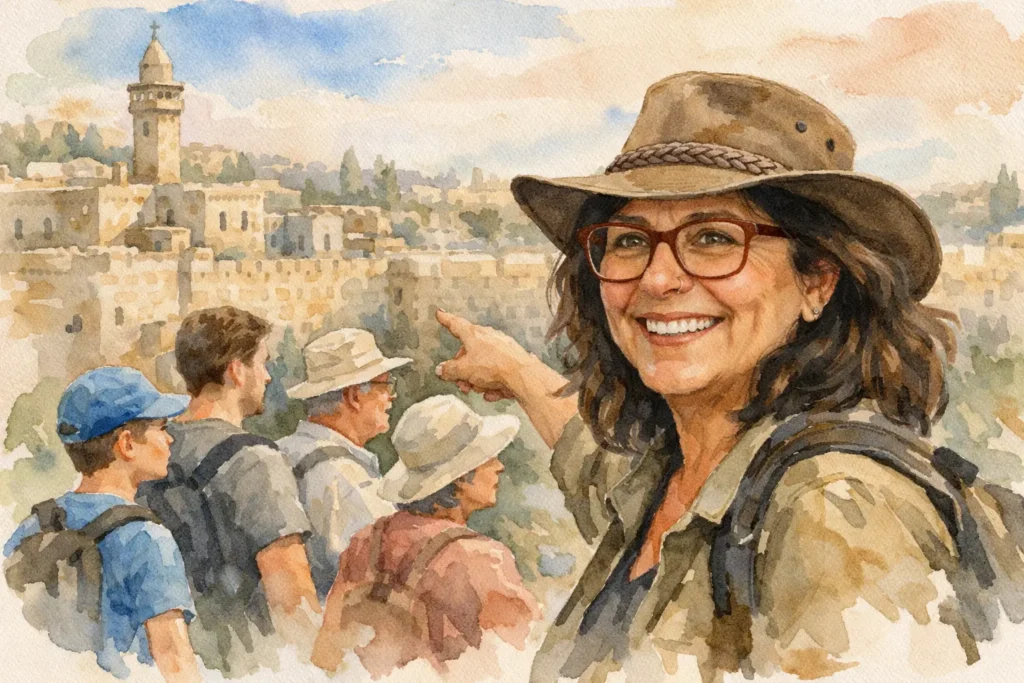
An 8-Day Family Israel Tour Itinerary Example
A good family Israel tour itinerary example should not feel like a race between famous places. Israel is compact, but its stories are dense, its weather changes by region, and children do better when every day includes room to move, eat, ask questions, and simply enjoy being together. This eight-day outline combines major highlights with hands-on moments, while leaving enough flexibility for the family’s own pace.
It is designed for a private family trip with a mix of school-age children, teens, parents, and grandparents. With younger children, shorten museum time and add more active stops. With teens, add a food workshop, 4×4 excursion, snorkeling, or a visit shaped around their interests. The route can also begin in the north or be adjusted around a family celebration, faith-based focus, or a return visit that calls for more hidden corners.
Why an Eight-Day Family Israel Itinerary Works
Eight days allows families to experience Jerusalem, the coast, the desert, and the north without changing hotels every night. A practical rhythm is three nights in Jerusalem, two nights near the Sea of Galilee, one night in the desert, and two nights in Tel Aviv or Jaffa. Some families prefer fewer hotel changes, especially when traveling with small children, while others enjoy waking up in a new landscape.
Private guiding makes the difference between an itinerary that looks good on paper and a trip that feels good in real life. A late breakfast, a longer stop at a market, an unexpected favorite site, or an afternoon swim can all become part of the day. At Patchwork Israel, that flexibility is built around the people traveling, not a fixed coach-tour schedule.
Day 1: Settle Into Jerusalem Through Its Stories and Flavors
Begin gently. After arrival and time to settle into the hotel, spend the late afternoon walking through the lanes of the Old City. The goal is orientation, not trying to see every sacred site at once. Walk its stone alleyways, notice the changes in architecture and atmosphere, and pause at viewpoints that help children understand why Jerusalem has mattered to so many people for so long.
Finish with an early dinner at Mahane Yehuda Market. In the daytime it is a lively place for fresh juice, baked goods, spices, and casual meals. Let each family member choose something unfamiliar to taste. It is an easy, delicious first lesson in how many food traditions meet in one small city.
Day 2: Jerusalem’s Big Sites, Made Family-Friendly
Start early at the Western Wall area, then continue through the Jewish Quarter and its archaeological remains. A good guide will turn stones, gates, and old street levels into a story with characters, choices, and surprising details rather than a long history lecture.
In the afternoon, choose one substantial indoor experience rather than packing in several. The Israel Museum works well for families who enjoy art, archaeology, and the model of ancient Jerusalem. Families with older children may prefer a carefully paced visit to Yad Vashem, while families with young children can choose a more active option such as exploring the tunnels beneath the city or a hands-on craft workshop.
This is a day where it pays to be selective. Jerusalem deserves curiosity and breathing room. It does not reward rushing.
A Note for Sabbath and Holiday Timing
The city’s weekly rhythm can shape restaurant hours, transportation, and the feel of particular neighborhoods. This can be a meaningful part of the experience, but it requires thoughtful planning. A private itinerary can shift museum visits, walks, meals, and hotel choices so the day remains enjoyable rather than complicated.
Day 3: From Jerusalem to the Judean Desert
Leave Jerusalem after breakfast and head toward Masada, the dramatic mountaintop fortress above the Dead Sea. Families can ascend by cable car or hike the Snake Path in the cooler early morning, depending on fitness, season, and the ages of the children. The hike is memorable, but it is not a badge of honor. In hot months, the cable car is often the smarter choice.
After hearing Masada’s story, continue to the Dead Sea for a float. Children love the strange sensation of buoyancy, though very young children need close supervision and everyone should avoid splashing. A freshwater shower afterward is essential.
For families who want more adventure, add a short desert walk, camel experience, or 4×4 drive through open desert terrain. Stay overnight in the Negev or return toward Jerusalem if changing hotels feels like too much.
Day 4: The Negev’s Wide-Open Classroom
The desert is where many families finally slow down. A morning hike in Makhtesh Ramon, the vast erosion crater in the Negev, offers colors, rock formations, and open horizons that feel completely different from Jerusalem. Choose a trail suited to your group, with plenty of water, hats, and an early start in warmer seasons.
A family can also visit a small farm, meet a local maker, or take part in a workshop that connects food, landscape, and ingenuity. These personal encounters often become the stories children repeat when they get home. They make room for conversation and show that Israel is not only a collection of ancient monuments.
Drive north in the afternoon, perhaps breaking up the journey with a coastal stop or a relaxed picnic. Arrive near the Sea of Galilee in time for dinner and an evening by the water.
Day 5: Sea of Galilee, Ancient Villages, and Water Time
The Galilee offers an appealing mix of heritage and outdoors. Begin at Capernaum and nearby sites connected to the early Christian story, especially meaningful for faith-based families. The setting beside the lake helps bring the landscape behind familiar texts into focus.
Then shift the day toward fun. Take a boat ride on the Sea of Galilee, swim from a permitted beach, or choose kayaking or another age-appropriate water activity. A good itinerary lets a spiritual or historical morning lead naturally into an afternoon where everyone can play.
If your family’s interests lean more Jewish, archaeological, or cultural, replace some of the Christian heritage sites with an ancient synagogue, a local food experience, or a visit to a regional village. The north has depth well beyond any single theme.
Day 6: Northern Landscapes and a Choice of Adventure
Make this a choice day. Active families might hike near Banias, where flowing water and shady paths provide relief in much of the year, or take a guided 4×4 route through forest and mountain scenery. Families who prefer a quieter pace can visit an archaeological site, enjoy a farm-to-table lunch, and spend an unhurried afternoon in a small northern town.
This is also an excellent day for a tailored encounter with someone whose work offers a window into contemporary life – perhaps an artist, farmer, chef, academic, or innovator. The right meeting should fit the family, not feel like an obligation. Teenagers in particular respond well when they can ask direct questions and hear a personal story.
Day 7: Caesarea, Jaffa, and the Mediterranean Coast
Travel southwest to Caesarea, where a Roman theater, harbor, aqueduct, and ancient streets create one of Israel’s best open-air history experiences. Children can climb, explore, and imagine ships entering the harbor, while adults appreciate the extraordinary layers of the site.
Continue to Jaffa for a walk through its old lanes, artists’ spaces, and views toward Tel Aviv’s shoreline. Jaffa is compact enough for a relaxed afternoon and makes a pleasing contrast to the desert and Galilee. End the day at the beach, with time for a swim or sunset walk before dinner.
Day 8: Tel Aviv at Your Family’s Pace
Save the final day for a lighter, personal finish. Tel Aviv can be about bicycles along the promenade, a neighborhood food walk, a market visit, street art, or a cooking class. Families with older children may enjoy an activity with a little more energy, while younger children may be happiest with a playground and a long lunch near the sea.
Before departure, leave room for one final favorite meal. It might be a warm pita fresh from the oven, a family-style spread of salads and grilled dishes, or a sweet treat chosen by the children. A thoughtful Israel trip should end not with exhaustion, but with the feeling that there is still more to return for.
How to Make This Itinerary Your Own
The best family itinerary is not the one that includes the most stops. It is the one that gives each traveler something to anticipate. One child may remember floating in the Dead Sea, another the desert jeep ride, a grandparent the view over Jerusalem, and a teen the conversation with a local chef.
Build around those moments. Keep driving days realistic, plan for shade and snacks, and allow one unscheduled hour whenever possible. Israel offers plenty to see, but the most lasting memories usually happen when a family has enough time to notice where it is.
Get the latest blog updates in your inbox.