
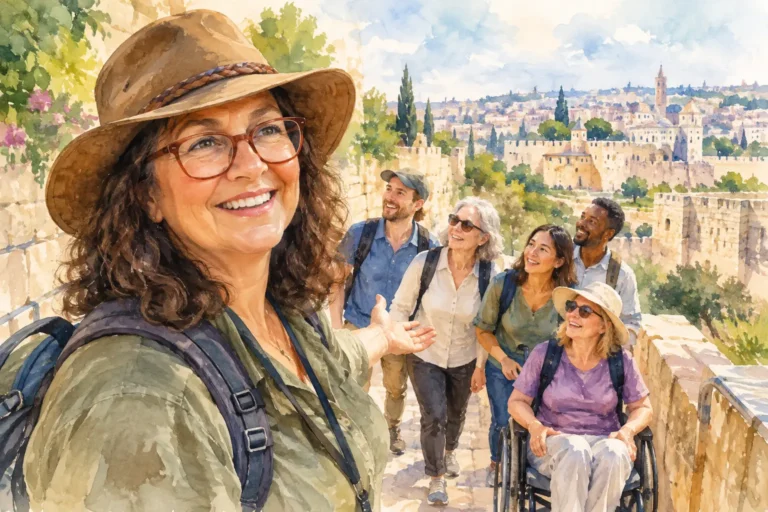
Can Private Tours Accommodate Mobility Needs?
A Jerusalem stone street can be beautiful, ancient, and uneven all at once. A viewpoint may involve a few steps, while an archaeological site can mean long distances across open ground. That is why the answer to “can private tours accommodate mobility needs?” is usually yes – when the day is designed around the traveler rather than around a fixed route.
A private tour does not erase every physical limitation or make every historic location fully accessible. What it can do is give you choices: a vehicle that reduces walking, a realistic pace, carefully selected entrances, well-timed rest stops, and experiences that still feel rich and personal. With thoughtful planning, mobility considerations do not have to turn an Israel visit into a stay-at-the-hotel vacation.
Can Private Tours Accommodate Mobility Needs in Israel?
They can, but the best answer begins with an honest conversation. Mobility needs are not one-size-fits-all. One guest may use a cane but happily walk short distances on level paths. Another may use a folding wheelchair, need regular seating, avoid stairs, or have the energy for one major site rather than three. Someone else may be recovering from surgery, traveling with an elderly parent, or managing a condition that changes from morning to afternoon.
On a private tour, these details shape the itinerary before the day begins. Rather than joining a large group that must keep to a preset timetable, you can spend more time at places that work for you and skip the parts that do not. A good plan is not about fitting in the greatest number of stops. It is about leaving with the feeling that you truly experienced the place.
Israel offers many rewarding options for travelers with different mobility levels. Some locations have accessible paths, elevators, visitor centers, nearby drop-off points, and places to sit. Others are more challenging because of stairs, cobblestones, slopes, rough terrain, or distances between key areas. The value of a personalized day is knowing the difference in advance.
The Details That Make a Tour Feel Comfortable
The right vehicle is often the starting point. A private car or van can minimize unnecessary walking and make it easier to bring a folding wheelchair, walker, medication, water, extra layers, or snacks. Door-to-door pickup also matters. Starting the day from your hotel or accommodation saves energy for the places you came to see.
Timing is equally valuable. In warmer months, an early start may allow for outdoor sites before the strongest heat. In a busy destination, arriving at the right time can mean less waiting and more room to move at a comfortable speed. A private guide can build in a proper coffee break, a leisurely lunch, and restroom stops without making them feel like interruptions.
Pace is not simply about walking slowly. It is about avoiding the exhausting pattern of getting out, rushing through a stop, and getting back into the vehicle again. Many travelers enjoy a day more when it includes two meaningful sites, a scenic drive, and a memorable meal instead of an ambitious checklist that leaves everyone tired.
Share the practical information early
The more specific you can be, the better the itinerary can be. Tell your guide whether you use a wheelchair, walker, scooter, cane, or other support. Explain whether you can manage a few steps, need an arm for balance, or require step-free access throughout the day. It also helps to mention how long you are comfortable being on your feet and whether getting in and out of a vehicle is difficult.
There is no need to minimize what you need in order to be “easygoing.” Clear information makes room for better choices. It can prevent a disappointing arrival at a site where the most interesting section is reachable only by steep stairs or a rough path.
A useful plan also considers companions. A couple may have different walking speeds. An adult child may want to make sure a parent is comfortable without making that parent feel sidelined. A family group may include both a grandparent who needs frequent rests and teenagers who want something active. Private touring makes it possible to create overlapping experiences, with a scenic overlook, market tasting, museum visit, or hands-on activity that gives everyone something to enjoy.
Meaningful Experiences Beyond the Long Walk
Some of Israel’s most memorable encounters do not require a demanding hike. In Jerusalem, it may be a thoughtfully chosen route through a historic quarter, time in a museum, a panoramic lookout, or a quiet conversation over coffee in a neighborhood with its own story. In Tel Aviv and Jaffa, a relaxed walk, food tasting, architecture, art, and sea views can create a full day without covering miles.
Along the coast, Caesarea can be approached with an itinerary that focuses on its accessible areas, dramatic views, and the stories that bring its remains to life. Around the Dead Sea, the journey itself can be part of the experience, with desert landscapes, comfortable stops, and a pace suited to the day. The key is not to promise identical access everywhere. It is to choose the most rewarding version of each destination for the individual traveler.
For travelers returning to Israel, mobility-friendly touring can be an especially good opportunity to look beyond the standard highlights. A visit with a local artisan, a cooking or baking workshop, a winery meal, a mosaic activity, or a carefully selected cultural encounter may offer more connection than trying to cover another sprawling site. These experiences also allow time to sit, talk, taste, ask questions, and be present.
When adventure is still part of the plan
Mobility considerations do not automatically rule out nature or a sense of adventure. A scenic desert drive, selected viewpoints, forest roads, and certain 4×4 routes can make landscapes accessible to travelers who would not be comfortable on a long trail. The trade-off is that off-road driving can be bumpy and is not suitable for every back, joint, or medical condition.
This is where expert judgment matters. Sometimes the better choice is a beautiful paved overlook and a slow walk in the fresh air. Sometimes a short, well-chosen trail is possible with support. Sometimes the right adventure is a cooking class, a boat outing, or an indoor flight simulation rather than rugged terrain. A memorable trip should feel energizing, not like a test of endurance.
Questions Worth Asking Before You Book
Before confirming a private day, ask how much walking is expected at each proposed stop, whether there are stairs or uneven surfaces, and where the closest vehicle drop-off is located. Ask about restroom access and whether seating is available. If you use a wheelchair, confirm whether the vehicle can carry it and whether it folds.
It is also wise to ask what happens if you need to change plans during the day. Heat, fatigue, pain, and an unexpected busy entrance can affect even a well-prepared itinerary. A private tour should have room for a change of direction – perhaps replacing a long outdoor stop with a museum, a scenic drive, or a relaxed lunch.
Be cautious of broad claims that a destination is simply “accessible.” Accessibility can mean different things in different places. A site may have an accessible entrance but still include uneven paving, a steep approach, or only partial access to historic areas. Honest planning means understanding both the possibilities and the limits.
A Day Built Around What You Can Enjoy
At Patchwork Israel, personalization begins with listening. The goal is not to ask travelers to adapt to a standard day, but to shape a day around their interests, energy, mobility, and curiosity. That might mean sacred history, a culinary afternoon, a desert panorama, a family-friendly activity, or a quieter encounter that reveals a side of Israel most visitors miss.
The best private tours are not measured by step counts. They are measured by the stories you heard, the flavors you remember, the questions you were able to ask, and the comfort of knowing you could enjoy the day in your own way. Share what you need, leave room for flexibility, and let the itinerary make space for discovery at your pace.

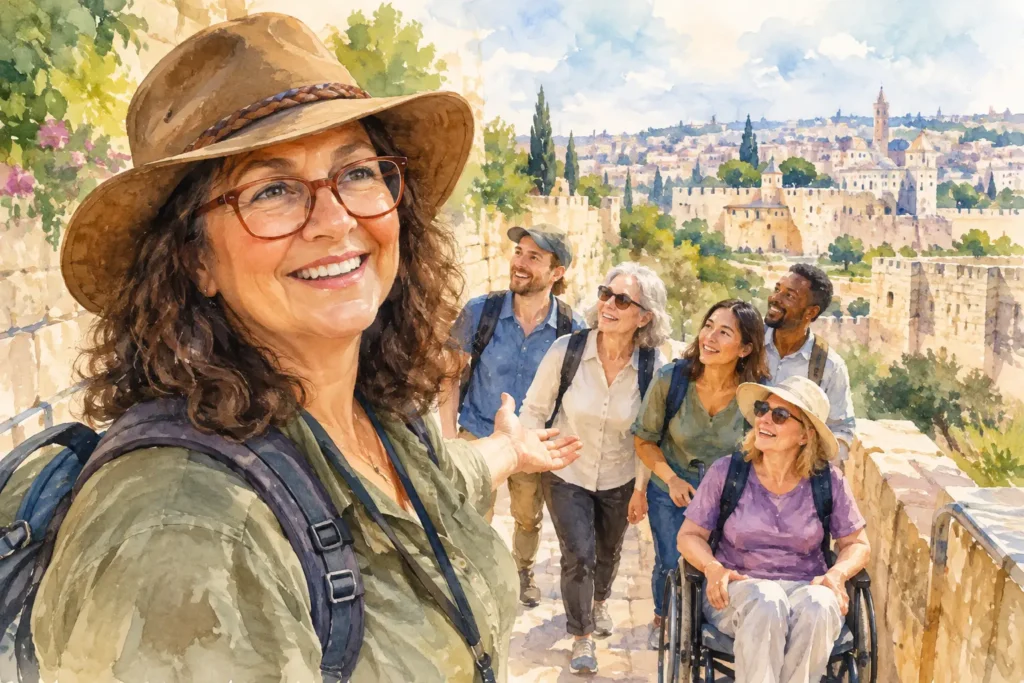
Can Private Tours Accommodate Mobility Needs?
A Jerusalem stone street can be beautiful, ancient, and uneven all at once. A viewpoint may involve a few steps, while an archaeological site can mean long distances across open ground. That is why the answer to “can private tours accommodate mobility needs?” is usually yes – when the day is designed around the traveler rather than around a fixed route.
A private tour does not erase every physical limitation or make every historic location fully accessible. What it can do is give you choices: a vehicle that reduces walking, a realistic pace, carefully selected entrances, well-timed rest stops, and experiences that still feel rich and personal. With thoughtful planning, mobility considerations do not have to turn an Israel visit into a stay-at-the-hotel vacation.
Can Private Tours Accommodate Mobility Needs in Israel?
They can, but the best answer begins with an honest conversation. Mobility needs are not one-size-fits-all. One guest may use a cane but happily walk short distances on level paths. Another may use a folding wheelchair, need regular seating, avoid stairs, or have the energy for one major site rather than three. Someone else may be recovering from surgery, traveling with an elderly parent, or managing a condition that changes from morning to afternoon.
On a private tour, these details shape the itinerary before the day begins. Rather than joining a large group that must keep to a preset timetable, you can spend more time at places that work for you and skip the parts that do not. A good plan is not about fitting in the greatest number of stops. It is about leaving with the feeling that you truly experienced the place.
Israel offers many rewarding options for travelers with different mobility levels. Some locations have accessible paths, elevators, visitor centers, nearby drop-off points, and places to sit. Others are more challenging because of stairs, cobblestones, slopes, rough terrain, or distances between key areas. The value of a personalized day is knowing the difference in advance.
The Details That Make a Tour Feel Comfortable
The right vehicle is often the starting point. A private car or van can minimize unnecessary walking and make it easier to bring a folding wheelchair, walker, medication, water, extra layers, or snacks. Door-to-door pickup also matters. Starting the day from your hotel or accommodation saves energy for the places you came to see.
Timing is equally valuable. In warmer months, an early start may allow for outdoor sites before the strongest heat. In a busy destination, arriving at the right time can mean less waiting and more room to move at a comfortable speed. A private guide can build in a proper coffee break, a leisurely lunch, and restroom stops without making them feel like interruptions.
Pace is not simply about walking slowly. It is about avoiding the exhausting pattern of getting out, rushing through a stop, and getting back into the vehicle again. Many travelers enjoy a day more when it includes two meaningful sites, a scenic drive, and a memorable meal instead of an ambitious checklist that leaves everyone tired.
Share the practical information early
The more specific you can be, the better the itinerary can be. Tell your guide whether you use a wheelchair, walker, scooter, cane, or other support. Explain whether you can manage a few steps, need an arm for balance, or require step-free access throughout the day. It also helps to mention how long you are comfortable being on your feet and whether getting in and out of a vehicle is difficult.
There is no need to minimize what you need in order to be “easygoing.” Clear information makes room for better choices. It can prevent a disappointing arrival at a site where the most interesting section is reachable only by steep stairs or a rough path.
A useful plan also considers companions. A couple may have different walking speeds. An adult child may want to make sure a parent is comfortable without making that parent feel sidelined. A family group may include both a grandparent who needs frequent rests and teenagers who want something active. Private touring makes it possible to create overlapping experiences, with a scenic overlook, market tasting, museum visit, or hands-on activity that gives everyone something to enjoy.
Meaningful Experiences Beyond the Long Walk
Some of Israel’s most memorable encounters do not require a demanding hike. In Jerusalem, it may be a thoughtfully chosen route through a historic quarter, time in a museum, a panoramic lookout, or a quiet conversation over coffee in a neighborhood with its own story. In Tel Aviv and Jaffa, a relaxed walk, food tasting, architecture, art, and sea views can create a full day without covering miles.
Along the coast, Caesarea can be approached with an itinerary that focuses on its accessible areas, dramatic views, and the stories that bring its remains to life. Around the Dead Sea, the journey itself can be part of the experience, with desert landscapes, comfortable stops, and a pace suited to the day. The key is not to promise identical access everywhere. It is to choose the most rewarding version of each destination for the individual traveler.
For travelers returning to Israel, mobility-friendly touring can be an especially good opportunity to look beyond the standard highlights. A visit with a local artisan, a cooking or baking workshop, a winery meal, a mosaic activity, or a carefully selected cultural encounter may offer more connection than trying to cover another sprawling site. These experiences also allow time to sit, talk, taste, ask questions, and be present.
When adventure is still part of the plan
Mobility considerations do not automatically rule out nature or a sense of adventure. A scenic desert drive, selected viewpoints, forest roads, and certain 4×4 routes can make landscapes accessible to travelers who would not be comfortable on a long trail. The trade-off is that off-road driving can be bumpy and is not suitable for every back, joint, or medical condition.
This is where expert judgment matters. Sometimes the better choice is a beautiful paved overlook and a slow walk in the fresh air. Sometimes a short, well-chosen trail is possible with support. Sometimes the right adventure is a cooking class, a boat outing, or an indoor flight simulation rather than rugged terrain. A memorable trip should feel energizing, not like a test of endurance.
Questions Worth Asking Before You Book
Before confirming a private day, ask how much walking is expected at each proposed stop, whether there are stairs or uneven surfaces, and where the closest vehicle drop-off is located. Ask about restroom access and whether seating is available. If you use a wheelchair, confirm whether the vehicle can carry it and whether it folds.
It is also wise to ask what happens if you need to change plans during the day. Heat, fatigue, pain, and an unexpected busy entrance can affect even a well-prepared itinerary. A private tour should have room for a change of direction – perhaps replacing a long outdoor stop with a museum, a scenic drive, or a relaxed lunch.
Be cautious of broad claims that a destination is simply “accessible.” Accessibility can mean different things in different places. A site may have an accessible entrance but still include uneven paving, a steep approach, or only partial access to historic areas. Honest planning means understanding both the possibilities and the limits.
A Day Built Around What You Can Enjoy
At Patchwork Israel, personalization begins with listening. The goal is not to ask travelers to adapt to a standard day, but to shape a day around their interests, energy, mobility, and curiosity. That might mean sacred history, a culinary afternoon, a desert panorama, a family-friendly activity, or a quieter encounter that reveals a side of Israel most visitors miss.
The best private tours are not measured by step counts. They are measured by the stories you heard, the flavors you remember, the questions you were able to ask, and the comfort of knowing you could enjoy the day in your own way. Share what you need, leave room for flexibility, and let the itinerary make space for discovery at your pace.
Get the latest blog updates in your inbox.