
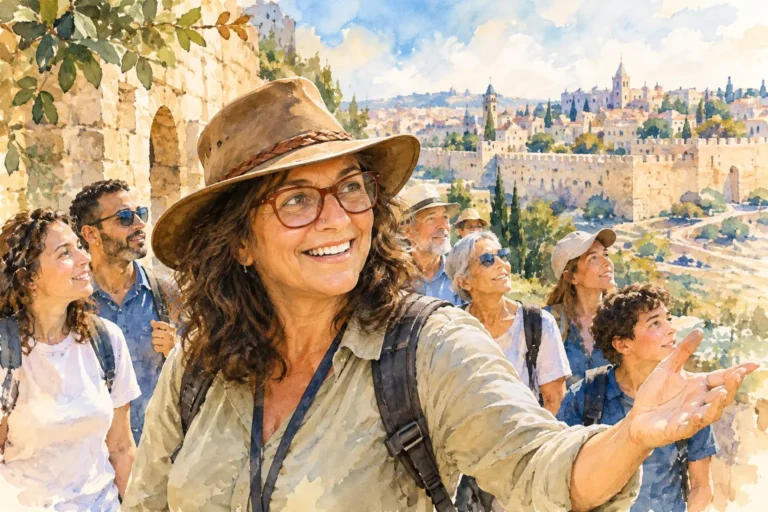
Israel Tours Built Around Your Curiosity
A sunrise over the desert, warm bread pulled from an oven, a quiet chapel tucked down a Jerusalem lane, or a conversation with someone whose life is rooted in a landscape you have only read about – these are the moments that stay with you. The best Israel tours do not rush from landmark to landmark. They make room for the questions, flavors, stories, and unexpected encounters that turn a visit into a personal connection.
Israel is compact, but it is never one-note. Within a few hours of driving, you can move from Mediterranean shoreline to ancient hilltop, from a bustling market to desert silence. That variety is exactly why a thoughtfully planned private tour makes such a difference. Your interests should set the route, not a preprinted schedule.
Israel Tours Should Start With Your Story
A first visit often begins with the places that have shaped so much history and memory: Jerusalem’s Old City, the archaeological remains of Caesarea, Masada above the desert, the Dead Sea, Jaffa, and Tel Aviv. These sites deserve their place on an itinerary. Yet no two travelers experience them in quite the same way.
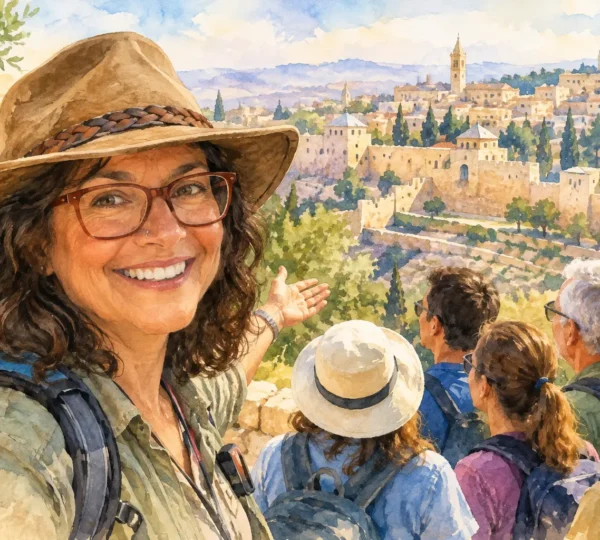
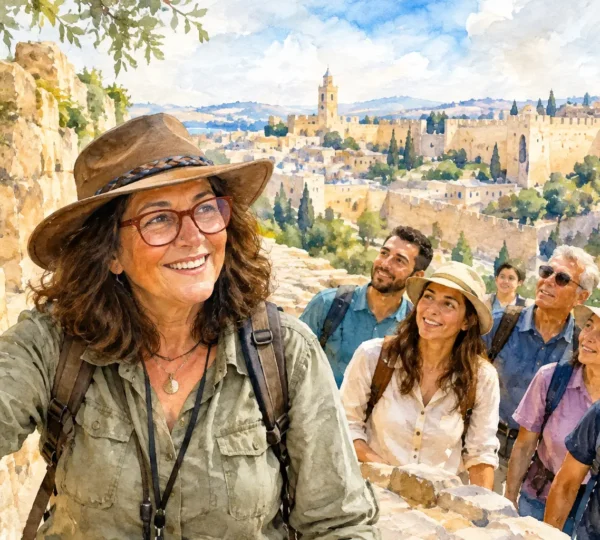
For one family, Jerusalem may be the heart of the trip, with time to walk slowly, pause at meaningful places, and understand the layers beneath the stones. For another, the priority may be a balanced day that combines a major heritage site with a food market, an easy nature walk, and a relaxed meal. A business traveler with one free afternoon may want a concentrated introduction that feels worthwhile rather than hurried.
That is the advantage of a private tour: the day can reflect what matters to you. It may mean an early start to experience Masada before the heat rises, a later morning after a long flight, or extra time at a museum, viewpoint, or neighborhood that sparks a real interest. Flexibility is not an indulgence. In a place with so much to absorb, it is often the difference between simply seeing a destination and understanding why it matters.
Beyond the Famous Stops
The headline destinations are only one part of the picture. Some of the most memorable Israel tours begin where the standard itinerary ends: in a small workshop, a family-run farm, a lesser-known archaeological site, a forest trail, or a home where a host shares a local tradition over coffee or a meal.
These experiences are especially rewarding for travelers returning to Israel. If you have already seen the major sites, your next trip can go deeper rather than repeat itself. You might spend time with an artisan, join a hands-on cooking or baking session, explore the country’s agricultural creativity, or learn how a particular community has shaped the character of its town. The point is not to collect obscure locations for their own sake. It is to find encounters that are meaningful to you.
A guide with long-standing local knowledge can help make those connections feel natural. Some experiences need advance coordination. Others are best chosen in the moment, based on the season, weather, energy level, and your curiosity that day. The strongest itineraries leave room for both.
Choose the Pace, Not Just the Places
Travelers often focus first on where to go. A better first question is how you want to feel at the end of each day. Inspired and energized? Rested enough to enjoy dinner? Challenged by a hike? Grounded by time for reflection? There is no single right answer.
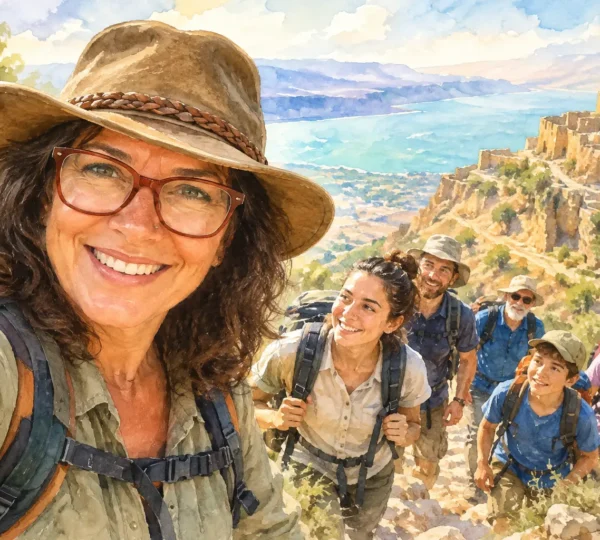
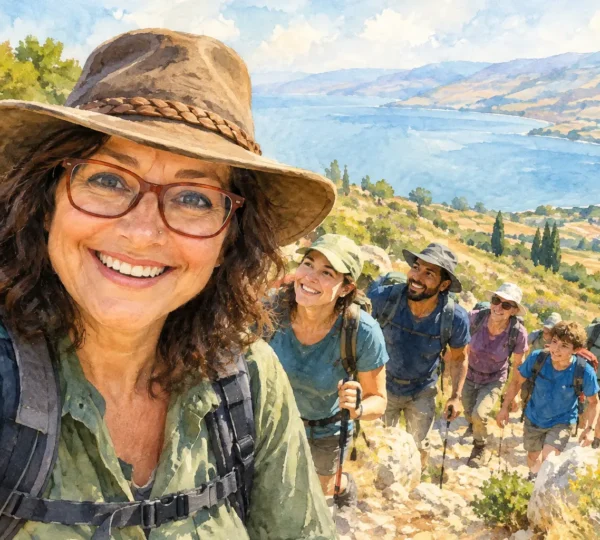
An active itinerary can include hiking in the Judean hills, a 4×4 route through desert terrain, foraging, sailing, scuba diving, or a mountain excursion. These are not add-ons for only serious adventurers. Activities can be tailored to different ages, confidence levels, and comfort preferences. A gentle walk to a beautiful overlook may be perfect for one group, while another is ready for a more demanding trail and a day off-road.
The same applies to cultural and culinary experiences. Some guests love a full day of tasting, market wandering, and cooking. Others prefer one well-chosen food stop woven into a day of history and scenery. Trying to fit everything into one trip can create a blur. Choosing a few experiences with care gives each one room to breathe.
Make Space for Human Encounters
Israel’s richness lies not only in its sites, but in its people. A meaningful visit can include conversations with innovators, farmers, educators, artists, historians, culinary professionals, clergy, and others whose work offers a firsthand view of the country’s daily life and creative energy.
These meetings are not lectures added to fill an itinerary. At their best, they invite genuine exchange. You may hear how an agricultural idea took root in a challenging landscape, learn from an archaeologist working to interpret a site, or share a meal with a host whose family stories bring a region to life. For students, families, and adults traveling together, these encounters can create the kind of discussion that continues long after the trip.
They also require sensitivity. Not every visitor wants the same degree of depth, and not every meeting is right for every group. A skilled guide listens closely, asks good questions before the trip, and suggests experiences that fit your interests without forcing a particular agenda.
Planning a Private Day That Works
The most successful tours usually begin with a simple conversation. Share the places you have dreamed of seeing, but also mention what you do not enjoy. If crowded spaces drain you, say so. If walking is limited, or if you are traveling with teens who need hands-on activity, that should shape the plan from the beginning.
It helps to consider the practical rhythm of your trip. Jerusalem rewards unhurried time and comfortable walking shoes. Desert routes call for attention to temperature and timing. Coastal days can be wonderfully relaxed, but may need a different pace than a packed day of ancient sites. Religious observances, museum hours, seasonal conditions, and traffic can all influence what makes sense on a given day.
A good itinerary is therefore a framework, not a contract. It should be organized enough to make the most of your time, yet responsive enough to follow an unexpected interest or adjust when the day calls for a change. That approach is particularly valuable for multigenerational families and private groups, where each person may arrive with a different hope for the journey.
When One Day Is Enough, and When It Is Not
A short private tour can be powerful. If you have limited time, choose one area and experience it well rather than trying to cross the whole country in a few hours. A focused Jerusalem day, a coastal route combining Caesarea and Jaffa, or a desert excursion can give you a vivid, satisfying introduction.
With several days, the connections between regions begin to emerge. You can pair ancient history with contemporary creativity, sacred spaces with outdoor time, and city energy with wide-open landscapes. More time also allows for the slower experiences that are often the most personal: meeting a local host, lingering over lunch, or taking an unplanned detour because a view is simply too good to pass.
Patchwork Israel creates private, tailor-made journeys for precisely this reason. A licensed guide’s expertise is not just knowing the route. It is understanding which stories belong together, where the hidden possibilities are, and when to stop talking so a place can speak for itself.
The right tour is not the one that checks the most boxes. It is the one that leaves you with a few vivid memories that feel entirely your own.

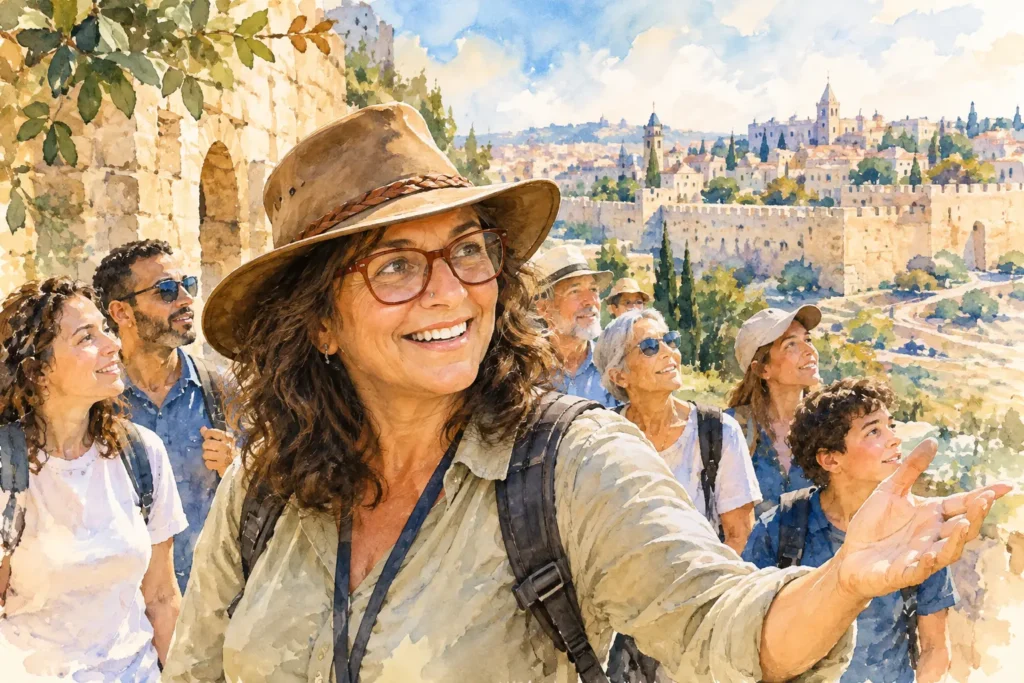
Israel Tours Built Around Your Curiosity
A sunrise over the desert, warm bread pulled from an oven, a quiet chapel tucked down a Jerusalem lane, or a conversation with someone whose life is rooted in a landscape you have only read about – these are the moments that stay with you. The best Israel tours do not rush from landmark to landmark. They make room for the questions, flavors, stories, and unexpected encounters that turn a visit into a personal connection.
Israel is compact, but it is never one-note. Within a few hours of driving, you can move from Mediterranean shoreline to ancient hilltop, from a bustling market to desert silence. That variety is exactly why a thoughtfully planned private tour makes such a difference. Your interests should set the route, not a preprinted schedule.
Israel Tours Should Start With Your Story
A first visit often begins with the places that have shaped so much history and memory: Jerusalem’s Old City, the archaeological remains of Caesarea, Masada above the desert, the Dead Sea, Jaffa, and Tel Aviv. These sites deserve their place on an itinerary. Yet no two travelers experience them in quite the same way.
For one family, Jerusalem may be the heart of the trip, with time to walk slowly, pause at meaningful places, and understand the layers beneath the stones. For another, the priority may be a balanced day that combines a major heritage site with a food market, an easy nature walk, and a relaxed meal. A business traveler with one free afternoon may want a concentrated introduction that feels worthwhile rather than hurried.
That is the advantage of a private tour: the day can reflect what matters to you. It may mean an early start to experience Masada before the heat rises, a later morning after a long flight, or extra time at a museum, viewpoint, or neighborhood that sparks a real interest. Flexibility is not an indulgence. In a place with so much to absorb, it is often the difference between simply seeing a destination and understanding why it matters.
Beyond the Famous Stops
The headline destinations are only one part of the picture. Some of the most memorable Israel tours begin where the standard itinerary ends: in a small workshop, a family-run farm, a lesser-known archaeological site, a forest trail, or a home where a host shares a local tradition over coffee or a meal.
These experiences are especially rewarding for travelers returning to Israel. If you have already seen the major sites, your next trip can go deeper rather than repeat itself. You might spend time with an artisan, join a hands-on cooking or baking session, explore the country’s agricultural creativity, or learn how a particular community has shaped the character of its town. The point is not to collect obscure locations for their own sake. It is to find encounters that are meaningful to you.
A guide with long-standing local knowledge can help make those connections feel natural. Some experiences need advance coordination. Others are best chosen in the moment, based on the season, weather, energy level, and your curiosity that day. The strongest itineraries leave room for both.
Choose the Pace, Not Just the Places
Travelers often focus first on where to go. A better first question is how you want to feel at the end of each day. Inspired and energized? Rested enough to enjoy dinner? Challenged by a hike? Grounded by time for reflection? There is no single right answer.
An active itinerary can include hiking in the Judean hills, a 4×4 route through desert terrain, foraging, sailing, scuba diving, or a mountain excursion. These are not add-ons for only serious adventurers. Activities can be tailored to different ages, confidence levels, and comfort preferences. A gentle walk to a beautiful overlook may be perfect for one group, while another is ready for a more demanding trail and a day off-road.
The same applies to cultural and culinary experiences. Some guests love a full day of tasting, market wandering, and cooking. Others prefer one well-chosen food stop woven into a day of history and scenery. Trying to fit everything into one trip can create a blur. Choosing a few experiences with care gives each one room to breathe.
Make Space for Human Encounters
Israel’s richness lies not only in its sites, but in its people. A meaningful visit can include conversations with innovators, farmers, educators, artists, historians, culinary professionals, clergy, and others whose work offers a firsthand view of the country’s daily life and creative energy.
These meetings are not lectures added to fill an itinerary. At their best, they invite genuine exchange. You may hear how an agricultural idea took root in a challenging landscape, learn from an archaeologist working to interpret a site, or share a meal with a host whose family stories bring a region to life. For students, families, and adults traveling together, these encounters can create the kind of discussion that continues long after the trip.
They also require sensitivity. Not every visitor wants the same degree of depth, and not every meeting is right for every group. A skilled guide listens closely, asks good questions before the trip, and suggests experiences that fit your interests without forcing a particular agenda.
Planning a Private Day That Works
The most successful tours usually begin with a simple conversation. Share the places you have dreamed of seeing, but also mention what you do not enjoy. If crowded spaces drain you, say so. If walking is limited, or if you are traveling with teens who need hands-on activity, that should shape the plan from the beginning.
It helps to consider the practical rhythm of your trip. Jerusalem rewards unhurried time and comfortable walking shoes. Desert routes call for attention to temperature and timing. Coastal days can be wonderfully relaxed, but may need a different pace than a packed day of ancient sites. Religious observances, museum hours, seasonal conditions, and traffic can all influence what makes sense on a given day.
A good itinerary is therefore a framework, not a contract. It should be organized enough to make the most of your time, yet responsive enough to follow an unexpected interest or adjust when the day calls for a change. That approach is particularly valuable for multigenerational families and private groups, where each person may arrive with a different hope for the journey.
When One Day Is Enough, and When It Is Not
A short private tour can be powerful. If you have limited time, choose one area and experience it well rather than trying to cross the whole country in a few hours. A focused Jerusalem day, a coastal route combining Caesarea and Jaffa, or a desert excursion can give you a vivid, satisfying introduction.
With several days, the connections between regions begin to emerge. You can pair ancient history with contemporary creativity, sacred spaces with outdoor time, and city energy with wide-open landscapes. More time also allows for the slower experiences that are often the most personal: meeting a local host, lingering over lunch, or taking an unplanned detour because a view is simply too good to pass.
Patchwork Israel creates private, tailor-made journeys for precisely this reason. A licensed guide’s expertise is not just knowing the route. It is understanding which stories belong together, where the hidden possibilities are, and when to stop talking so a place can speak for itself.
The right tour is not the one that checks the most boxes. It is the one that leaves you with a few vivid memories that feel entirely your own.

Get the latest blog updates in your inbox.