
Plan a Meaningful Magdala Sea of Galilee Visit
At Magdala, the Sea of Galilee is not merely a beautiful backdrop. It is part of the story. A Magdala Sea of Galilee visit places you beside a lake that shaped daily work, travel, faith, and community life two thousand years ago – then invites you to slow down long enough to notice the details.
For some travelers, Magdala is a deeply personal Christian pilgrimage stop connected by tradition to Mary Magdalene. For others, it is one of the most compelling archaeological sites in the Galilee: a remarkably tangible first-century Jewish town with a synagogue, ritual baths, market areas, and a shoreline setting that makes the ancient landscape feel close. It works especially well for families, heritage travelers, and returning visitors who want more than a quick photo stop between major sites.
Why Magdala Feels Different
Many sites around the Sea of Galilee are remembered for a single event or tradition. Magdala offers something slightly different: a sense of an actual town. Archaeological excavations have revealed streets, domestic and commercial areas, water installations, and a first-century synagogue that is among the most significant discoveries in the region.
The synagogue is modest in size, which is part of its power. Its carved stone, often called the Magdala Stone, includes imagery associated with the Jerusalem Temple. Standing near it, visitors can consider how connected this lakeside community was to the wider Jewish world of its time. This is not a reconstruction designed to entertain. It is a place where careful archaeology gives texture to a period that can otherwise feel distant.
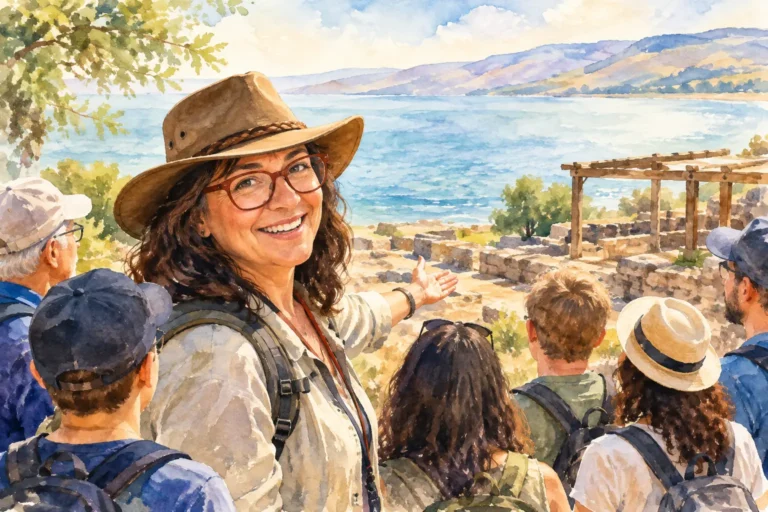
Magdala was a fishing town, and the lake still provides essential context. Look across the water toward the surrounding hills and it becomes easier to imagine boats arriving with their catch, goods moving along regional routes, and local families building their lives around the rhythms of the shore.
The Mary Magdalene Connection
The name Mary Magdalene is traditionally understood as Mary from Magdala. While a visit should distinguish clearly between tradition, scripture, and archaeological evidence, that association gives the site a special resonance for many Christian visitors.
Magdala’s modern spiritual spaces are designed to welcome reflection across Christian traditions. The chapel known as Duc in Altum, meaning “put out into the deep,” is particularly moving for visitors who want time for prayer, quiet, or simply a pause from a full touring day. Its setting and design encourage contemplation without requiring anyone to approach the site in a particular way.
That openness is one reason Magdala works for mixed-interest groups. One traveler may be drawn to the Gospel connections, another to the synagogue and excavations, and another to the architecture and lake views. A well-paced visit makes room for each response.
How to Plan a Magdala Sea of Galilee Visit
Magdala is on the western side of the Sea of Galilee, near other important Galilee destinations. It can fit naturally into a day that includes Capernaum, Mount of Beatitudes, a lakeside meal, or a short walk in the surrounding landscape. Yet it deserves more than a rushed 20-minute stop. Allow roughly 60 to 90 minutes for the archaeological site and spiritual areas, longer if your group wishes to spend unhurried time in the chapel or add a guided discussion.
The best order depends on your travel style. Early morning often brings softer light over the water and a calmer feeling before the day becomes busy. Later in the afternoon can also be lovely, especially when Magdala is paired with a relaxed lakeside finish rather than another tightly scheduled attraction.
Wear comfortable walking shoes. The terrain is generally manageable, but archaeological paths can be uneven and the Galilee sun can feel stronger than expected. Bring water, sun protection, and modest clothing suitable for a sacred setting. Opening hours and access arrangements can change with seasons and holidays, so a current check is always sensible when building an itinerary.
Give the Site Its Proper Context
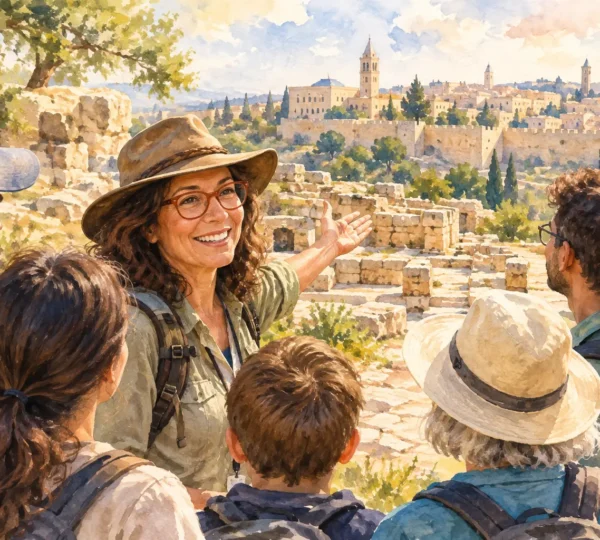
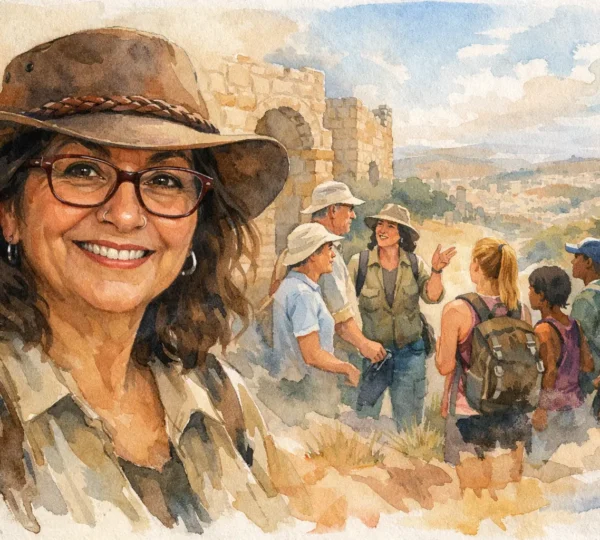
A guide can make the difference between seeing old stone walls and understanding a living town. At Magdala, context matters: how ritual baths functioned, why a synagogue’s decoration is unusual, what the lake meant to local commerce, and where historical knowledge ends and later tradition begins.
This is also a place where good guiding means knowing when not to fill every moment with commentary. There should be time to sit, look at the water, and let the setting do its work. Travelers often remember that quiet interval as clearly as the facts.
For a private day, Patchwork Israel can shape the visit around the questions your group actually brings. A faith-focused itinerary may allow additional time for reflection and scripture-based context. A heritage or archaeology-focused day can compare Magdala’s synagogue with other sites in the Galilee. For travelers who have already visited the headline locations, the day can lean into local food, a gentle nature walk, or lesser-known corners of the region.
Pair Magdala With Experiences That Fit Your Pace
Magdala does not need to carry an entire day on its own. Its strength is how well it complements nearby experiences.
A classic first-time Galilee day might connect Magdala with Capernaum and the Mount of Beatitudes, creating a clear geographical and historical flow. The trade-off is pace: these places are meaningful, and trying to cover all of them too quickly can reduce each one to a checklist. If spiritual reflection is central to your visit, choose fewer stops and protect time at Magdala.
For travelers interested in daily life and landscape, pair the site with a boat experience on the Sea of Galilee or a local culinary stop. The lake then becomes more than a view from an archaeological path. It becomes part of the day’s sensory memory – the breeze, the changing light, the sound of water against the shore, and a meal that reflects the region’s agricultural abundance.
Active travelers may prefer to combine Magdala with an accessible hike or a scenic drive above the lake. The right route depends on the season, fitness level, heat, and the makeup of your group. In summer, an early start and a shorter walk are often wiser than pushing through midday temperatures. In cooler months, the green slopes and open views can make a little extra time outdoors especially rewarding.
What Families and Groups Should Know
Magdala can be meaningful for multigenerational families because it offers several layers without requiring everyone to engage in the same way. Children and teens often respond to the idea of a real ancient town beside a lake. Adults may be more interested in the history, faith traditions, or architecture. A guide can keep the story concrete by focusing on daily routines: where people gathered, how they prepared for worship, and how a fishing economy sustained a town.
For larger educational or faith-based groups, planning is essential. Build in bathroom and water breaks, set expectations about respectful behavior in sacred spaces, and avoid scheduling too many talks back-to-back. A strong group visit is not simply a lecture delivered outdoors. It is a sequence of short insights, moments to observe, and opportunities for participants to ask their own questions.
Visitors who are not religious should not skip Magdala on that account. The site stands on its archaeological importance and its striking location. Its religious associations add meaning for many people, but curiosity about history, architecture, and human stories is more than enough reason to come.
Make Space for Your Own Response
The Sea of Galilee has a way of changing a schedule. Even travelers who arrive focused on the next destination often find themselves lingering at the water. That is not lost time. At Magdala, the landscape is part of the evidence, part of the tradition, and part of the experience.
Plan the facts, choose the right companions for the day, and leave a little unscheduled space beside the lake. Magdala is at its best when it is not rushed.

Plan a Meaningful Magdala Sea of Galilee Visit
At Magdala, the Sea of Galilee is not merely a beautiful backdrop. It is part of the story. A Magdala Sea of Galilee visit places you beside a lake that shaped daily work, travel, faith, and community life two thousand years ago – then invites you to slow down long enough to notice the details.
For some travelers, Magdala is a deeply personal Christian pilgrimage stop connected by tradition to Mary Magdalene. For others, it is one of the most compelling archaeological sites in the Galilee: a remarkably tangible first-century Jewish town with a synagogue, ritual baths, market areas, and a shoreline setting that makes the ancient landscape feel close. It works especially well for families, heritage travelers, and returning visitors who want more than a quick photo stop between major sites.
Why Magdala Feels Different
Many sites around the Sea of Galilee are remembered for a single event or tradition. Magdala offers something slightly different: a sense of an actual town. Archaeological excavations have revealed streets, domestic and commercial areas, water installations, and a first-century synagogue that is among the most significant discoveries in the region.
The synagogue is modest in size, which is part of its power. Its carved stone, often called the Magdala Stone, includes imagery associated with the Jerusalem Temple. Standing near it, visitors can consider how connected this lakeside community was to the wider Jewish world of its time. This is not a reconstruction designed to entertain. It is a place where careful archaeology gives texture to a period that can otherwise feel distant.
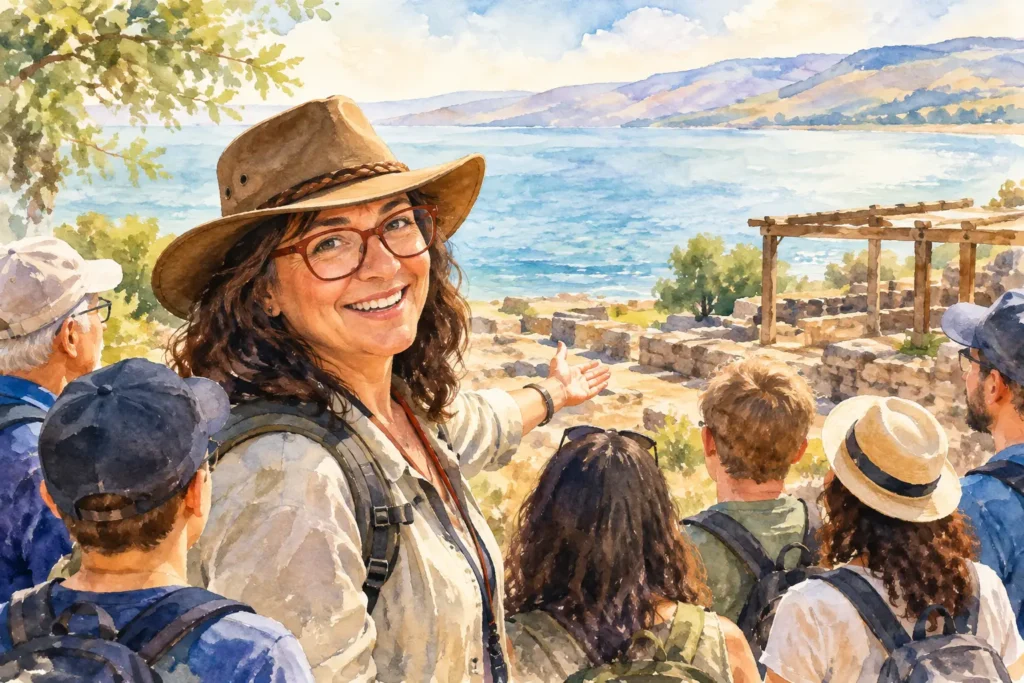
Magdala was a fishing town, and the lake still provides essential context. Look across the water toward the surrounding hills and it becomes easier to imagine boats arriving with their catch, goods moving along regional routes, and local families building their lives around the rhythms of the shore.
The Mary Magdalene Connection
The name Mary Magdalene is traditionally understood as Mary from Magdala. While a visit should distinguish clearly between tradition, scripture, and archaeological evidence, that association gives the site a special resonance for many Christian visitors.
Magdala’s modern spiritual spaces are designed to welcome reflection across Christian traditions. The chapel known as Duc in Altum, meaning “put out into the deep,” is particularly moving for visitors who want time for prayer, quiet, or simply a pause from a full touring day. Its setting and design encourage contemplation without requiring anyone to approach the site in a particular way.
That openness is one reason Magdala works for mixed-interest groups. One traveler may be drawn to the Gospel connections, another to the synagogue and excavations, and another to the architecture and lake views. A well-paced visit makes room for each response.
How to Plan a Magdala Sea of Galilee Visit
Magdala is on the western side of the Sea of Galilee, near other important Galilee destinations. It can fit naturally into a day that includes Capernaum, Mount of Beatitudes, a lakeside meal, or a short walk in the surrounding landscape. Yet it deserves more than a rushed 20-minute stop. Allow roughly 60 to 90 minutes for the archaeological site and spiritual areas, longer if your group wishes to spend unhurried time in the chapel or add a guided discussion.
The best order depends on your travel style. Early morning often brings softer light over the water and a calmer feeling before the day becomes busy. Later in the afternoon can also be lovely, especially when Magdala is paired with a relaxed lakeside finish rather than another tightly scheduled attraction.
Wear comfortable walking shoes. The terrain is generally manageable, but archaeological paths can be uneven and the Galilee sun can feel stronger than expected. Bring water, sun protection, and modest clothing suitable for a sacred setting. Opening hours and access arrangements can change with seasons and holidays, so a current check is always sensible when building an itinerary.
Give the Site Its Proper Context
A guide can make the difference between seeing old stone walls and understanding a living town. At Magdala, context matters: how ritual baths functioned, why a synagogue’s decoration is unusual, what the lake meant to local commerce, and where historical knowledge ends and later tradition begins.
This is also a place where good guiding means knowing when not to fill every moment with commentary. There should be time to sit, look at the water, and let the setting do its work. Travelers often remember that quiet interval as clearly as the facts.
For a private day, Patchwork Israel can shape the visit around the questions your group actually brings. A faith-focused itinerary may allow additional time for reflection and scripture-based context. A heritage or archaeology-focused day can compare Magdala’s synagogue with other sites in the Galilee. For travelers who have already visited the headline locations, the day can lean into local food, a gentle nature walk, or lesser-known corners of the region.
Pair Magdala With Experiences That Fit Your Pace
Magdala does not need to carry an entire day on its own. Its strength is how well it complements nearby experiences.
A classic first-time Galilee day might connect Magdala with Capernaum and the Mount of Beatitudes, creating a clear geographical and historical flow. The trade-off is pace: these places are meaningful, and trying to cover all of them too quickly can reduce each one to a checklist. If spiritual reflection is central to your visit, choose fewer stops and protect time at Magdala.
For travelers interested in daily life and landscape, pair the site with a boat experience on the Sea of Galilee or a local culinary stop. The lake then becomes more than a view from an archaeological path. It becomes part of the day’s sensory memory – the breeze, the changing light, the sound of water against the shore, and a meal that reflects the region’s agricultural abundance.
Active travelers may prefer to combine Magdala with an accessible hike or a scenic drive above the lake. The right route depends on the season, fitness level, heat, and the makeup of your group. In summer, an early start and a shorter walk are often wiser than pushing through midday temperatures. In cooler months, the green slopes and open views can make a little extra time outdoors especially rewarding.
What Families and Groups Should Know
Magdala can be meaningful for multigenerational families because it offers several layers without requiring everyone to engage in the same way. Children and teens often respond to the idea of a real ancient town beside a lake. Adults may be more interested in the history, faith traditions, or architecture. A guide can keep the story concrete by focusing on daily routines: where people gathered, how they prepared for worship, and how a fishing economy sustained a town.
For larger educational or faith-based groups, planning is essential. Build in bathroom and water breaks, set expectations about respectful behavior in sacred spaces, and avoid scheduling too many talks back-to-back. A strong group visit is not simply a lecture delivered outdoors. It is a sequence of short insights, moments to observe, and opportunities for participants to ask their own questions.
Visitors who are not religious should not skip Magdala on that account. The site stands on its archaeological importance and its striking location. Its religious associations add meaning for many people, but curiosity about history, architecture, and human stories is more than enough reason to come.
Make Space for Your Own Response
The Sea of Galilee has a way of changing a schedule. Even travelers who arrive focused on the next destination often find themselves lingering at the water. That is not lost time. At Magdala, the landscape is part of the evidence, part of the tradition, and part of the experience.
Plan the facts, choose the right companions for the day, and leave a little unscheduled space beside the lake. Magdala is at its best when it is not rushed.

Get the latest blog updates in your inbox.