
Masada Sunrise or Dead Sea: Choose Your Day
The question is rarely just Masada sunrise or Dead Sea. It is really about how you want to feel in the desert: exhilarated before breakfast, floating weightlessly by late morning, or pleasantly tired after making room for both. These two iconic experiences sit naturally within the same region, but the right plan depends on your fitness, season, pace, and what you want the day to hold.
I have seen travelers come down from Masada at first light with dusty shoes and huge smiles, then sink into the Dead Sea feeling they have earned every quiet minute. I have also met families, business travelers with one free day, and visitors seeking a gentler experience who wisely chose a later start and gave the Dead Sea the attention it deserves. There is no prize for copying someone else’s itinerary. Your vacation, your choice.
Masada Sunrise or Dead Sea: The Real Difference
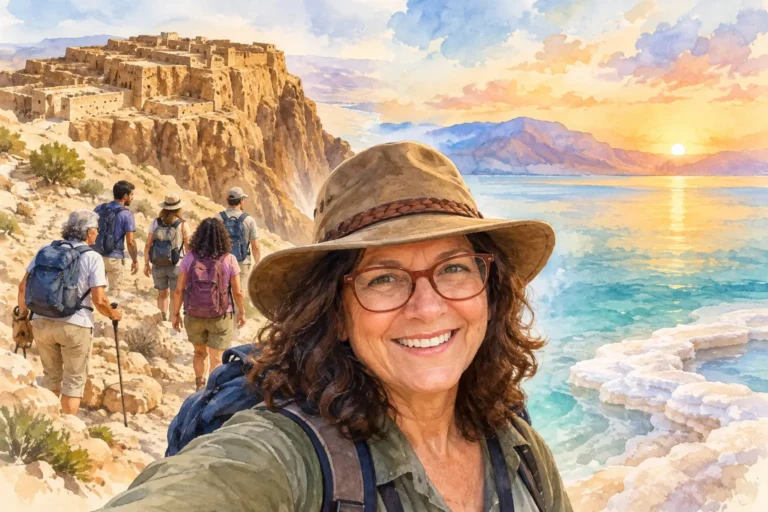
Masada is about story, landscape, and effort. The mountaintop fortress rises above the Judean Desert with a dramatic presence that photographs cannot quite explain. At sunrise, the changing light reveals the pale desert ridges, the Dead Sea below, and the immense silence of the landscape. Reaching the summit on foot adds a physical dimension to the visit: you do not simply see Masada, you arrive there.
The Dead Sea is about sensation and release. The mineral-rich water lets you float with almost comic ease, while the still desert scenery makes the shoreline feel wonderfully removed from ordinary life. A stop here can be playful, restorative, and memorable for nearly every age. It is not a substitute for Masada, and Masada is not a substitute for it. One asks you to climb; the other invites you to let go.
For many private tours, the best answer is both. The question is whether combining them will feel satisfying or rushed.
When the Masada Sunrise Hike Is Worth the Early Alarm
The classic sunrise experience means setting out in darkness, usually hiking the Snake Path before dawn. It is a real hike, not a casual stroll. The route is well known and rewarding, but it includes sustained uphill walking, uneven ground, and a large number of steps. In warmer months, the early timing is not merely atmospheric – it is the sensible way to avoid hiking during the fiercest heat.
Choose sunrise at Masada if you enjoy being active, can handle a steady ascent, and want one of Israel’s most powerful landscape moments. It is especially meaningful for travelers interested in history, heritage, archaeology, or simply the satisfaction of beginning a day before the sun has cleared the mountains. A knowledgeable guide can make those quiet hours count, connecting the fortress to the people who lived, worked, stored water, and made choices here long ago.
The trade-off is sleep. Depending on where you are staying, the departure can be very early. A sunrise hike also asks for flexibility: cloud cover, seasonal opening times, and personal energy all shape the experience. If you are traveling with young children, have knee or mobility concerns, or are adjusting to jet lag, forcing a pre-dawn climb may turn a wonderful place into a test of endurance.
There is a middle path. Masada can be visited later by cable car, allowing you to explore the summit without the demanding ascent. You still get the vast views and the remarkable ruins, with more energy left for the rest of the day. For some travelers, particularly those building a long itinerary with Jerusalem, Galilee, or coastal cities still ahead, that is the smarter choice.
What to Know Before Hiking Masada
Bring more water than you think you need, wear supportive closed-toe shoes, and dress in layers for the cool start and warm finish. A small flashlight or headlamp is useful for the pre-dawn trail. Sun protection matters even when the morning begins in darkness.
Most importantly, be honest about your pace. A private day can be adjusted around your needs, but the desert is not the place to ignore heat, fatigue, or an old injury. The best guides set a rhythm that leaves room to look up, ask questions, and enjoy the climb rather than race through it.
When to Make the Dead Sea the Main Event
Choose a Dead Sea-centered day when restoration is as important as sightseeing. Perhaps you have arrived after a long flight, spent several full days walking through cities and museums, or simply want a meaningful desert outing without an athletic start. The shoreline offers an immediate and unusual experience: floating is easy, but the setting stays with you because it is so visually striking.
A good Dead Sea visit needs a little practical planning. Do not shave shortly before entering the water, and keep splashing to a minimum – even a tiny amount of salty water in the eyes will quickly end the fun. Avoid swallowing the water, cover cuts carefully, and rinse off afterward. The water is intensely salty, so shorter floating sessions are usually more comfortable than trying to stay in for a long time.
The Dead Sea can work beautifully with a scenic drive, desert viewpoints, a relaxed lunch, or a shorter walk in a nearby nature area, depending on weather and interests. This is where a customized itinerary makes a difference. Some guests want mud, floating, and a comfortable place to change; others prefer to pair the sea with a quiet overlook and a conversation about the extraordinary geology of the region.
If your group includes people with very different energy levels, the Dead Sea can be a particularly generous choice. It offers a shared experience without requiring everyone to hike at the same speed.
Can You Do Masada and the Dead Sea in One Day?
Yes, and for many travelers it is a superb desert day. A sunrise hike followed by breakfast, a visit to the summit’s key sites, and time at the Dead Sea creates a satisfying contrast between effort and ease. The important word is time. Trying to fit every possible stop into the same day can reduce Masada to a checklist and the Dead Sea to a rushed photo.
A well-paced combined itinerary usually gives the sunrise hike its own unhurried morning, then builds in food, shade, hydration, and enough time by the water to actually float and relax. In hot weather, the order matters even more. Hiking first is generally far more pleasant than leaving Masada’s exposed trails for midday.
If you are taking the cable car rather than hiking, a later departure becomes more realistic, though the desert still rewards an early start. During cooler months, there is more flexibility and an added chance to include a short desert walk or a less-visited viewpoint. During the hottest periods, simple plans often make the best memories.
How to Decide Based on Your Travel Style
If you have one available day and love active travel, choose the sunrise hike and add the Dead Sea afterward. You will experience the desert in two entirely different ways and understand why the combination is so popular.
If you have limited mobility, are traveling with a multigenerational family, or want a slower rhythm, choose Masada by cable car and enjoy a more generous Dead Sea stop. You will not be missing the essence of the place. The summit remains compelling, and your day will have room to breathe.
If the Dead Sea is the dream you have carried for years, let it be more than an afterthought. Plan enough time to float, rinse off, eat well, and take in the quiet surroundings. If Masada is the experience you have imagined, protect the early morning for it and do not dilute it with too many extra stops.
For return visitors who have already checked off the headline sights, the desert has further layers. A carefully chosen route can include lesser-known scenery, a seasonal walk, a local food stop, or a deeper look at how people have adapted to this demanding landscape. That is the pleasure of traveling with someone who knows when to follow the famous road and when to take a more personal turn.
Patchwork Israel builds these days around the people in the vehicle, not a fixed template. The right Masada and Dead Sea itinerary may begin with a headlamp and a climb, or with coffee, a cable car, and a slow float. Either way, leave a little space in the schedule. The desert is at its best when you have time to notice it.

Masada Sunrise or Dead Sea: Choose Your Day
The question is rarely just Masada sunrise or Dead Sea. It is really about how you want to feel in the desert: exhilarated before breakfast, floating weightlessly by late morning, or pleasantly tired after making room for both. These two iconic experiences sit naturally within the same region, but the right plan depends on your fitness, season, pace, and what you want the day to hold.
I have seen travelers come down from Masada at first light with dusty shoes and huge smiles, then sink into the Dead Sea feeling they have earned every quiet minute. I have also met families, business travelers with one free day, and visitors seeking a gentler experience who wisely chose a later start and gave the Dead Sea the attention it deserves. There is no prize for copying someone else’s itinerary. Your vacation, your choice.
Masada Sunrise or Dead Sea: The Real Difference
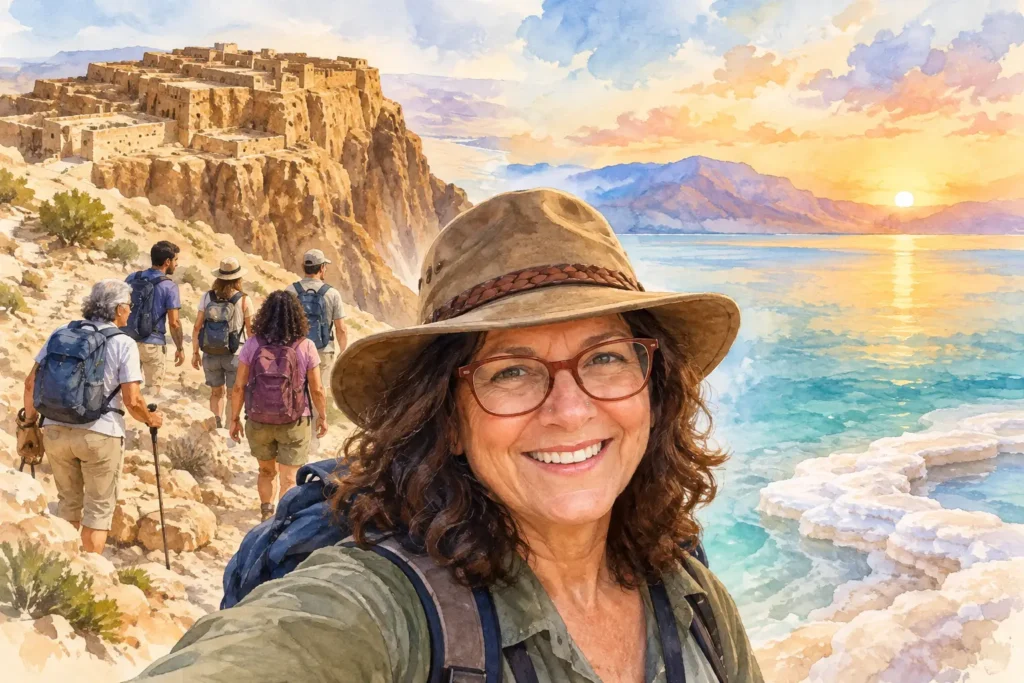
Masada is about story, landscape, and effort. The mountaintop fortress rises above the Judean Desert with a dramatic presence that photographs cannot quite explain. At sunrise, the changing light reveals the pale desert ridges, the Dead Sea below, and the immense silence of the landscape. Reaching the summit on foot adds a physical dimension to the visit: you do not simply see Masada, you arrive there.
The Dead Sea is about sensation and release. The mineral-rich water lets you float with almost comic ease, while the still desert scenery makes the shoreline feel wonderfully removed from ordinary life. A stop here can be playful, restorative, and memorable for nearly every age. It is not a substitute for Masada, and Masada is not a substitute for it. One asks you to climb; the other invites you to let go.
For many private tours, the best answer is both. The question is whether combining them will feel satisfying or rushed.
When the Masada Sunrise Hike Is Worth the Early Alarm
The classic sunrise experience means setting out in darkness, usually hiking the Snake Path before dawn. It is a real hike, not a casual stroll. The route is well known and rewarding, but it includes sustained uphill walking, uneven ground, and a large number of steps. In warmer months, the early timing is not merely atmospheric – it is the sensible way to avoid hiking during the fiercest heat.
Choose sunrise at Masada if you enjoy being active, can handle a steady ascent, and want one of Israel’s most powerful landscape moments. It is especially meaningful for travelers interested in history, heritage, archaeology, or simply the satisfaction of beginning a day before the sun has cleared the mountains. A knowledgeable guide can make those quiet hours count, connecting the fortress to the people who lived, worked, stored water, and made choices here long ago.
The trade-off is sleep. Depending on where you are staying, the departure can be very early. A sunrise hike also asks for flexibility: cloud cover, seasonal opening times, and personal energy all shape the experience. If you are traveling with young children, have knee or mobility concerns, or are adjusting to jet lag, forcing a pre-dawn climb may turn a wonderful place into a test of endurance.
There is a middle path. Masada can be visited later by cable car, allowing you to explore the summit without the demanding ascent. You still get the vast views and the remarkable ruins, with more energy left for the rest of the day. For some travelers, particularly those building a long itinerary with Jerusalem, Galilee, or coastal cities still ahead, that is the smarter choice.
What to Know Before Hiking Masada
Bring more water than you think you need, wear supportive closed-toe shoes, and dress in layers for the cool start and warm finish. A small flashlight or headlamp is useful for the pre-dawn trail. Sun protection matters even when the morning begins in darkness.
Most importantly, be honest about your pace. A private day can be adjusted around your needs, but the desert is not the place to ignore heat, fatigue, or an old injury. The best guides set a rhythm that leaves room to look up, ask questions, and enjoy the climb rather than race through it.
When to Make the Dead Sea the Main Event
Choose a Dead Sea-centered day when restoration is as important as sightseeing. Perhaps you have arrived after a long flight, spent several full days walking through cities and museums, or simply want a meaningful desert outing without an athletic start. The shoreline offers an immediate and unusual experience: floating is easy, but the setting stays with you because it is so visually striking.
A good Dead Sea visit needs a little practical planning. Do not shave shortly before entering the water, and keep splashing to a minimum – even a tiny amount of salty water in the eyes will quickly end the fun. Avoid swallowing the water, cover cuts carefully, and rinse off afterward. The water is intensely salty, so shorter floating sessions are usually more comfortable than trying to stay in for a long time.
The Dead Sea can work beautifully with a scenic drive, desert viewpoints, a relaxed lunch, or a shorter walk in a nearby nature area, depending on weather and interests. This is where a customized itinerary makes a difference. Some guests want mud, floating, and a comfortable place to change; others prefer to pair the sea with a quiet overlook and a conversation about the extraordinary geology of the region.
If your group includes people with very different energy levels, the Dead Sea can be a particularly generous choice. It offers a shared experience without requiring everyone to hike at the same speed.
Can You Do Masada and the Dead Sea in One Day?
Yes, and for many travelers it is a superb desert day. A sunrise hike followed by breakfast, a visit to the summit’s key sites, and time at the Dead Sea creates a satisfying contrast between effort and ease. The important word is time. Trying to fit every possible stop into the same day can reduce Masada to a checklist and the Dead Sea to a rushed photo.
A well-paced combined itinerary usually gives the sunrise hike its own unhurried morning, then builds in food, shade, hydration, and enough time by the water to actually float and relax. In hot weather, the order matters even more. Hiking first is generally far more pleasant than leaving Masada’s exposed trails for midday.
If you are taking the cable car rather than hiking, a later departure becomes more realistic, though the desert still rewards an early start. During cooler months, there is more flexibility and an added chance to include a short desert walk or a less-visited viewpoint. During the hottest periods, simple plans often make the best memories.
How to Decide Based on Your Travel Style
If you have one available day and love active travel, choose the sunrise hike and add the Dead Sea afterward. You will experience the desert in two entirely different ways and understand why the combination is so popular.
If you have limited mobility, are traveling with a multigenerational family, or want a slower rhythm, choose Masada by cable car and enjoy a more generous Dead Sea stop. You will not be missing the essence of the place. The summit remains compelling, and your day will have room to breathe.
If the Dead Sea is the dream you have carried for years, let it be more than an afterthought. Plan enough time to float, rinse off, eat well, and take in the quiet surroundings. If Masada is the experience you have imagined, protect the early morning for it and do not dilute it with too many extra stops.
For return visitors who have already checked off the headline sights, the desert has further layers. A carefully chosen route can include lesser-known scenery, a seasonal walk, a local food stop, or a deeper look at how people have adapted to this demanding landscape. That is the pleasure of traveling with someone who knows when to follow the famous road and when to take a more personal turn.
Patchwork Israel builds these days around the people in the vehicle, not a fixed template. The right Masada and Dead Sea itinerary may begin with a headlamp and a climb, or with coffee, a cable car, and a slow float. Either way, leave a little space in the schedule. The desert is at its best when you have time to notice it.

Get the latest blog updates in your inbox.