
Your Guide to Biblical Archaeology Trails
A pottery sherd in the dust, a water tunnel cut through bedrock, a city gate worn smooth by centuries of footsteps – these are the details that make Israel’s past feel startlingly close. A guide to biblical archaeology trails is not simply a list of places mentioned in Scripture. It is a way to walk through landscapes where geography, faith, settlement, trade, conflict, agriculture, and daily life have left visible traces.
For some travelers, the defining moment is standing above an ancient city and seeing why it was built on that particular hill. For others, it is descending into a cistern, tracing a Roman street, or comparing an excavation layer with a familiar biblical story. The best archaeology day leaves room for both: the big historical picture and the small, human details that bring it to life.
What Makes a Biblical Archaeology Trail Meaningful?
Biblical archaeology is most rewarding when it is approached with curiosity rather than a hunt for quick proof. Excavated sites can illuminate the physical world of the Bible – fortifications, water systems, homes, inscriptions, roads, ritual spaces, and agricultural terraces. They also show that the region was home to many communities and empires over thousands of years.
That layered reality is the point. A site may have an Iron Age gate, a Hellenistic wall, a Roman bathhouse, a Byzantine church, and later structures all within a short walk. A knowledgeable guide helps separate those periods, explain what archaeologists know with confidence, and acknowledge where interpretation remains open. That balance matters, especially for visitors who want their faith, heritage, or personal connection to be treated with care.
A true trail also follows the land. Ancient travelers chose routes based on springs, ridges, valleys, fertile soil, and defensible high ground. When you hike even a small portion of the landscape between sites, the stories become less abstract. You begin to understand why a road passed one village, why a city needed a tunnel, or why a desert fortress commanded such attention.
Build Your Guide to Biblical Archaeology Trails Around a Region
Trying to cross the entire country in search of every famous excavation creates a rushed experience. Israel is compact on a map, but a meaningful archaeology itinerary needs time for walking, heat, site opening hours, and the unexpected conversation or viewpoint that often becomes the day’s highlight.
Jerusalem: Water, Stone, and Sacred Memory
Jerusalem offers extraordinary archaeological depth, but it works best when planned as a focused day or several carefully paced visits. In the ancient city area, water systems, fortifications, streets, and excavated domestic spaces reveal how critical water access and topography were to life here. Walking underground can be memorable, but it is not for everyone. Travelers with mobility concerns, claustrophobia, or young children may prefer above-ground routes with overlooks and accessible excavations.
The Old City adds another dimension: archaeology is not isolated behind a fence but woven into an active urban setting. That requires patience. There is much to see, yet a good day should not become an endless recital of dates. Pairing an archaeological walk with time to absorb the atmosphere, enjoy a quiet courtyard, or stop for lunch lets the experience settle in.
The Shephelah: Cities Between the Hills and Coast
Southwest of Jerusalem, the rolling lowlands known as the Shephelah are ideal for travelers who want archaeology with open views and a gentler sense of space. Sites such as Lachish and Tel Gezer help explain the strategic importance of the routes connecting the coastal plain with the Judean hills.
At Lachish, the scale of the mound and its defensive setting provide a powerful lesson in ancient city planning. Gezer is especially useful for discussing how archaeologists read a tel – the accumulated mound created by generations building, rebuilding, and reshaping the same location. These are not polished museum experiences, and that is part of their appeal. Bring sturdy shoes, water, sun protection, and a willingness to imagine beyond the stones.
This region suits a half-day hike followed by a vineyard meal, a rural visit, or a hands-on activity. It is a strong choice for repeat visitors who have already seen the major urban landmarks and want a deeper encounter with the land itself.
Northern Tels: Gates, Springs, and Borderland Landscapes
The north offers some of Israel’s most satisfying combinations of archaeology and nature. Tel Dan, for example, is set beside abundant water and shaded paths, making it especially appealing during warmer months. The site’s gates, monumental remains, and spring-fed landscape help visitors picture how settlement, religion, and security were intertwined in antiquity.
Tel Megiddo is another essential stop for those interested in the archaeology of the biblical world. Its elevated position gives a broad view over a major valley and ancient travel corridor. The famous water system is a highlight, though it includes stairs and can feel demanding in summer heat. If you have limited time, choose one northern tel and explore it thoroughly instead of collecting several sites in a single day.
A northern archaeology route can also include time in a local village, a farm, or a food-focused stop. History is not only in ruins. The flavors, landscapes, and communities encountered along the way give valuable context to the region’s continuing story.
Desert Trails: Masada and the Dead Sea Landscape
The Judean Desert demands a different pace. Here, the story is written in cliffs, wadis, caves, and hard-earned water sources. Masada is often the central destination, and its dramatic plateau, storerooms, bathhouses, and views make clear why the site remains so compelling. The early-morning ascent is unforgettable for fit hikers, while the cable car offers a practical option for families, travelers with limited mobility, or anyone who would rather save energy for exploring the summit.
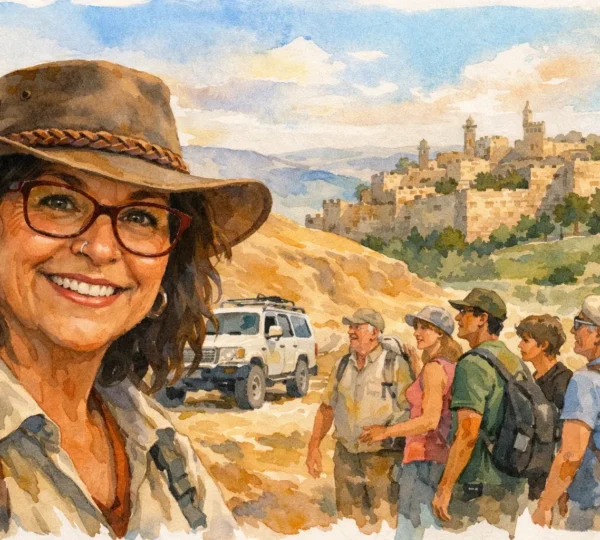
Nearby desert archaeology can add texture to the day, but heat is the deciding factor. In warmer seasons, begin before sunrise, carry more water than you think you need, and avoid treating the desert as a backdrop for a rushed checklist. A guide can adjust the route to weather conditions and your comfort level, whether that means a short canyon walk, a scenic 4×4 approach, or a slower day centered on viewpoints and interpretation.
How to Read an Archaeological Site Without Getting Lost in Dates
You do not need an academic background to appreciate archaeology. Start with four questions: Why was this site built here? Where did its people get water? How did they protect themselves? What evidence tells us how they lived?
Look for the practical features first. A broad gate suggests controlled entry and trade. A line of stones may be a city wall, but its position on a slope tells you as much as its size. Storage jars, olive presses, and wine installations point to the work that sustained a settlement. Then consider what is missing. Many ancient structures were dismantled, reused, or buried, and archaeology often works from fragments rather than complete scenes.
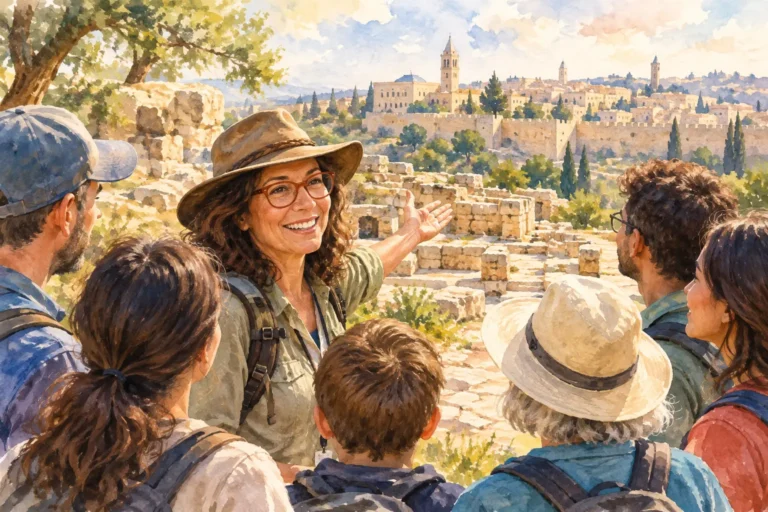
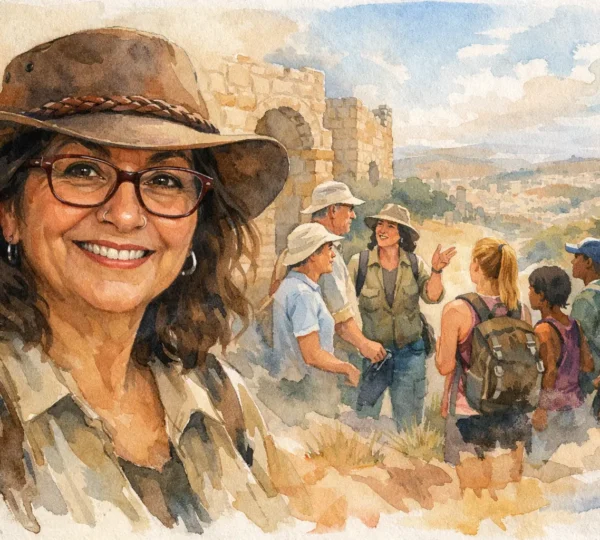
This is why expert guiding makes such a difference. A good guide does more than identify a wall. She helps you stand in the right place, notice the landscape beyond it, and connect the physical evidence to the people who once depended on it.
Practical Planning for Archaeology Walks
Archaeological trails vary greatly. Some involve wheelchair-friendly paths, visitor centers, and shaded rest areas. Others require uneven walking, steep descents, ladders, or exposure to the sun. Your route should match your group’s energy, interests, and abilities – not an imaginary ideal itinerary.
For a family group, an underground water feature or a short mound climb may be enough to create a memorable day. For heritage travelers, more time may be devoted to textual connections and archaeological debate. Business travelers with only a few hours can still have a meaningful experience by choosing one site near their schedule and pairing it with a panoramic viewpoint or an excellent local lunch.
Wear closed-toe shoes with grip, carry water, and dress for strong sun even when the morning feels mild. In winter, trails can be muddy and certain water routes may be unsuitable. In summer, an early start is usually wiser than trying to power through the midday heat. Site hours, access conditions, and special closures can change, so flexibility is part of smart planning.
Let the Trail Reflect Your Story
The most memorable archaeological itinerary is rarely the one with the most pins on a map. It may be a day that begins in a quiet northern spring, continues through an ancient gate, and ends around a table discussing what you saw. Or it may be a sunrise hike at Masada followed by floating in the Dead Sea. Your interests set the direction.
At Patchwork Israel, a private archaeology day can be shaped around biblical study, family heritage, outdoor walking, photography, food, or a return visit that reaches beyond the familiar highlights. Give the stones time to speak, ask the questions that matter to you, and let the trail become more than a route through ruins.

Your Guide to Biblical Archaeology Trails
A pottery sherd in the dust, a water tunnel cut through bedrock, a city gate worn smooth by centuries of footsteps – these are the details that make Israel’s past feel startlingly close. A guide to biblical archaeology trails is not simply a list of places mentioned in Scripture. It is a way to walk through landscapes where geography, faith, settlement, trade, conflict, agriculture, and daily life have left visible traces.
For some travelers, the defining moment is standing above an ancient city and seeing why it was built on that particular hill. For others, it is descending into a cistern, tracing a Roman street, or comparing an excavation layer with a familiar biblical story. The best archaeology day leaves room for both: the big historical picture and the small, human details that bring it to life.
What Makes a Biblical Archaeology Trail Meaningful?
Biblical archaeology is most rewarding when it is approached with curiosity rather than a hunt for quick proof. Excavated sites can illuminate the physical world of the Bible – fortifications, water systems, homes, inscriptions, roads, ritual spaces, and agricultural terraces. They also show that the region was home to many communities and empires over thousands of years.
That layered reality is the point. A site may have an Iron Age gate, a Hellenistic wall, a Roman bathhouse, a Byzantine church, and later structures all within a short walk. A knowledgeable guide helps separate those periods, explain what archaeologists know with confidence, and acknowledge where interpretation remains open. That balance matters, especially for visitors who want their faith, heritage, or personal connection to be treated with care.
A true trail also follows the land. Ancient travelers chose routes based on springs, ridges, valleys, fertile soil, and defensible high ground. When you hike even a small portion of the landscape between sites, the stories become less abstract. You begin to understand why a road passed one village, why a city needed a tunnel, or why a desert fortress commanded such attention.
Build Your Guide to Biblical Archaeology Trails Around a Region
Trying to cross the entire country in search of every famous excavation creates a rushed experience. Israel is compact on a map, but a meaningful archaeology itinerary needs time for walking, heat, site opening hours, and the unexpected conversation or viewpoint that often becomes the day’s highlight.
Jerusalem: Water, Stone, and Sacred Memory
Jerusalem offers extraordinary archaeological depth, but it works best when planned as a focused day or several carefully paced visits. In the ancient city area, water systems, fortifications, streets, and excavated domestic spaces reveal how critical water access and topography were to life here. Walking underground can be memorable, but it is not for everyone. Travelers with mobility concerns, claustrophobia, or young children may prefer above-ground routes with overlooks and accessible excavations.
The Old City adds another dimension: archaeology is not isolated behind a fence but woven into an active urban setting. That requires patience. There is much to see, yet a good day should not become an endless recital of dates. Pairing an archaeological walk with time to absorb the atmosphere, enjoy a quiet courtyard, or stop for lunch lets the experience settle in.
The Shephelah: Cities Between the Hills and Coast
Southwest of Jerusalem, the rolling lowlands known as the Shephelah are ideal for travelers who want archaeology with open views and a gentler sense of space. Sites such as Lachish and Tel Gezer help explain the strategic importance of the routes connecting the coastal plain with the Judean hills.
At Lachish, the scale of the mound and its defensive setting provide a powerful lesson in ancient city planning. Gezer is especially useful for discussing how archaeologists read a tel – the accumulated mound created by generations building, rebuilding, and reshaping the same location. These are not polished museum experiences, and that is part of their appeal. Bring sturdy shoes, water, sun protection, and a willingness to imagine beyond the stones.
This region suits a half-day hike followed by a vineyard meal, a rural visit, or a hands-on activity. It is a strong choice for repeat visitors who have already seen the major urban landmarks and want a deeper encounter with the land itself.
Northern Tels: Gates, Springs, and Borderland Landscapes
The north offers some of Israel’s most satisfying combinations of archaeology and nature. Tel Dan, for example, is set beside abundant water and shaded paths, making it especially appealing during warmer months. The site’s gates, monumental remains, and spring-fed landscape help visitors picture how settlement, religion, and security were intertwined in antiquity.
Tel Megiddo is another essential stop for those interested in the archaeology of the biblical world. Its elevated position gives a broad view over a major valley and ancient travel corridor. The famous water system is a highlight, though it includes stairs and can feel demanding in summer heat. If you have limited time, choose one northern tel and explore it thoroughly instead of collecting several sites in a single day.
A northern archaeology route can also include time in a local village, a farm, or a food-focused stop. History is not only in ruins. The flavors, landscapes, and communities encountered along the way give valuable context to the region’s continuing story.
Desert Trails: Masada and the Dead Sea Landscape
The Judean Desert demands a different pace. Here, the story is written in cliffs, wadis, caves, and hard-earned water sources. Masada is often the central destination, and its dramatic plateau, storerooms, bathhouses, and views make clear why the site remains so compelling. The early-morning ascent is unforgettable for fit hikers, while the cable car offers a practical option for families, travelers with limited mobility, or anyone who would rather save energy for exploring the summit.
Nearby desert archaeology can add texture to the day, but heat is the deciding factor. In warmer seasons, begin before sunrise, carry more water than you think you need, and avoid treating the desert as a backdrop for a rushed checklist. A guide can adjust the route to weather conditions and your comfort level, whether that means a short canyon walk, a scenic 4×4 approach, or a slower day centered on viewpoints and interpretation.
How to Read an Archaeological Site Without Getting Lost in Dates
You do not need an academic background to appreciate archaeology. Start with four questions: Why was this site built here? Where did its people get water? How did they protect themselves? What evidence tells us how they lived?
Look for the practical features first. A broad gate suggests controlled entry and trade. A line of stones may be a city wall, but its position on a slope tells you as much as its size. Storage jars, olive presses, and wine installations point to the work that sustained a settlement. Then consider what is missing. Many ancient structures were dismantled, reused, or buried, and archaeology often works from fragments rather than complete scenes.
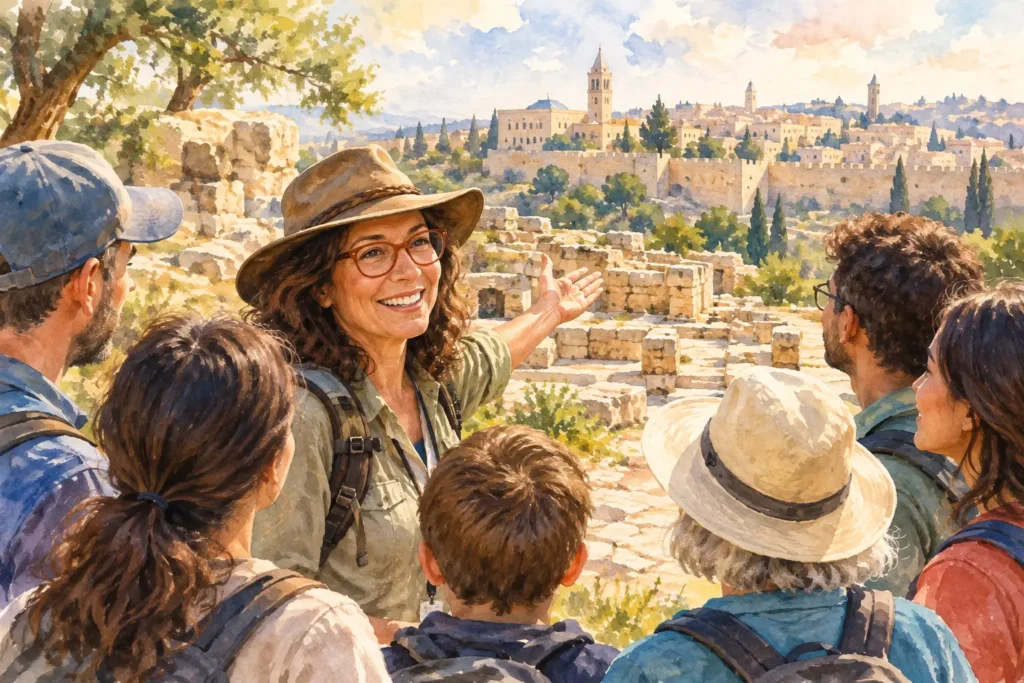
This is why expert guiding makes such a difference. A good guide does more than identify a wall. She helps you stand in the right place, notice the landscape beyond it, and connect the physical evidence to the people who once depended on it.
Practical Planning for Archaeology Walks
Archaeological trails vary greatly. Some involve wheelchair-friendly paths, visitor centers, and shaded rest areas. Others require uneven walking, steep descents, ladders, or exposure to the sun. Your route should match your group’s energy, interests, and abilities – not an imaginary ideal itinerary.
For a family group, an underground water feature or a short mound climb may be enough to create a memorable day. For heritage travelers, more time may be devoted to textual connections and archaeological debate. Business travelers with only a few hours can still have a meaningful experience by choosing one site near their schedule and pairing it with a panoramic viewpoint or an excellent local lunch.
Wear closed-toe shoes with grip, carry water, and dress for strong sun even when the morning feels mild. In winter, trails can be muddy and certain water routes may be unsuitable. In summer, an early start is usually wiser than trying to power through the midday heat. Site hours, access conditions, and special closures can change, so flexibility is part of smart planning.
Let the Trail Reflect Your Story
The most memorable archaeological itinerary is rarely the one with the most pins on a map. It may be a day that begins in a quiet northern spring, continues through an ancient gate, and ends around a table discussing what you saw. Or it may be a sunrise hike at Masada followed by floating in the Dead Sea. Your interests set the direction.
At Patchwork Israel, a private archaeology day can be shaped around biblical study, family heritage, outdoor walking, photography, food, or a return visit that reaches beyond the familiar highlights. Give the stones time to speak, ask the questions that matter to you, and let the trail become more than a route through ruins.

Get the latest blog updates in your inbox.