A Guide to Israel Educational Tours That Connect
The best educational trips are remembered for a conversation, a view, a smell from a bakery, or the moment a familiar story suddenly has a real landscape around it. This guide to Israel educational tours is for travelers and group organizers who want more than a quick procession through famous sites. Israel is compact, but its layers are not. A well-designed day can move from ancient stones to a working farm, from a quiet trail to a shared meal, and leave room for questions that do not fit neatly on a worksheet.
Educational travel here works especially well because learning is tangible. Geography, archaeology, faith, food, innovation, family history, and everyday life are close together. The challenge is not finding places to visit. It is choosing the experiences that fit your group, your energy, and the questions you genuinely want to explore.
Start With a Learning Purpose, Not a Site List
Jerusalem, Masada, Caesarea, Jaffa, Tel Aviv, and the Dead Sea deserve their reputations. Yet an educational tour becomes more meaningful when each stop serves a purpose. Rather than asking, “What can we fit in?” ask what participants should understand, feel, or be able to discuss by the end of the trip.
A multigenerational family might center its program on heritage and connection, balancing major historic sites with hands-on activities that keep younger travelers involved. A Catholic or Christian group may want time for reflection at sacred places, alongside context about the communities and landscapes surrounding them. A Jewish youth group may benefit from an itinerary that connects history, identity, service, nature, and contemporary Israeli creativity without turning every hour into a lecture.
For business travelers with only a free afternoon, a focused visit can still be deeply educational. A walk through an old port neighborhood, a tasting that introduces the region’s food traditions, or a conversation with a specialist can offer more insight than trying to rush through five attractions. Depth usually wins over quantity.
Build around a question
Strong tours often begin with one clear question: How did people make a life in this landscape? What does Jerusalem mean to different visitors? How has water shaped settlement and agriculture? What can food tell us about memory and community?
A question gives a guide room to connect places that might otherwise feel unrelated. It also lets the group participate. People listen more closely when they have something real to consider, rather than simply collecting facts and photographs.
Choose Places That Teach in Different Ways
A varied educational itinerary gives participants more than one mode of learning. Historic sites provide scale and chronology. Museums and archaeological remains help interpret what is no longer visible. Neighborhood walks reveal details that large bus windows miss. Outdoor experiences create a direct relationship with terrain, distance, climate, and effort.
In Jerusalem, the Old City can be approached through sacred geography, architecture, daily life, or the layers beneath the streets. The right route depends on the group. Some travelers prefer a concentrated overview of key quarters and major sites. Others will gain more from slowing down in one area, noticing its sounds, building styles, markets, and rituals.
On the coast, Caesarea offers a powerful setting for discussing ancient trade, engineering, and the changing use of public space. Jaffa brings together port history, art, winding lanes, and Mediterranean views. Tel Aviv can add a different educational texture through architecture, food, urban design, and creative industries.
Further south, Masada and the Dead Sea invite a conversation about desert adaptation, water, movement, and resilience. A sunrise hike can be memorable, but it is not automatically right for every group. Heat, mobility, sleep schedules, and season matter. A cable car ascent, an early departure, or a shorter desert walk may make the experience more inclusive while preserving its impact.
Add People, Practice, and Participation
Landmarks provide context. Personal encounters make context human.
When appropriate, build in opportunities to meet people whose work or craft opens a window into the country: a farmer, chef, artist, archaeologist, academic, architect, entrepreneur, or local community host. These visits should not feel staged or rushed. The value comes from an honest exchange, time for questions, and a guide who prepares the group with enough background to listen thoughtfully.
Hands-on learning also changes the pace of a tour. Baking, cooking, mosaic making, foraging, sailing, camel riding, or a desert navigation activity can reinforce a theme while giving participants a break from passive listening. A culinary session, for example, is not only about lunch. It can introduce seasonal ingredients, migration stories, family traditions, and the practical realities of cooking in a particular climate.
For young people, participation is often the difference between a good itinerary and a meaningful one. They need moments to move, make choices, work together, and ask their own questions. For adults, those same moments can be surprisingly valuable. A private tour does not have to be quiet and formal to be serious.
Plan the Pace of an Israel Educational Tour
The most common planning mistake is assuming short driving distances mean unlimited daily capacity. Israel’s geography makes it possible to see a great deal, but security checks, parking, walking conditions, meal timing, weather, and the simple need to absorb what has been seen all affect the day.
A practical rhythm is to pair one major learning experience with one contrasting experience. For instance, a morning at an archaeological site may be followed by a relaxed food-focused walk or a visit with a local maker. A day of museums and city streets may be balanced with a forest hike, a coastal walk, or time in the desert.
Build in pauses. A shaded rest stop, a proper lunch, and a few unscheduled minutes can create the space where the best conversations happen. This is particularly important for groups ranging widely in age, as well as for travelers arriving from North America with jet lag.
Consider season and physical access early
Summer requires smart timing. Outdoor sites and hikes are often best in the early morning, with indoor or shaded activities later in the day. Winter can be excellent for green landscapes and comfortable walking, although rain may change plans. Spring is beautiful and busy. Fall offers warm days and a gentler return to outdoor travel.
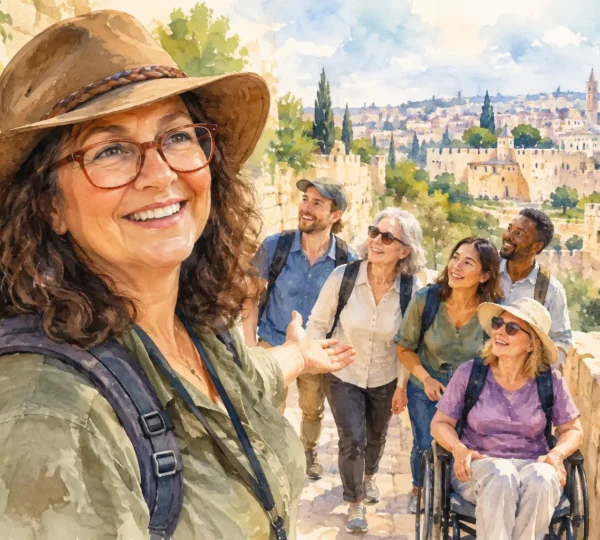
Be clear about mobility needs from the beginning. Many important sites involve uneven paving, steps, hills, or long walks. An experienced licensed guide can adapt routes, select accessible viewpoints, arrange realistic stops, and make sure nobody feels left behind simply because an itinerary looked good on paper.
Match the Tour Format to the Group
Small private groups have the greatest flexibility. A family of six can change pace on the spot, linger at an exhibit, follow a child’s unexpected curiosity, or add a spontaneous tasting. Travelers returning to Israel after seeing the headline sites can go deeper through neighborhood stories, lesser-known landscapes, specialist visits, and activities tailored to a personal interest.
Larger educational bus groups need a different kind of planning. The itinerary must account for coach access, timed entries, group meals, restroom stops, and clear meeting points. That does not mean the experience has to feel generic. It means the guide, driver, and organizer need a program designed for the group’s actual size and attention span. A group of 55 needs rhythm and structure; a group of 15 can take more detours and hold longer conversations.
For youth programs, it helps to alternate content-heavy moments with active ones. For adult affinity groups, thoughtful interpretation and time to reflect may matter more than a packed schedule. Neither approach is better. The best format is the one that respects why the group came.
What Expert Guidance Changes
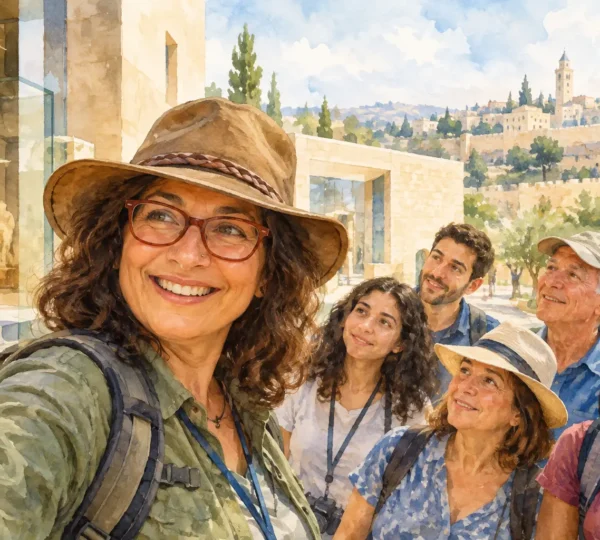
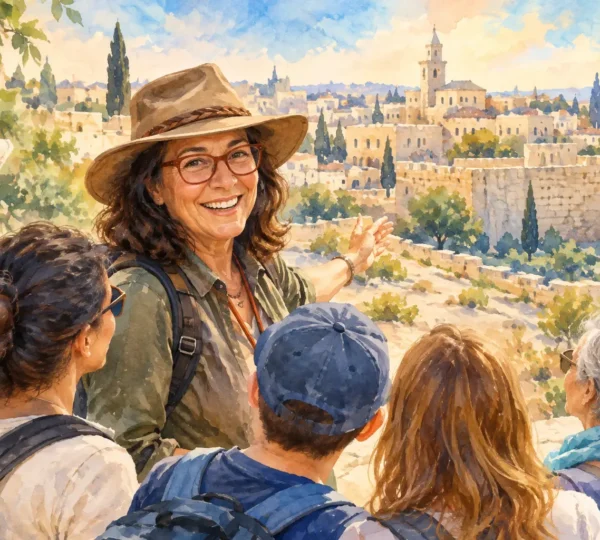
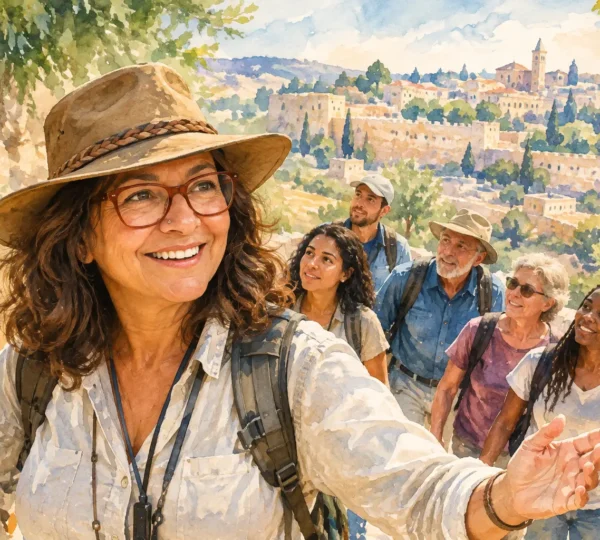
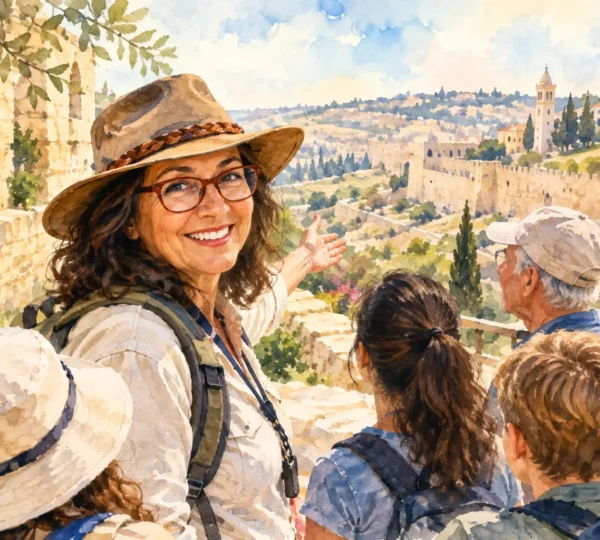
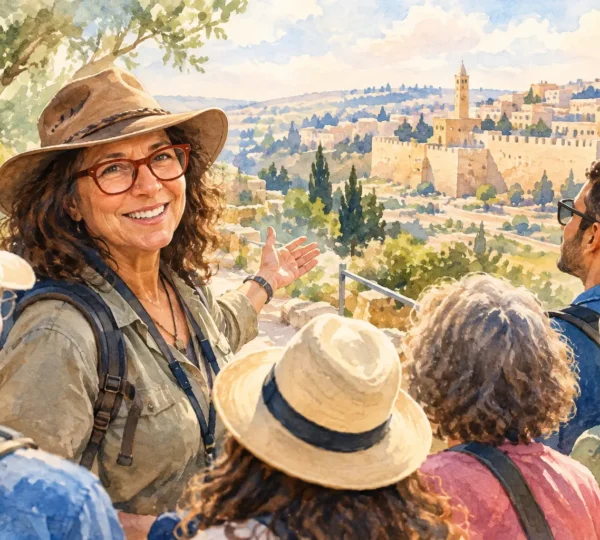
A guide should do more than recite dates. The right guide reads the group, connects a question from breakfast to a site visited after lunch, and knows when a small detail is more revealing than a long speech. She also handles the invisible work: route adjustments, timing, conditions on the ground, and the local knowledge that turns a stop into an experience.
At Patchwork Israel, a private educational itinerary can combine recognized heritage destinations with less expected encounters, outdoor exploration, and personal interests. The aim is not to prove that you covered Israel. It is to help you experience it with attention.
Before finalizing a program, share what your group already knows, what they hope to learn, who needs extra support, and what kind of moments they tend to enjoy. Those details are not minor logistics. They are the raw material of a tour that feels made for the people taking it.
Leave at least one open window in the itinerary. It may become an extra conversation, a beautiful overlook, a local snack, or a slower walk through a place that deserves more of your time. Those unhurried moments are often where learning stays with you long after the trip ends.

A Guide to Israel Educational Tours That Connect
The best educational trips are remembered for a conversation, a view, a smell from a bakery, or the moment a familiar story suddenly has a real landscape around it. This guide to Israel educational tours is for travelers and group organizers who want more than a quick procession through famous sites. Israel is compact, but its layers are not. A well-designed day can move from ancient stones to a working farm, from a quiet trail to a shared meal, and leave room for questions that do not fit neatly on a worksheet.
Educational travel here works especially well because learning is tangible. Geography, archaeology, faith, food, innovation, family history, and everyday life are close together. The challenge is not finding places to visit. It is choosing the experiences that fit your group, your energy, and the questions you genuinely want to explore.
Start With a Learning Purpose, Not a Site List
Jerusalem, Masada, Caesarea, Jaffa, Tel Aviv, and the Dead Sea deserve their reputations. Yet an educational tour becomes more meaningful when each stop serves a purpose. Rather than asking, “What can we fit in?” ask what participants should understand, feel, or be able to discuss by the end of the trip.
A multigenerational family might center its program on heritage and connection, balancing major historic sites with hands-on activities that keep younger travelers involved. A Catholic or Christian group may want time for reflection at sacred places, alongside context about the communities and landscapes surrounding them. A Jewish youth group may benefit from an itinerary that connects history, identity, service, nature, and contemporary Israeli creativity without turning every hour into a lecture.
For business travelers with only a free afternoon, a focused visit can still be deeply educational. A walk through an old port neighborhood, a tasting that introduces the region’s food traditions, or a conversation with a specialist can offer more insight than trying to rush through five attractions. Depth usually wins over quantity.
Build around a question
Strong tours often begin with one clear question: How did people make a life in this landscape? What does Jerusalem mean to different visitors? How has water shaped settlement and agriculture? What can food tell us about memory and community?
A question gives a guide room to connect places that might otherwise feel unrelated. It also lets the group participate. People listen more closely when they have something real to consider, rather than simply collecting facts and photographs.
Choose Places That Teach in Different Ways
A varied educational itinerary gives participants more than one mode of learning. Historic sites provide scale and chronology. Museums and archaeological remains help interpret what is no longer visible. Neighborhood walks reveal details that large bus windows miss. Outdoor experiences create a direct relationship with terrain, distance, climate, and effort.
In Jerusalem, the Old City can be approached through sacred geography, architecture, daily life, or the layers beneath the streets. The right route depends on the group. Some travelers prefer a concentrated overview of key quarters and major sites. Others will gain more from slowing down in one area, noticing its sounds, building styles, markets, and rituals.
On the coast, Caesarea offers a powerful setting for discussing ancient trade, engineering, and the changing use of public space. Jaffa brings together port history, art, winding lanes, and Mediterranean views. Tel Aviv can add a different educational texture through architecture, food, urban design, and creative industries.
Further south, Masada and the Dead Sea invite a conversation about desert adaptation, water, movement, and resilience. A sunrise hike can be memorable, but it is not automatically right for every group. Heat, mobility, sleep schedules, and season matter. A cable car ascent, an early departure, or a shorter desert walk may make the experience more inclusive while preserving its impact.
Add People, Practice, and Participation
Landmarks provide context. Personal encounters make context human.
When appropriate, build in opportunities to meet people whose work or craft opens a window into the country: a farmer, chef, artist, archaeologist, academic, architect, entrepreneur, or local community host. These visits should not feel staged or rushed. The value comes from an honest exchange, time for questions, and a guide who prepares the group with enough background to listen thoughtfully.
Hands-on learning also changes the pace of a tour. Baking, cooking, mosaic making, foraging, sailing, camel riding, or a desert navigation activity can reinforce a theme while giving participants a break from passive listening. A culinary session, for example, is not only about lunch. It can introduce seasonal ingredients, migration stories, family traditions, and the practical realities of cooking in a particular climate.
For young people, participation is often the difference between a good itinerary and a meaningful one. They need moments to move, make choices, work together, and ask their own questions. For adults, those same moments can be surprisingly valuable. A private tour does not have to be quiet and formal to be serious.
Plan the Pace of an Israel Educational Tour
The most common planning mistake is assuming short driving distances mean unlimited daily capacity. Israel’s geography makes it possible to see a great deal, but security checks, parking, walking conditions, meal timing, weather, and the simple need to absorb what has been seen all affect the day.
A practical rhythm is to pair one major learning experience with one contrasting experience. For instance, a morning at an archaeological site may be followed by a relaxed food-focused walk or a visit with a local maker. A day of museums and city streets may be balanced with a forest hike, a coastal walk, or time in the desert.
Build in pauses. A shaded rest stop, a proper lunch, and a few unscheduled minutes can create the space where the best conversations happen. This is particularly important for groups ranging widely in age, as well as for travelers arriving from North America with jet lag.
Consider season and physical access early
Summer requires smart timing. Outdoor sites and hikes are often best in the early morning, with indoor or shaded activities later in the day. Winter can be excellent for green landscapes and comfortable walking, although rain may change plans. Spring is beautiful and busy. Fall offers warm days and a gentler return to outdoor travel.
Be clear about mobility needs from the beginning. Many important sites involve uneven paving, steps, hills, or long walks. An experienced licensed guide can adapt routes, select accessible viewpoints, arrange realistic stops, and make sure nobody feels left behind simply because an itinerary looked good on paper.
Match the Tour Format to the Group
Small private groups have the greatest flexibility. A family of six can change pace on the spot, linger at an exhibit, follow a child’s unexpected curiosity, or add a spontaneous tasting. Travelers returning to Israel after seeing the headline sites can go deeper through neighborhood stories, lesser-known landscapes, specialist visits, and activities tailored to a personal interest.
Larger educational bus groups need a different kind of planning. The itinerary must account for coach access, timed entries, group meals, restroom stops, and clear meeting points. That does not mean the experience has to feel generic. It means the guide, driver, and organizer need a program designed for the group’s actual size and attention span. A group of 55 needs rhythm and structure; a group of 15 can take more detours and hold longer conversations.
For youth programs, it helps to alternate content-heavy moments with active ones. For adult affinity groups, thoughtful interpretation and time to reflect may matter more than a packed schedule. Neither approach is better. The best format is the one that respects why the group came.
What Expert Guidance Changes
A guide should do more than recite dates. The right guide reads the group, connects a question from breakfast to a site visited after lunch, and knows when a small detail is more revealing than a long speech. She also handles the invisible work: route adjustments, timing, conditions on the ground, and the local knowledge that turns a stop into an experience.
At Patchwork Israel, a private educational itinerary can combine recognized heritage destinations with less expected encounters, outdoor exploration, and personal interests. The aim is not to prove that you covered Israel. It is to help you experience it with attention.
Before finalizing a program, share what your group already knows, what they hope to learn, who needs extra support, and what kind of moments they tend to enjoy. Those details are not minor logistics. They are the raw material of a tour that feels made for the people taking it.
Leave at least one open window in the itinerary. It may become an extra conversation, a beautiful overlook, a local snack, or a slower walk through a place that deserves more of your time. Those unhurried moments are often where learning stays with you long after the trip ends.
Get the latest blog updates in your inbox.