
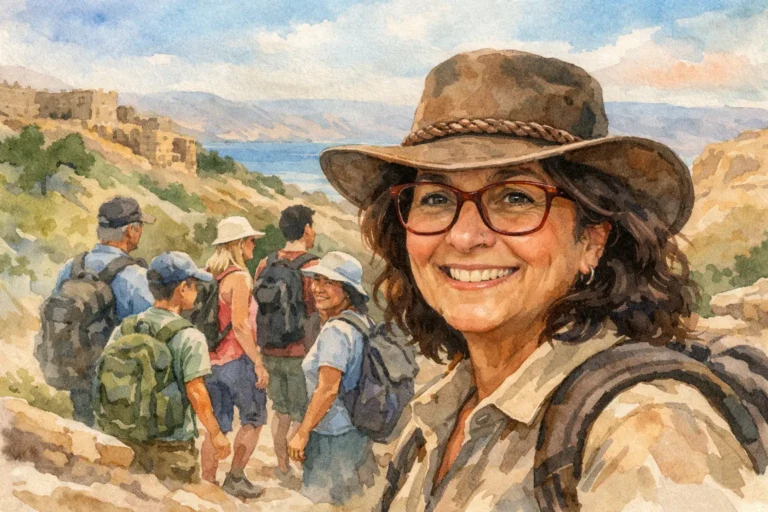
7 Israel Hiking Day Trips Worth Your Time
A morning can begin beside a cool spring under a canopy of oak trees and end with sunset across a desert crater. That range is what makes Israel hiking day trips so rewarding. The country is compact, but its landscapes change quickly: green hills, coastal cliffs, stream beds, ancient paths, high plateaus, and silent expanses of rock are often within a few hours of one another.
The best day hike is not necessarily the most famous trail. It is the one that fits the weather, your walking confidence, the people traveling with you, and what you hope to feel at the end of the day. Some travelers want a challenging ridge and a picnic lunch. Others want an easy walk with archaeology, a swim in a spring, and time for a good local meal. With thoughtful planning, both can be a very good Israel day.
Choosing Israel Hiking Day Trips That Fit You
Israel is a year-round destination, but hiking conditions are not the same year-round. Desert routes are often best from fall through spring, when daytime temperatures are more comfortable and low-angle light brings out the colors of the rocks. Northern forests, streams, and wildflower landscapes are especially appealing in winter and spring. Summer calls for an early start, a shaded route where possible, plenty of water, and a realistic approach to distance.
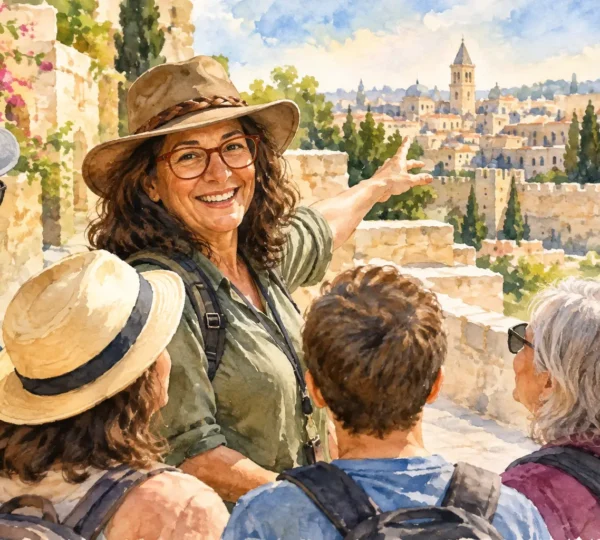
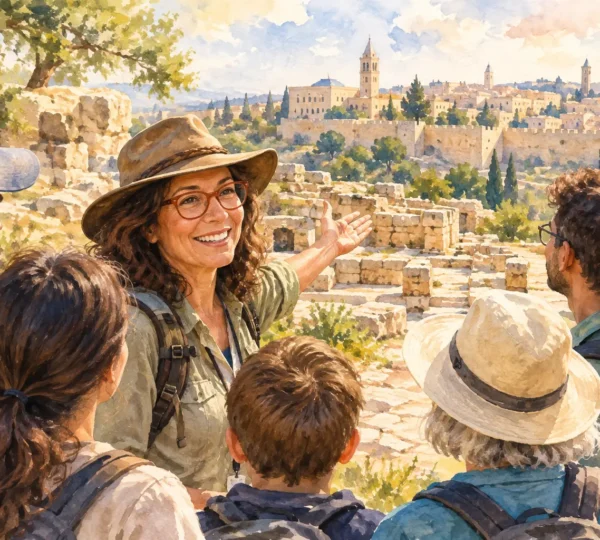
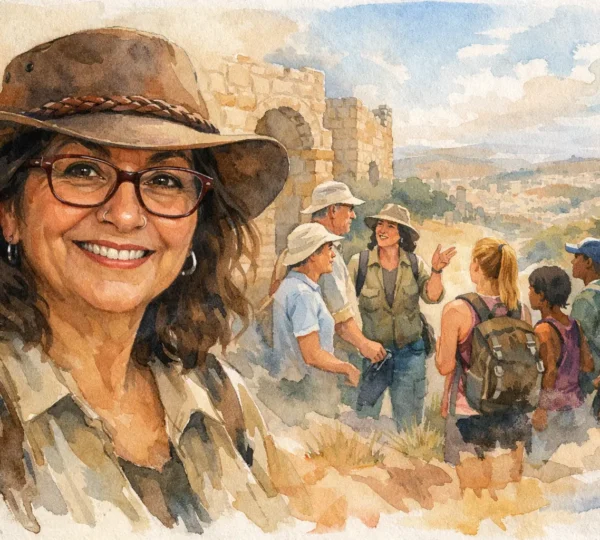
A map rarely tells the whole story. A trail marked as moderate may include a steep descent on loose stone, an exposed section with little shade, or a stream crossing that changes after rainfall. This is where local guiding adds real value. A licensed guide can adapt the route in real time, choose a safer alternative when conditions shift, and add the stories that make a landscape more than a pretty view.
For families and multigenerational groups, a shorter trail can be the wiser choice. A two- to four-mile walk with varied scenery, time to explore, and no pressure to rush often creates a better day than a longer route that leaves everyone exhausted. More experienced hikers may prefer a full-day outing with elevation, remote scenery, and a satisfying sense of having earned the view.
1. Ein Gedi: Desert, Springs, and Waterfalls
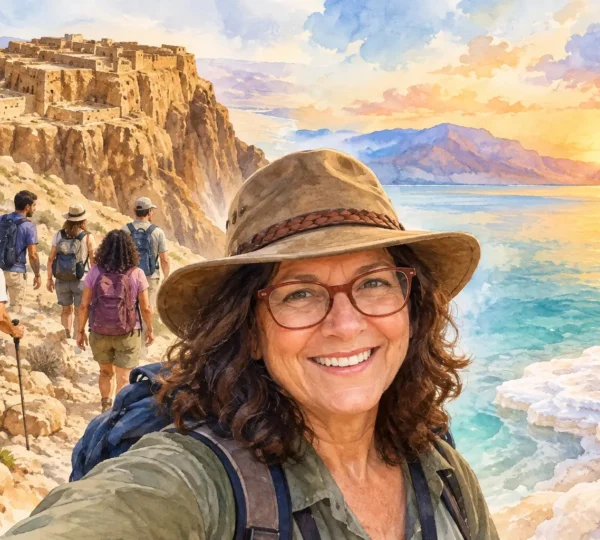
Ein Gedi offers one of Israel’s most dramatic contrasts: green vegetation and flowing water set against the pale, dry cliffs of the Judean Desert. A hike here can be shaped around short waterfall walks, higher viewpoints, or a combination of both. Ibex are commonly seen on the slopes, and the sight of wildlife moving through this improbable oasis stays with people.
This is an excellent choice for travelers who want a powerful desert experience without committing to an all-day wilderness trek. It works particularly well when paired with time near the Dead Sea. The trade-off is popularity. Early mornings are quieter, cooler, and much more pleasant, especially outside winter.
2. Makhtesh Ramon: A Hike Through Geology
Makhtesh Ramon is not a crater formed by an impact. It is a vast erosional landform, revealing layers of rock shaped over immense stretches of time. Hiking here feels spacious in a way that is hard to find elsewhere: long horizons, sculpted ridges, fossil-rich stone, and colors that shift from cream to rust to deep purple.
There are routes for different fitness levels, from scenic overlooks and short walks to more demanding descents into the makhtesh. A customized day can include a desert drive to reach a less-traveled trailhead, a stop to understand the geological story beneath your feet, and a quiet picnic where the only sound may be the wind. This is a strong choice for repeat visitors who have seen the classic sites and want Israel at its most elemental.
3. Mount Carmel: Forest Paths Above the Coast
The Carmel region is where a hiking day can blend woodland, Mediterranean views, and layers of human history. Trails wind through pine and oak forest, across limestone slopes, and toward broad views of the sea. In the right season, the ground is bright with wildflowers, and the scent of herbs rises with the warmth of the day.
Mount Carmel suits travelers based in Tel Aviv, Haifa, or Caesarea who want a natural escape without a long transfer. The terrain can be surprisingly hilly, so route selection matters. A gentle forest ramble is possible, but so is a more athletic hike with sustained climbs. The reward is variety: nature, overlooks, and the chance to follow paths that have connected communities and landscapes for centuries.
4. The Sea of Galilee and Arbel Cliffs
Above the Sea of Galilee, the Arbel area delivers one of the country’s most memorable views. From the cliffs, the lake spreads below, with the Golan Heights and surrounding hills framing the horizon. The route can include an easy approach to the viewpoint or a steeper descent for hikers comfortable with uneven ground and sections that require careful footing.
This is more than a photo stop when explored on foot. The rock formations, caves, and old pathways give context to a landscape that many visitors know from stories but have never experienced at walking pace. A guided day in the region can be paired with a farm visit, a tasting, or a relaxed meal, depending on whether your group prefers a full hiking focus or a broader northern experience.
5. Nahal Amud: Water, Shade, and Galilee Stone
For a greener hiking day, Nahal Amud is a lovely option in the Upper Galilee. The stream route moves through a valley of limestone walls, vegetation, and seasonal water features. Its famous stone pillar gives the trail its name, but the pleasure lies in the changing texture of the walk: shaded sections, open views, birdsong, and the welcome sound of water.
This is often a better choice than a high-exposure hike for travelers visiting in warmer months, though an early start remains smart. Conditions vary by season, and water levels are not guaranteed, so the route should be chosen with flexibility. It is also a fine example of why hiking in Israel is not only about the desert. The northern landscape can feel remarkably lush.
6. The Jerusalem Hills: Ancient Paths Close to the City
Just beyond Jerusalem, the hills offer trails through terraces, pine forests, olive groves, and valleys once used for agriculture. These walks are ideal for travelers who want to step away from the city’s intensity without spending half the day driving. The landscape holds traces of generations of cultivation, and a simple path can open a conversation about water, stone, food, faith, and daily life.
A Jerusalem Hills hike can be as gentle or vigorous as you want. One group may enjoy a relaxed walk ending at a winery or a village-style lunch. Another may want a longer route over ridges and down into a spring-fed valley. It is a particularly good fit for business travelers with one free day and families seeking an experience that feels active, meaningful, and manageable.
7. Timna Park: Copper, Stone, and Desert Light
Near Eilat, Timna’s surreal sandstone formations make even a short hike feel cinematic. Mushroom-shaped rocks, arches, cliffs, and traces of ancient copper mining create a landscape that invites curiosity. The distances can be adapted easily, making Timna useful for a mixed group where some guests want a walk and others prefer shorter scenic stops.
The desert light is part of the experience. Early morning reveals delicate color in the stone; late afternoon softens the heat and gives the landscape a richer glow. Because shade is limited, this is a destination where timing, water, sun protection, and pacing deserve serious attention.
What to Bring and What to Leave Flexible
Good footwear, a hat, sunscreen, and more water than you think you need are basics, not extras. Layers are helpful in the desert and highlands, where a warm morning can become cool after sunset. A small daypack keeps hands free on uneven terrain, and snacks matter more than travelers often expect.
What should remain flexible is the exact route. Weather, trail conditions, energy levels, and unexpected discoveries can all improve the day when there is room to adjust. A private hiking experience should not feel like a race against an itinerary. It should feel like the landscape has been opened up for you.
At Patchwork Israel, a hiking day can stand alone or become part of a larger journey – perhaps a desert walk followed by a local culinary experience, a northern trail paired with a conversation and visit, or an easy nature outing between heritage sites. The point is not to check off a trail. It is to come home with dust on your shoes, a fuller sense of place, and a story that belongs to your own trip.

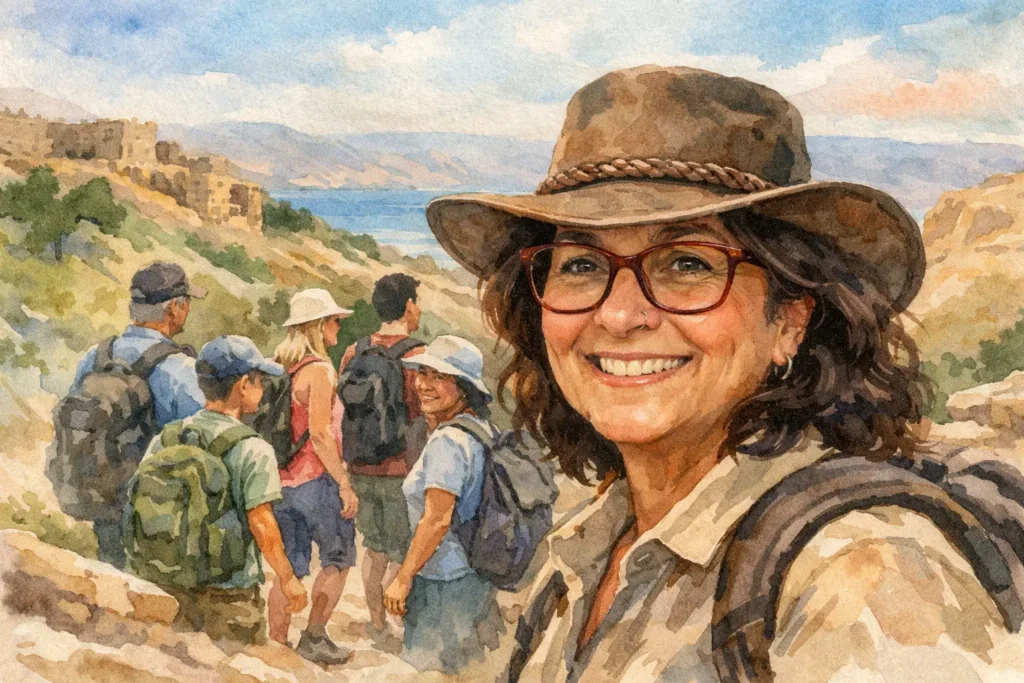
7 Israel Hiking Day Trips Worth Your Time
A morning can begin beside a cool spring under a canopy of oak trees and end with sunset across a desert crater. That range is what makes Israel hiking day trips so rewarding. The country is compact, but its landscapes change quickly: green hills, coastal cliffs, stream beds, ancient paths, high plateaus, and silent expanses of rock are often within a few hours of one another.
The best day hike is not necessarily the most famous trail. It is the one that fits the weather, your walking confidence, the people traveling with you, and what you hope to feel at the end of the day. Some travelers want a challenging ridge and a picnic lunch. Others want an easy walk with archaeology, a swim in a spring, and time for a good local meal. With thoughtful planning, both can be a very good Israel day.
Choosing Israel Hiking Day Trips That Fit You
Israel is a year-round destination, but hiking conditions are not the same year-round. Desert routes are often best from fall through spring, when daytime temperatures are more comfortable and low-angle light brings out the colors of the rocks. Northern forests, streams, and wildflower landscapes are especially appealing in winter and spring. Summer calls for an early start, a shaded route where possible, plenty of water, and a realistic approach to distance.
A map rarely tells the whole story. A trail marked as moderate may include a steep descent on loose stone, an exposed section with little shade, or a stream crossing that changes after rainfall. This is where local guiding adds real value. A licensed guide can adapt the route in real time, choose a safer alternative when conditions shift, and add the stories that make a landscape more than a pretty view.
For families and multigenerational groups, a shorter trail can be the wiser choice. A two- to four-mile walk with varied scenery, time to explore, and no pressure to rush often creates a better day than a longer route that leaves everyone exhausted. More experienced hikers may prefer a full-day outing with elevation, remote scenery, and a satisfying sense of having earned the view.
1. Ein Gedi: Desert, Springs, and Waterfalls
Ein Gedi offers one of Israel’s most dramatic contrasts: green vegetation and flowing water set against the pale, dry cliffs of the Judean Desert. A hike here can be shaped around short waterfall walks, higher viewpoints, or a combination of both. Ibex are commonly seen on the slopes, and the sight of wildlife moving through this improbable oasis stays with people.
This is an excellent choice for travelers who want a powerful desert experience without committing to an all-day wilderness trek. It works particularly well when paired with time near the Dead Sea. The trade-off is popularity. Early mornings are quieter, cooler, and much more pleasant, especially outside winter.
2. Makhtesh Ramon: A Hike Through Geology
Makhtesh Ramon is not a crater formed by an impact. It is a vast erosional landform, revealing layers of rock shaped over immense stretches of time. Hiking here feels spacious in a way that is hard to find elsewhere: long horizons, sculpted ridges, fossil-rich stone, and colors that shift from cream to rust to deep purple.
There are routes for different fitness levels, from scenic overlooks and short walks to more demanding descents into the makhtesh. A customized day can include a desert drive to reach a less-traveled trailhead, a stop to understand the geological story beneath your feet, and a quiet picnic where the only sound may be the wind. This is a strong choice for repeat visitors who have seen the classic sites and want Israel at its most elemental.
3. Mount Carmel: Forest Paths Above the Coast
The Carmel region is where a hiking day can blend woodland, Mediterranean views, and layers of human history. Trails wind through pine and oak forest, across limestone slopes, and toward broad views of the sea. In the right season, the ground is bright with wildflowers, and the scent of herbs rises with the warmth of the day.
Mount Carmel suits travelers based in Tel Aviv, Haifa, or Caesarea who want a natural escape without a long transfer. The terrain can be surprisingly hilly, so route selection matters. A gentle forest ramble is possible, but so is a more athletic hike with sustained climbs. The reward is variety: nature, overlooks, and the chance to follow paths that have connected communities and landscapes for centuries.
4. The Sea of Galilee and Arbel Cliffs
Above the Sea of Galilee, the Arbel area delivers one of the country’s most memorable views. From the cliffs, the lake spreads below, with the Golan Heights and surrounding hills framing the horizon. The route can include an easy approach to the viewpoint or a steeper descent for hikers comfortable with uneven ground and sections that require careful footing.
This is more than a photo stop when explored on foot. The rock formations, caves, and old pathways give context to a landscape that many visitors know from stories but have never experienced at walking pace. A guided day in the region can be paired with a farm visit, a tasting, or a relaxed meal, depending on whether your group prefers a full hiking focus or a broader northern experience.
5. Nahal Amud: Water, Shade, and Galilee Stone
For a greener hiking day, Nahal Amud is a lovely option in the Upper Galilee. The stream route moves through a valley of limestone walls, vegetation, and seasonal water features. Its famous stone pillar gives the trail its name, but the pleasure lies in the changing texture of the walk: shaded sections, open views, birdsong, and the welcome sound of water.
This is often a better choice than a high-exposure hike for travelers visiting in warmer months, though an early start remains smart. Conditions vary by season, and water levels are not guaranteed, so the route should be chosen with flexibility. It is also a fine example of why hiking in Israel is not only about the desert. The northern landscape can feel remarkably lush.
6. The Jerusalem Hills: Ancient Paths Close to the City
Just beyond Jerusalem, the hills offer trails through terraces, pine forests, olive groves, and valleys once used for agriculture. These walks are ideal for travelers who want to step away from the city’s intensity without spending half the day driving. The landscape holds traces of generations of cultivation, and a simple path can open a conversation about water, stone, food, faith, and daily life.
A Jerusalem Hills hike can be as gentle or vigorous as you want. One group may enjoy a relaxed walk ending at a winery or a village-style lunch. Another may want a longer route over ridges and down into a spring-fed valley. It is a particularly good fit for business travelers with one free day and families seeking an experience that feels active, meaningful, and manageable.
7. Timna Park: Copper, Stone, and Desert Light
Near Eilat, Timna’s surreal sandstone formations make even a short hike feel cinematic. Mushroom-shaped rocks, arches, cliffs, and traces of ancient copper mining create a landscape that invites curiosity. The distances can be adapted easily, making Timna useful for a mixed group where some guests want a walk and others prefer shorter scenic stops.
The desert light is part of the experience. Early morning reveals delicate color in the stone; late afternoon softens the heat and gives the landscape a richer glow. Because shade is limited, this is a destination where timing, water, sun protection, and pacing deserve serious attention.
What to Bring and What to Leave Flexible
Good footwear, a hat, sunscreen, and more water than you think you need are basics, not extras. Layers are helpful in the desert and highlands, where a warm morning can become cool after sunset. A small daypack keeps hands free on uneven terrain, and snacks matter more than travelers often expect.
What should remain flexible is the exact route. Weather, trail conditions, energy levels, and unexpected discoveries can all improve the day when there is room to adjust. A private hiking experience should not feel like a race against an itinerary. It should feel like the landscape has been opened up for you.
At Patchwork Israel, a hiking day can stand alone or become part of a larger journey – perhaps a desert walk followed by a local culinary experience, a northern trail paired with a conversation and visit, or an easy nature outing between heritage sites. The point is not to check off a trail. It is to come home with dust on your shoes, a fuller sense of place, and a story that belongs to your own trip.

Get the latest blog updates in your inbox.