
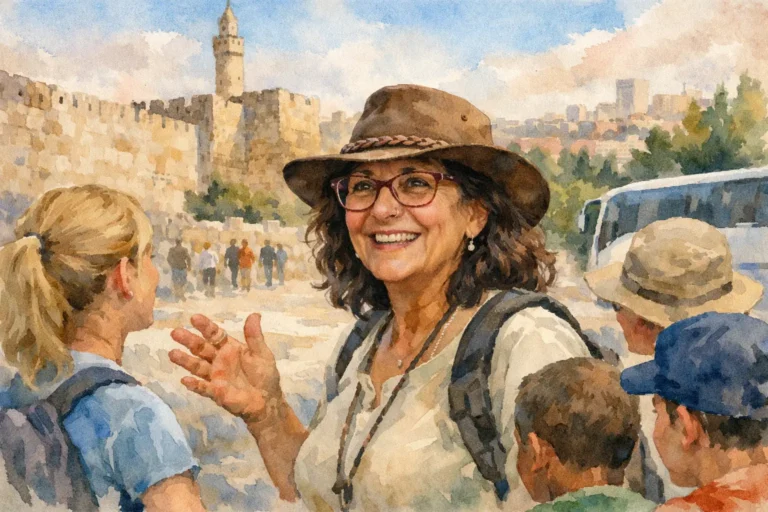
An Educational Bus Tour Israel Example That Works
A bus full of travelers does not need to become a passive audience. The best educational bus tour Israel example is one where people step off the bus with questions, stories, a sense of place, and enough breathing room to make the experience personal. For a youth group, family gathering, faith-based visit, or company delegation, education works best when it is felt as well as heard.
A meaningful day in Israel may move from an ancient hillside to a working market, from a major historical site to a conversation with someone who knows the area from the inside. The bus makes that range possible. Thoughtful guiding gives it a clear purpose.
What This Educational Bus Tour Israel Example Teaches
Consider a full-day program for an English-speaking group of 30 to 50 travelers based in Jerusalem. Its goal is not to cover every famous stop before dinner. It is to help participants understand how geography, memory, daily life, faith, food, and innovation sit beside one another in a very small country.
The day begins early with a short orientation on the bus. Rather than delivering a lecture before anyone has had coffee, the guide frames the day with one practical question: What does it take for a place to remain meaningful across generations? That question can return throughout the day, giving even a varied itinerary a shared thread.
The first stop might be a viewpoint overlooking Jerusalem. From there, a licensed guide can make the landscape readable: the ridges, valleys, old routes, neighborhoods, and landmarks that travelers may have seen in photographs but never fully understood. This is the right moment for context, not a flood of dates. A few well-chosen stories help the group look with more attention when they later walk through the city.
From the viewpoint, the group continues to a carefully selected heritage location. Depending on the participants, this could focus on archaeology, Jewish history, Christian tradition, architecture, or the practical realities of preserving a living city. The guide should invite observation. What materials were used? Why was this site built here? Which details have survived, and which are reconstructed? Education becomes more memorable when travelers are encouraged to notice rather than simply receive information.
Build Learning Into the Rhythm of the Day
A bus tour has a natural rhythm: travel, arrival, exploration, reflection, and travel again. The bus itself can become part of the learning rather than dead time between stops.
On the drive out of Jerusalem, a short discussion can connect the morning’s site to the wider country. A guide might point out changing terrain or explain why water, roads, and topography matter. For younger travelers, this can be a quick challenge: look out the window and identify what has changed since the first stop. For adults, it may become a conversation about settlement patterns, agriculture, or the way old and new development share the same landscape.
By late morning, the program benefits from doing something hands-on. A mosaic workshop, a cooking session, or a food-focused visit creates a welcome change from walking and listening. It also gives participants a direct connection to materials, flavors, and skills that cannot be absorbed through a windshield. A group that has made something together tends to talk about it for the rest of the day.
Lunch should not be treated as an interruption. In the right setting, it is another form of discovery. A market visit with a few tastings can open conversations about local ingredients, family recipes, seasonal cooking, and the people behind the counters. For groups with dietary needs, timing and restaurant selection matter. A knowledgeable planner builds those details in early, rather than leaving the guide to solve them on the spot.
Add One Encounter That Cannot Be Found on a Standard Itinerary
The difference between an ordinary bus itinerary and an educational one often comes down to one meaningful encounter. This might be a visit with an artist in a working studio, a farmer discussing water-conscious growing, an archaeologist explaining how evidence is interpreted, or an entrepreneur offering a window into Israeli problem-solving.
The encounter should fit the group, not be chosen simply because it sounds impressive. A student group may respond especially well to a candid conversation and an activity. A multigenerational family may prefer a slower visit that leaves room for relatives to share their own reactions. Business travelers with only a few hours may value a focused meeting paired with one historic landmark that gives the conversation a larger setting.
The guide’s role is crucial here. A good guide prepares the group with just enough background, makes introductions that feel natural, and leaves room for genuine questions. The conversation should never feel staged. Sometimes the most powerful learning happens when a traveler asks something unexpected and receives an honest, thoughtful answer.
End With a Place That Lets the Day Settle In
For an afternoon finish, choose a setting that changes the energy again. After a city-based morning, that could mean a forest trail, a desert overlook, a short coastal walk, or an ancient site where the scale of the landscape does some of the teaching. Groups do not need a strenuous hike to benefit from being outdoors. Even a gentle walk can reset attention after a busy day.
If the group is active and the season is right, a 4×4 route or guided hike can add a sense of adventure. This is not simply entertainment. Moving through a wadi, ridge, or wooded track makes geography tangible in a way that a map cannot. Still, adventure should match the group’s mobility, confidence, weather conditions, and available time. A great itinerary is not the one with the most activities. It is the one where no one feels rushed through the moments that matter.
Before returning to the hotel, allow ten quiet minutes for reflection. The guide might ask participants to share one thing they noticed, one question they are carrying, or one moment that changed their expectations. For youth groups, this can be done in small circles. For adult groups, it may be as simple as an open conversation while everyone settles back onto the bus.
How to Adapt the Day for Your Group
There is no single correct educational itinerary. A group of 55 needs clear timing, accessible routes, reliable rest stops, and a pace that keeps the whole bus together. A private family group of 12 can be far more spontaneous, spend longer in a workshop, or follow an unexpected interest that emerges during the day.
Age also changes the design. Teenagers usually need participation, movement, and room to speak. Adults often appreciate deeper context and a little more unstructured time. Travelers returning to Israel after seeing the major landmarks may want to go beyond the familiar, meeting local people, visiting lesser-known neighborhoods, or focusing on a specific passion such as food, design, nature, or archaeology.
The strongest programs balance iconic places with personal discoveries. Major sites provide shared reference points, especially for first-time visitors. Hidden corners, local encounters, and hands-on experiences make the trip feel like it belongs to this group and no other.
The Details That Make a Bus Tour Feel Personal
Educational travel is often decided by details that guests barely notice when they are handled well. The route should avoid unnecessary backtracking. Restrooms, water, shade, walking distances, meal times, and bus access all affect how receptive a group is to learning. So does the guide’s ability to adjust when heat, rain, traffic, or a participant’s energy calls for a change.
At Patchwork Israel, a tailored bus day begins with listening: who is traveling, what they already know, what they hope to feel, and how active they want to be. From there, history can meet hiking, a sacred site can be paired with a culinary stop, and a landmark can lead naturally to a conversation that stays with travelers long after they are home.
The most successful educational bus tour does not try to explain all of Israel in one day. It gives each traveler a few vivid connections and a reason to keep asking better questions tomorrow.

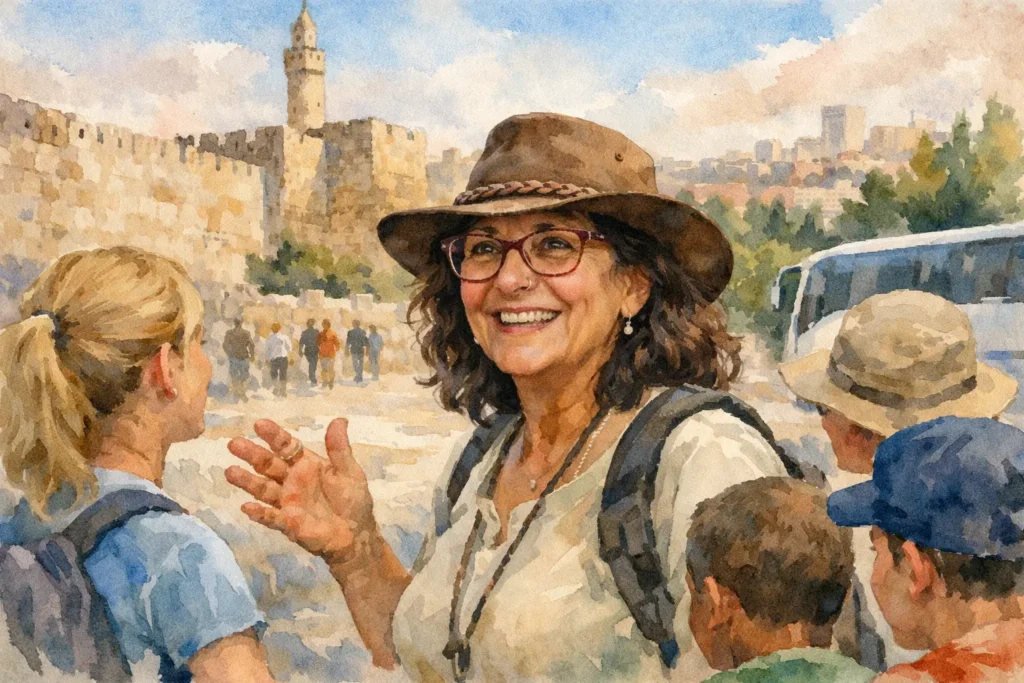
An Educational Bus Tour Israel Example That Works
A bus full of travelers does not need to become a passive audience. The best educational bus tour Israel example is one where people step off the bus with questions, stories, a sense of place, and enough breathing room to make the experience personal. For a youth group, family gathering, faith-based visit, or company delegation, education works best when it is felt as well as heard.
A meaningful day in Israel may move from an ancient hillside to a working market, from a major historical site to a conversation with someone who knows the area from the inside. The bus makes that range possible. Thoughtful guiding gives it a clear purpose.
What This Educational Bus Tour Israel Example Teaches
Consider a full-day program for an English-speaking group of 30 to 50 travelers based in Jerusalem. Its goal is not to cover every famous stop before dinner. It is to help participants understand how geography, memory, daily life, faith, food, and innovation sit beside one another in a very small country.
The day begins early with a short orientation on the bus. Rather than delivering a lecture before anyone has had coffee, the guide frames the day with one practical question: What does it take for a place to remain meaningful across generations? That question can return throughout the day, giving even a varied itinerary a shared thread.
The first stop might be a viewpoint overlooking Jerusalem. From there, a licensed guide can make the landscape readable: the ridges, valleys, old routes, neighborhoods, and landmarks that travelers may have seen in photographs but never fully understood. This is the right moment for context, not a flood of dates. A few well-chosen stories help the group look with more attention when they later walk through the city.
From the viewpoint, the group continues to a carefully selected heritage location. Depending on the participants, this could focus on archaeology, Jewish history, Christian tradition, architecture, or the practical realities of preserving a living city. The guide should invite observation. What materials were used? Why was this site built here? Which details have survived, and which are reconstructed? Education becomes more memorable when travelers are encouraged to notice rather than simply receive information.
Build Learning Into the Rhythm of the Day
A bus tour has a natural rhythm: travel, arrival, exploration, reflection, and travel again. The bus itself can become part of the learning rather than dead time between stops.
On the drive out of Jerusalem, a short discussion can connect the morning’s site to the wider country. A guide might point out changing terrain or explain why water, roads, and topography matter. For younger travelers, this can be a quick challenge: look out the window and identify what has changed since the first stop. For adults, it may become a conversation about settlement patterns, agriculture, or the way old and new development share the same landscape.
By late morning, the program benefits from doing something hands-on. A mosaic workshop, a cooking session, or a food-focused visit creates a welcome change from walking and listening. It also gives participants a direct connection to materials, flavors, and skills that cannot be absorbed through a windshield. A group that has made something together tends to talk about it for the rest of the day.
Lunch should not be treated as an interruption. In the right setting, it is another form of discovery. A market visit with a few tastings can open conversations about local ingredients, family recipes, seasonal cooking, and the people behind the counters. For groups with dietary needs, timing and restaurant selection matter. A knowledgeable planner builds those details in early, rather than leaving the guide to solve them on the spot.
Add One Encounter That Cannot Be Found on a Standard Itinerary
The difference between an ordinary bus itinerary and an educational one often comes down to one meaningful encounter. This might be a visit with an artist in a working studio, a farmer discussing water-conscious growing, an archaeologist explaining how evidence is interpreted, or an entrepreneur offering a window into Israeli problem-solving.
The encounter should fit the group, not be chosen simply because it sounds impressive. A student group may respond especially well to a candid conversation and an activity. A multigenerational family may prefer a slower visit that leaves room for relatives to share their own reactions. Business travelers with only a few hours may value a focused meeting paired with one historic landmark that gives the conversation a larger setting.
The guide’s role is crucial here. A good guide prepares the group with just enough background, makes introductions that feel natural, and leaves room for genuine questions. The conversation should never feel staged. Sometimes the most powerful learning happens when a traveler asks something unexpected and receives an honest, thoughtful answer.
End With a Place That Lets the Day Settle In
For an afternoon finish, choose a setting that changes the energy again. After a city-based morning, that could mean a forest trail, a desert overlook, a short coastal walk, or an ancient site where the scale of the landscape does some of the teaching. Groups do not need a strenuous hike to benefit from being outdoors. Even a gentle walk can reset attention after a busy day.
If the group is active and the season is right, a 4×4 route or guided hike can add a sense of adventure. This is not simply entertainment. Moving through a wadi, ridge, or wooded track makes geography tangible in a way that a map cannot. Still, adventure should match the group’s mobility, confidence, weather conditions, and available time. A great itinerary is not the one with the most activities. It is the one where no one feels rushed through the moments that matter.
Before returning to the hotel, allow ten quiet minutes for reflection. The guide might ask participants to share one thing they noticed, one question they are carrying, or one moment that changed their expectations. For youth groups, this can be done in small circles. For adult groups, it may be as simple as an open conversation while everyone settles back onto the bus.
How to Adapt the Day for Your Group
There is no single correct educational itinerary. A group of 55 needs clear timing, accessible routes, reliable rest stops, and a pace that keeps the whole bus together. A private family group of 12 can be far more spontaneous, spend longer in a workshop, or follow an unexpected interest that emerges during the day.
Age also changes the design. Teenagers usually need participation, movement, and room to speak. Adults often appreciate deeper context and a little more unstructured time. Travelers returning to Israel after seeing the major landmarks may want to go beyond the familiar, meeting local people, visiting lesser-known neighborhoods, or focusing on a specific passion such as food, design, nature, or archaeology.
The strongest programs balance iconic places with personal discoveries. Major sites provide shared reference points, especially for first-time visitors. Hidden corners, local encounters, and hands-on experiences make the trip feel like it belongs to this group and no other.
The Details That Make a Bus Tour Feel Personal
Educational travel is often decided by details that guests barely notice when they are handled well. The route should avoid unnecessary backtracking. Restrooms, water, shade, walking distances, meal times, and bus access all affect how receptive a group is to learning. So does the guide’s ability to adjust when heat, rain, traffic, or a participant’s energy calls for a change.
At Patchwork Israel, a tailored bus day begins with listening: who is traveling, what they already know, what they hope to feel, and how active they want to be. From there, history can meet hiking, a sacred site can be paired with a culinary stop, and a landmark can lead naturally to a conversation that stays with travelers long after they are home.
The most successful educational bus tour does not try to explain all of Israel in one day. It gives each traveler a few vivid connections and a reason to keep asking better questions tomorrow.

Get the latest blog updates in your inbox.