
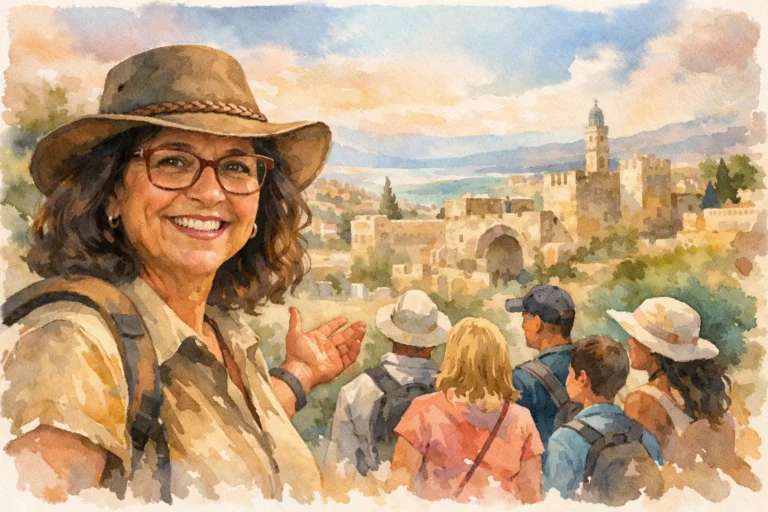
Is Israel Good for Private Tours? What to Know
A sunrise over the Judean Desert, an unhurried conversation in a small family kitchen, a quiet corner of Jerusalem that never makes the standard itinerary – these are the moments that answer the question, is Israel good for private tours? Yes, especially for travelers who want their time to reflect their own curiosity rather than someone else’s schedule.
Israel is compact, intensely layered, and full of contrasts. You can stand among ancient stones in the morning, taste a regional specialty at lunch, hike above a dramatic valley in the afternoon, and finish the day by the Mediterranean. A private tour makes that variety feel personal instead of rushed.
Why Israel Works So Well for Private Tours
The country offers a remarkable density of experiences within relatively short driving distances. But that does not mean every day should be packed from breakfast to bedtime. The real advantage of private touring is choosing where to slow down.
A family tracing heritage may want extra time at meaningful religious and historical sites, with space for questions and reflection. A returning visitor may be ready to leave the familiar landmarks behind for a lesser-known archaeological site, an artists’ studio, a mountain road, or a conversation that brings daily life into clearer view. A business traveler with one free day may want an intelligent, memorable introduction that fits between meetings.
On a group itinerary, the answer is usually fixed before you arrive. On a private tour, the day can change because you found a neighborhood you love, the children are fascinated by an excavation, or the desert light is too beautiful to hurry past. That flexibility is not a luxury detail. In Israel, it can completely change the character of a trip.
Is Israel Good for Private Tours for First-Time Visitors?
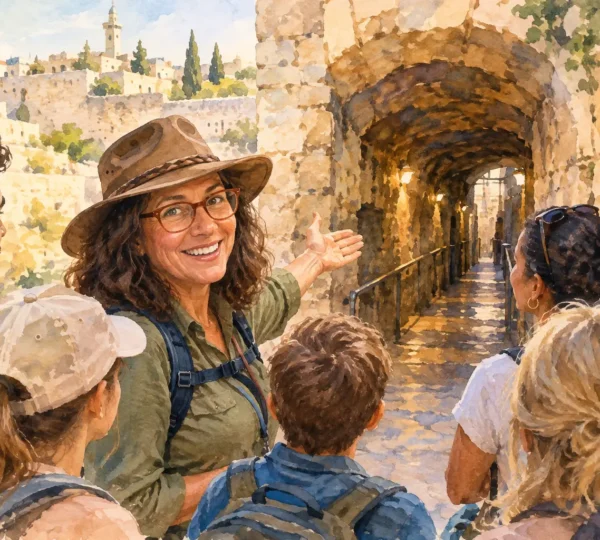
For a first visit, private touring can make an ambitious trip feel manageable. Jerusalem alone contains layers of faith, history, architecture, markets, and everyday life that are difficult to absorb without context. A knowledgeable licensed guide helps turn a collection of places into a story that makes sense.
Rather than racing through a checklist, you might build a day around the Old City and choose the sites that speak most strongly to you. Some travelers want a faith-centered visit. Others prefer archaeology, urban history, food, or the human stories behind the streets. Most enjoy a thoughtful combination.
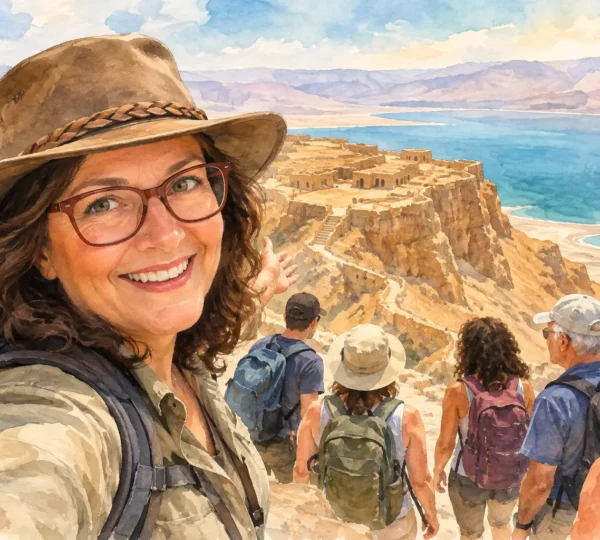
Outside Jerusalem, private travel makes it easier to link classic places in a way that feels natural. Caesarea can become more than impressive ruins when its harbor, Roman past, and changing coastal landscape are explained in context. Masada and the Dead Sea can be paired with a desert walk, a scenic overlook, or time to simply enjoy the stillness. Jaffa and Tel Aviv can offer ancient port lanes, contemporary design, local food, and beachside energy in one well-paced day.
The benefit is not just information. It is having someone who knows when an early start is worthwhile, where a short walk gives the best view, and how to shape a route around your energy, interests, and practical needs.
The Best Private Tours Go Beyond the Famous Sites
The famous places deserve their reputation, but they are only one part of Israel. Travelers who have visited before often find that a private itinerary opens an entirely different country.
That could mean visiting a working farm and hearing how people adapt to a demanding landscape. It might be a hands-on cooking session, foraging in season, mosaic making, sailing, or a 4×4 route through desert terrain. For active travelers, there are hikes suited to different fitness levels, mountain excursions, water activities, and off-road adventures that reveal landscapes most buses never reach.
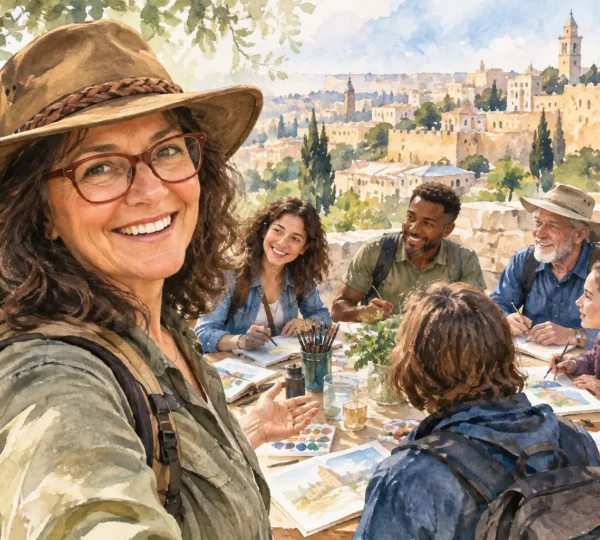
For many guests, the most lasting memories come from personal encounters. A visit with an artist, historian, culinary expert, academic, farmer, architect, or another local voice can add texture that guidebooks cannot provide. These meetings are not about collecting unusual experiences for their own sake. They offer a chance to listen, ask good questions, and see how many traditions, beliefs, and ways of life share this small place.
That is why customization should begin with more than, “Which sites do you want to see?” Better questions are: What do you want to understand? Do you prefer active days or a gentler pace? Are you returning to places that matter to your family? Would you rather spend an afternoon in a market, on a trail, at a museum, or around a table?
What a Private Guide Changes
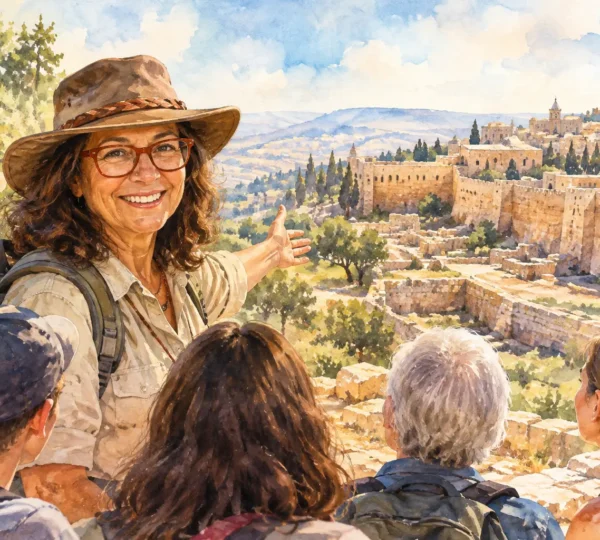
A good private guide is not simply a narrator standing beside a landmark. She is your planner, interpreter, navigator, and thoughtful companion for the day. The right guide notices when a teenager needs a more active stop, when a grandparent would appreciate fewer stairs, and when a meaningful conversation deserves another twenty minutes.
Private touring is particularly valuable for multigenerational families. Grandparents may be looking for historical depth while younger travelers want something hands-on. With a custom day, both can be part of the experience. One family might combine ancient history with a food market and a short nature walk. Another might choose a desert jeep route, camel riding, and an evening meal shaped around regional flavors.
It also works beautifully for small groups of friends, couples, and larger educational groups. The format changes, but the principle stays the same: the itinerary should serve the people in it. A coach group may need clear timing and engaging stops that work for many interests. A couple may prefer a slower pace and more spontaneous detours. Neither should feel like a generic package.
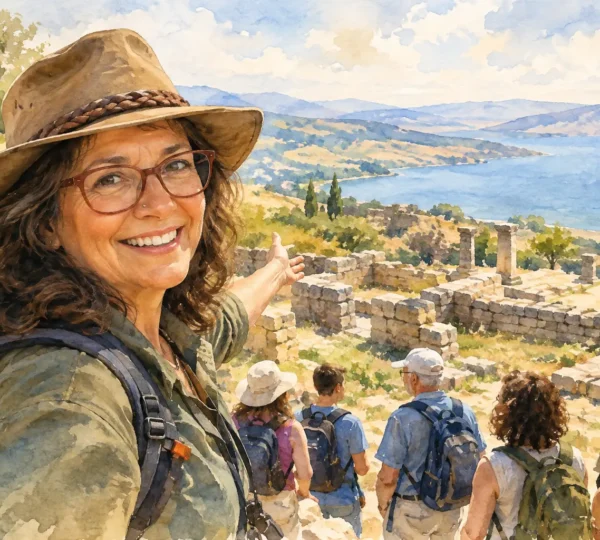
At Patchwork Israel, that approach begins with listening. Sharon brings decades of on-the-ground experience as a licensed tour guide, hiking guide, 4×4 guide, and outdoor training facilitator, then builds the day around what will matter most to you.
The Trade-Offs: When Private Touring Is Worth It
Private tours usually cost more than joining a large group, and it is sensible to weigh that difference. The value is strongest when time is limited, interests are specific, or the people traveling together have different needs. You are paying for expertise, a tailored route, private transportation when arranged, and the ability to make decisions around your own day.
A shared tour can be a fine choice if you are traveling solo on a tight budget, happy with a fixed schedule, and mainly want a broad overview. But it may not suit travelers who dislike long waits, want deeper discussion, need a flexible pace, or hope to include places outside the usual route.
Private does not have to mean overly formal or expensive at every turn. A well-designed half-day can be ideal for visitors with limited time. Choosing one region per day instead of zigzagging across the country also keeps the experience richer and more relaxed. The best itinerary is not the one with the most pins on a map. It is the one that leaves room for genuine discovery.
How to Plan a Meaningful Private Tour in Israel
Start with your priorities, not a list copied from social media. Share what you already know you want to see, but also mention what kind of traveler you are. Love long walks? Say so. Prefer comfortable viewpoints and short strolls? That matters too. Traveling with children, celebrating a milestone, observing dietary preferences, or hoping for a particular kind of spiritual experience can all shape the plan.
It helps to identify one or two anchor experiences for each day. Perhaps Jerusalem’s sacred and historic quarters are the anchor, with a market tasting and an overlooked viewpoint woven around them. Perhaps the anchor is Masada, with a desert hike adjusted to your pace and time to float at the Dead Sea afterward. The supporting moments are where a guide’s local knowledge often shines.
Leave a little empty space in the plan. The most memorable stop may be an unexpected roadside view, a bakery still warm from the oven, or a question that leads to a longer conversation. Israel rewards travelers who arrive curious and allow the day to breathe.
A private tour is not about being insulated from a place. It is about having the confidence and context to meet it more fully – one meaningful stop, shared meal, trail, and story at a time.

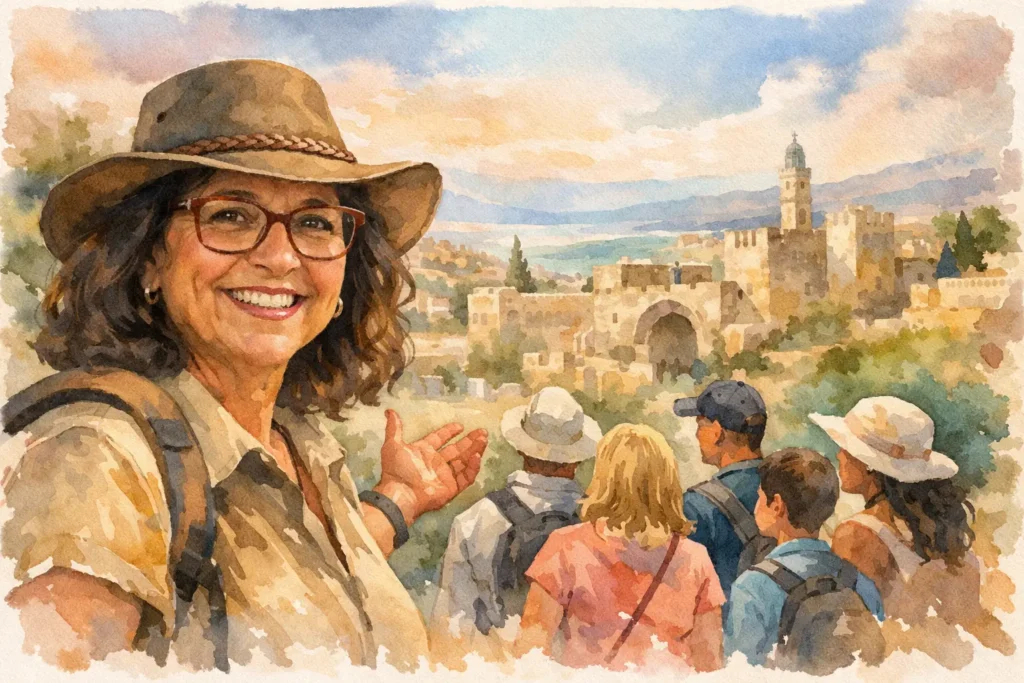
Is Israel Good for Private Tours? What to Know
A sunrise over the Judean Desert, an unhurried conversation in a small family kitchen, a quiet corner of Jerusalem that never makes the standard itinerary – these are the moments that answer the question, is Israel good for private tours? Yes, especially for travelers who want their time to reflect their own curiosity rather than someone else’s schedule.
Israel is compact, intensely layered, and full of contrasts. You can stand among ancient stones in the morning, taste a regional specialty at lunch, hike above a dramatic valley in the afternoon, and finish the day by the Mediterranean. A private tour makes that variety feel personal instead of rushed.
Why Israel Works So Well for Private Tours
The country offers a remarkable density of experiences within relatively short driving distances. But that does not mean every day should be packed from breakfast to bedtime. The real advantage of private touring is choosing where to slow down.
A family tracing heritage may want extra time at meaningful religious and historical sites, with space for questions and reflection. A returning visitor may be ready to leave the familiar landmarks behind for a lesser-known archaeological site, an artists’ studio, a mountain road, or a conversation that brings daily life into clearer view. A business traveler with one free day may want an intelligent, memorable introduction that fits between meetings.
On a group itinerary, the answer is usually fixed before you arrive. On a private tour, the day can change because you found a neighborhood you love, the children are fascinated by an excavation, or the desert light is too beautiful to hurry past. That flexibility is not a luxury detail. In Israel, it can completely change the character of a trip.
Is Israel Good for Private Tours for First-Time Visitors?
For a first visit, private touring can make an ambitious trip feel manageable. Jerusalem alone contains layers of faith, history, architecture, markets, and everyday life that are difficult to absorb without context. A knowledgeable licensed guide helps turn a collection of places into a story that makes sense.
Rather than racing through a checklist, you might build a day around the Old City and choose the sites that speak most strongly to you. Some travelers want a faith-centered visit. Others prefer archaeology, urban history, food, or the human stories behind the streets. Most enjoy a thoughtful combination.
Outside Jerusalem, private travel makes it easier to link classic places in a way that feels natural. Caesarea can become more than impressive ruins when its harbor, Roman past, and changing coastal landscape are explained in context. Masada and the Dead Sea can be paired with a desert walk, a scenic overlook, or time to simply enjoy the stillness. Jaffa and Tel Aviv can offer ancient port lanes, contemporary design, local food, and beachside energy in one well-paced day.
The benefit is not just information. It is having someone who knows when an early start is worthwhile, where a short walk gives the best view, and how to shape a route around your energy, interests, and practical needs.
The Best Private Tours Go Beyond the Famous Sites
The famous places deserve their reputation, but they are only one part of Israel. Travelers who have visited before often find that a private itinerary opens an entirely different country.
That could mean visiting a working farm and hearing how people adapt to a demanding landscape. It might be a hands-on cooking session, foraging in season, mosaic making, sailing, or a 4×4 route through desert terrain. For active travelers, there are hikes suited to different fitness levels, mountain excursions, water activities, and off-road adventures that reveal landscapes most buses never reach.
For many guests, the most lasting memories come from personal encounters. A visit with an artist, historian, culinary expert, academic, farmer, architect, or another local voice can add texture that guidebooks cannot provide. These meetings are not about collecting unusual experiences for their own sake. They offer a chance to listen, ask good questions, and see how many traditions, beliefs, and ways of life share this small place.
That is why customization should begin with more than, “Which sites do you want to see?” Better questions are: What do you want to understand? Do you prefer active days or a gentler pace? Are you returning to places that matter to your family? Would you rather spend an afternoon in a market, on a trail, at a museum, or around a table?
What a Private Guide Changes
A good private guide is not simply a narrator standing beside a landmark. She is your planner, interpreter, navigator, and thoughtful companion for the day. The right guide notices when a teenager needs a more active stop, when a grandparent would appreciate fewer stairs, and when a meaningful conversation deserves another twenty minutes.
Private touring is particularly valuable for multigenerational families. Grandparents may be looking for historical depth while younger travelers want something hands-on. With a custom day, both can be part of the experience. One family might combine ancient history with a food market and a short nature walk. Another might choose a desert jeep route, camel riding, and an evening meal shaped around regional flavors.
It also works beautifully for small groups of friends, couples, and larger educational groups. The format changes, but the principle stays the same: the itinerary should serve the people in it. A coach group may need clear timing and engaging stops that work for many interests. A couple may prefer a slower pace and more spontaneous detours. Neither should feel like a generic package.
At Patchwork Israel, that approach begins with listening. Sharon brings decades of on-the-ground experience as a licensed tour guide, hiking guide, 4×4 guide, and outdoor training facilitator, then builds the day around what will matter most to you.
The Trade-Offs: When Private Touring Is Worth It
Private tours usually cost more than joining a large group, and it is sensible to weigh that difference. The value is strongest when time is limited, interests are specific, or the people traveling together have different needs. You are paying for expertise, a tailored route, private transportation when arranged, and the ability to make decisions around your own day.
A shared tour can be a fine choice if you are traveling solo on a tight budget, happy with a fixed schedule, and mainly want a broad overview. But it may not suit travelers who dislike long waits, want deeper discussion, need a flexible pace, or hope to include places outside the usual route.
Private does not have to mean overly formal or expensive at every turn. A well-designed half-day can be ideal for visitors with limited time. Choosing one region per day instead of zigzagging across the country also keeps the experience richer and more relaxed. The best itinerary is not the one with the most pins on a map. It is the one that leaves room for genuine discovery.
How to Plan a Meaningful Private Tour in Israel
Start with your priorities, not a list copied from social media. Share what you already know you want to see, but also mention what kind of traveler you are. Love long walks? Say so. Prefer comfortable viewpoints and short strolls? That matters too. Traveling with children, celebrating a milestone, observing dietary preferences, or hoping for a particular kind of spiritual experience can all shape the plan.
It helps to identify one or two anchor experiences for each day. Perhaps Jerusalem’s sacred and historic quarters are the anchor, with a market tasting and an overlooked viewpoint woven around them. Perhaps the anchor is Masada, with a desert hike adjusted to your pace and time to float at the Dead Sea afterward. The supporting moments are where a guide’s local knowledge often shines.
Leave a little empty space in the plan. The most memorable stop may be an unexpected roadside view, a bakery still warm from the oven, or a question that leads to a longer conversation. Israel rewards travelers who arrive curious and allow the day to breathe.
A private tour is not about being insulated from a place. It is about having the confidence and context to meet it more fully – one meaningful stop, shared meal, trail, and story at a time.
Get the latest blog updates in your inbox.