
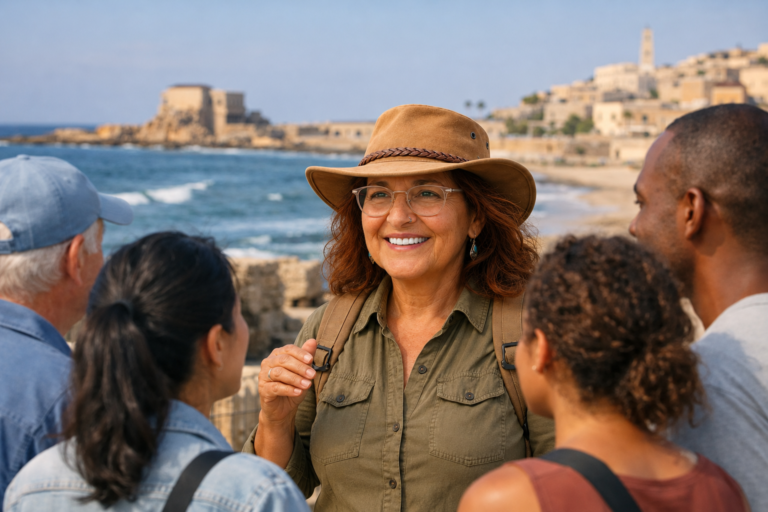
Caesarea Jaffa Day Tour That Flows
Some days in Israel work best when they hold two very different moods at once. A Caesarea Jaffa day tour does exactly that. You begin with the grand sweep of a Roman port built for empire, and end among the winding lanes, artists’ corners, sea air, and layered stories of one of the country’s oldest living urban spaces.
That contrast is the whole point. Caesarea gives you scale, archaeology, and the drama of ancient engineering. Jaffa gives you texture – fishermen’s harbor, Ottoman stone, church traditions, flea market energy, and the kind of streets that invite you to slow down and notice details. If you only rush from photo stop to photo stop, you miss what makes this pairing so strong.
Why a Caesarea Jaffa day tour works so well
On paper, Caesarea and Jaffa are both coastal heritage sites. In practice, they feel completely different, and that is why they belong together. Caesarea is spacious and theatrical. You walk through the remains of a city that was planned to impress, from the harbor to the theater to the racing arena. Jaffa feels more intimate. It is less about monumental ruins and more about layers that kept being reused, rebuilt, and lived in.
For travelers who want one day to hold history, architecture, sea views, and a genuine sense of place, this route is hard to beat. It also suits people with different interests. One person may love archaeology, another may care more about biblical context, another may want food, markets, or art. This day can hold all of that without feeling forced.
It is also a smart choice for repeat visitors who have already seen some of Israel’s headline sites and want a day with more nuance. The coastal plain is not just a transfer route between bigger names. It tells a story of trade, conquest, pilgrimage, daily life, and reinvention.
Starting in Caesarea
Caesarea is usually best earlier in the day, when the light is clear and the site feels open rather than hot and exposed. This is a place that rewards context. Without a guide, many visitors see beautiful ruins. With the right storytelling, the city becomes legible. You understand why Herod built here, how the harbor changed the region, what public entertainment looked like, and why so many later civilizations left their own marks on the same ground.
The amphitheater is often the first place that catches people emotionally. Even when it is quiet, you can imagine the public spectacle that once filled the space. The hippodrome has a different feeling – broader, windier, and more athletic in spirit. Near the harbor, the engineering becomes the real star. Standing by the sea, it is easier to appreciate the ambition behind building such a port on this stretch of coast.
A good visit to Caesarea is not only about the Roman period. Depending on your interests, the conversation can widen into early Christianity, Crusader layers, medieval rebuilding, and the way archaeology reveals both glory and fragility. Some travelers want a strong historical framework. Others want just enough context to make the stones speak. That is where a tailored day matters.
How much time do you need in Caesarea?
For most travelers, two to three hours works well. Less than that can feel thin, especially if you want time to walk, pause for the views, and absorb the site rather than skim it. More than that can be worthwhile for history lovers, but it depends on your pace and the rest of the day.
Families, business travelers with one free day, and multigenerational groups often do best with a balanced rhythm. Enough time for substance, not so much that everyone fades before Jaffa. This is one of those tours where pacing matters more than trying to fit in every possible stop.
The drive south is part of the day
Between Caesarea and Jaffa, the landscape helps connect the story. This is not dead travel time if the day is guided well. The coastal route opens conversations about how ancient ports worked, how trade moved, and how different communities shaped the shoreline over centuries.
Some travelers prefer a straightforward transfer so they can preserve energy. Others enjoy adding a culinary pause, a short scenic break, or a conversation that shifts the day from archaeology toward living culture. It depends on whether you want a classic heritage day or something a little more layered and personal.
Jaffa in the afternoon: slower, richer, more human
If Caesarea gives you grandeur, Jaffa gives you atmosphere. Arriving later in the day often suits it. The old city lanes catch the light beautifully, and the area naturally encourages wandering, looking, and stopping. You do not visit Jaffa the same way you visit a fenced archaeological park. You experience it.
A strong Jaffa visit usually includes the old port area, the lanes of the old city, key viewpoints over the sea and Tel Aviv skyline, and time to notice religious, artistic, and everyday layers side by side. For some visitors, Jaffa is deeply meaningful in a faith context. For others, it is about architecture, local character, and the meeting point between ancient harbor town and modern city.
This is also where flexibility becomes valuable. Some travelers want more time in galleries and artisan spaces. Some care most about the market atmosphere and food. Some want to focus on church history or biblical associations. Others simply want to walk, hear the stories, and sit with a coffee overlooking the water. A private day handles those differences far better than a rigid group schedule.
What to include on a Caesarea Jaffa day tour
The best version of this tour is not the one with the most stops. It is the one with the right stops for you. In Caesarea, most days center on the theater, harbor, hippodrome, and core archaeological remains. In Jaffa, the old port, old city lanes, scenic overlooks, and time for a market or food element usually create the most satisfying balance.
If you are traveling with teens or mixed ages, adding a tactile or culinary moment can change the whole feel of the day. A market tasting, a bakery stop, or time to browse in a less hurried way often keeps everyone engaged. If your interests lean scholarly, more depth in the archaeology and historical transitions may be the better choice.
That is the real trade-off. More depth means fewer locations. More variety means a lighter touch at each site. Neither is wrong. The best day is the one that fits the people actually taking it.
Who enjoys this route most?
This coastal pairing works especially well for travelers who want meaning without an exhausting pace. It suits first-time visitors, but it is often even better for people returning to Israel who want to go beyond a checklist. It also works for those who may not all share the same focus. One traveler can come for heritage, another for faith context, another for food, and another simply for the beauty of the Mediterranean coast.
It is also a very good option for short stays. If someone has limited time and wants a day that feels distinctly Israeli, historically rich, and visually memorable, this route delivers a lot without requiring desert travel or a very early start.
Why guidance changes this day
Both Caesarea and Jaffa can be visited independently, but they become far more interesting when the day is shaped around your curiosity. The right guide does more than explain dates. She notices what will matter to you, adjusts the rhythm, and helps the day feel connected rather than split into two separate visits.
That matters even more in places with many historical layers. A stone arch, a harbor edge, or a church courtyard may seem simple until it is placed in a wider human story. Suddenly the site is not just old – it becomes understandable.
This is where a company like Patchwork Israel can make the day feel personal rather than packaged. A couple interested in culture and food may experience the route differently than a family, a heritage traveler, or a visitor looking for a thoughtful day between meetings. The framework is the same, but the emphasis can shift.
Practical timing for the day
Most Caesarea Jaffa day tours work best as a full day, not a rushed half day. An early departure helps you enjoy Caesarea before the strongest midday heat, then move toward Jaffa with enough time to enjoy its streets at a gentler pace.
Comfort matters. Good walking shoes are worth it, and so is leaving some breathing room in the schedule. These are places with stones, slopes, and distractions in the best sense. If every minute is overplanned, there is no space for the moment when a view opens up, a conversation lingers, or a small side street becomes your favorite memory.
Food is worth planning intentionally too. Some travelers want a proper lunch, others prefer lighter local bites spread through the day. Jaffa especially rewards people who arrive with enough flexibility to enjoy a snack, coffee, or early dinner atmosphere instead of treating the visit as one last box to check.
A Caesarea Jaffa day tour is at its best when it feels curated, not crowded. The sea is present in both places, but each site tells a different kind of story. Give the day enough room, and it tends to stay with you long after the photos are put away.

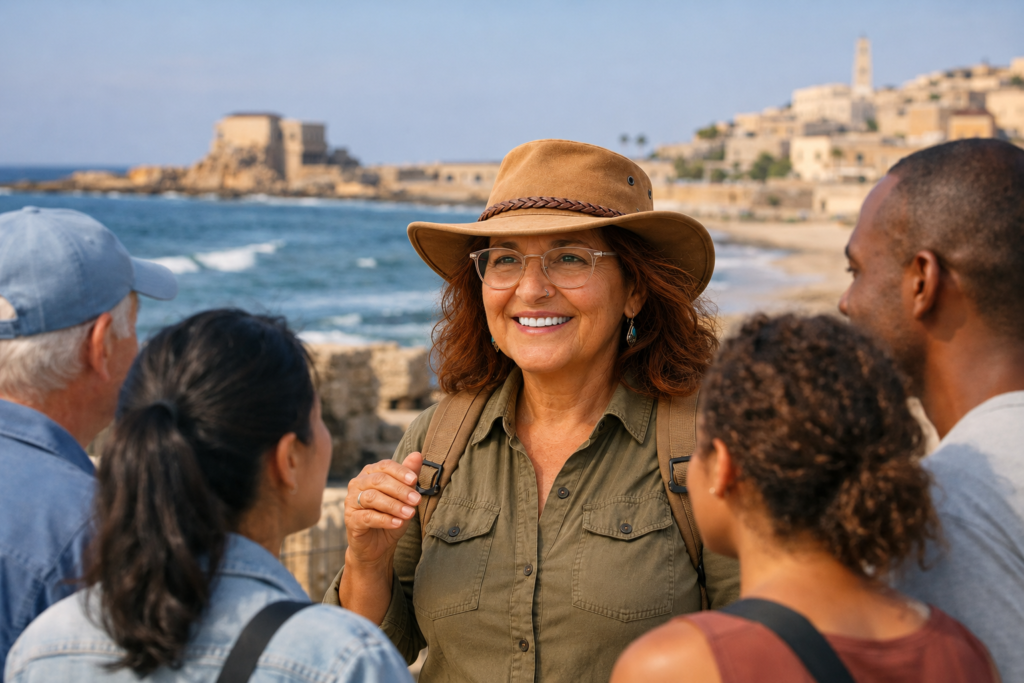
Caesarea Jaffa Day Tour That Flows
Some days in Israel work best when they hold two very different moods at once. A Caesarea Jaffa day tour does exactly that. You begin with the grand sweep of a Roman port built for empire, and end among the winding lanes, artists’ corners, sea air, and layered stories of one of the country’s oldest living urban spaces.
That contrast is the whole point. Caesarea gives you scale, archaeology, and the drama of ancient engineering. Jaffa gives you texture – fishermen’s harbor, Ottoman stone, church traditions, flea market energy, and the kind of streets that invite you to slow down and notice details. If you only rush from photo stop to photo stop, you miss what makes this pairing so strong.
Why a Caesarea Jaffa day tour works so well
On paper, Caesarea and Jaffa are both coastal heritage sites. In practice, they feel completely different, and that is why they belong together. Caesarea is spacious and theatrical. You walk through the remains of a city that was planned to impress, from the harbor to the theater to the racing arena. Jaffa feels more intimate. It is less about monumental ruins and more about layers that kept being reused, rebuilt, and lived in.
For travelers who want one day to hold history, architecture, sea views, and a genuine sense of place, this route is hard to beat. It also suits people with different interests. One person may love archaeology, another may care more about biblical context, another may want food, markets, or art. This day can hold all of that without feeling forced.
It is also a smart choice for repeat visitors who have already seen some of Israel’s headline sites and want a day with more nuance. The coastal plain is not just a transfer route between bigger names. It tells a story of trade, conquest, pilgrimage, daily life, and reinvention.
Starting in Caesarea
Caesarea is usually best earlier in the day, when the light is clear and the site feels open rather than hot and exposed. This is a place that rewards context. Without a guide, many visitors see beautiful ruins. With the right storytelling, the city becomes legible. You understand why Herod built here, how the harbor changed the region, what public entertainment looked like, and why so many later civilizations left their own marks on the same ground.
The amphitheater is often the first place that catches people emotionally. Even when it is quiet, you can imagine the public spectacle that once filled the space. The hippodrome has a different feeling – broader, windier, and more athletic in spirit. Near the harbor, the engineering becomes the real star. Standing by the sea, it is easier to appreciate the ambition behind building such a port on this stretch of coast.
A good visit to Caesarea is not only about the Roman period. Depending on your interests, the conversation can widen into early Christianity, Crusader layers, medieval rebuilding, and the way archaeology reveals both glory and fragility. Some travelers want a strong historical framework. Others want just enough context to make the stones speak. That is where a tailored day matters.
How much time do you need in Caesarea?
For most travelers, two to three hours works well. Less than that can feel thin, especially if you want time to walk, pause for the views, and absorb the site rather than skim it. More than that can be worthwhile for history lovers, but it depends on your pace and the rest of the day.
Families, business travelers with one free day, and multigenerational groups often do best with a balanced rhythm. Enough time for substance, not so much that everyone fades before Jaffa. This is one of those tours where pacing matters more than trying to fit in every possible stop.
The drive south is part of the day
Between Caesarea and Jaffa, the landscape helps connect the story. This is not dead travel time if the day is guided well. The coastal route opens conversations about how ancient ports worked, how trade moved, and how different communities shaped the shoreline over centuries.
Some travelers prefer a straightforward transfer so they can preserve energy. Others enjoy adding a culinary pause, a short scenic break, or a conversation that shifts the day from archaeology toward living culture. It depends on whether you want a classic heritage day or something a little more layered and personal.
Jaffa in the afternoon: slower, richer, more human
If Caesarea gives you grandeur, Jaffa gives you atmosphere. Arriving later in the day often suits it. The old city lanes catch the light beautifully, and the area naturally encourages wandering, looking, and stopping. You do not visit Jaffa the same way you visit a fenced archaeological park. You experience it.
A strong Jaffa visit usually includes the old port area, the lanes of the old city, key viewpoints over the sea and Tel Aviv skyline, and time to notice religious, artistic, and everyday layers side by side. For some visitors, Jaffa is deeply meaningful in a faith context. For others, it is about architecture, local character, and the meeting point between ancient harbor town and modern city.
This is also where flexibility becomes valuable. Some travelers want more time in galleries and artisan spaces. Some care most about the market atmosphere and food. Some want to focus on church history or biblical associations. Others simply want to walk, hear the stories, and sit with a coffee overlooking the water. A private day handles those differences far better than a rigid group schedule.
What to include on a Caesarea Jaffa day tour
The best version of this tour is not the one with the most stops. It is the one with the right stops for you. In Caesarea, most days center on the theater, harbor, hippodrome, and core archaeological remains. In Jaffa, the old port, old city lanes, scenic overlooks, and time for a market or food element usually create the most satisfying balance.
If you are traveling with teens or mixed ages, adding a tactile or culinary moment can change the whole feel of the day. A market tasting, a bakery stop, or time to browse in a less hurried way often keeps everyone engaged. If your interests lean scholarly, more depth in the archaeology and historical transitions may be the better choice.
That is the real trade-off. More depth means fewer locations. More variety means a lighter touch at each site. Neither is wrong. The best day is the one that fits the people actually taking it.
Who enjoys this route most?
This coastal pairing works especially well for travelers who want meaning without an exhausting pace. It suits first-time visitors, but it is often even better for people returning to Israel who want to go beyond a checklist. It also works for those who may not all share the same focus. One traveler can come for heritage, another for faith context, another for food, and another simply for the beauty of the Mediterranean coast.
It is also a very good option for short stays. If someone has limited time and wants a day that feels distinctly Israeli, historically rich, and visually memorable, this route delivers a lot without requiring desert travel or a very early start.
Why guidance changes this day
Both Caesarea and Jaffa can be visited independently, but they become far more interesting when the day is shaped around your curiosity. The right guide does more than explain dates. She notices what will matter to you, adjusts the rhythm, and helps the day feel connected rather than split into two separate visits.
That matters even more in places with many historical layers. A stone arch, a harbor edge, or a church courtyard may seem simple until it is placed in a wider human story. Suddenly the site is not just old – it becomes understandable.
This is where a company like Patchwork Israel can make the day feel personal rather than packaged. A couple interested in culture and food may experience the route differently than a family, a heritage traveler, or a visitor looking for a thoughtful day between meetings. The framework is the same, but the emphasis can shift.
Practical timing for the day
Most Caesarea Jaffa day tours work best as a full day, not a rushed half day. An early departure helps you enjoy Caesarea before the strongest midday heat, then move toward Jaffa with enough time to enjoy its streets at a gentler pace.
Comfort matters. Good walking shoes are worth it, and so is leaving some breathing room in the schedule. These are places with stones, slopes, and distractions in the best sense. If every minute is overplanned, there is no space for the moment when a view opens up, a conversation lingers, or a small side street becomes your favorite memory.
Food is worth planning intentionally too. Some travelers want a proper lunch, others prefer lighter local bites spread through the day. Jaffa especially rewards people who arrive with enough flexibility to enjoy a snack, coffee, or early dinner atmosphere instead of treating the visit as one last box to check.
A Caesarea Jaffa day tour is at its best when it feels curated, not crowded. The sea is present in both places, but each site tells a different kind of story. Give the day enough room, and it tends to stay with you long after the photos are put away.
Get the latest blog updates in your inbox.