
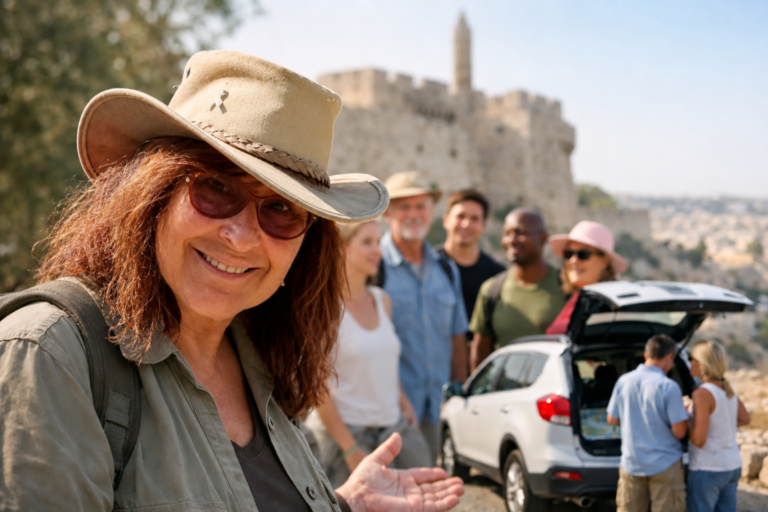
Guided Israel Trip vs Self Drive: Which Fits?
If you are weighing a guided Israel trip vs self drive, the real question is not which style is better in general. It is which one gives you the kind of Israel experience you actually want. A trip built around sacred places, layered history, food, landscapes, and human encounters can feel completely different depending on how you move through the country.
Israel is small on the map and dense in experience. That often makes travelers assume driving themselves will be simple. Sometimes it is. But a compact country packed with ancient sites, modern cities, desert roads, nature reserves, market streets, and meaningful cultural stops can become complicated fast. The right choice depends on your pace, your confidence, and how much depth you want from each day.
Guided Israel trip vs self drive: the biggest difference
A self-drive trip gives you control. You can leave early, change a plan mid-morning, stay longer at a beach, or stop at a roadside bakery because it smells too good to ignore. For independent travelers, that freedom is a real pleasure.
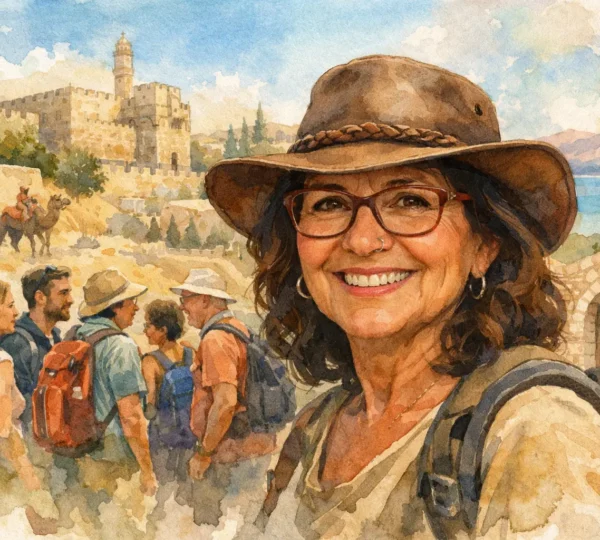
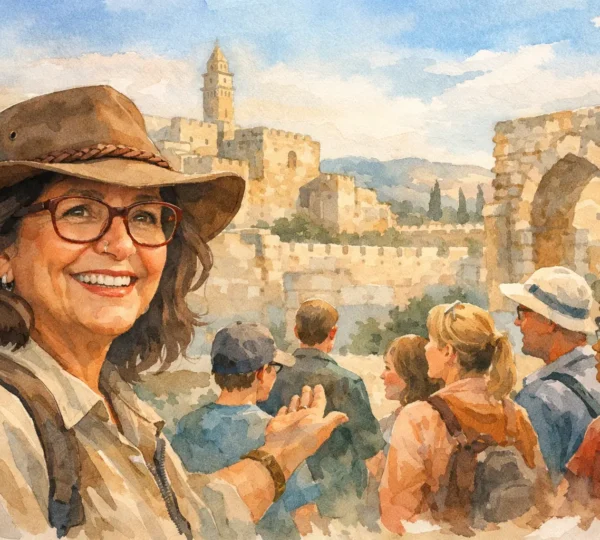
A guided trip gives you context and access. You are not just arriving at Jerusalem, Masada, Jaffa, or the Galilee. You are understanding what you are seeing, why it matters, what most visitors miss, and how to connect the pieces. You also spend less mental energy on parking, timing, route changes, and logistics.
That trade-off matters more in Israel than in many destinations. Distances may be short, but the emotional and historical density is high. One hill, one alley, one excavation, or one meal can carry centuries of meaning. If that is the reason you are coming, guidance can transform the trip.
When self-drive works beautifully
Self-drive can be a great fit if you love independence and enjoy being your own travel manager. Travelers who are comfortable with navigation apps, rental car rules, shifting city traffic, and planning opening hours often do very well with this style.
It also suits people who want a looser vacation rhythm. If your dream is a mix of scenic drives, a few anchor sites, flexible meals, and downtime, driving yourself can feel relaxed and natural. Families sometimes prefer it because they can move at their own pace and adapt around children, naps, or energy levels.
A repeat visitor may enjoy self-drive even more than a first-time visitor. Once you have seen the headline sites, the pleasure may come from revisiting favorite regions, spending extra time in nature, or combining towns and landscapes in your own way.
Still, self-drive works best when you are happy to do the homework. Israel rewards curiosity, but it does not always explain itself on the surface. Without preparation, travelers can pass through extraordinary places and only catch a fraction of what is there.
The hidden cost of doing it yourself
A self-drive trip can look less expensive at first. You book the car, choose the hotels, and avoid paying for a guide each day. But price is only part of the picture.
There is also the cost of time and attention. You may spend evenings researching the next day, adjusting routes, checking whether a site needs advance booking, or trying to understand whether two stops that look close on a map are actually practical together. Then there is parking in busy areas, choosing where to enter a complex site, and figuring out which places are worth your limited hours.
Some travelers enjoy that planning. Others find that by day three, they are tired of making decisions.
When a guided trip is worth it
A guided trip shines when you want more than transportation between landmarks. It is especially valuable if this is your first visit, if your schedule is tight, or if you care about history, faith, archaeology, culture, food, or meaningful encounters with people.
With an experienced guide, the country opens differently. A stone wall is no longer just a stone wall. A neighborhood is no longer just a place you passed through. A market becomes a story of migration, identity, and taste. A desert road becomes a gateway to geology, survival, monastic life, and wide-open quiet.
That is why many travelers who could easily drive still choose a guide. They are not looking for someone to hold their hand. They want someone to sharpen the experience.
A guided day can also be surprisingly flexible. The best private touring is not about being herded from stop to stop. It is about shaping the day around your interests, energy, and curiosity. You might begin with a classic site and then spend the afternoon on a culinary trail, an off-road desert route, a hands-on workshop, or a conversation that makes the whole trip feel personal.
Guided does not have to mean generic
Some travelers hear the word guided and picture a big bus, matching headsets, and a rigid clock. That is one version of touring, but it is far from the only one.
A well-designed private trip can feel highly personal. It can go deeper into the places you care about most and skip what does not speak to you. For some travelers that means major heritage sites with strong historical framing. For others it means hidden corners, active days outdoors, food experiences, or a more nuanced understanding of daily life in Israel.
This is where local expertise really matters. A seasoned guide knows when to go, what to pair together, how to avoid a flat itinerary, and where the memorable moments tend to happen.
Guided Israel trip vs self drive for first-time visitors
For first-time visitors, a guided Israel trip vs self drive often comes down to confidence and priorities. If your main goal is to cover a lot quickly and efficiently while understanding what you are seeing, guided travel usually delivers more value.
First trips often carry high expectations. People want Jerusalem to feel meaningful, not rushed. They want the Dead Sea and Masada to fit smoothly into a day. They want Tel Aviv and Jaffa to make sense together. They want to balance the famous places with something less obvious and more personal.
That is much easier when someone who knows the country well is shaping the route. A good guide helps you avoid common planning mistakes, wasted driving loops, and overpacked days that look good on paper but feel thin in real life.
If, on the other hand, your first visit is intentionally light and independent, and you are comfortable missing a few layers in exchange for freedom, self-drive can still work well. It just helps to be honest about what you are giving up.
What kind of traveler are you, really?
Some people love making every choice themselves. They enjoy the search, the route, the restaurant hunt, the sense of discovery through trial and error. For them, driving can be part of the fun.
Others want to be present rather than in charge. They would rather spend the day noticing the landscape, asking questions, tasting, walking, reflecting, and learning than managing logistics. For them, guided travel can feel lighter and richer at the same time.
There is also a middle ground, and it is often the smartest option. Many travelers combine both styles. They use guided touring for places where context matters most and plan some independent days for beaches, restaurants, wineries, shopping, or scenic wandering. That balance can be ideal.
A company like Patchwork Israel is especially strong in that middle space because the experience can be shaped around what interests you, whether that means heritage, hiking, culinary stops, deeper site interpretation, or lesser-known places that rarely appear on standard itineraries.
The choice is not just about transportation
The most common mistake travelers make is treating this as a simple question of car keys versus driver. It is really a question of how you want to experience the country.
Do you want broad freedom, even if some moments stay surface-level? Or do you want depth, insight, and local guidance, even if someone else is helping shape the day? Neither answer is wrong. But they lead to very different memories.
Israel can absolutely be enjoyed from behind your own steering wheel. It can also become far more vivid with the right guide beside you. If you choose based on your travel style rather than a generic idea of what you are supposed to do, you will almost always get the better trip.
The best plan is the one that leaves you enough room to notice where you are, not just rush through it.

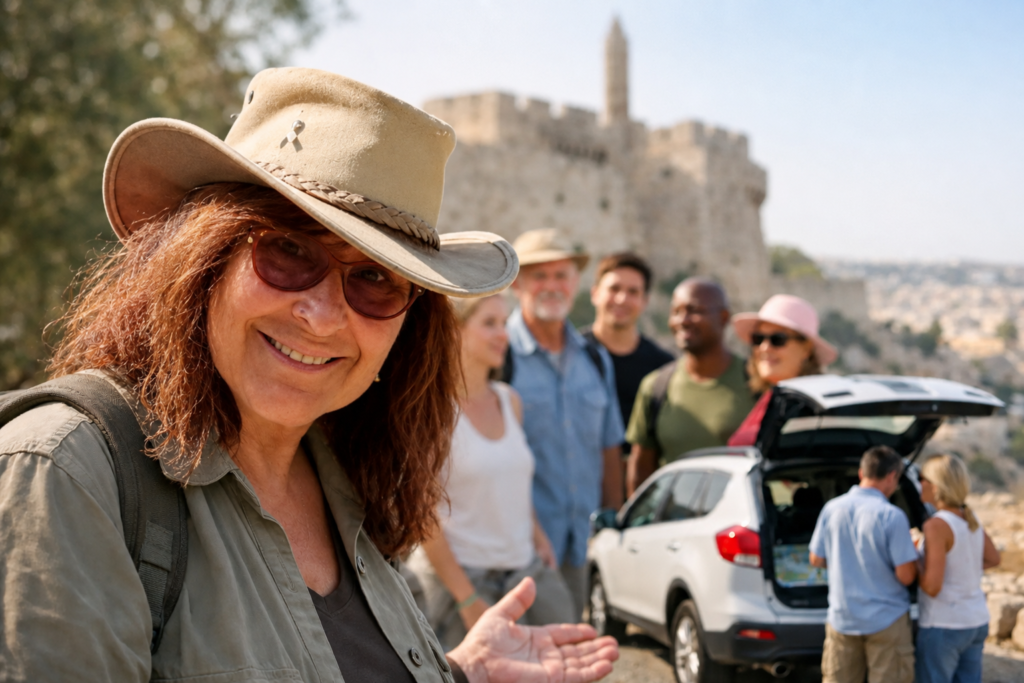
Guided Israel Trip vs Self Drive: Which Fits?
If you are weighing a guided Israel trip vs self drive, the real question is not which style is better in general. It is which one gives you the kind of Israel experience you actually want. A trip built around sacred places, layered history, food, landscapes, and human encounters can feel completely different depending on how you move through the country.
Israel is small on the map and dense in experience. That often makes travelers assume driving themselves will be simple. Sometimes it is. But a compact country packed with ancient sites, modern cities, desert roads, nature reserves, market streets, and meaningful cultural stops can become complicated fast. The right choice depends on your pace, your confidence, and how much depth you want from each day.
Guided Israel trip vs self drive: the biggest difference
A self-drive trip gives you control. You can leave early, change a plan mid-morning, stay longer at a beach, or stop at a roadside bakery because it smells too good to ignore. For independent travelers, that freedom is a real pleasure.
A guided trip gives you context and access. You are not just arriving at Jerusalem, Masada, Jaffa, or the Galilee. You are understanding what you are seeing, why it matters, what most visitors miss, and how to connect the pieces. You also spend less mental energy on parking, timing, route changes, and logistics.
That trade-off matters more in Israel than in many destinations. Distances may be short, but the emotional and historical density is high. One hill, one alley, one excavation, or one meal can carry centuries of meaning. If that is the reason you are coming, guidance can transform the trip.
When self-drive works beautifully
Self-drive can be a great fit if you love independence and enjoy being your own travel manager. Travelers who are comfortable with navigation apps, rental car rules, shifting city traffic, and planning opening hours often do very well with this style.
It also suits people who want a looser vacation rhythm. If your dream is a mix of scenic drives, a few anchor sites, flexible meals, and downtime, driving yourself can feel relaxed and natural. Families sometimes prefer it because they can move at their own pace and adapt around children, naps, or energy levels.
A repeat visitor may enjoy self-drive even more than a first-time visitor. Once you have seen the headline sites, the pleasure may come from revisiting favorite regions, spending extra time in nature, or combining towns and landscapes in your own way.
Still, self-drive works best when you are happy to do the homework. Israel rewards curiosity, but it does not always explain itself on the surface. Without preparation, travelers can pass through extraordinary places and only catch a fraction of what is there.
The hidden cost of doing it yourself
A self-drive trip can look less expensive at first. You book the car, choose the hotels, and avoid paying for a guide each day. But price is only part of the picture.
There is also the cost of time and attention. You may spend evenings researching the next day, adjusting routes, checking whether a site needs advance booking, or trying to understand whether two stops that look close on a map are actually practical together. Then there is parking in busy areas, choosing where to enter a complex site, and figuring out which places are worth your limited hours.
Some travelers enjoy that planning. Others find that by day three, they are tired of making decisions.
When a guided trip is worth it
A guided trip shines when you want more than transportation between landmarks. It is especially valuable if this is your first visit, if your schedule is tight, or if you care about history, faith, archaeology, culture, food, or meaningful encounters with people.
With an experienced guide, the country opens differently. A stone wall is no longer just a stone wall. A neighborhood is no longer just a place you passed through. A market becomes a story of migration, identity, and taste. A desert road becomes a gateway to geology, survival, monastic life, and wide-open quiet.
That is why many travelers who could easily drive still choose a guide. They are not looking for someone to hold their hand. They want someone to sharpen the experience.
A guided day can also be surprisingly flexible. The best private touring is not about being herded from stop to stop. It is about shaping the day around your interests, energy, and curiosity. You might begin with a classic site and then spend the afternoon on a culinary trail, an off-road desert route, a hands-on workshop, or a conversation that makes the whole trip feel personal.
Guided does not have to mean generic
Some travelers hear the word guided and picture a big bus, matching headsets, and a rigid clock. That is one version of touring, but it is far from the only one.
A well-designed private trip can feel highly personal. It can go deeper into the places you care about most and skip what does not speak to you. For some travelers that means major heritage sites with strong historical framing. For others it means hidden corners, active days outdoors, food experiences, or a more nuanced understanding of daily life in Israel.
This is where local expertise really matters. A seasoned guide knows when to go, what to pair together, how to avoid a flat itinerary, and where the memorable moments tend to happen.
Guided Israel trip vs self drive for first-time visitors
For first-time visitors, a guided Israel trip vs self drive often comes down to confidence and priorities. If your main goal is to cover a lot quickly and efficiently while understanding what you are seeing, guided travel usually delivers more value.
First trips often carry high expectations. People want Jerusalem to feel meaningful, not rushed. They want the Dead Sea and Masada to fit smoothly into a day. They want Tel Aviv and Jaffa to make sense together. They want to balance the famous places with something less obvious and more personal.
That is much easier when someone who knows the country well is shaping the route. A good guide helps you avoid common planning mistakes, wasted driving loops, and overpacked days that look good on paper but feel thin in real life.
If, on the other hand, your first visit is intentionally light and independent, and you are comfortable missing a few layers in exchange for freedom, self-drive can still work well. It just helps to be honest about what you are giving up.
What kind of traveler are you, really?
Some people love making every choice themselves. They enjoy the search, the route, the restaurant hunt, the sense of discovery through trial and error. For them, driving can be part of the fun.
Others want to be present rather than in charge. They would rather spend the day noticing the landscape, asking questions, tasting, walking, reflecting, and learning than managing logistics. For them, guided travel can feel lighter and richer at the same time.
There is also a middle ground, and it is often the smartest option. Many travelers combine both styles. They use guided touring for places where context matters most and plan some independent days for beaches, restaurants, wineries, shopping, or scenic wandering. That balance can be ideal.
A company like Patchwork Israel is especially strong in that middle space because the experience can be shaped around what interests you, whether that means heritage, hiking, culinary stops, deeper site interpretation, or lesser-known places that rarely appear on standard itineraries.
The choice is not just about transportation
The most common mistake travelers make is treating this as a simple question of car keys versus driver. It is really a question of how you want to experience the country.
Do you want broad freedom, even if some moments stay surface-level? Or do you want depth, insight, and local guidance, even if someone else is helping shape the day? Neither answer is wrong. But they lead to very different memories.
Israel can absolutely be enjoyed from behind your own steering wheel. It can also become far more vivid with the right guide beside you. If you choose based on your travel style rather than a generic idea of what you are supposed to do, you will almost always get the better trip.
The best plan is the one that leaves you enough room to notice where you are, not just rush through it.



Get the latest blog updates in your inbox.