
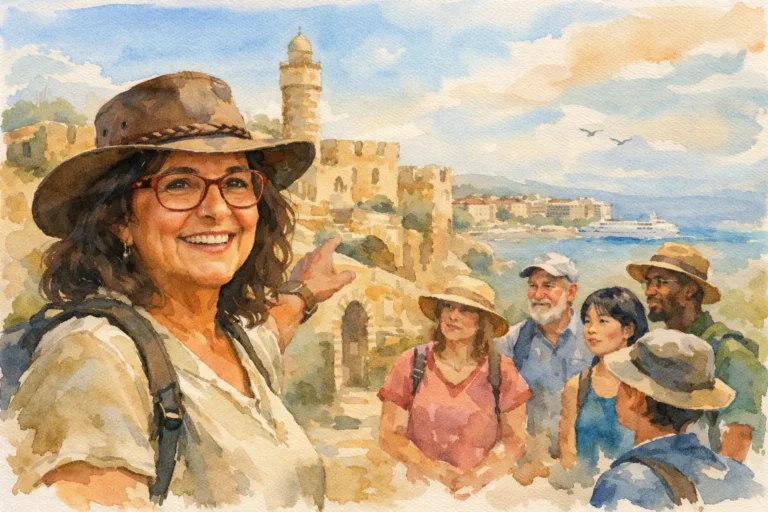
How to Plan Israel Shore Excursions Wisely
A ship arriving in Haifa or Ashdod puts an extraordinary amount of Israel within reach, but a port day is not the same as a land vacation. You may have eight, 10, or 12 hours, yet those hours include disembarkation, driving, security procedures, meals, and the non-negotiable need to return before all aboard. Learning how to plan israel shore excursions begins with one simple shift: choose fewer places, and experience them properly.
Israel is compact on a map but wonderfully dense in real life. A single day can hold a Roman port, an ancient hilltop, a market lunch, a sacred church, a desert overlook, or a conversation that changes how you see the country. The best shore excursion does not try to collect all of them. It creates a day that feels personal, unrushed, and worth remembering after the ship has sailed.
Start With Your Actual Port Hours
Before choosing a destination, look closely at your cruise itinerary. Note the scheduled arrival time, the all-aboard time, whether your ship is docking or using tenders, and whether the itinerary allows for an early departure. Build your day around the ship’s schedule, not around a wish list.
For a private excursion, I recommend allowing time at both ends of the day. Disembarkation can take longer than expected, especially when several thousand guests are leaving at once. Returning to the port 60 to 90 minutes before all aboard gives you a sensible cushion. A good guide will also monitor traffic patterns, holiday closures, weather, and site hours while shaping the route.
Haifa is an excellent starting point for the north: Caesarea, Acre, Nazareth, the Galilee, and the Carmel region may be possibilities, depending on your time ashore. From Ashdod, travelers often look toward Jerusalem, Jaffa, Tel Aviv, or the Judean foothills. Each route has trade-offs. Jerusalem offers immense historical and spiritual depth but deserves sufficient time; a closer coastal route may offer a richer, calmer day for guests with shorter port hours.
How to Plan Israel Shore Excursions Around Your Interests
The most rewarding itinerary starts with a question that standard cruise excursions rarely ask: what do you want to feel, learn, or celebrate today?
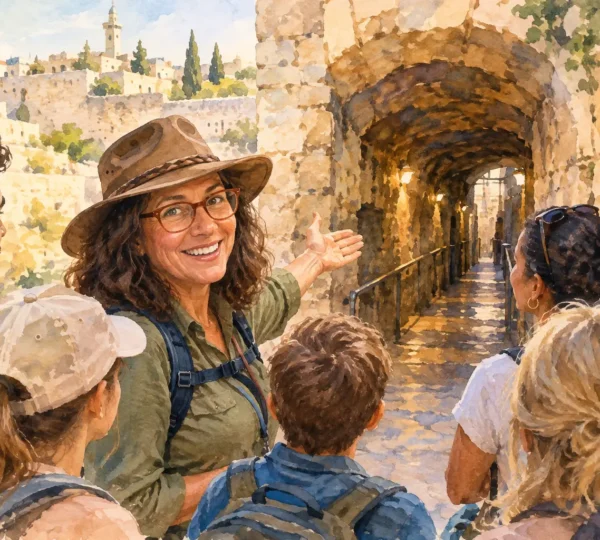
A first-time visitor may dream of standing in Jerusalem’s Old City, following layers of history through its lanes and sacred places. A family might prefer an active day that pairs an archaeological site with a hands-on food experience or an easy nature walk. Travelers returning to Israel may be ready to skip the familiar highlights and spend time in a working farm, an artist’s studio, a small town, or a lesser-known landscape.
Faith and heritage travelers often benefit from choosing a clear focus rather than trying to cover every significant location. A day centered on the Christian Galilee, Jewish heritage, ancient Rome, or a particular family connection has a natural rhythm. You will have time to ask questions, absorb the atmosphere, and notice details that are easily lost in a hurried stop.
For curious travelers without a religious agenda, Israel’s layers are equally compelling. Consider a day shaped around architecture, culinary traditions, archaeology, desert ecology, innovation, or daily life. A private guide can connect these threads in ways that make the country feel human rather than museum-like.
When sharing your interests, be specific. Mention mobility needs, preferred pace, food preferences, whether you enjoy walking, and how much historical detail you want. Also say what you do not enjoy. If long shopping stops, steep climbs, crowded interiors, or lecture-heavy touring are not for you, that information helps create a much better day.
Choose One Anchor and One Complement
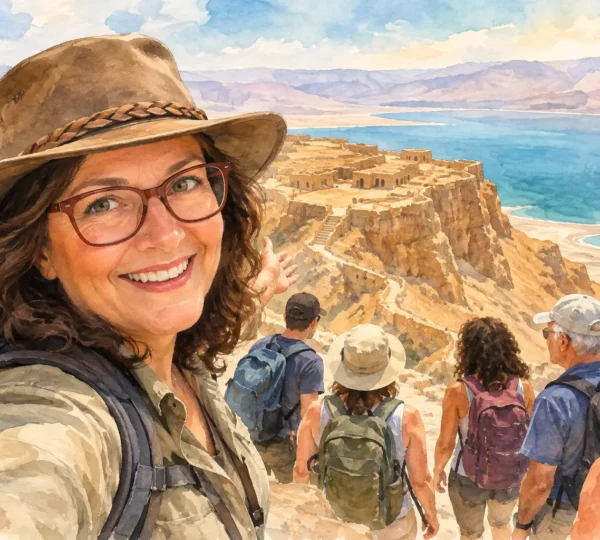
A shore day works best when it has an anchor – the place or experience you would be genuinely disappointed to miss. For some guests, that is Jerusalem. For others, it is Caesarea’s seaside ruins, the dramatic desert road toward Masada and the Dead Sea, or a quiet Galilee view.
Then add one complementary experience that changes the texture of the day. If your anchor is ancient history, the complement could be a market tasting or a relaxed local lunch. If your anchor is a sacred site, add a scenic walk or a small workshop. If you are heading into the desert, a short 4×4 outing or camel experience may suit your group better than trying to add a distant city.
This pairing prevents the common mistake of creating a day made entirely of entrances, exits, parking lots, and photo stops. It also leaves room for the lovely surprises that happen on a private tour: lingering over a view, finding the perfect bakery, or following an unexpected question into a deeper conversation.
Be Honest About Travel Times
A map can make destinations appear closer than they feel on a port day. Driving time is only part of the equation. There are restrooms, parking, security checks, walks from the vehicle to the site, lunch, and the time it takes a group to gather after each stop.
Jerusalem from Ashdod can be a meaningful full-day experience if your ship provides enough time ashore and your itinerary is carefully paced. Trying to combine Jerusalem, Bethlehem-area sites, the Dead Sea, and Tel Aviv in one cruise day, however, turns the experience into a race. The same principle applies in the north: do not assume that Caesarea, Acre, Nazareth, and the Sea of Galilee all belong in one brief visit.
There are exceptions. Guests who have visited before, travel very efficiently, or have a long port call may choose a more ambitious route. Even then, set priorities in order: must-see, would-love-to-see, and only-if-time-allows. A skilled guide can adjust gracefully without making you feel that the day has gone off plan.
Decide Whether Private Touring Is Worth It
A ship-sponsored coach tour offers simplicity and a fixed return arrangement. It may be the right choice for travelers who want the lowest-effort option, are comfortable with a large group, or only want a broad introduction.
A private shore excursion costs more, but it buys something valuable: control of your time. You can begin with the places that matter most to you, adjust walking distances, choose a lunch that fits your tastes, and spend 40 minutes where another traveler might spend 10. For multigenerational families, friends traveling together, and guests with special interests, that flexibility can be the difference between merely seeing Israel and connecting with it.
Private touring is particularly useful when the group has mixed needs. One traveler may want serious archaeology, another may care more about local food, and a teenager may need an active element. The itinerary can include all three without becoming a generic compromise.
At Patchwork Israel, personalized shore days are built around the traveler rather than a fixed route, with the practical port timing always kept firmly in view.
Plan for Comfort, Not Just Sightseeing
Israel can be hot and bright, especially in warmer months, while winter days may bring rain and cooler temperatures. Wear comfortable closed-toe shoes for old stones, uneven paths, and archaeological sites. Bring sun protection, a refillable water bottle, and a light layer for air-conditioned vehicles or hilltop breezes.
Dress respectfully for religious sites. Shoulders and knees should be covered in many locations, and a light scarf or overshirt can make this easy without changing your whole day. If you use a wheelchair, walker, cane, or simply prefer minimal stairs, say so before the route is planned. Many meaningful experiences can be adapted, but not every ancient site has easy access.
Food deserves some advance thought as well. A quick meal saves time, but a good lunch can be part of the experience. Let your guide know about allergies, dietary requirements, and whether a market snack, casual local restaurant, picnic, or sit-down meal sounds best. On a short day, a memorable lunch near your route is usually wiser than detouring across the country for a famous table.
Leave Space for the Unplanned Moment
The most successful Israel shore excursions are carefully organized without feeling overorganized. Your guide should know the timing, backup routes, and closing hours, but you should still have permission to pause. Perhaps you want another few minutes at an overlook, time to photograph an ancient arch, or an unhurried coffee after a fascinating conversation.
That breathing room is what turns a port call into a real encounter with a place. Pick the experience you care about most, build a realistic route around it, and let the rest of the day have a little room to surprise you.

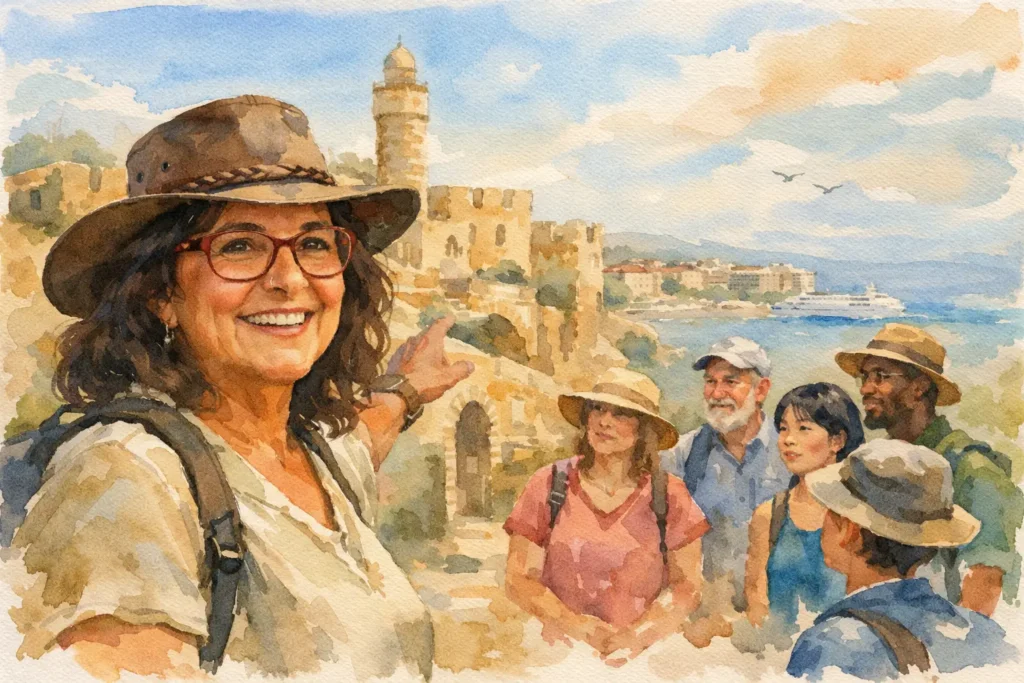
How to Plan Israel Shore Excursions Wisely
A ship arriving in Haifa or Ashdod puts an extraordinary amount of Israel within reach, but a port day is not the same as a land vacation. You may have eight, 10, or 12 hours, yet those hours include disembarkation, driving, security procedures, meals, and the non-negotiable need to return before all aboard. Learning how to plan israel shore excursions begins with one simple shift: choose fewer places, and experience them properly.
Israel is compact on a map but wonderfully dense in real life. A single day can hold a Roman port, an ancient hilltop, a market lunch, a sacred church, a desert overlook, or a conversation that changes how you see the country. The best shore excursion does not try to collect all of them. It creates a day that feels personal, unrushed, and worth remembering after the ship has sailed.
Start With Your Actual Port Hours
Before choosing a destination, look closely at your cruise itinerary. Note the scheduled arrival time, the all-aboard time, whether your ship is docking or using tenders, and whether the itinerary allows for an early departure. Build your day around the ship’s schedule, not around a wish list.
For a private excursion, I recommend allowing time at both ends of the day. Disembarkation can take longer than expected, especially when several thousand guests are leaving at once. Returning to the port 60 to 90 minutes before all aboard gives you a sensible cushion. A good guide will also monitor traffic patterns, holiday closures, weather, and site hours while shaping the route.
Haifa is an excellent starting point for the north: Caesarea, Acre, Nazareth, the Galilee, and the Carmel region may be possibilities, depending on your time ashore. From Ashdod, travelers often look toward Jerusalem, Jaffa, Tel Aviv, or the Judean foothills. Each route has trade-offs. Jerusalem offers immense historical and spiritual depth but deserves sufficient time; a closer coastal route may offer a richer, calmer day for guests with shorter port hours.
How to Plan Israel Shore Excursions Around Your Interests
The most rewarding itinerary starts with a question that standard cruise excursions rarely ask: what do you want to feel, learn, or celebrate today?
A first-time visitor may dream of standing in Jerusalem’s Old City, following layers of history through its lanes and sacred places. A family might prefer an active day that pairs an archaeological site with a hands-on food experience or an easy nature walk. Travelers returning to Israel may be ready to skip the familiar highlights and spend time in a working farm, an artist’s studio, a small town, or a lesser-known landscape.
Faith and heritage travelers often benefit from choosing a clear focus rather than trying to cover every significant location. A day centered on the Christian Galilee, Jewish heritage, ancient Rome, or a particular family connection has a natural rhythm. You will have time to ask questions, absorb the atmosphere, and notice details that are easily lost in a hurried stop.
For curious travelers without a religious agenda, Israel’s layers are equally compelling. Consider a day shaped around architecture, culinary traditions, archaeology, desert ecology, innovation, or daily life. A private guide can connect these threads in ways that make the country feel human rather than museum-like.
When sharing your interests, be specific. Mention mobility needs, preferred pace, food preferences, whether you enjoy walking, and how much historical detail you want. Also say what you do not enjoy. If long shopping stops, steep climbs, crowded interiors, or lecture-heavy touring are not for you, that information helps create a much better day.
Choose One Anchor and One Complement
A shore day works best when it has an anchor – the place or experience you would be genuinely disappointed to miss. For some guests, that is Jerusalem. For others, it is Caesarea’s seaside ruins, the dramatic desert road toward Masada and the Dead Sea, or a quiet Galilee view.
Then add one complementary experience that changes the texture of the day. If your anchor is ancient history, the complement could be a market tasting or a relaxed local lunch. If your anchor is a sacred site, add a scenic walk or a small workshop. If you are heading into the desert, a short 4×4 outing or camel experience may suit your group better than trying to add a distant city.
This pairing prevents the common mistake of creating a day made entirely of entrances, exits, parking lots, and photo stops. It also leaves room for the lovely surprises that happen on a private tour: lingering over a view, finding the perfect bakery, or following an unexpected question into a deeper conversation.
Be Honest About Travel Times
A map can make destinations appear closer than they feel on a port day. Driving time is only part of the equation. There are restrooms, parking, security checks, walks from the vehicle to the site, lunch, and the time it takes a group to gather after each stop.
Jerusalem from Ashdod can be a meaningful full-day experience if your ship provides enough time ashore and your itinerary is carefully paced. Trying to combine Jerusalem, Bethlehem-area sites, the Dead Sea, and Tel Aviv in one cruise day, however, turns the experience into a race. The same principle applies in the north: do not assume that Caesarea, Acre, Nazareth, and the Sea of Galilee all belong in one brief visit.
There are exceptions. Guests who have visited before, travel very efficiently, or have a long port call may choose a more ambitious route. Even then, set priorities in order: must-see, would-love-to-see, and only-if-time-allows. A skilled guide can adjust gracefully without making you feel that the day has gone off plan.
Decide Whether Private Touring Is Worth It
A ship-sponsored coach tour offers simplicity and a fixed return arrangement. It may be the right choice for travelers who want the lowest-effort option, are comfortable with a large group, or only want a broad introduction.
A private shore excursion costs more, but it buys something valuable: control of your time. You can begin with the places that matter most to you, adjust walking distances, choose a lunch that fits your tastes, and spend 40 minutes where another traveler might spend 10. For multigenerational families, friends traveling together, and guests with special interests, that flexibility can be the difference between merely seeing Israel and connecting with it.
Private touring is particularly useful when the group has mixed needs. One traveler may want serious archaeology, another may care more about local food, and a teenager may need an active element. The itinerary can include all three without becoming a generic compromise.
At Patchwork Israel, personalized shore days are built around the traveler rather than a fixed route, with the practical port timing always kept firmly in view.
Plan for Comfort, Not Just Sightseeing
Israel can be hot and bright, especially in warmer months, while winter days may bring rain and cooler temperatures. Wear comfortable closed-toe shoes for old stones, uneven paths, and archaeological sites. Bring sun protection, a refillable water bottle, and a light layer for air-conditioned vehicles or hilltop breezes.
Dress respectfully for religious sites. Shoulders and knees should be covered in many locations, and a light scarf or overshirt can make this easy without changing your whole day. If you use a wheelchair, walker, cane, or simply prefer minimal stairs, say so before the route is planned. Many meaningful experiences can be adapted, but not every ancient site has easy access.
Food deserves some advance thought as well. A quick meal saves time, but a good lunch can be part of the experience. Let your guide know about allergies, dietary requirements, and whether a market snack, casual local restaurant, picnic, or sit-down meal sounds best. On a short day, a memorable lunch near your route is usually wiser than detouring across the country for a famous table.
Leave Space for the Unplanned Moment
The most successful Israel shore excursions are carefully organized without feeling overorganized. Your guide should know the timing, backup routes, and closing hours, but you should still have permission to pause. Perhaps you want another few minutes at an overlook, time to photograph an ancient arch, or an unhurried coffee after a fascinating conversation.
That breathing room is what turns a port call into a real encounter with a place. Pick the experience you care about most, build a realistic route around it, and let the rest of the day have a little room to surprise you.



Get the latest blog updates in your inbox.