
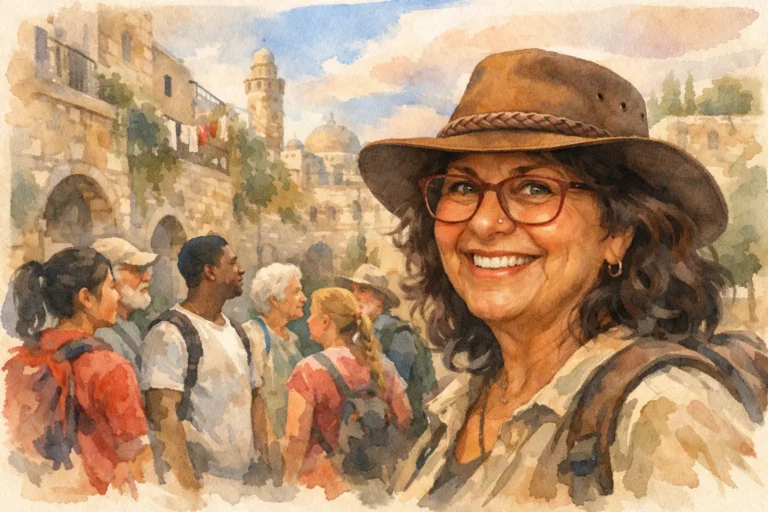
Your Jerusalem Beyond the Landmarks Guide
The best Jerusalem days rarely begin at a gate and end with a photograph. They begin with the aroma of fresh bread from a neighborhood bakery, a question asked over coffee, or a small detail in a stone doorway that changes how you see the street. This Jerusalem beyond the landmarks guide is for travelers who have seen the famous sites, as well as first-time visitors who want their visit to feel personal rather than prepackaged.
Jerusalem holds centuries of memory in a remarkably compact space, but it is also a working city of families, shopkeepers, students, craftspeople, prayer, food, and daily routines. The major landmarks matter. They provide essential context. Yet the richest moments often happen when you allow time around them: an unhurried walk through a market lane, a conversation with someone who knows a neighborhood intimately, or a hands-on activity that gives history a human scale.
Start with a neighborhood, not a checklist
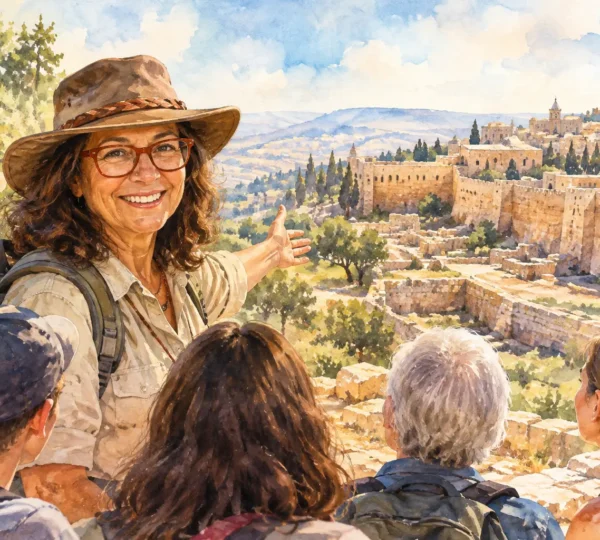
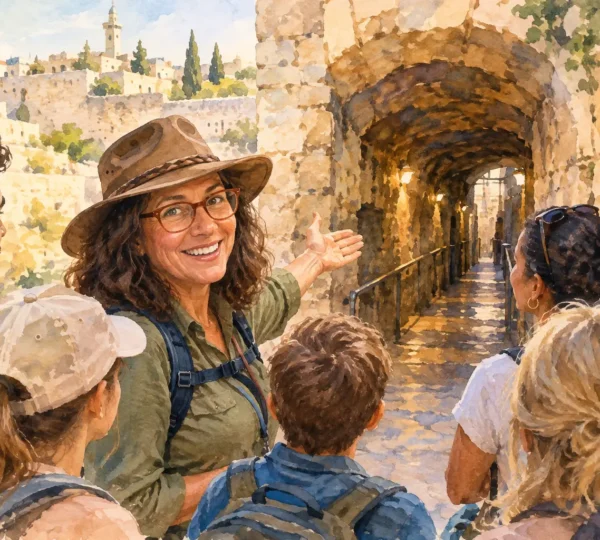
A meaningful day in Jerusalem is often built around one area and one question: what makes life here distinctive? In the Old City, that may mean looking beyond the main routes and noticing how courtyards, workshops, places of worship, and family businesses exist side by side. A guide can help turn an apparently confusing maze into a story of geography, craft, faith, architecture, and everyday life.
Outside the walls, neighborhoods offer an entirely different rhythm. In areas of handsome stone homes and shaded lanes, you can trace the city’s growth beyond its historic core. In a lively market district, the focus may be food, changing tastes, and the rituals of preparing for a weekend or holiday. In an artists’ quarter, a gallery visit or studio conversation can reveal how Jerusalem’s ancient visual language continues to inspire contemporary work.
There is a practical advantage to this approach as well. Jerusalem rewards walking, but its hills and sensory intensity can be tiring. Choosing one or two connected areas allows you to slow down, sit when needed, and leave room for discoveries that a tightly scheduled itinerary misses.
Taste the city at its own pace
Food is not a detour from Jerusalem’s story. It is one of the clearest ways into it. Instead of treating a market as a quick lunch stop, spend time understanding what is being sold and why. Ask about seasonal produce, spice blends, breads, sweets, cheeses, and the family recipes behind a favorite counter. The difference between sampling and learning is often the person guiding the experience.
A private cooking or baking session can be especially rewarding for families, returning visitors, and business travelers with only a few free hours. You leave with more than a meal: you have handled ingredients, heard the stories attached to them, and gained something you can recreate at home. It also gives children and teens an active role in the day, rather than asking them to absorb history while standing still.
Markets change character throughout the week. Morning can be best for a quieter, more observant visit; later in the day brings greater energy and more street-food choices. Timing matters around religious observance and seasonal schedules, so flexibility is more useful than insisting on one fixed plan.
Meet the makers behind the stone walls
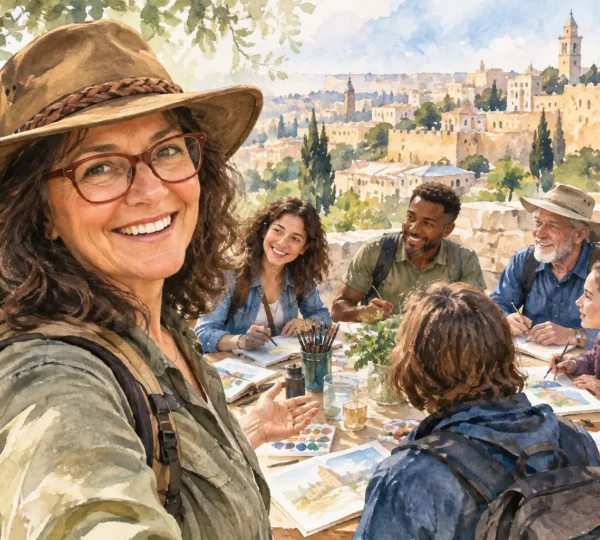
Jerusalem is often described through grand events and sacred geography. Meet the people who make, restore, teach, cook, research, and create here, and the city becomes more immediate. A mosaic workshop, for example, offers a tactile link to the floors and fragments seen in archaeological settings. An artist’s studio can open a conversation about materials, memory, and the challenge of making new work in an old city.
These encounters should feel respectful, never staged. The goal is not to collect a dramatic story. It is to listen, ask thoughtful questions, and understand that Jerusalem contains many lived experiences that cannot be captured by a single viewpoint or a hurried visit.
For travelers interested in ideas as much as scenery, a carefully arranged discussion with an educator, historian, architect, culinary expert, or local entrepreneur can be a highlight. The right conversation depends on your curiosity. One guest may want to understand ancient water systems; another may be fascinated by urban design, contemporary art, or how small food businesses preserve a family tradition.
Let the landscape explain the city
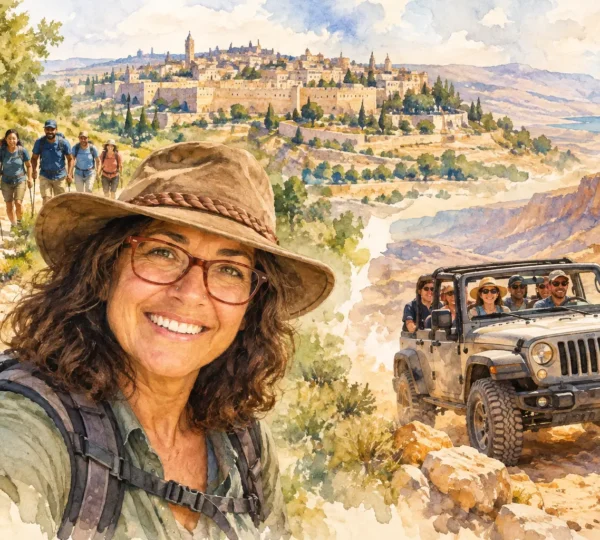
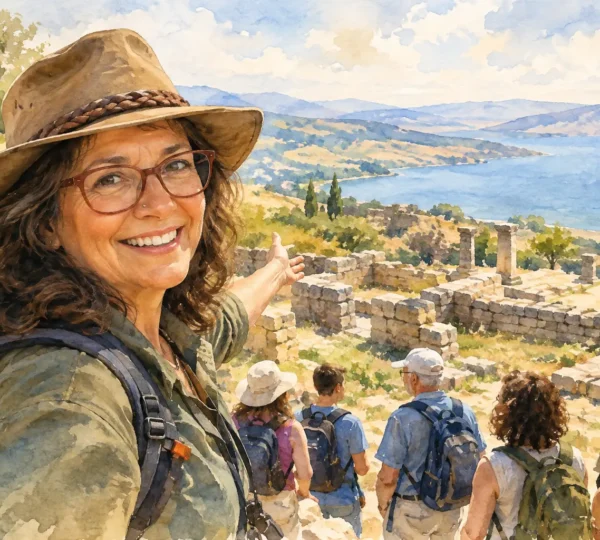
Jerusalem is a city of slopes, ridges, terraces, and unexpectedly close-open views. A walk on one of its surrounding nature trails can add perspective after hours spent in narrow streets. You may find wild herbs in season, old agricultural terraces, pine-covered hillsides, birds overhead, and vistas that clarify why the city developed where it did.
This is where a hiking guide’s local knowledge becomes particularly valuable. The most appropriate route depends on weather, fitness, daylight, footwear, and the pace of your group. A short, gentle walk can suit grandparents and younger children; a longer hike can give active travelers a satisfying half-day outdoors. In hotter months, an early start is usually the sensible choice, while winter calls for attention to rain and trail conditions.
A nature outing need not compete with heritage sightseeing. Pairing a morning walk with a relaxed neighborhood lunch, a small museum, or a culinary activity can create a day with far more texture than landmark after landmark.
Build in time for what cannot be scheduled
The most common mistake on a Jerusalem itinerary is trying to fit too much into one day. Even a short distance can take time when a street invites a closer look, a place of worship has its own visitor expectations, or a compelling conversation develops. Overplanning turns these moments into inconveniences. A well-designed private tour treats them as part of the experience.
Leave space for a favorite shop to become a longer stop. Let a child follow the scent of roasted nuts. Pause at a viewpoint when the light changes. If you are visiting for personal heritage or faith, allow quiet time rather than moving immediately to the next site. These are not empty gaps. They are often where the city settles in.
Comfort and etiquette also shape a good day. Jerusalem has areas where modest clothing is appreciated or required, uneven stone surfaces that call for supportive shoes, and times when businesses or venues may close. An experienced licensed guide can prepare you for these details without making the day feel overly managed.
A Jerusalem beyond the landmarks guide for returning visitors
Returning visitors have a special advantage: they can give themselves permission to go deeper. Perhaps you have already stood at the classic viewpoints and visited the best-known sacred places. This time, follow a theme. Spend a morning with the city’s food traditions, trace changing architecture outside the Old City, explore a lesser-known archaeological layer, or combine a workshop with an easy nature walk.
For a couple, that may mean a leisurely food-focused afternoon and an intimate evening stroll. For a multigenerational family, it may mean balancing stories, hands-on activities, shade, and frequent breaks. For a professional group with limited time, a focused two- or three-hour experience can still be meaningful when it is shaped around a real interest rather than a generic highlights tour.
At Patchwork Israel, a personalized Jerusalem day begins with those choices: what you already know, what you want to understand, how far you want to walk, and which kinds of encounters stay with you. The landmarks can anchor the day, but they do not have to define all of it.
Before you arrive, choose one thing you would like to feel rather than merely see. It might be the warmth of a bakery, the quiet of a hillside path, the concentration of an artisan at work, or the satisfaction of finding your own corner of a city that never reveals itself all at once.

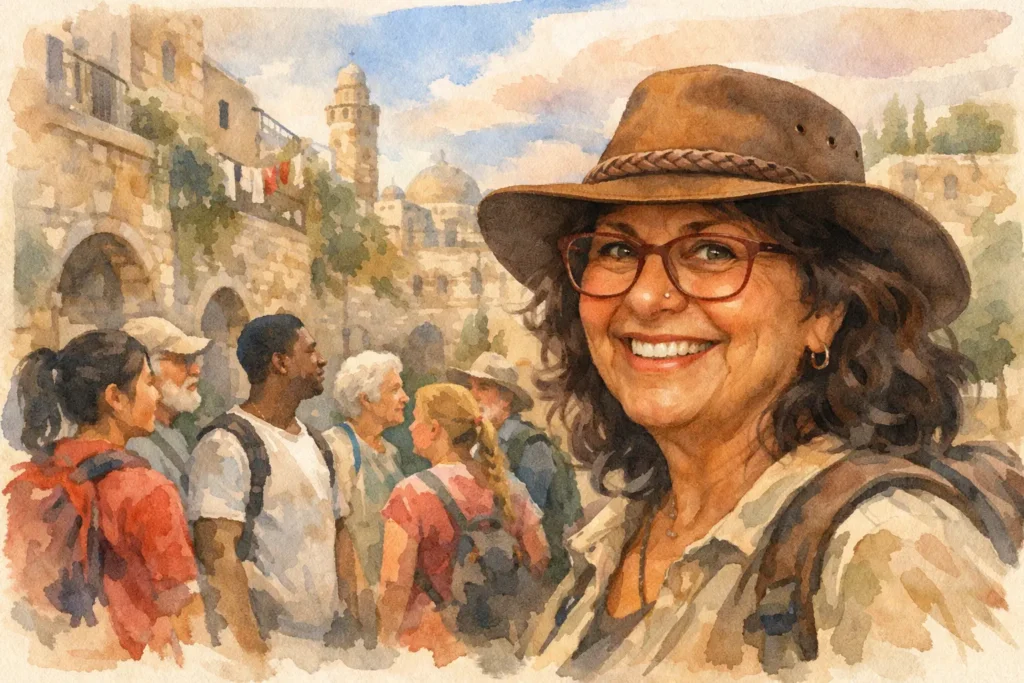
Your Jerusalem Beyond the Landmarks Guide
The best Jerusalem days rarely begin at a gate and end with a photograph. They begin with the aroma of fresh bread from a neighborhood bakery, a question asked over coffee, or a small detail in a stone doorway that changes how you see the street. This Jerusalem beyond the landmarks guide is for travelers who have seen the famous sites, as well as first-time visitors who want their visit to feel personal rather than prepackaged.
Jerusalem holds centuries of memory in a remarkably compact space, but it is also a working city of families, shopkeepers, students, craftspeople, prayer, food, and daily routines. The major landmarks matter. They provide essential context. Yet the richest moments often happen when you allow time around them: an unhurried walk through a market lane, a conversation with someone who knows a neighborhood intimately, or a hands-on activity that gives history a human scale.
Start with a neighborhood, not a checklist
A meaningful day in Jerusalem is often built around one area and one question: what makes life here distinctive? In the Old City, that may mean looking beyond the main routes and noticing how courtyards, workshops, places of worship, and family businesses exist side by side. A guide can help turn an apparently confusing maze into a story of geography, craft, faith, architecture, and everyday life.
Outside the walls, neighborhoods offer an entirely different rhythm. In areas of handsome stone homes and shaded lanes, you can trace the city’s growth beyond its historic core. In a lively market district, the focus may be food, changing tastes, and the rituals of preparing for a weekend or holiday. In an artists’ quarter, a gallery visit or studio conversation can reveal how Jerusalem’s ancient visual language continues to inspire contemporary work.
There is a practical advantage to this approach as well. Jerusalem rewards walking, but its hills and sensory intensity can be tiring. Choosing one or two connected areas allows you to slow down, sit when needed, and leave room for discoveries that a tightly scheduled itinerary misses.
Taste the city at its own pace
Food is not a detour from Jerusalem’s story. It is one of the clearest ways into it. Instead of treating a market as a quick lunch stop, spend time understanding what is being sold and why. Ask about seasonal produce, spice blends, breads, sweets, cheeses, and the family recipes behind a favorite counter. The difference between sampling and learning is often the person guiding the experience.
A private cooking or baking session can be especially rewarding for families, returning visitors, and business travelers with only a few free hours. You leave with more than a meal: you have handled ingredients, heard the stories attached to them, and gained something you can recreate at home. It also gives children and teens an active role in the day, rather than asking them to absorb history while standing still.
Markets change character throughout the week. Morning can be best for a quieter, more observant visit; later in the day brings greater energy and more street-food choices. Timing matters around religious observance and seasonal schedules, so flexibility is more useful than insisting on one fixed plan.
Meet the makers behind the stone walls
Jerusalem is often described through grand events and sacred geography. Meet the people who make, restore, teach, cook, research, and create here, and the city becomes more immediate. A mosaic workshop, for example, offers a tactile link to the floors and fragments seen in archaeological settings. An artist’s studio can open a conversation about materials, memory, and the challenge of making new work in an old city.
These encounters should feel respectful, never staged. The goal is not to collect a dramatic story. It is to listen, ask thoughtful questions, and understand that Jerusalem contains many lived experiences that cannot be captured by a single viewpoint or a hurried visit.
For travelers interested in ideas as much as scenery, a carefully arranged discussion with an educator, historian, architect, culinary expert, or local entrepreneur can be a highlight. The right conversation depends on your curiosity. One guest may want to understand ancient water systems; another may be fascinated by urban design, contemporary art, or how small food businesses preserve a family tradition.
Let the landscape explain the city
Jerusalem is a city of slopes, ridges, terraces, and unexpectedly close-open views. A walk on one of its surrounding nature trails can add perspective after hours spent in narrow streets. You may find wild herbs in season, old agricultural terraces, pine-covered hillsides, birds overhead, and vistas that clarify why the city developed where it did.
This is where a hiking guide’s local knowledge becomes particularly valuable. The most appropriate route depends on weather, fitness, daylight, footwear, and the pace of your group. A short, gentle walk can suit grandparents and younger children; a longer hike can give active travelers a satisfying half-day outdoors. In hotter months, an early start is usually the sensible choice, while winter calls for attention to rain and trail conditions.
A nature outing need not compete with heritage sightseeing. Pairing a morning walk with a relaxed neighborhood lunch, a small museum, or a culinary activity can create a day with far more texture than landmark after landmark.
Build in time for what cannot be scheduled
The most common mistake on a Jerusalem itinerary is trying to fit too much into one day. Even a short distance can take time when a street invites a closer look, a place of worship has its own visitor expectations, or a compelling conversation develops. Overplanning turns these moments into inconveniences. A well-designed private tour treats them as part of the experience.
Leave space for a favorite shop to become a longer stop. Let a child follow the scent of roasted nuts. Pause at a viewpoint when the light changes. If you are visiting for personal heritage or faith, allow quiet time rather than moving immediately to the next site. These are not empty gaps. They are often where the city settles in.
Comfort and etiquette also shape a good day. Jerusalem has areas where modest clothing is appreciated or required, uneven stone surfaces that call for supportive shoes, and times when businesses or venues may close. An experienced licensed guide can prepare you for these details without making the day feel overly managed.
A Jerusalem beyond the landmarks guide for returning visitors
Returning visitors have a special advantage: they can give themselves permission to go deeper. Perhaps you have already stood at the classic viewpoints and visited the best-known sacred places. This time, follow a theme. Spend a morning with the city’s food traditions, trace changing architecture outside the Old City, explore a lesser-known archaeological layer, or combine a workshop with an easy nature walk.
For a couple, that may mean a leisurely food-focused afternoon and an intimate evening stroll. For a multigenerational family, it may mean balancing stories, hands-on activities, shade, and frequent breaks. For a professional group with limited time, a focused two- or three-hour experience can still be meaningful when it is shaped around a real interest rather than a generic highlights tour.
At Patchwork Israel, a personalized Jerusalem day begins with those choices: what you already know, what you want to understand, how far you want to walk, and which kinds of encounters stay with you. The landmarks can anchor the day, but they do not have to define all of it.
Before you arrive, choose one thing you would like to feel rather than merely see. It might be the warmth of a bakery, the quiet of a hillside path, the concentration of an artisan at work, or the satisfaction of finding your own corner of a city that never reveals itself all at once.
Get the latest blog updates in your inbox.