How to Meet Local Communities in Israel
The moment many travelers remember most in Israel is not standing at a famous site. It is the conversation afterward – over coffee in a village, bread in a family kitchen, tea in the desert, or a walk with someone whose daily life gives that place texture and meaning. If you want to meet local communities in Israel, the real shift is this: stop thinking only in terms of attractions and start thinking in terms of people.
That approach changes the whole trip. Israel is small, but it holds remarkable variety across geography, faith traditions, food cultures, languages, and ways of life. In one well-planned journey, you can move from urban creative spaces to agricultural communities, from desert hospitality to religious neighborhoods, from culinary workshops to conversations with artists, academics, clergy, or farmers. The experience becomes less like checking off sites and more like understanding how the country is actually lived.
Why meeting local communities in Israel matters
The major landmarks absolutely deserve their place on an itinerary. Jerusalem, Jaffa, Caesarea, Masada, the Dead Sea, and Tel Aviv can be powerful and memorable. But for many travelers, especially those who have already seen the classic highlights, the next layer is what makes the trip feel personal.
Meeting communities adds context that no signboard can provide. A Druze host explaining local food traditions, a farmer speaking about the rhythm of the land, an artisan demonstrating mosaic work, or a culinary expert opening a kitchen to guests gives you something richer than information. You begin to notice how history, belief, landscape, and everyday life intersect.
This is also why these encounters appeal to such a wide range of visitors. People of all faiths, ideas and lifestyles often arrive with different interests, but meaningful person-to-person experiences speak to all of them. Some want faith context. Some want culture. Some want food, hiking, architecture, or innovation. The right community experience can hold all of that together.
The best ways to meet local communities in Israel
There is no single best format. It depends on your pace, interests, comfort level, and whether this is a first visit or a return trip.
Start with shared activities, not formal meetings
For many travelers, the easiest and most natural entry point is a shared activity. A baking session, home cooking experience, foraging outing, mosaic workshop, vineyard visit, or farm-based activity creates conversation without pressure. You are doing something together, which makes the interaction feel genuine rather than staged.
This works especially well for families and mixed-interest groups. One person may come for the food, another for the cultural learning, and someone else simply enjoys the hands-on format. Everyone leaves with more than they expected.
Use food as a cultural bridge
Food is often the most immediate way into community life. Markets are one piece of that, but a meal or tasting with local hosts usually goes further. Ingredients, preparation methods, holiday traditions, hospitality customs, and family stories all come through naturally at the table.
In Israel, culinary encounters can vary widely by region and community. That is part of the appeal. The flavors shift, the stories shift, and your sense of place becomes much sharper when you taste it as well as see it.
Visit working places, not only visitor sites
If you want depth, spend time where people actually work and create. Farms, wineries, studios, research settings, small businesses, kitchens, and community spaces often reveal more than polished tourist stops. Depending on your interests, that could mean time with people in agriculture, high tech, agri-tech, architecture, art, education, or local crafts.
These visits are especially valuable for repeat travelers. If you have already done the broad overview trip, this is where Israel starts to feel less familiar in the best possible way.
Where these encounters can happen
One of the pleasures of a customized trip is that community experiences can be woven into very different settings.
In Jerusalem, meaningful encounters might center on faith, history, scholarship, food traditions, or neighborhood life. In Tel Aviv and Jaffa, you may lean toward creative communities, culinary scenes, architecture, innovation, or small-scale cultural spaces. In the Galilee, village hospitality, farming, hiking, and regional cuisine can come together beautifully. In the desert, Bedouin hospitality and outdoor experiences often create the kind of memory that stays with people for years.
The setting matters because it shapes the tone of the interaction. A home visit feels different from a workshop. A desert conversation feels different from a city walk. A clergy discussion brings one kind of insight, while a session with an archaeologist or historian brings another. None is automatically better. The right fit depends on what you want to feel and understand.
How to meet local communities in Israel respectfully
Good community-based travel is not only about collecting unusual encounters. It is about showing up with curiosity and respect.
That starts with expectations. Not every community visit should feel highly emotional or deeply intimate. Sometimes the best experience is simply a thoughtful conversation, a shared meal, or an honest look at someone else’s daily routine. If you go in demanding a dramatic moment, you can miss the quieter ones that are often more real.
It also helps to be flexible. Dress norms may differ by setting. Timing may be shaped by prayer schedules, family rhythms, agricultural work, or local customs. Some hosts are naturally expansive, others more reserved. A skilled guide helps travelers read these nuances so the experience feels comfortable for everyone.
Questions matter too. Most local hosts appreciate genuine interest, especially when questions are open-ended and grounded in daily life, tradition, food, craft, work, or values. The goal is exchange, not interrogation.
Why guided access makes all the difference
This is where many travelers underestimate the difference between independent travel and curated travel. You can absolutely visit places on your own, but it is much harder to build the kind of access that leads to meaningful community encounters.
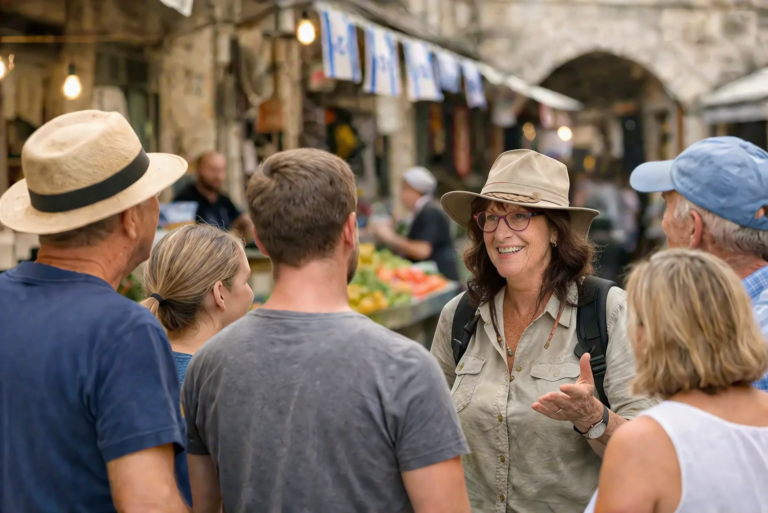
A well-connected guide does more than arrange logistics. She understands which hosts are a strong match for your interests, how to sequence a day so it feels natural, how long to spend in each setting, and how to create trust on both sides. That matters whether you are meeting women entrepreneurs, clergy, artists, farmers, Bedouin hosts, culinary experts, archaeologists, academics, or families in diverse social settings.
It also helps avoid the common mistake of overpacking the itinerary. Community visits need breathing room. If every hour is scheduled like a race between landmarks, there is no space for conversation, reflection, or the unexpected detail that turns a good day into a memorable one.
That is especially true for travelers with layered interests. Maybe you want some major sites, but also hiking, food, and personal encounters. Maybe your family includes heritage-focused adults, teenagers who want active experiences, and grandparents who care most about comfort and depth. A personalized approach lets those pieces work together instead of competing.
Who this kind of travel suits best
Travelers often assume community-based experiences are only for highly academic visitors or people on long specialty trips. Not at all. They work beautifully for first-time visitors who want context from the start, and for return visitors who are ready for hidden gems and a deeper view.
They also suit different travel styles. Faith-based travelers may want discussions with clergy or visits tied to religious life. Food lovers may prefer kitchens, markets, vineyards, and farms. Adventure travelers may connect best through desert hospitality, hiking, camel riding, sailing, or off-road experiences. Families often do especially well when cultural interaction is paired with an activity.
For many guests, the sweet spot is a balanced itinerary. See the places you came to see, then make room for the people who help those places come alive.
A company such as Patchwork Israel can shape that balance in a way that feels personal rather than packaged. That is often the difference between a trip you enjoyed and a trip you still talk about years later.
Let the trip be shaped by people
If your goal is to meet local communities in Israel, the smartest starting point is not asking, What should I see? It is asking, Who would I like to meet, and what kind of experience would help me connect?
Maybe that means sharing a meal with local hosts, spending time in a village, meeting a faith leader, learning from a farmer, joining a workshop, or combining a classic site with a conversation that gives it fresh meaning. Israel offers all of those possibilities, but the best ones rarely happen by accident.
Leave some room in your itinerary for human texture. The landmarks will still matter. They simply matter more when someone opens the door and lets you experience the life around them.

How to Meet Local Communities in Israel
The moment many travelers remember most in Israel is not standing at a famous site. It is the conversation afterward – over coffee in a village, bread in a family kitchen, tea in the desert, or a walk with someone whose daily life gives that place texture and meaning. If you want to meet local communities in Israel, the real shift is this: stop thinking only in terms of attractions and start thinking in terms of people.
That approach changes the whole trip. Israel is small, but it holds remarkable variety across geography, faith traditions, food cultures, languages, and ways of life. In one well-planned journey, you can move from urban creative spaces to agricultural communities, from desert hospitality to religious neighborhoods, from culinary workshops to conversations with artists, academics, clergy, or farmers. The experience becomes less like checking off sites and more like understanding how the country is actually lived.
Why meeting local communities in Israel matters
The major landmarks absolutely deserve their place on an itinerary. Jerusalem, Jaffa, Caesarea, Masada, the Dead Sea, and Tel Aviv can be powerful and memorable. But for many travelers, especially those who have already seen the classic highlights, the next layer is what makes the trip feel personal.
Meeting communities adds context that no signboard can provide. A Druze host explaining local food traditions, a farmer speaking about the rhythm of the land, an artisan demonstrating mosaic work, or a culinary expert opening a kitchen to guests gives you something richer than information. You begin to notice how history, belief, landscape, and everyday life intersect.
This is also why these encounters appeal to such a wide range of visitors. People of all faiths, ideas and lifestyles often arrive with different interests, but meaningful person-to-person experiences speak to all of them. Some want faith context. Some want culture. Some want food, hiking, architecture, or innovation. The right community experience can hold all of that together.
The best ways to meet local communities in Israel
There is no single best format. It depends on your pace, interests, comfort level, and whether this is a first visit or a return trip.
Start with shared activities, not formal meetings
For many travelers, the easiest and most natural entry point is a shared activity. A baking session, home cooking experience, foraging outing, mosaic workshop, vineyard visit, or farm-based activity creates conversation without pressure. You are doing something together, which makes the interaction feel genuine rather than staged.
This works especially well for families and mixed-interest groups. One person may come for the food, another for the cultural learning, and someone else simply enjoys the hands-on format. Everyone leaves with more than they expected.
Use food as a cultural bridge
Food is often the most immediate way into community life. Markets are one piece of that, but a meal or tasting with local hosts usually goes further. Ingredients, preparation methods, holiday traditions, hospitality customs, and family stories all come through naturally at the table.
In Israel, culinary encounters can vary widely by region and community. That is part of the appeal. The flavors shift, the stories shift, and your sense of place becomes much sharper when you taste it as well as see it.
Visit working places, not only visitor sites
If you want depth, spend time where people actually work and create. Farms, wineries, studios, research settings, small businesses, kitchens, and community spaces often reveal more than polished tourist stops. Depending on your interests, that could mean time with people in agriculture, high tech, agri-tech, architecture, art, education, or local crafts.
These visits are especially valuable for repeat travelers. If you have already done the broad overview trip, this is where Israel starts to feel less familiar in the best possible way.
Where these encounters can happen
One of the pleasures of a customized trip is that community experiences can be woven into very different settings.
In Jerusalem, meaningful encounters might center on faith, history, scholarship, food traditions, or neighborhood life. In Tel Aviv and Jaffa, you may lean toward creative communities, culinary scenes, architecture, innovation, or small-scale cultural spaces. In the Galilee, village hospitality, farming, hiking, and regional cuisine can come together beautifully. In the desert, Bedouin hospitality and outdoor experiences often create the kind of memory that stays with people for years.
The setting matters because it shapes the tone of the interaction. A home visit feels different from a workshop. A desert conversation feels different from a city walk. A clergy discussion brings one kind of insight, while a session with an archaeologist or historian brings another. None is automatically better. The right fit depends on what you want to feel and understand.
How to meet local communities in Israel respectfully
Good community-based travel is not only about collecting unusual encounters. It is about showing up with curiosity and respect.
That starts with expectations. Not every community visit should feel highly emotional or deeply intimate. Sometimes the best experience is simply a thoughtful conversation, a shared meal, or an honest look at someone else’s daily routine. If you go in demanding a dramatic moment, you can miss the quieter ones that are often more real.
It also helps to be flexible. Dress norms may differ by setting. Timing may be shaped by prayer schedules, family rhythms, agricultural work, or local customs. Some hosts are naturally expansive, others more reserved. A skilled guide helps travelers read these nuances so the experience feels comfortable for everyone.
Questions matter too. Most local hosts appreciate genuine interest, especially when questions are open-ended and grounded in daily life, tradition, food, craft, work, or values. The goal is exchange, not interrogation.
Why guided access makes all the difference
This is where many travelers underestimate the difference between independent travel and curated travel. You can absolutely visit places on your own, but it is much harder to build the kind of access that leads to meaningful community encounters.
A well-connected guide does more than arrange logistics. She understands which hosts are a strong match for your interests, how to sequence a day so it feels natural, how long to spend in each setting, and how to create trust on both sides. That matters whether you are meeting women entrepreneurs, clergy, artists, farmers, Bedouin hosts, culinary experts, archaeologists, academics, or families in diverse social settings.
It also helps avoid the common mistake of overpacking the itinerary. Community visits need breathing room. If every hour is scheduled like a race between landmarks, there is no space for conversation, reflection, or the unexpected detail that turns a good day into a memorable one.
That is especially true for travelers with layered interests. Maybe you want some major sites, but also hiking, food, and personal encounters. Maybe your family includes heritage-focused adults, teenagers who want active experiences, and grandparents who care most about comfort and depth. A personalized approach lets those pieces work together instead of competing.
Who this kind of travel suits best
Travelers often assume community-based experiences are only for highly academic visitors or people on long specialty trips. Not at all. They work beautifully for first-time visitors who want context from the start, and for return visitors who are ready for hidden gems and a deeper view.
They also suit different travel styles. Faith-based travelers may want discussions with clergy or visits tied to religious life. Food lovers may prefer kitchens, markets, vineyards, and farms. Adventure travelers may connect best through desert hospitality, hiking, camel riding, sailing, or off-road experiences. Families often do especially well when cultural interaction is paired with an activity.
For many guests, the sweet spot is a balanced itinerary. See the places you came to see, then make room for the people who help those places come alive.
A company such as Patchwork Israel can shape that balance in a way that feels personal rather than packaged. That is often the difference between a trip you enjoyed and a trip you still talk about years later.
Let the trip be shaped by people
If your goal is to meet local communities in Israel, the smartest starting point is not asking, What should I see? It is asking, Who would I like to meet, and what kind of experience would help me connect?
Maybe that means sharing a meal with local hosts, spending time in a village, meeting a faith leader, learning from a farmer, joining a workshop, or combining a classic site with a conversation that gives it fresh meaning. Israel offers all of those possibilities, but the best ones rarely happen by accident.
Leave some room in your itinerary for human texture. The landmarks will still matter. They simply matter more when someone opens the door and lets you experience the life around them.
Get the latest blog updates in your inbox.