
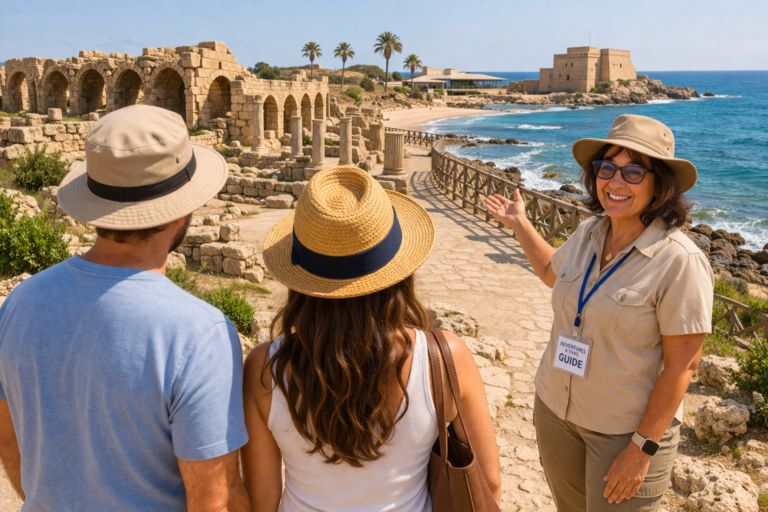
How to Plan a Caesarea Tour
If you arrive at Caesarea expecting a quick walk past old stones, this site will surprise you. A well-planned Caesarea tour can feel like a compact course in Roman engineering, biblical background, Crusader history, coastal geography, and the many layers that make Israel so compelling to travel through.
That is exactly why Caesarea works so well for so many kinds of travelers. It appeals to history lovers, faith-based visitors, families, return travelers who want more than the usual checklist, and curious guests from Jewish, Christian, Muslim, and non-religious backgrounds who want context, not just scenery.
Why a Caesarea tour deserves real time
Caesarea is not one monument. It is a full archaeological landscape set along the Mediterranean, and the site only really makes sense when someone helps connect its parts. The theater, hippodrome, palace area, harbor remains, Crusader walls, and later fortifications are all impressive on their own, but they tell a much better story together.
This is one of those places where pacing matters. If you rush, you see ruins. If you slow down with a guide who knows how to read the terrain, you begin to understand how a grand port city was imagined, built, expanded, reused, and reshaped over centuries.
For many visitors, that shift is the difference between a nice stop and a memorable day.
What you actually see on a Caesarea tour
The most famous first impression is often the Roman theater. It is beautifully positioned near the sea, and it gives immediate scale to the city’s ambition. Standing there, it is easy to picture performance, ceremony, and public life in a place that was designed to impress.
From there, many tours move toward the palace and harbor area. This part of Caesarea tends to stay with people because it combines archaeology with the coastline itself. You are not looking at ruins in isolation. You are seeing how architecture, trade, power, and landscape worked together.
The hippodrome adds a different energy. It opens a conversation about entertainment, competition, and public spectacle in the Roman world and includes its own public latrine with a view of the spectacle. Families often connect with the hippodrome quickly because the space is easy to imagine in motion.
The Crusader city introduces another layer entirely. The walls, gateways, and enclosed spaces create a different mood from the earlier Roman remains. That contrast is one of Caesarea’s strengths. You are not visiting a site frozen in one period. You are walking through a place that kept being claimed, adapted, and reinterpreted.
The value of context at Caesarea
Some sites are visually dramatic even without explanation. Caesarea is certainly beautiful, but it becomes much richer with interpretation. The harbor matters more when you understand its technical significance. The palace feels different when you notice its relationship to the sea. The Crusader remains become more meaningful when you compare them with the earlier urban plan.
This is especially true for travelers who have visited Israel before and want a deeper read of the country’s heritage. Caesarea rewards questions. It is not just about what happened here. It is about why this location mattered so much, and why it continued to matter over time.
Best timing for a Caesarea tour
Morning is often the smartest choice, especially in warmer months. The light is softer, the walking is more comfortable, and the site feels calmer before the day fills out. If you like photography, the coastline and stonework are particularly appealing earlier in the day.
That said, timing depends on what kind of day you want. If Caesarea is your main destination, you can give it a generous half day and move at a thoughtful pace. If it is part of a larger coastal itinerary, it can combine very well with places such as Jaffa, Tel Aviv, or other northern stops. The trade-off is depth. The more you combine, the more selective you need to be at each site.
A private tour helps here because not every traveler wants the same balance. Some guests want archaeology in depth. Others want a broader day with history, sea views, food, and one or two additional stops. Both approaches can work.
How long should you spend there?
For most visitors, two to three hours is a strong baseline for the ruins themselves. That gives enough time to move through the major sections without turning the visit into a blur. If you are especially interested in archaeology, biblical connections, Roman history, or layered urban development, you may want longer.
Families with children sometimes do better with a focused visit rather than the longest possible one. The site is open and engaging, but younger travelers usually benefit from clear storytelling and purposeful movement. On the other hand, adults who enjoy historical detail often appreciate extra time to stop, ask questions, and compare periods.
This is where customization matters. A couple celebrating a special trip will likely tour differently than a multi-generational family or a group of repeat visitors looking for lesser-known angles.
Making your Caesarea tour part of a bigger day
One of Caesarea’s real advantages is its flexibility. It can stand on its own, or it can anchor a broader day built around your interests.
If you love heritage and archaeology, Caesarea pairs naturally with other historic sites. If you are more interested in culture and atmosphere, you might combine it with a coastal town, a food stop, or a conversation that adds modern local texture to the day. If you are returning to Israel and have already seen many of the standard highlights, Caesarea can also be the starting point for a more personalized route with hidden gems in between.
That is often where a guide adds the most value. Not just in explaining the ruins, but in shaping the day around what will feel meaningful to you. Some travelers want more Christian historical context. Some are fascinated by Roman infrastructure. Some want a mix of ancient sites and present-day daily life. There is no single correct formula.
What to wear and bring
Caesarea is an outdoor site, and comfort matters more than people sometimes expect. Good walking shoes are worth it because the terrain changes underfoot. Sun protection is essential, especially from late spring through early fall. Water is not optional.
A hat, light layers, and comfortable clothing usually make the visit much more pleasant. If you are building Caesarea into a full-day itinerary, think practically rather than dressy. The site invites walking, pausing, and looking closely.
Who enjoys this site most?
Caesarea has broad appeal, but it is especially rewarding for travelers who enjoy stories told through place. You do not need to be an archaeology specialist to appreciate it. You just need a little curiosity and enough time to let the site unfold.
It is also an excellent choice for people who want an Israel experience that feels layered rather than rushed. That includes first-time visitors and repeat travelers alike. For repeat guests especially, Caesarea often becomes more interesting, not less, because they can place it within a wider understanding of the country.
Why private guiding changes the experience
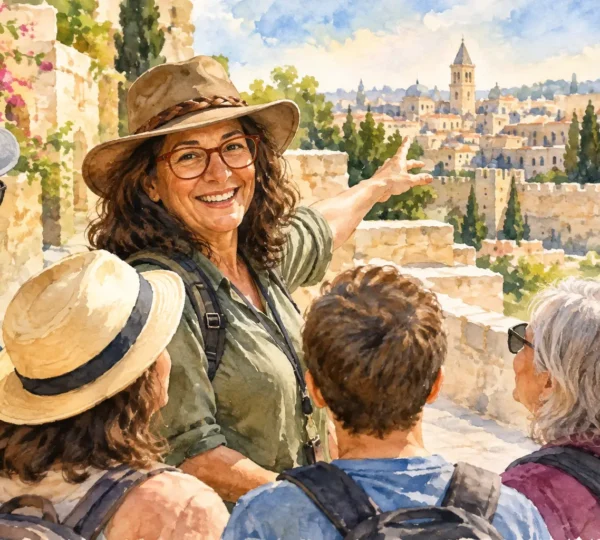
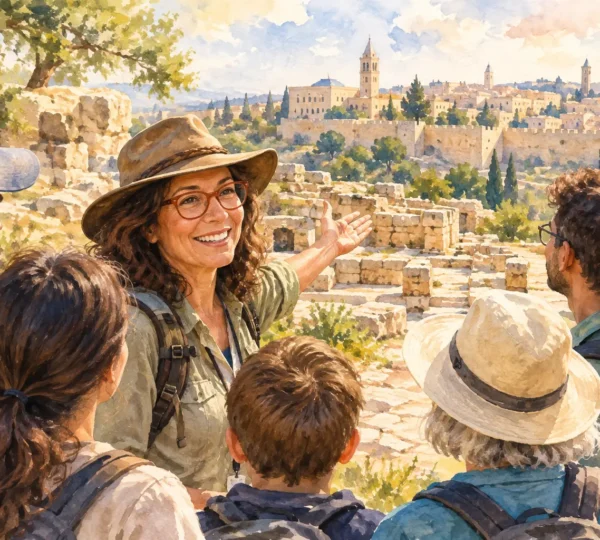
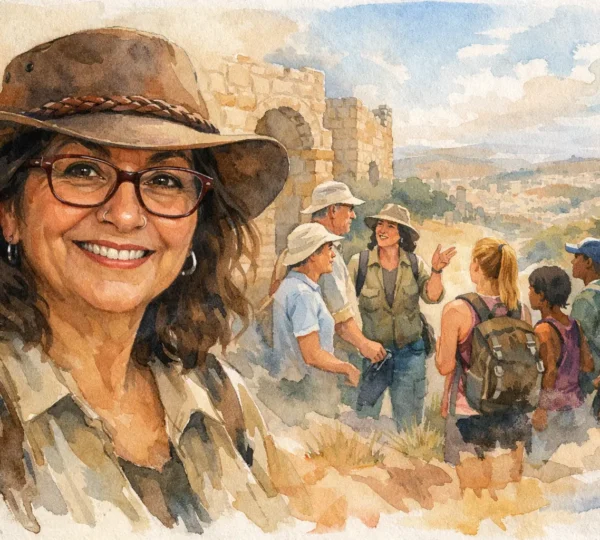
A self-guided visit can certainly be enjoyable, but Caesarea is one of those sites where expert guiding changes the texture of the day. A good guide helps you notice what you would otherwise pass by. More than that, she shapes the visit around your interests, your pace, and the kind of questions you naturally ask.
That personal approach is especially valuable when a group includes different generations or different knowledge levels. One person may be drawn to faith history, another to architecture, another to the sheer beauty of the coast. A guided experience can hold all of that together without making the day feel scattered.
At Patchwork Israel Tours, that is very much the point – not a one-size-fits-all script, but a curated day that turns a famous site into your own meaningful experience.
A few smart expectations before you go
Caesarea is polished and accessible, but it is still an archaeological site. Parts are expansive, some sections feel exposed to sun and wind, and not every traveler will want the same depth of explanation. That is not a drawback. It simply means the best tour is the one planned around your style.
If you like quick highlights, you can absolutely enjoy Caesarea. If you prefer nuance, this site can give you plenty of that too. The key is not to treat it as just another stop between bigger names. Caesarea has enough presence and complexity to carry a day, or at least to become the part of the day you remember most.
Give it a little room, bring your curiosity, and let the stones do more than sit quietly by the sea.

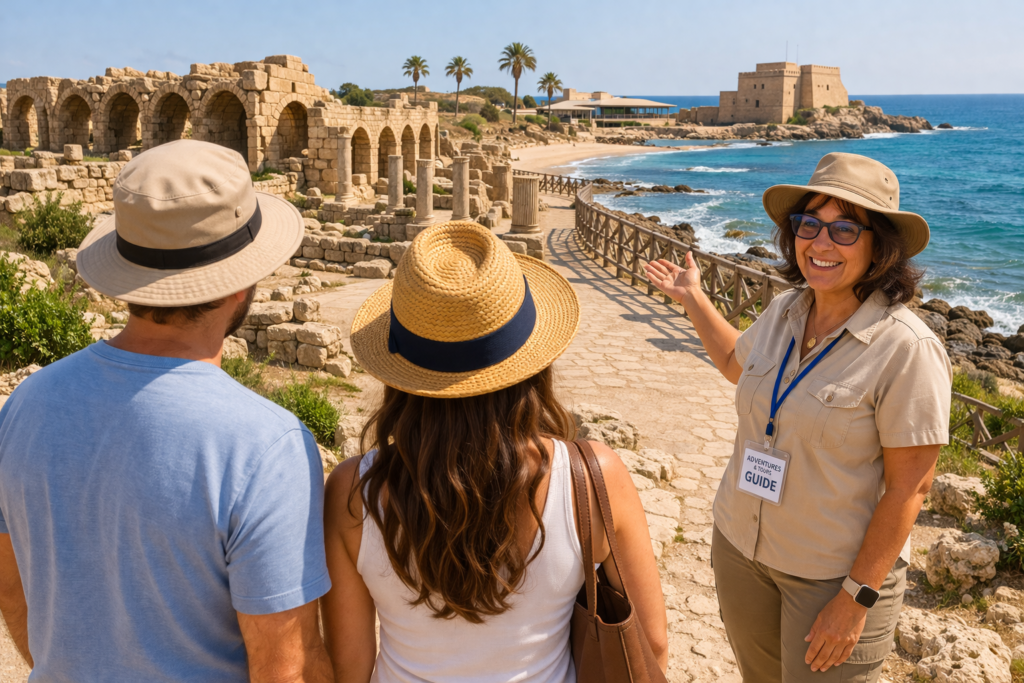
How to Plan a Caesarea Tour
If you arrive at Caesarea expecting a quick walk past old stones, this site will surprise you. A well-planned Caesarea tour can feel like a compact course in Roman engineering, biblical background, Crusader history, coastal geography, and the many layers that make Israel so compelling to travel through.
That is exactly why Caesarea works so well for so many kinds of travelers. It appeals to history lovers, faith-based visitors, families, return travelers who want more than the usual checklist, and curious guests from Jewish, Christian, Muslim, and non-religious backgrounds who want context, not just scenery.
Why a Caesarea tour deserves real time
Caesarea is not one monument. It is a full archaeological landscape set along the Mediterranean, and the site only really makes sense when someone helps connect its parts. The theater, hippodrome, palace area, harbor remains, Crusader walls, and later fortifications are all impressive on their own, but they tell a much better story together.
This is one of those places where pacing matters. If you rush, you see ruins. If you slow down with a guide who knows how to read the terrain, you begin to understand how a grand port city was imagined, built, expanded, reused, and reshaped over centuries.
For many visitors, that shift is the difference between a nice stop and a memorable day.
What you actually see on a Caesarea tour
The most famous first impression is often the Roman theater. It is beautifully positioned near the sea, and it gives immediate scale to the city’s ambition. Standing there, it is easy to picture performance, ceremony, and public life in a place that was designed to impress.
From there, many tours move toward the palace and harbor area. This part of Caesarea tends to stay with people because it combines archaeology with the coastline itself. You are not looking at ruins in isolation. You are seeing how architecture, trade, power, and landscape worked together.
The hippodrome adds a different energy. It opens a conversation about entertainment, competition, and public spectacle in the Roman world and includes its own public latrine with a view of the spectacle. Families often connect with the hippodrome quickly because the space is easy to imagine in motion.
The Crusader city introduces another layer entirely. The walls, gateways, and enclosed spaces create a different mood from the earlier Roman remains. That contrast is one of Caesarea’s strengths. You are not visiting a site frozen in one period. You are walking through a place that kept being claimed, adapted, and reinterpreted.
The value of context at Caesarea
Some sites are visually dramatic even without explanation. Caesarea is certainly beautiful, but it becomes much richer with interpretation. The harbor matters more when you understand its technical significance. The palace feels different when you notice its relationship to the sea. The Crusader remains become more meaningful when you compare them with the earlier urban plan.
This is especially true for travelers who have visited Israel before and want a deeper read of the country’s heritage. Caesarea rewards questions. It is not just about what happened here. It is about why this location mattered so much, and why it continued to matter over time.
Best timing for a Caesarea tour
Morning is often the smartest choice, especially in warmer months. The light is softer, the walking is more comfortable, and the site feels calmer before the day fills out. If you like photography, the coastline and stonework are particularly appealing earlier in the day.
That said, timing depends on what kind of day you want. If Caesarea is your main destination, you can give it a generous half day and move at a thoughtful pace. If it is part of a larger coastal itinerary, it can combine very well with places such as Jaffa, Tel Aviv, or other northern stops. The trade-off is depth. The more you combine, the more selective you need to be at each site.
A private tour helps here because not every traveler wants the same balance. Some guests want archaeology in depth. Others want a broader day with history, sea views, food, and one or two additional stops. Both approaches can work.
How long should you spend there?
For most visitors, two to three hours is a strong baseline for the ruins themselves. That gives enough time to move through the major sections without turning the visit into a blur. If you are especially interested in archaeology, biblical connections, Roman history, or layered urban development, you may want longer.
Families with children sometimes do better with a focused visit rather than the longest possible one. The site is open and engaging, but younger travelers usually benefit from clear storytelling and purposeful movement. On the other hand, adults who enjoy historical detail often appreciate extra time to stop, ask questions, and compare periods.
This is where customization matters. A couple celebrating a special trip will likely tour differently than a multi-generational family or a group of repeat visitors looking for lesser-known angles.
Making your Caesarea tour part of a bigger day
One of Caesarea’s real advantages is its flexibility. It can stand on its own, or it can anchor a broader day built around your interests.
If you love heritage and archaeology, Caesarea pairs naturally with other historic sites. If you are more interested in culture and atmosphere, you might combine it with a coastal town, a food stop, or a conversation that adds modern local texture to the day. If you are returning to Israel and have already seen many of the standard highlights, Caesarea can also be the starting point for a more personalized route with hidden gems in between.
That is often where a guide adds the most value. Not just in explaining the ruins, but in shaping the day around what will feel meaningful to you. Some travelers want more Christian historical context. Some are fascinated by Roman infrastructure. Some want a mix of ancient sites and present-day daily life. There is no single correct formula.
What to wear and bring
Caesarea is an outdoor site, and comfort matters more than people sometimes expect. Good walking shoes are worth it because the terrain changes underfoot. Sun protection is essential, especially from late spring through early fall. Water is not optional.
A hat, light layers, and comfortable clothing usually make the visit much more pleasant. If you are building Caesarea into a full-day itinerary, think practically rather than dressy. The site invites walking, pausing, and looking closely.
Who enjoys this site most?
Caesarea has broad appeal, but it is especially rewarding for travelers who enjoy stories told through place. You do not need to be an archaeology specialist to appreciate it. You just need a little curiosity and enough time to let the site unfold.
It is also an excellent choice for people who want an Israel experience that feels layered rather than rushed. That includes first-time visitors and repeat travelers alike. For repeat guests especially, Caesarea often becomes more interesting, not less, because they can place it within a wider understanding of the country.
Why private guiding changes the experience
A self-guided visit can certainly be enjoyable, but Caesarea is one of those sites where expert guiding changes the texture of the day. A good guide helps you notice what you would otherwise pass by. More than that, she shapes the visit around your interests, your pace, and the kind of questions you naturally ask.
That personal approach is especially valuable when a group includes different generations or different knowledge levels. One person may be drawn to faith history, another to architecture, another to the sheer beauty of the coast. A guided experience can hold all of that together without making the day feel scattered.
At Patchwork Israel Tours, that is very much the point – not a one-size-fits-all script, but a curated day that turns a famous site into your own meaningful experience.
A few smart expectations before you go
Caesarea is polished and accessible, but it is still an archaeological site. Parts are expansive, some sections feel exposed to sun and wind, and not every traveler will want the same depth of explanation. That is not a drawback. It simply means the best tour is the one planned around your style.
If you like quick highlights, you can absolutely enjoy Caesarea. If you prefer nuance, this site can give you plenty of that too. The key is not to treat it as just another stop between bigger names. Caesarea has enough presence and complexity to carry a day, or at least to become the part of the day you remember most.
Give it a little room, bring your curiosity, and let the stones do more than sit quietly by the sea.

Get the latest blog updates in your inbox.