Multicultural Israel Encounter Itinerary
The difference between a pleasant Israel trip and a memorable one often comes down to a single choice: do you want to simply see places, or do you want to understand the people who give those places their meaning? A well-built multicultural Israel encounter itinerary is less about racing from site to site and more about creating real contact with the country’s many lived realities – through conversation, food, neighborhoods, landscapes, and the small details most visitors miss.
That kind of itinerary works especially well for travelers who want more than a standard highlights package. Maybe you have been before and already checked off Jerusalem, Masada, and the Dead Sea. Maybe this is your first visit, but what you want is context, not just photos. Either way, the most rewarding route is one that balances the iconic with the personal.
What makes a multicultural Israel encounter itinerary work
The word multicultural can easily sound abstract until it is translated into actual travel decisions. In practice, it means designing each day around encounters, not just attractions. It means choosing one market over another because of who you might meet there, or adding a home hospitality visit, a workshop, or a conversation with a local expert because those moments often stay with people longer than the postcard views.
It also means pacing the itinerary carefully. Too many cultural stops in a day can feel academic. Too many big-name sites can flatten the experience into a checklist. The sweet spot is usually one major anchor, one neighborhood or community layer, and one hands-on experience. That rhythm gives travelers enough structure to feel grounded and enough openness to stay curious.
A strong itinerary also respects the fact that not every traveler connects in the same way. Some people want faith history. Others respond more deeply to food, architecture, music, archaeology, desert landscapes, or innovation. The right guide listens for those cues and builds around them.
A 6-day multicultural Israel encounter itinerary example
This sample is not meant to be rigid. It is a model for how a private, customized journey can unfold when cultural depth matters as much as the headline sites.
Day 1: Jaffa and Tel Aviv through layers of old and new
Start in Jaffa, where the stone alleys, port history, artists’ corners, and mixed urban texture set the tone beautifully. This is a good first day because it introduces Israel as a lived-in place rather than a museum. You can walk through the old city, hear the long arc of the port’s story, and then move into the markets and backstreets where daily life fills in the rest.
From there, continue into Tel Aviv with a focus that matches your interests. For some travelers, that means architecture and city planning. For others, it means culinary stops, startup culture, contemporary Israeli life, or neighborhood encounters that reveal how varied urban Israel really is. This first day works best when it stays conversational and flexible rather than overloaded.
Day 2: Jerusalem beyond the obvious
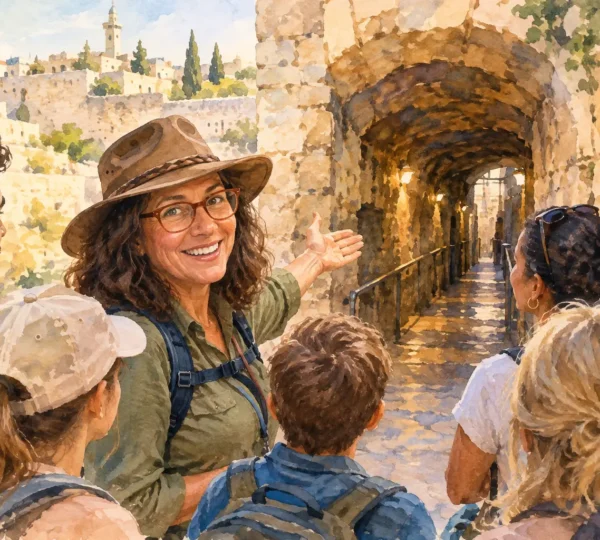
Jerusalem deserves time, but not only for the major sacred sites. Of course, the Old City matters deeply, and a first-time visitor should experience its spiritual and historical intensity. Still, a richer day includes the city beyond its walls – modern neighborhoods, local markets, different communal rhythms, and quieter corners where the complexity of daily life becomes more visible.
This is often the day to include a conversation-based encounter. That might be with a scholar, an artist, a culinary host, or someone whose professional or personal perspective opens up the city in a more human way. Jerusalem can overwhelm if approached only through monuments. It becomes more meaningful when people are part of the picture.
Day 3: Desert, resilience, and perspective
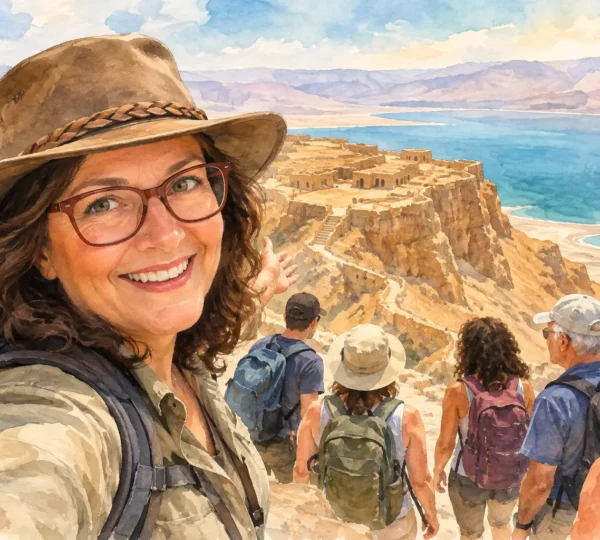
The desert changes the emotional tempo of a trip. Whether you head toward Masada and the Dead Sea or choose a more off-the-beaten-path route in the Negev, this day adds space, silence, and a different cultural lens. The landscape itself tells a story, but so do the communities that have learned to live and thrive there.
This is also where activity can deepen connection. A 4×4 route, a foraging experience, camel riding, or a hosted meal can turn a scenic day into a memorable one. For some travelers, the desert is where the trip suddenly feels personal. The scale of the land invites reflection, and the encounter element keeps it from becoming just another scenic excursion.
Day 4: Northbound for shared histories and local flavor
Northern Israel offers a very different atmosphere. The shift in geography brings a shift in food, architecture, agriculture, and pace. A day in the Galilee can combine landscapes with village visits, culinary experiences, artisan workshops, or meaningful conversations that show how closely heritage and daily life are intertwined.
This is often the right region for travelers who want to move gently between history and hospitality. You might include a winery, a farm, a cooking session, or a craft-based activity. These experiences are not filler. They are often where people stop being spectators and start feeling welcomed in.
Day 5: Caesarea, Haifa, or a themed encounter day
By day five, many travelers know what they want more of. That is why this day should stay adaptable. If archaeology and layered history are drawing you in, Caesarea can be a fascinating anchor. If gardens, coastal views, and urban diversity are more compelling, Haifa may be the better fit. If your strongest moments so far have come through conversation, then this can become a full themed encounter day with visits tailored around shared interests.
That could mean meeting people in fields like education, agriculture, faith leadership, architecture, culinary arts, or technology. For returning visitors especially, this kind of day can become the heart of the journey. It trades predictability for relevance, and that usually pays off.
Day 6: A closing day shaped around meaning
The final day should not feel like leftovers. It should feel intentional. For some travelers, that means revisiting Jerusalem with fresh eyes. For others, it means ending by the sea, taking a food-focused route, or adding a reflective experience such as mosaic making, a scenic hike, or a quieter heritage visit.
This is also the right place for a shorter program if you are a business traveler or part of a family group with limited time. Not every multicultural encounter itinerary needs a full week. Sometimes one well-designed day or a two-day sequence can create exactly the kind of depth people are looking for.
How to personalize a multicultural Israel encounter itinerary
The most successful trips are built around questions, not assumptions. Are you energized by conversation or by scenery? Do you prefer walking old streets, tasting your way through markets, sitting down with local hosts, or heading into nature with a bit of dust on your shoes? These choices shape the trip far more than people expect.
It also matters how much intensity you want. Some travelers want full days with a strong intellectual component. Others want one meaningful encounter per day balanced with lighter touring. Families often do better when serious content is mixed with hands-on activities. Multigenerational groups need thoughtful pacing and easy transitions. There is no single best formula.
This is where an experienced guide makes a real difference. Timing, geography, and local relationships matter. A beautiful idea on paper can turn into a tiring day if distances are misjudged or if too many heavy topics are stacked together. A personalized itinerary should feel spacious, not crowded.
Why hidden gems matter in this kind of journey
Big sites absolutely have a place. You do not skip Jerusalem’s historic heart just because you also care about lesser-known stories. But hidden gems are often what give a multicultural trip its shape. A small workshop, a neighborhood bakery, a mountain overlook, a farm visit, or a conversation in someone’s home can shift the entire emotional register of a journey.
That is especially true for travelers who have already visited Israel once. The second or third trip often becomes more satisfying because there is room to go narrower and deeper. Instead of trying to cover everything, you can spend time on what genuinely resonates. Patchwork Israel is built around exactly that idea – a trip that reflects your interests rather than forcing you into a prewritten script.
The trade-offs to keep in mind
A meaningful itinerary is not the same as a maximal itinerary. If you try to include every community angle, every famous site, and every type of experience, the result will feel rushed. Depth requires selection. Sometimes saying no to one major stop makes room for the encounter you remember for years.
There is also the question of comfort level. Some travelers love spontaneous discussion and active days in varied settings. Others prefer a gentler pace with strong planning and fewer moving parts. Neither approach is better. The point is to match the itinerary to the traveler, not the other way around.
If you are considering a multicultural Israel encounter itinerary, the best place to begin is with honesty about what kind of connection you want. Once that is clear, the route becomes much easier to shape – and much more likely to stay with you after the trip is over.

Multicultural Israel Encounter Itinerary
The difference between a pleasant Israel trip and a memorable one often comes down to a single choice: do you want to simply see places, or do you want to understand the people who give those places their meaning? A well-built multicultural Israel encounter itinerary is less about racing from site to site and more about creating real contact with the country’s many lived realities – through conversation, food, neighborhoods, landscapes, and the small details most visitors miss.
That kind of itinerary works especially well for travelers who want more than a standard highlights package. Maybe you have been before and already checked off Jerusalem, Masada, and the Dead Sea. Maybe this is your first visit, but what you want is context, not just photos. Either way, the most rewarding route is one that balances the iconic with the personal.
What makes a multicultural Israel encounter itinerary work
The word multicultural can easily sound abstract until it is translated into actual travel decisions. In practice, it means designing each day around encounters, not just attractions. It means choosing one market over another because of who you might meet there, or adding a home hospitality visit, a workshop, or a conversation with a local expert because those moments often stay with people longer than the postcard views.
It also means pacing the itinerary carefully. Too many cultural stops in a day can feel academic. Too many big-name sites can flatten the experience into a checklist. The sweet spot is usually one major anchor, one neighborhood or community layer, and one hands-on experience. That rhythm gives travelers enough structure to feel grounded and enough openness to stay curious.
A strong itinerary also respects the fact that not every traveler connects in the same way. Some people want faith history. Others respond more deeply to food, architecture, music, archaeology, desert landscapes, or innovation. The right guide listens for those cues and builds around them.
A 6-day multicultural Israel encounter itinerary example
This sample is not meant to be rigid. It is a model for how a private, customized journey can unfold when cultural depth matters as much as the headline sites.
Day 1: Jaffa and Tel Aviv through layers of old and new
Start in Jaffa, where the stone alleys, port history, artists’ corners, and mixed urban texture set the tone beautifully. This is a good first day because it introduces Israel as a lived-in place rather than a museum. You can walk through the old city, hear the long arc of the port’s story, and then move into the markets and backstreets where daily life fills in the rest.
From there, continue into Tel Aviv with a focus that matches your interests. For some travelers, that means architecture and city planning. For others, it means culinary stops, startup culture, contemporary Israeli life, or neighborhood encounters that reveal how varied urban Israel really is. This first day works best when it stays conversational and flexible rather than overloaded.
Day 2: Jerusalem beyond the obvious
Jerusalem deserves time, but not only for the major sacred sites. Of course, the Old City matters deeply, and a first-time visitor should experience its spiritual and historical intensity. Still, a richer day includes the city beyond its walls – modern neighborhoods, local markets, different communal rhythms, and quieter corners where the complexity of daily life becomes more visible.
This is often the day to include a conversation-based encounter. That might be with a scholar, an artist, a culinary host, or someone whose professional or personal perspective opens up the city in a more human way. Jerusalem can overwhelm if approached only through monuments. It becomes more meaningful when people are part of the picture.
Day 3: Desert, resilience, and perspective
The desert changes the emotional tempo of a trip. Whether you head toward Masada and the Dead Sea or choose a more off-the-beaten-path route in the Negev, this day adds space, silence, and a different cultural lens. The landscape itself tells a story, but so do the communities that have learned to live and thrive there.
This is also where activity can deepen connection. A 4×4 route, a foraging experience, camel riding, or a hosted meal can turn a scenic day into a memorable one. For some travelers, the desert is where the trip suddenly feels personal. The scale of the land invites reflection, and the encounter element keeps it from becoming just another scenic excursion.
Day 4: Northbound for shared histories and local flavor
Northern Israel offers a very different atmosphere. The shift in geography brings a shift in food, architecture, agriculture, and pace. A day in the Galilee can combine landscapes with village visits, culinary experiences, artisan workshops, or meaningful conversations that show how closely heritage and daily life are intertwined.
This is often the right region for travelers who want to move gently between history and hospitality. You might include a winery, a farm, a cooking session, or a craft-based activity. These experiences are not filler. They are often where people stop being spectators and start feeling welcomed in.
Day 5: Caesarea, Haifa, or a themed encounter day
By day five, many travelers know what they want more of. That is why this day should stay adaptable. If archaeology and layered history are drawing you in, Caesarea can be a fascinating anchor. If gardens, coastal views, and urban diversity are more compelling, Haifa may be the better fit. If your strongest moments so far have come through conversation, then this can become a full themed encounter day with visits tailored around shared interests.
That could mean meeting people in fields like education, agriculture, faith leadership, architecture, culinary arts, or technology. For returning visitors especially, this kind of day can become the heart of the journey. It trades predictability for relevance, and that usually pays off.
Day 6: A closing day shaped around meaning
The final day should not feel like leftovers. It should feel intentional. For some travelers, that means revisiting Jerusalem with fresh eyes. For others, it means ending by the sea, taking a food-focused route, or adding a reflective experience such as mosaic making, a scenic hike, or a quieter heritage visit.
This is also the right place for a shorter program if you are a business traveler or part of a family group with limited time. Not every multicultural encounter itinerary needs a full week. Sometimes one well-designed day or a two-day sequence can create exactly the kind of depth people are looking for.
How to personalize a multicultural Israel encounter itinerary
The most successful trips are built around questions, not assumptions. Are you energized by conversation or by scenery? Do you prefer walking old streets, tasting your way through markets, sitting down with local hosts, or heading into nature with a bit of dust on your shoes? These choices shape the trip far more than people expect.
It also matters how much intensity you want. Some travelers want full days with a strong intellectual component. Others want one meaningful encounter per day balanced with lighter touring. Families often do better when serious content is mixed with hands-on activities. Multigenerational groups need thoughtful pacing and easy transitions. There is no single best formula.
This is where an experienced guide makes a real difference. Timing, geography, and local relationships matter. A beautiful idea on paper can turn into a tiring day if distances are misjudged or if too many heavy topics are stacked together. A personalized itinerary should feel spacious, not crowded.
Why hidden gems matter in this kind of journey
Big sites absolutely have a place. You do not skip Jerusalem’s historic heart just because you also care about lesser-known stories. But hidden gems are often what give a multicultural trip its shape. A small workshop, a neighborhood bakery, a mountain overlook, a farm visit, or a conversation in someone’s home can shift the entire emotional register of a journey.
That is especially true for travelers who have already visited Israel once. The second or third trip often becomes more satisfying because there is room to go narrower and deeper. Instead of trying to cover everything, you can spend time on what genuinely resonates. Patchwork Israel is built around exactly that idea – a trip that reflects your interests rather than forcing you into a prewritten script.
The trade-offs to keep in mind
A meaningful itinerary is not the same as a maximal itinerary. If you try to include every community angle, every famous site, and every type of experience, the result will feel rushed. Depth requires selection. Sometimes saying no to one major stop makes room for the encounter you remember for years.
There is also the question of comfort level. Some travelers love spontaneous discussion and active days in varied settings. Others prefer a gentler pace with strong planning and fewer moving parts. Neither approach is better. The point is to match the itinerary to the traveler, not the other way around.
If you are considering a multicultural Israel encounter itinerary, the best place to begin is with honesty about what kind of connection you want. Once that is clear, the route becomes much easier to shape – and much more likely to stay with you after the trip is over.
Get the latest blog updates in your inbox.