Israel Archaeology Tour That Goes Deeper
Stand on the broad stone steps at the Southern Wall in Jerusalem, trace the chisel marks in an ancient quarry, or watch the sun lift over Masada, and an Israel archaeology tour stops feeling academic. It becomes immediate. You are not looking at disconnected ruins. You are moving through places where faith, daily life, empire, trade, craftsmanship, and memory still sit close to the surface.
That is exactly why archaeology in Israel deserves a more thoughtful kind of touring. This is not a country where one impressive site tells the whole story. Layers matter. So does pacing. So does having someone beside you who can connect a Roman street to a Jewish ritual bath, a Crusader wall to an Ottoman alley, or a Canaanite gateway to the modern landscape around it.
What makes an Israel archaeology tour special
Some destinations offer a single era in high definition. Israel is different. Here, archaeology is cumulative. In one trip, you can encounter Bronze Age city remains, Second Temple period streets, Byzantine churches, early Islamic layers, Crusader fortifications, and modern excavations still reshaping what scholars understand.
That density is thrilling, but it can also be overwhelming. Without context, even major sites blur together into columns, stones, and dates. With the right guide, the same places become legible. You begin to notice water systems, fortification logic, burial customs, urban planning, agricultural methods, and how geography shaped settlement over thousands of years.
That is why a private or customized format often works better than a one-size-fits-all bus itinerary. Some travelers want biblical archaeology. Others care more about Roman engineering, ancient trade routes, mosaics, desert fortresses, or the transition from one civilization to the next. The strongest tours are built around those interests rather than asking every traveler to absorb the same script.
The best Israel archaeology tour is shaped around your curiosity
A good archaeology day is not about squeezing in the most stops. It is about seeing enough to compare, understand, and remember.
For some travelers, Jerusalem is the anchor. The City of David, the Davidson Archaeological Park area, Jewish Quarter excavations, and the Israel Museum can fill days without repeating themselves. One site explains water and kingship. Another reveals pilgrimage, public architecture, and destruction layers. A museum visit then helps make sense of what you saw in the field.
For others, the coast tells the stronger story. Caesarea brings Roman planning, Herodian ambition, harbor engineering, and later adaptations into one remarkable setting. Jaffa offers older settlement layers wrapped inside a living urban landscape. Akko can deepen the medieval picture with underground Crusader remains and a city that still feels inhabited rather than preserved behind glass.
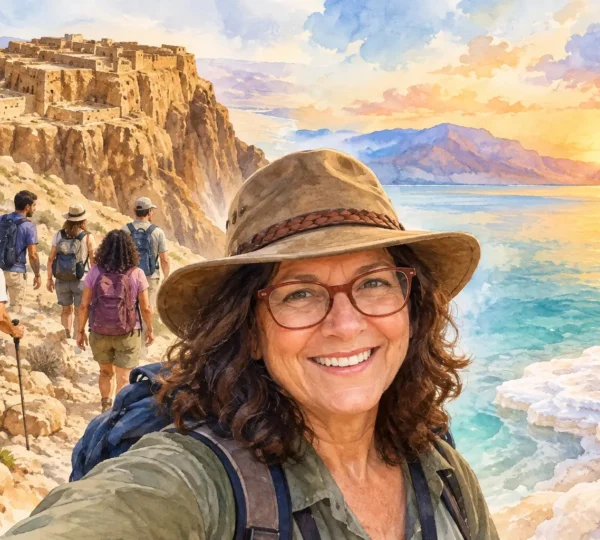
Then there is the desert, where archaeology often feels stark, dramatic, and stripped down to essentials. Masada is the obvious draw, but it is not just about the view. It is about logistics, storage, defense, ritual life, and survival in a harsh environment. Nearby sites and landscapes can add depth, especially if you want to understand how ancient communities managed water, movement, and settlement in places that seem almost impossible at first glance.
The Galilee offers a different rhythm again. Synagogue remains, ancient villages, churches, and layered towns allow you to look at daily life as much as monumental history. The north can be especially rewarding for repeat visitors who have already seen the headline sites and want a more textured experience.
How to choose the right archaeological sites
The right itinerary depends on what kind of traveler you are.
If this is your first visit, it usually makes sense to balance iconic places with one or two less expected sites. The famous locations matter for a reason. They give you chronological anchors and a shared frame of reference. But the quieter sites often become the places you remember most because there is room to observe, ask questions, and feel the setting rather than just pass through it.
If you have been to Israel before, this is where a custom archaeology tour becomes especially rewarding. Instead of repeating the standard route, you can go deeper into excavation areas, museum collections, regional stories, or places that connect archaeology with living communities, local craft traditions, landscape use, or food history. Sometimes the most satisfying day is not the grandest one. It is the one where the pieces finally connect.
Families need a different approach from serious history enthusiasts, and that is perfectly fine. Children often respond better to tunnels, water systems, fortresses, and anything tactile or dramatic. Adults who love scholarship may want inscriptions, chronology, architecture, and debate over interpretation. The sweet spot is designing a day that leaves everyone engaged rather than politely tired.
Why expert guiding matters more in archaeology than almost anywhere
Archaeology rewards interpretation. Two travelers can stand in the same excavation and have completely different experiences depending on what is explained.
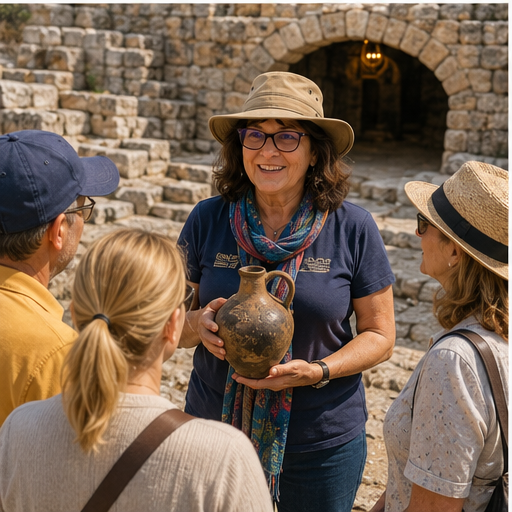
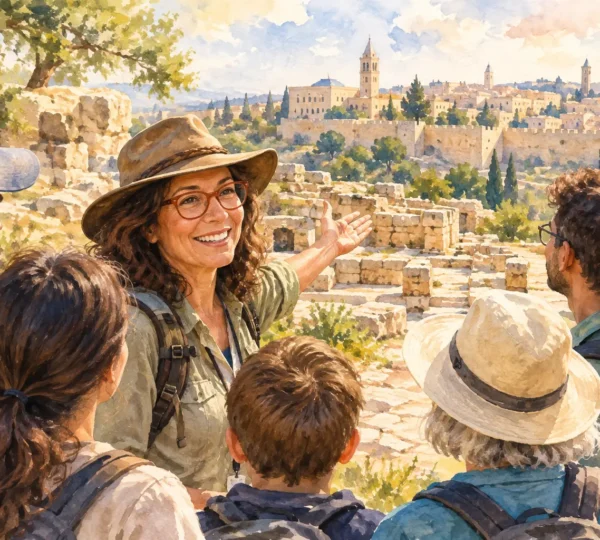
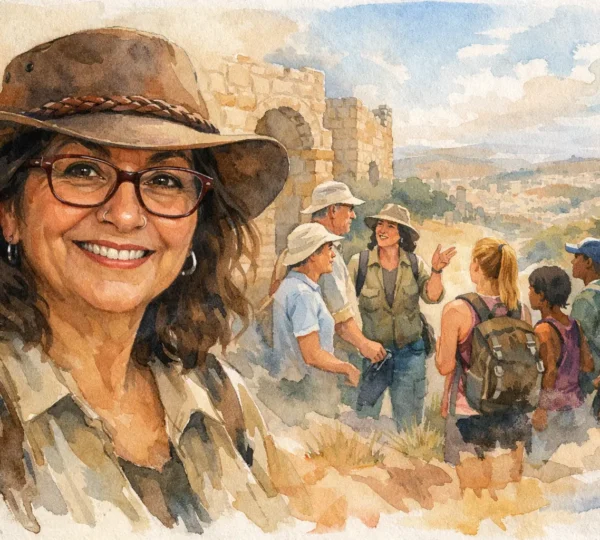
An expert guide does more than identify ruins. She helps you read a site. She knows when to slow down and let one threshold, one mosaic floor, or one storage jar illuminate an entire period. She also knows when not to overtalk. Sometimes the strongest moment is simply standing in an ancient street and understanding who walked there, what they carried, how water arrived, where goods were sold, and why the city was built exactly there.
This matters even more in Israel because so many sites sit within wider cultural, geographic, and religious landscapes. Archaeology here is rarely isolated. A tell, a desert road, a port, a vineyard area, or a hilltop fortress all make more sense when you understand the terrain around them.
That is one reason personalized touring works so well. If you are fascinated by ancient technology, your day can focus on water systems, roads, fortifications, and construction methods. If you are drawn to sacred history, the emphasis can shift toward pilgrimage routes, ritual spaces, burial practices, and continuity of memory. If you prefer archaeology as part of a broader cultural trip, it can be paired with food, markets, desert landscapes, or conversations that bring the human side of history closer.
A strong archaeology itinerary leaves room for the present
The best archaeological travel does not trap you in the past. It helps you notice continuity.
You might spend the morning in an excavation and lunch in a local setting where regional ingredients still reflect ancient agricultural patterns. You might study a mosaic and later try a workshop that gives you a practical sense of how design, craft, and material culture shape daily life. You might move from a fortified site to a modern overlook and finally understand why that hill, coast, spring, or crossroads mattered so much across centuries.
This is where a discovery-oriented guide can make all the difference. A site visit becomes richer when it is connected to landscape, cuisine, architecture, and the rhythms of everyday Israel. The trip feels less like a lecture and more like an unfolding story.
For travelers with limited time, even a short archaeology-focused day can be meaningful. Business travelers, families adding depth to a broader vacation, and visitors with one special interest do not need a full academic tour to get real value. A carefully chosen route with expert interpretation can deliver far more than a rushed checklist.
What to expect from an Israel archaeology tour day
Expect walking, questions, and at least one moment where the timeline suddenly clicks. Expect some uneven ground, weather that may shape the day, and choices about depth versus breadth. It is usually better to understand three places well than skim eight.
Expect trade-offs too. Museums provide context and fragile finds that cannot stay outdoors, but field sites give scale and atmosphere. Desert sites can be unforgettable, though they require smart timing in warmer months. Urban archaeology is accessible and layered, but sometimes busier. The best plan is the one that fits your interests, pace, and energy.
A personalized guide can also help with practical decisions that affect the experience more than people realize, such as when to arrive, which site combinations make sense geographically, and where to build in rest, food, or a scenic break so the day stays absorbing rather than exhausting.
For travelers who want history with substance, an Israel archaeology tour offers something rare. It gives you evidence, imagination, and place all at once. Stones become stories, but only when someone helps you see how the pieces belong together.
If that sounds like your kind of travel, it may be worth choosing fewer sites, asking better questions, and giving yourself the chance to experience ancient Israel as something vivid, layered, and surprisingly personal.

Israel Archaeology Tour That Goes Deeper
Stand on the broad stone steps at the Southern Wall in Jerusalem, trace the chisel marks in an ancient quarry, or watch the sun lift over Masada, and an Israel archaeology tour stops feeling academic. It becomes immediate. You are not looking at disconnected ruins. You are moving through places where faith, daily life, empire, trade, craftsmanship, and memory still sit close to the surface.
That is exactly why archaeology in Israel deserves a more thoughtful kind of touring. This is not a country where one impressive site tells the whole story. Layers matter. So does pacing. So does having someone beside you who can connect a Roman street to a Jewish ritual bath, a Crusader wall to an Ottoman alley, or a Canaanite gateway to the modern landscape around it.
What makes an Israel archaeology tour special
Some destinations offer a single era in high definition. Israel is different. Here, archaeology is cumulative. In one trip, you can encounter Bronze Age city remains, Second Temple period streets, Byzantine churches, early Islamic layers, Crusader fortifications, and modern excavations still reshaping what scholars understand.
That density is thrilling, but it can also be overwhelming. Without context, even major sites blur together into columns, stones, and dates. With the right guide, the same places become legible. You begin to notice water systems, fortification logic, burial customs, urban planning, agricultural methods, and how geography shaped settlement over thousands of years.
That is why a private or customized format often works better than a one-size-fits-all bus itinerary. Some travelers want biblical archaeology. Others care more about Roman engineering, ancient trade routes, mosaics, desert fortresses, or the transition from one civilization to the next. The strongest tours are built around those interests rather than asking every traveler to absorb the same script.
The best Israel archaeology tour is shaped around your curiosity
A good archaeology day is not about squeezing in the most stops. It is about seeing enough to compare, understand, and remember.
For some travelers, Jerusalem is the anchor. The City of David, the Davidson Archaeological Park area, Jewish Quarter excavations, and the Israel Museum can fill days without repeating themselves. One site explains water and kingship. Another reveals pilgrimage, public architecture, and destruction layers. A museum visit then helps make sense of what you saw in the field.
For others, the coast tells the stronger story. Caesarea brings Roman planning, Herodian ambition, harbor engineering, and later adaptations into one remarkable setting. Jaffa offers older settlement layers wrapped inside a living urban landscape. Akko can deepen the medieval picture with underground Crusader remains and a city that still feels inhabited rather than preserved behind glass.
Then there is the desert, where archaeology often feels stark, dramatic, and stripped down to essentials. Masada is the obvious draw, but it is not just about the view. It is about logistics, storage, defense, ritual life, and survival in a harsh environment. Nearby sites and landscapes can add depth, especially if you want to understand how ancient communities managed water, movement, and settlement in places that seem almost impossible at first glance.
The Galilee offers a different rhythm again. Synagogue remains, ancient villages, churches, and layered towns allow you to look at daily life as much as monumental history. The north can be especially rewarding for repeat visitors who have already seen the headline sites and want a more textured experience.
How to choose the right archaeological sites
The right itinerary depends on what kind of traveler you are.
If this is your first visit, it usually makes sense to balance iconic places with one or two less expected sites. The famous locations matter for a reason. They give you chronological anchors and a shared frame of reference. But the quieter sites often become the places you remember most because there is room to observe, ask questions, and feel the setting rather than just pass through it.
If you have been to Israel before, this is where a custom archaeology tour becomes especially rewarding. Instead of repeating the standard route, you can go deeper into excavation areas, museum collections, regional stories, or places that connect archaeology with living communities, local craft traditions, landscape use, or food history. Sometimes the most satisfying day is not the grandest one. It is the one where the pieces finally connect.
Families need a different approach from serious history enthusiasts, and that is perfectly fine. Children often respond better to tunnels, water systems, fortresses, and anything tactile or dramatic. Adults who love scholarship may want inscriptions, chronology, architecture, and debate over interpretation. The sweet spot is designing a day that leaves everyone engaged rather than politely tired.
Why expert guiding matters more in archaeology than almost anywhere
Archaeology rewards interpretation. Two travelers can stand in the same excavation and have completely different experiences depending on what is explained.
An expert guide does more than identify ruins. She helps you read a site. She knows when to slow down and let one threshold, one mosaic floor, or one storage jar illuminate an entire period. She also knows when not to overtalk. Sometimes the strongest moment is simply standing in an ancient street and understanding who walked there, what they carried, how water arrived, where goods were sold, and why the city was built exactly there.
This matters even more in Israel because so many sites sit within wider cultural, geographic, and religious landscapes. Archaeology here is rarely isolated. A tell, a desert road, a port, a vineyard area, or a hilltop fortress all make more sense when you understand the terrain around them.
That is one reason personalized touring works so well. If you are fascinated by ancient technology, your day can focus on water systems, roads, fortifications, and construction methods. If you are drawn to sacred history, the emphasis can shift toward pilgrimage routes, ritual spaces, burial practices, and continuity of memory. If you prefer archaeology as part of a broader cultural trip, it can be paired with food, markets, desert landscapes, or conversations that bring the human side of history closer.
A strong archaeology itinerary leaves room for the present
The best archaeological travel does not trap you in the past. It helps you notice continuity.
You might spend the morning in an excavation and lunch in a local setting where regional ingredients still reflect ancient agricultural patterns. You might study a mosaic and later try a workshop that gives you a practical sense of how design, craft, and material culture shape daily life. You might move from a fortified site to a modern overlook and finally understand why that hill, coast, spring, or crossroads mattered so much across centuries.
This is where a discovery-oriented guide can make all the difference. A site visit becomes richer when it is connected to landscape, cuisine, architecture, and the rhythms of everyday Israel. The trip feels less like a lecture and more like an unfolding story.
For travelers with limited time, even a short archaeology-focused day can be meaningful. Business travelers, families adding depth to a broader vacation, and visitors with one special interest do not need a full academic tour to get real value. A carefully chosen route with expert interpretation can deliver far more than a rushed checklist.
What to expect from an Israel archaeology tour day
Expect walking, questions, and at least one moment where the timeline suddenly clicks. Expect some uneven ground, weather that may shape the day, and choices about depth versus breadth. It is usually better to understand three places well than skim eight.
Expect trade-offs too. Museums provide context and fragile finds that cannot stay outdoors, but field sites give scale and atmosphere. Desert sites can be unforgettable, though they require smart timing in warmer months. Urban archaeology is accessible and layered, but sometimes busier. The best plan is the one that fits your interests, pace, and energy.
A personalized guide can also help with practical decisions that affect the experience more than people realize, such as when to arrive, which site combinations make sense geographically, and where to build in rest, food, or a scenic break so the day stays absorbing rather than exhausting.
For travelers who want history with substance, an Israel archaeology tour offers something rare. It gives you evidence, imagination, and place all at once. Stones become stories, but only when someone helps you see how the pieces belong together.
If that sounds like your kind of travel, it may be worth choosing fewer sites, asking better questions, and giving yourself the chance to experience ancient Israel as something vivid, layered, and surprisingly personal.

Get the latest blog updates in your inbox.