
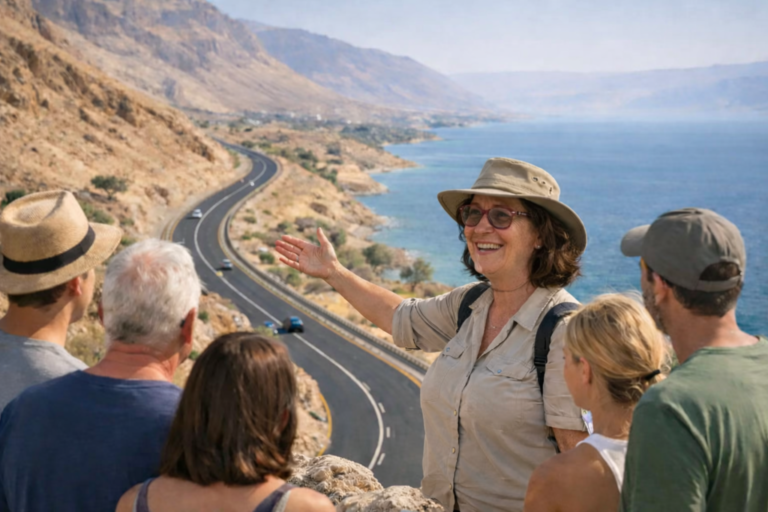
Route 90 Israel Roadtrip Ideas That Fit You
The best Route 90 Israel roadtrip is not the one that races from north to south just to say you did it. It is the one that knows when to pause – for a monastery view above the Sea of Galilee, a desert sunrise near Masada, a quiet farm stop, a conversation over strong coffee, or a swim when the heat says everything else can wait.
Route 90 is the spine of the country, stretching from the northern valleys down through the Great African-Syrian Rift (or Jordan Valley in Israel), along the Dead Sea, across the Arava, and toward Eilat. On paper, it looks simple. In practice, it can become many different journeys. For some travelers, it is a heritage route. For others, it is a landscape roadtrip shaped by desert light, archaeology, food, geology and unexpected encounters. That flexibility is what makes it such a rewarding drive.
Why a Route 90 Israel roadtrip works so well
Few roads in Israel show so much variety in one continuous line. You can start among green northern landscapes and biblical sites, then move into stark desert terrain where the geology feels almost lunar. The shift is not only visual. The rhythm of the day changes too. In the north, you may linger over viewpoints and historic churches. Around the Dead Sea, timing matters because of heat and light. In the south, long open stretches invite a different pace, with room for off-road detours, stargazing, and quiet.
This route also suits very different travelers. Families can build it around swimming spots, short walks, and comfortable overnight stops. Heritage travelers can connect ancient places with a deeper sense of geography. Christian, Jewish, Muslim, Druze, and visitors often appreciate the same route for different reasons, which is part of its appeal. It gives you a framework without forcing one style of travel.
North to south or south to north?
Either direction works, but they feel different. Driving north to south gives you a gradual transition into the dramatic desert sections. It starts with softer scenery and builds toward the intensity of the Dead Sea and Arava. For first-time visitors, this often feels natural.
Starting in the south creates a stronger opening. Eilat and the desert make an immediate impression, and then the journey softens as you move north. This version can work beautifully for repeat visitors who want the roadtrip to begin with big landscapes and adventure.
The real decision is less about direction and more about how much time you want to spend in each region. If you only have two or three days, Route 90 becomes selective. If you have five to seven days, it starts to breathe.
The best stops along Route 90 in Israel
The northern section invites slower travel than many people expect. Around the Hula Valley and the Sea of Galilee area, you can shape a day around nature, history, and food without covering huge distances. This is where many travelers realize that a roadtrip in Israel is not just about the drive. The road connects compact but layered places, and often the most memorable stop is not the biggest name on the map.
Further south, Beit Shean is a strong stop if you enjoy archaeology and want to understand the region through its Roman and Byzantine remains. It pairs well with time in the Jordan Valley, where agricultural landscapes and local stories add another dimension to what could otherwise feel like a purely historical day. It is also home to the Springs Valley, a network of beautiful fresh water springs open to the public.
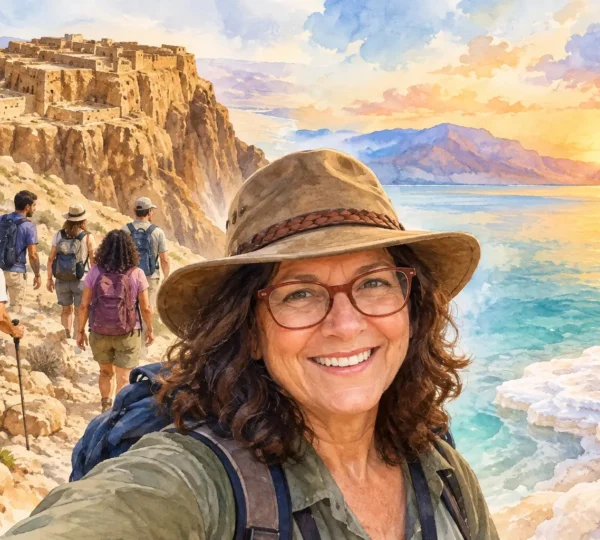
The Dead Sea stretch is where Route 90 becomes iconic. As you approach the Dead Sea and Judean Desert, you enter the land that is home to the first monasteries ever erected, the site of Jesus’ baptism, the site where the Israelites crossed the Jordan River and incredible beaches with accommodations for overnight.
Masada though, is the headline stop for good reason, but it should not be treated as a box to check. Early morning is usually best for Masada, both for temperature and atmosphere. Afterward, many travelers want a Dead Sea float, but there is a trade-off here. If you try to do Masada, a full spa stop, multiple viewpoints, and a desert hike all in one day, the experience starts to feel rushed. Choosing two or three highlights usually works better than chasing everything.
Then comes the Arava, a section many travelers underestimate. The distances open up, the traffic often thins out, and the landscapes become meditative. This is where a tailored trip can make the biggest difference. Instead of simply driving through, you might add a desert farm visit, a short hike in colored sandstone and prehistoric hunting sites, a jeep excursion, or a hands-on activity that gives texture to the day. What looks empty from the highway is often full of stories when you know where to turn.
Eilat is the natural southern finish, but it does not have to be only a beach ending. For some travelers it is about Red Sea relaxation. For others, it is mountain scenery, snorkeling, or a final desert dawn before turning back north.
How many days do you need?
Three days is enough for a taste, but not for depth. With three days, you can connect the north, Dead Sea, and south, yet you will need to be disciplined. This version works best if you already know which experiences matter most.
Five days is where a Route 90 Israel roadtrip starts to feel personal. You can give the Galilee and Jordan Valley proper attention, spend meaningful time around the Dead Sea, and still leave room for the Arava instead of treating it as a transfer day.
A full week is ideal if you like your travel to include both major sites and hidden gems. That extra time allows for home hospitality, culinary experiences, easier hiking schedules, and meaningful meetings with people from different communities and professions. That is often the difference between seeing Israel and feeling it.
What to plan carefully
This is an easy road to follow, but not a road to improvise carelessly. Heat is the biggest factor for much of the route, especially around the Dead Sea and farther south. A beautiful midday viewpoint can become unpleasant if your timing is off. Water, sun protection, and realistic daily distances matter.
Accommodation strategy matters too. Some travelers prefer one-night stops to keep moving. Others do better with two-night bases, especially if they want to mix roadtrip days with slower local experiences. There is no single right answer. If you enjoy unpacking once and exploring outward, choose fewer bases. If your joy comes from changing scenery every evening, keep the itinerary moving.
Driving itself is usually straightforward, but the style of trip changes if you add desert tracks or 4×4 segments. Those can transform the experience, especially in the south, but they require local knowledge and sensible pacing. The point is not to make the route more extreme. It is to reach places the main road cannot show you on its own.
Making the route feel less generic
Many people can drive Route 90. Far fewer shape it around who they are. That is where the road becomes interesting.
If you are drawn to faith and heritage, the route can connect sacred landscapes with a stronger sense of place, not just isolated holy sites. If you are returning to Israel after seeing the major highlights, Route 90 is perfect for going deeper – adding culinary workshops, artisan visits, agricultural encounters, or conversations with historians, clergy, academics, or local families. If you are traveling with teenagers or multigenerational family, the route can balance ancient history with active desert experiences, water time, and hands-on activities that keep everyone engaged.
This road also rewards curiosity. A small overlook at the right hour, a bakery stop, a quiet monastery, a date farm, or a conversation in a place most tourists pass by can stay with you longer than a famous viewpoint. The strongest itineraries leave room for that.
Is Route 90 right for first-time visitors?
Yes, but with one caveat. If this is your very first Israel trip and you are also hoping to spend substantial time in Jerusalem and Tel Aviv, then Route 90 should be part of a wider plan, not the whole plan. Trying to squeeze everything into one fast loop usually weakens the trip.
For first-time visitors who want to understand the land through its changing regions, Route 90 is excellent. For repeat visitors, it may be even better. It opens the door to layers that standard itineraries often miss. That is especially true when the route is shaped around your interests rather than built from a generic list of stops.
At Patchwork Israel, this is exactly the kind of journey that becomes richer with guidance – not because the road is hard to find, but because the right stop at the right moment can change the whole feel of the day.
A good roadtrip gives you movement. A memorable one gives you context, surprise, and enough breathing room to notice where you are. Route 90 does that beautifully when you let it be more than a line on a map.

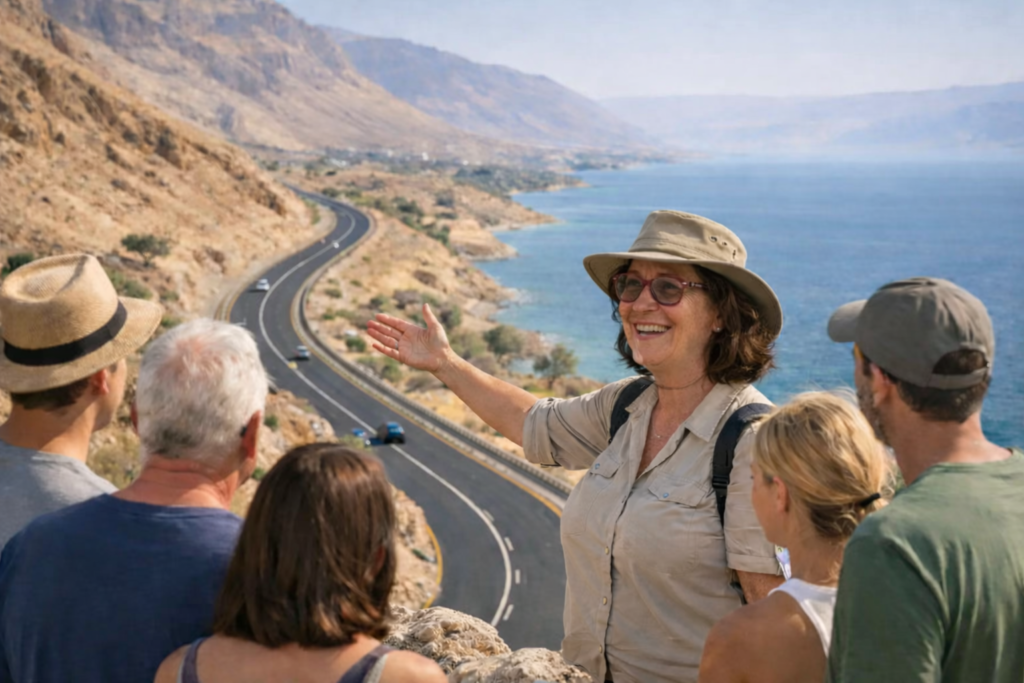
Route 90 Israel Roadtrip Ideas That Fit You
The best Route 90 Israel roadtrip is not the one that races from north to south just to say you did it. It is the one that knows when to pause – for a monastery view above the Sea of Galilee, a desert sunrise near Masada, a quiet farm stop, a conversation over strong coffee, or a swim when the heat says everything else can wait.
Route 90 is the spine of the country, stretching from the northern valleys down through the Great African-Syrian Rift (or Jordan Valley in Israel), along the Dead Sea, across the Arava, and toward Eilat. On paper, it looks simple. In practice, it can become many different journeys. For some travelers, it is a heritage route. For others, it is a landscape roadtrip shaped by desert light, archaeology, food, geology and unexpected encounters. That flexibility is what makes it such a rewarding drive.
Why a Route 90 Israel roadtrip works so well
Few roads in Israel show so much variety in one continuous line. You can start among green northern landscapes and biblical sites, then move into stark desert terrain where the geology feels almost lunar. The shift is not only visual. The rhythm of the day changes too. In the north, you may linger over viewpoints and historic churches. Around the Dead Sea, timing matters because of heat and light. In the south, long open stretches invite a different pace, with room for off-road detours, stargazing, and quiet.
This route also suits very different travelers. Families can build it around swimming spots, short walks, and comfortable overnight stops. Heritage travelers can connect ancient places with a deeper sense of geography. Christian, Jewish, Muslim, Druze, and visitors often appreciate the same route for different reasons, which is part of its appeal. It gives you a framework without forcing one style of travel.
North to south or south to north?
Either direction works, but they feel different. Driving north to south gives you a gradual transition into the dramatic desert sections. It starts with softer scenery and builds toward the intensity of the Dead Sea and Arava. For first-time visitors, this often feels natural.
Starting in the south creates a stronger opening. Eilat and the desert make an immediate impression, and then the journey softens as you move north. This version can work beautifully for repeat visitors who want the roadtrip to begin with big landscapes and adventure.
The real decision is less about direction and more about how much time you want to spend in each region. If you only have two or three days, Route 90 becomes selective. If you have five to seven days, it starts to breathe.
The best stops along Route 90 in Israel
The northern section invites slower travel than many people expect. Around the Hula Valley and the Sea of Galilee area, you can shape a day around nature, history, and food without covering huge distances. This is where many travelers realize that a roadtrip in Israel is not just about the drive. The road connects compact but layered places, and often the most memorable stop is not the biggest name on the map.
Further south, Beit Shean is a strong stop if you enjoy archaeology and want to understand the region through its Roman and Byzantine remains. It pairs well with time in the Jordan Valley, where agricultural landscapes and local stories add another dimension to what could otherwise feel like a purely historical day. It is also home to the Springs Valley, a network of beautiful fresh water springs open to the public.
The Dead Sea stretch is where Route 90 becomes iconic. As you approach the Dead Sea and Judean Desert, you enter the land that is home to the first monasteries ever erected, the site of Jesus’ baptism, the site where the Israelites crossed the Jordan River and incredible beaches with accommodations for overnight.
Masada though, is the headline stop for good reason, but it should not be treated as a box to check. Early morning is usually best for Masada, both for temperature and atmosphere. Afterward, many travelers want a Dead Sea float, but there is a trade-off here. If you try to do Masada, a full spa stop, multiple viewpoints, and a desert hike all in one day, the experience starts to feel rushed. Choosing two or three highlights usually works better than chasing everything.
Then comes the Arava, a section many travelers underestimate. The distances open up, the traffic often thins out, and the landscapes become meditative. This is where a tailored trip can make the biggest difference. Instead of simply driving through, you might add a desert farm visit, a short hike in colored sandstone and prehistoric hunting sites, a jeep excursion, or a hands-on activity that gives texture to the day. What looks empty from the highway is often full of stories when you know where to turn.
Eilat is the natural southern finish, but it does not have to be only a beach ending. For some travelers it is about Red Sea relaxation. For others, it is mountain scenery, snorkeling, or a final desert dawn before turning back north.
How many days do you need?
Three days is enough for a taste, but not for depth. With three days, you can connect the north, Dead Sea, and south, yet you will need to be disciplined. This version works best if you already know which experiences matter most.
Five days is where a Route 90 Israel roadtrip starts to feel personal. You can give the Galilee and Jordan Valley proper attention, spend meaningful time around the Dead Sea, and still leave room for the Arava instead of treating it as a transfer day.
A full week is ideal if you like your travel to include both major sites and hidden gems. That extra time allows for home hospitality, culinary experiences, easier hiking schedules, and meaningful meetings with people from different communities and professions. That is often the difference between seeing Israel and feeling it.
What to plan carefully
This is an easy road to follow, but not a road to improvise carelessly. Heat is the biggest factor for much of the route, especially around the Dead Sea and farther south. A beautiful midday viewpoint can become unpleasant if your timing is off. Water, sun protection, and realistic daily distances matter.
Accommodation strategy matters too. Some travelers prefer one-night stops to keep moving. Others do better with two-night bases, especially if they want to mix roadtrip days with slower local experiences. There is no single right answer. If you enjoy unpacking once and exploring outward, choose fewer bases. If your joy comes from changing scenery every evening, keep the itinerary moving.
Driving itself is usually straightforward, but the style of trip changes if you add desert tracks or 4×4 segments. Those can transform the experience, especially in the south, but they require local knowledge and sensible pacing. The point is not to make the route more extreme. It is to reach places the main road cannot show you on its own.
Making the route feel less generic
Many people can drive Route 90. Far fewer shape it around who they are. That is where the road becomes interesting.
If you are drawn to faith and heritage, the route can connect sacred landscapes with a stronger sense of place, not just isolated holy sites. If you are returning to Israel after seeing the major highlights, Route 90 is perfect for going deeper – adding culinary workshops, artisan visits, agricultural encounters, or conversations with historians, clergy, academics, or local families. If you are traveling with teenagers or multigenerational family, the route can balance ancient history with active desert experiences, water time, and hands-on activities that keep everyone engaged.
This road also rewards curiosity. A small overlook at the right hour, a bakery stop, a quiet monastery, a date farm, or a conversation in a place most tourists pass by can stay with you longer than a famous viewpoint. The strongest itineraries leave room for that.
Is Route 90 right for first-time visitors?
Yes, but with one caveat. If this is your very first Israel trip and you are also hoping to spend substantial time in Jerusalem and Tel Aviv, then Route 90 should be part of a wider plan, not the whole plan. Trying to squeeze everything into one fast loop usually weakens the trip.
For first-time visitors who want to understand the land through its changing regions, Route 90 is excellent. For repeat visitors, it may be even better. It opens the door to layers that standard itineraries often miss. That is especially true when the route is shaped around your interests rather than built from a generic list of stops.
At Patchwork Israel, this is exactly the kind of journey that becomes richer with guidance – not because the road is hard to find, but because the right stop at the right moment can change the whole feel of the day.
A good roadtrip gives you movement. A memorable one gives you context, surprise, and enough breathing room to notice where you are. Route 90 does that beautifully when you let it be more than a line on a map.

Get the latest blog updates in your inbox.