
Private Tour Versus Bus Tour in Israel
You can learn a lot about a trip from what happens at 10:30 in the morning. On a bus tour, that might be the moment everyone is called back from the overlook, whether they are ready or not. On a private tour versus bus tour, the difference is simple – one runs on a group clock, and the other runs on your curiosity. In a country as layered and compact as Israel, that difference shapes the whole day.
For some travelers, a bus tour is exactly the right fit. It can be efficient, social, and reassuring, especially on a first visit with a short list of major highlights. But many visitors to Israel are looking for something more personal – more depth in Jerusalem, more time in the Galilee, a quieter path through the desert, or a day built around family history, faith, food, archaeology, hiking, or real conversations with people who live here. That is where a private tour often changes the experience completely.
Private tour versus bus tour: what really changes?
The obvious difference is the number of people in the vehicle. The more meaningful difference is how the day unfolds.
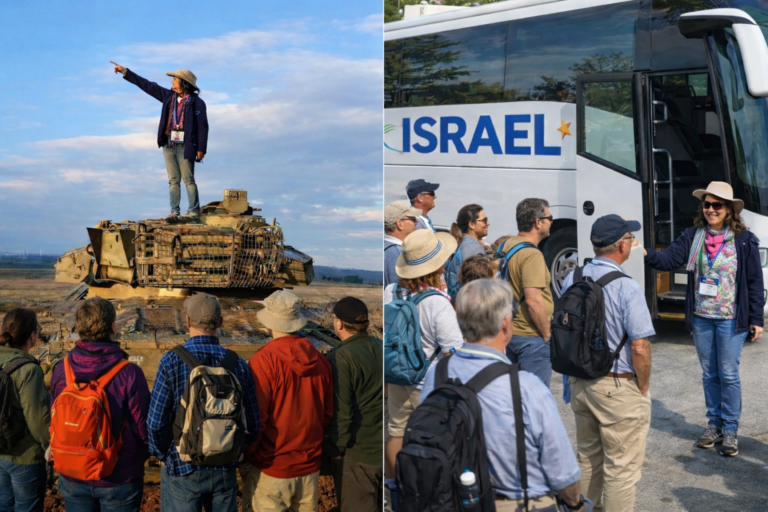
A bus tour follows a fixed route, fixed timing, and a group pace. That structure can work well if you want a broad overview and do not mind moving quickly. You usually know the headline stops in advance, and the logistics are handled for you. For travelers who like predictability and are comfortable with a more general introduction, that can be appealing.
A private tour is built around you. That does not just mean being picked up at your hotel. It means the guide can shape the route around your interests, energy level, mobility, background, and questions. If you want to spend extra time at the Church of the Holy Sepulchre, pause longer at Yad Vashem, linger in the shuk tasting spices and pastries, or leave the main road to see a lesser-known mosaic, village, winery, or desert viewpoint, you can.
In Israel, where distances are short but the range of experiences is wide, flexibility matters more than many travelers expect. A single day can move from archaeology to street food, from a sacred site to a nature reserve, from a museum to a Druze village or a boutique olive oil producer. On a bus, those transitions tend to be standardized. On a private tour, they can feel connected and purposeful.
Pace matters more in Israel than people think
Israel is not a large country, but it is dense with meaning. Jerusalem alone can be overwhelming if you try to absorb it at group-tour speed. The same is true at Caesarea, Masada, Akko, Safed, Nazareth, Jaffa, or the Dead Sea region. These are not places where everyone experiences the site in the same way.
One traveler wants historical context. Another wants time for prayer or reflection. A family may need snack breaks and a lighter walking route. A returning visitor may have already seen the major landmarks and want to go deeper – into architecture, local communities, desert ecology, food traditions, or lesser-known heritage sites.
This is where the private tour versus bus tour decision becomes practical, not abstract. A bus tour is built for the average participant. A private tour is built for the actual people traveling.
That distinction matters for Jews, Christians, Muslims, and other religious and non-religious travelers alike. Israel can be profoundly meaningful in different ways, and not every meaningful moment fits into a preset schedule. Some travelers want a strong faith-based itinerary. Others want a cultural and culinary lens. Others are most alive on a trail, in a 4×4 route, or in conversation with artists, academics, farmers, or archaeologists. A private format makes room for those differences.
Comfort, access, and energy
Comfort is not only about seat size. It is also about mental space.
On a bus tour, there is often background noise, wait time, and a certain amount of herd movement. You may spend part of the day organizing restroom stops, counting heads, and navigating the needs of people whose priorities are nothing like yours. That is normal in group travel. It is also tiring, especially in heat, on busy days, or when visiting emotionally intense places.
A private tour gives you a calmer rhythm. You can start earlier to beat crowds or begin later if that suits your family better. You can adjust for weather, stamina, and interests as the day develops. If a site deserves more time, you stay. If something does not resonate, you move on.
For older travelers, multigenerational families, and visitors with limited mobility, this can make the trip far more enjoyable. For highly curious travelers, it also opens up access to places and experiences that buses simply do not handle well – scenic backroads, small food stops, hands-on workshops, trailheads, boutique wineries, farms, desert encounters, and more personal visits across different sectors of Israeli society.
Cost versus value
Bus tours usually look less expensive at first glance, and sometimes they are. If you are a solo traveler joining one day trip and your goal is to check off a major site, a bus can offer a fair value for a guided tour.
But value is not the same as price. A private tour often includes what bus travel cannot: direct pickup, a customized route, less wasted time, deeper interpretation, and the ability to make the day truly yours. For couples, families, and small groups, the cost difference can feel much smaller once divided among travelers. Often a single day bus tour for a family of 5 will cost the same as a private tour for the same family.
There is also the value of relevance. If you are paying for a day in Israel, do you want part of that day shaped around strangers, or around your own priorities? If your interests are specific – biblical history, culinary experiences, desert adventure, hidden gems, second-time travel, Jewish heritage, Christian sites, Muslim heritage, architecture, archaeology, or nature – a private guide can make the day richer in a way no large group format really can.
That is especially true for travelers who do not want a sightseeing checklist. They want context. They want stories. They want the little turns in the road that make a place memorable.
Who should choose a bus tour?
A bus tour can still be the right answer. If you are traveling on a tighter budget, enjoy meeting other travelers, and want a straightforward introduction to major highlights, it can work well. It may also suit travelers who are very comfortable with fixed timing and do not mind a less personal approach.
For some first-time visitors, a bus tour is a decent starting point. It gives a basic framework and a sense of orientation. If that feels reassuring, there is nothing wrong with that. It also is a way to check off the major sites.
The trade-off is depth. You may see many places, but not necessarily experience them in the way that feels most meaningful to you.
Who gets the most from a private tour?
Private touring tends to suit travelers who care about substance as much as sightseeing. That includes first-time visitors who want expert help making sense of Israel, and returning visitors who are ready to go beyond the usual route.
It is often the best fit for families, heritage travelers, faith-based travelers, active travelers, and anyone with a specific interest. If you want a day built around markets and cooking, desert hiking and off-roading, archaeology and hidden churches, interfaith heritage, local food, or conversations across different communities and professions, private touring gives you room to shape those experiences thoughtfully. It also gives you room to change your itinerary spontaneously, if need be.
This is also where an experienced licensed guide makes all the difference. Knowledge is not just facts delivered through a microphone. It is knowing when to explain, when to pause, when to reroute, and when to follow your curiosity because that is where the day becomes unforgettable.
The best choice depends on the trip you want
If your goal is to cover ground efficiently, a bus tour may be enough. If your goal is to feel Israel rather than just pass through it, private travel usually offers far more.
With a company like Patchwork Israel, that can mean combining famous sites with places that rarely make standard itineraries – a layered day in Jerusalem, a culinary route through the north, an archaeology-focused journey, a family-friendly Dead Sea and desert day, or meaningful encounters tailored to your interests and background. The point is not luxury for its own sake. The point is relevance, depth, and the freedom to travel in a way that feels personal.
The best Israel trips are not always the ones with the longest list of stops. They are the ones where you come home remembering a conversation, a view, a meal, a question, or a quiet moment that felt like it was truly yours.