How to Plan Israel Trip the Right Way
The biggest mistake people make when figuring out how to plan Israel trip details is trying to fit too much into too little time. Israel is small on a map, but it is dense in every sense – history, faith, landscapes, food, archaeology, and human stories all sit close together. A good trip does not try to “cover” Israel. It chooses the right rhythm, the right regions, and the right experiences for the people actually traveling.
That matters whether you are visiting for the first time or returning after seeing the well-known highlights. Some travelers want Jerusalem, Masada, and the Dead Sea. Others want those classics plus a Druze village meal, a desert 4×4 day, a home visit, a walk through Bahai gardens from a broader cultural lens, or time with artists, archaeologists, clergy, farmers, or culinary experts. The best plans are personal, not generic.
How to plan Israel trip goals before you book
Start with your real reason for coming. Not the answer you think you should give – the honest one. If your trip is rooted in faith, your itinerary should leave room for sacred places and quiet time, not just transportation between stops. If you are traveling as a family, pace matters more than ambition. If you are curious about the many communities that shape the country, your days should include conversation and context, not only landmarks.
For many visitors, Israel works best when built around two or three main priorities. These might be heritage and archaeology, Christian sites, Jewish history, Muslim heritage, food and markets, hiking, desert landscapes, or meetings with people from different backgrounds and professions including Jews, Christians, Muslims, Alawites, Druze, Bahai, Cercessians, Bedouins, Farmer Cave Dwellers and more, – each encounter connecting with different layers of the country, and often with more overlap than expected.
Once you know your priorities, decisions become easier. You can decide whether to spend more nights in Jerusalem for depth, split time between city and nature, or add specialized experiences that turn a good trip into a memorable one.
Choose your trip length honestly
A common planning problem is pretending a six-day trip is a ten-day trip. It is better to travel well than rush through a checklist.
If you have about five to seven days, focus tightly. Jerusalem, Tel Aviv-Jaffa, and one or two day trips often make more sense than trying to reach every region. You can still include major sites like Masada and the Dead Sea, or head north for Caesarea and the Galilee, but not everything at once.
If you have eight to ten days, the trip opens up. You can combine Jerusalem, the coast, the north, and the desert without feeling constantly in transit. This is often the sweet spot for first-time travelers.
If you have more than ten days, you can add depth instead of just adding distance. That is where hidden gems, private meetings, culinary workshops, hiking days, or off-road desert experiences start to shine. This is when you can see a snow capped mountain in the north and a tropical sea to the south. Returning travelers especially benefit from this approach. They do not need to repeat a standard program unless they want to. They can go further into places, people, and themes.
Build by regions, not by random sites
Israel trip planning gets easier when you think in clusters.
Jerusalem deserves real time. It is not a place to squeeze into one long day. The Old City alone can be approached through Jewish, Christian, Muslim, Armenian, archaeological, sociological or architectural lenses, and each tells a different story. Beyond that, modern Jerusalem, local neighborhoods, markets, museums, and layered social history add texture many visitors miss.
Tel Aviv and Jaffa bring a different energy – Mediterranean, urban, creative, culinary, and contemporary. This region works well if you want beach time, markets, Bauhaus architecture, nightlife, food tours, or a contrast to Jerusalem’s intensity.
The central coast and north offer excellent combinations: Caesarea, Haifa, Akko, the Galilee, mountain viewpoints, wineries, nature reserves, and villages with distinct cultural identities. This part of the country rewards travelers who enjoy variety and scenic drives.
The south and east give you space. Masada and the Dead Sea are famous for a reason, but the desert is far more than a single sunrise stop and there are three distinct deserts here. They can be contemplative, adventurous, and surprisingly intimate. Hiking, camel/alpaca riding, foraging, jeep or 4×4 routes, stargazing, and desert hospitality all make sense here.
When days are grouped geographically, the trip feels smoother. Less packing, less backtracking, more time actually experiencing the place.
Decide what kind of traveler you are
This is where many itineraries either come alive or fall flat. Two people can visit the exact same destination and need completely different days.
Some travelers are site-driven. They want the major places done well, with expert guiding that brings them into focus. Others are experience-driven. They remember the meal in a family kitchen, the mosaic workshop, the farm visit, the desert trail, or the conversation with a local educator more than the photo at a landmark.
Most people are somewhere in the middle. That is often the best balance. A morning at a major historical site can pair beautifully with an afternoon food experience, an artisan visit, or time in nature. The trade-off is pace. If every day contains too many different modes, the trip can feel fragmented. Better to choose one anchor and one supporting experience than cram in four unrelated things.
Timing matters more than people expect
If you are wondering how to plan Israel trip dates, season should shape more than your packing list.
Spring and fall are usually the easiest for a broad itinerary. You can comfortably combine cities, hiking, archaeological sites, and desert areas. Summer works well for travelers focused on the coast, early morning touring, and air-conditioned cultural sites, but midday heat can be intense, especially in southern regions. Winter can be excellent for travelers who prefer fewer crowds and greener landscapes, though some hiking days and water-based conditions depend on weather.
Religious calendars, school breaks, and local holiday periods can also affect crowd levels, hotel prices, and site atmosphere. That is not necessarily a reason to avoid those times. Sometimes visiting during a meaningful season adds richness. It just means planning with open eyes.
Transportation, hotels, and daily flow
On paper, a self-drive trip can look simple. In reality, many visitors enjoy Israel more when they do not have to think about navigation, parking, timing, and logistics between regions. That is especially true in Jerusalem, on multi-stop days, or when the value of a destination depends on context rather than just arrival.
Hotels should match your trip style. If your days are full, a comfortable base in the right location matters more than a flashy property that adds commuting time. Families may want larger rooms and easier pacing. Faith-based travelers may prefer proximity to specific areas. Food-focused travelers may enjoy staying where evening walks and restaurant options are part of the experience.
A good daily plan also leaves breathing room. Not every meal needs to be scheduled, and not every hour needs a formal activity. Some of the best travel moments happen when there is enough margin to linger.
Personalization is what turns a trip into your trip
A strong Israel itinerary does more than hit highlights. It reflects who is coming.
That might mean a Christian family spending extra time in the Galilee, a Jewish couple wanting deeper historical and spiritual context in Jerusalem, Muslim travelers interested in sacred and cultural and historical sites approached with care and knowledge, or repeat visitors looking beyond famous landmarks into community encounters, architecture, agriculture, archaeology, and cuisine.
It might also mean blending very different interests in one trip. One traveler wants biblical history. Another wants hiking. A teenager wants active experiences. A grandparent wants a manageable pace and meaningful guiding. This is exactly where customized planning becomes valuable. The point is not to create a packed schedule for everyone. It is to find the overlap that feels generous rather than compromised.
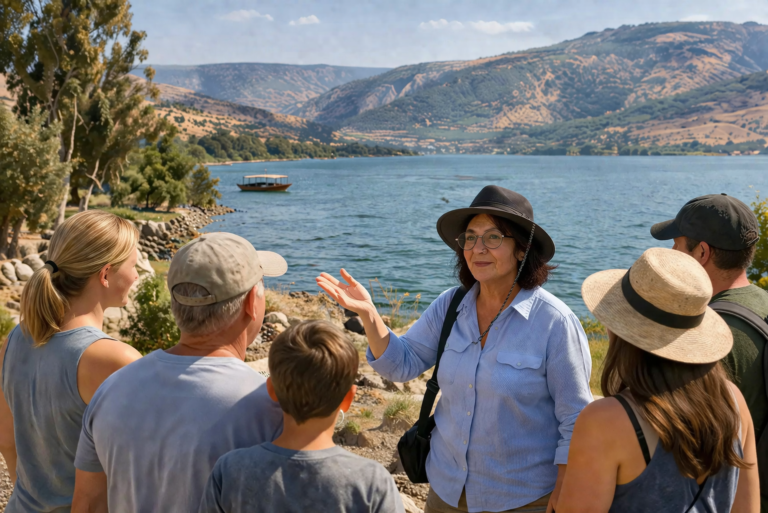
That is also why private guiding often changes the quality of the experience. With the right guide, a site becomes a story, a road becomes context, and a change in weather or energy does not ruin the day – it simply redirects it. For travelers who want a trip shaped around their pace and interests, a specialist such as Patchwork Israel can help build that kind of thoughtful flow.
Keep room for the unexpected good stuff
The best Israel trips usually include one or two things travelers did not know they wanted until they got there. A small winery. A cooking session. A conversation in a village. A desert overlook at the right hour. A neighborhood walk that explains more than a museum label ever could.
That is why the smartest way to plan is not to overschedule every day from breakfast to bedtime. Leave space for recommendation-driven moments. The country rewards curiosity.
If you want your trip to feel richer, do not ask only, “What should we see?” Ask, “What do we want to understand, feel, taste, and remember?” That question leads to better choices – and usually to a far better journey.