
12 Best Food Experiences in Israel
The best food experiences in Israel rarely happen when you are rushing from one landmark to the next. They happen when you slow down long enough to taste the place – standing at a market stall with warm bourekas in hand, sharing a family meal in a village home, or sitting under the desert sky over coffee and fresh bread. If you have never had an Israeli breakfast you are in for a big treat. Food here is not just something you book around. It is one of the clearest ways to understand the people, landscapes, traditions, and daily rhythms that make Israel feel so layered.
For travelers who want more than a standard restaurant reservation, Israel rewards curiosity. A great culinary day can begin in an ancient city, continue through vineyards or farms, and end with a meal shaped by one community’s memory and another region’s ingredients. That is what makes food travel here so satisfying – there is always another story behind the plate.
What makes the best food experiences in Israel different
Israel is small, but its food culture is wonderfully dense. Jewish communities from the Middle East, North Africa, Europe, Asia, the Americas and beyond have all brought their cooking traditions. Arab kitchens, Druze hospitality, Bedouin desert foodways, Christian communities, Circassian influences, and modern chef-driven creativity all add their own texture. For food from Jewish, Christian, Muslim, Alawite, Druze, Bedouin and others alike, food is a welcoming way into the country’s many identities.
The trade-off is that not every food experience feels equally meaningful. A trendy meal in Tel Aviv may be excellent, but if you only do polished urban dining, you may miss the intimacy of home cooking, agricultural visits, or regional specialties. On the other hand, if you focus only on traditional meals, you might miss how inventive the contemporary food scene has become. The most rewarding itineraries usually balance both.
The best food experiences in Israel to build a trip around
1. Market tasting in Jerusalem, Tel Aviv, Haifa
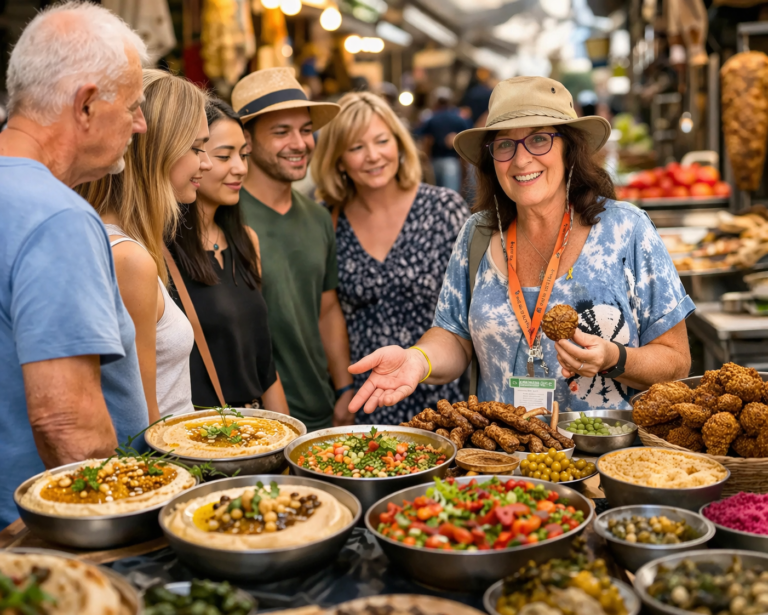
If you want to feel the pulse of a city, start in the market. Jerusalem’s Machane Yehuda has that wonderful mix of old and new – spice stalls, bakeries, halva, street snacks, and long-standing family vendors alongside modern food counters. Tel Aviv’s Carmel Market is looser, beachier, and full of produce, pastries, juices, and quick bites that reflect the city’s energy. The lesser known but original Levinsky Market brings the tastes of Greece, Persia and Turkey providing a very ethnic experience. If you have never been to the Wadi Nisnas market in the mixed city of Haifa, you will delight in Arab, Druze and Jewish delicacies, that tell a story of this city.
A market visit works best with context. Otherwise, it can become a blur of colors and noise. With a knowledgeable guide, you begin to understand why one bakery is beloved, what makes a certain pickle stand out, or how immigration shaped the flavors around you. It turns a snack crawl into a cultural experience.
2. A home-cooked meal with local hosts
Some of the most memorable meals in Israel never appear in guidebooks. Sitting down in someone’s home changes the entire pace of travel. You taste family recipes, but you also hear stories, ask questions, and see what hospitality looks like in daily life.
This can take many forms – a Shabbat-style Friday meal, a Druze lunch in the north, a village table built around seasonal dishes, or a cooking visit with a family that loves feeding guests. The menu matters, but the human connection matters more. For repeat visitors especially, this is often where the trip becomes personal.
3. Druze culinary hospitality in the Galilee or Carmel
A Druze food experience is often one of the highlights of a northern itinerary. Fresh pita or laffa, labaneh, olives, zaatar, grilled vegetables, stuffed grape leaves, lentils, and beautifully prepared meat dishes can all appear, depending on the home or restaurant. The meals are generous and grounded in tradition.
What makes this special is the atmosphere of welcome. Pairing a meal with a village walk or a conversation about local life and this exclusive religion, gives travelers a richer sense of place and its people than lunch alone. It is ideal for families, multigenerational groups, and anyone who prefers meaningful encounters over check-the-box sightseeing.
4. Desert meals with Bedouin hospitality
The desert changes how food feels. In the Negev or Judean Desert, a meal can be simple, but simplicity is part of the point. Freshly baked pita, salads, rice, slow-cooked meats, tea, and coffee take on another dimension when served in a tent or open-air setting after a hike, jeep ride, or camel experience.
These meals are not about fine dining, although always deliscious. They are about atmosphere, landscape, and Bedouin tradition. If you love dramatic scenery and experiential travel, this is one of the most distinctive culinary moments you can have in Israel.
5. Hands-on cooking and baking workshops
Watching is nice. Making your own food is better. Cooking workshops can include challah baking, regional pastries, market-to-table cooking, spice blending, or preparing dishes from a particular community’s kitchen. These experiences are especially good for families and small private groups because everyone participates.
The best workshops are not overly staged. You want flour on the counter, real technique, and enough conversation to understand why the food matters. A good class gives you something rare in travel – a memory you can actually recreate at home.
6. Winery visits with regional food pairings
Israel’s wine scene surprises many first-time visitors. The range is impressive, from boutique family wineries to more established estates in areas such as the Judean Hills, Galilee, Golan, and Carmel region. A well-planned winery stop is not only about the tasting flight. It is about landscape, local agriculture, and the slower rhythm of the day.
Add cheeses, bread, olive oil, or a seasonal lunch, and the experience becomes far more complete. This works beautifully for couples, adult groups, and travelers who want a refined counterpoint to busy cities and archaeological touring.
7. Farm visits, olive oil tastings, and agricultural experiences
Food does not begin in the kitchen. In Israel, farms can be some of the most rewarding culinary stops, especially when they include meeting growers and tasting produce where it is raised. Depending on the season, this might mean olive oil, goat cheese, dates, herbs, grapes, citrus, or fresh-picked vegetables.
These experiences are especially good for travelers who enjoy understanding how geography shapes food. They also pair well with off-the-beaten-path touring, because some of the most memorable producers are in quieter rural settings you would never find on your own.
8. Jaffa and Acre for layered culinary history
For travelers who love atmosphere, old port cities offer a wonderful blend of food and setting. In Jaffa, you can combine a walk through historic lanes with seafood, hummus, Arab pastries, or contemporary chef-driven plates. Acre offers a different mood – market life, old stone alleys, sweets, and deeply rooted regional cooking.
Neither city should be reduced to one famous dish. The point is the layering. You are tasting food in places where trade, religion, migration, and craftsmanship have met for generations.
9. Breakfast as an experience, not an afterthought
Israeli breakfast deserves respect. The best versions are abundant without feeling heavy: eggs, salads, cheeses, breads, spreads, olives, fish, pastries, fruit, and strong coffee. It is one of the country’s most enjoyable meal formats because it feels communal and unhurried.
This is not the kind of breakfast you eat while checking email. It is the kind that sets the tone for a day of touring. In boutique hotels, kibbutz guesthouses, or countryside settings, breakfast is often one of the trip’s quiet pleasures.
10. Street food done well
Yes, falafel and shawarma matter. So do sabich, burekas, kubbeh, malabi, kanafeh, and excellent hummus. Street food is accessible, flavorful, and often deeply regional. It also helps travelers taste widely without committing to a long meal.
The key is quality and timing. A great street food stop between sites can energize the day. Too many rushed stops, though, and everything starts to blur together. Street food is best as part of a broader culinary story, not the whole story.
11. Seasonal and holiday food moments
Some of the best food experiences in Israel depend on when you travel. Spring brings wonderful herbs and lighter flavors. It also offers a wonderful opportunity to forage for wild edible plants and combine an outdoor cooking class with all the abundance of the land. Autumn can be ideal for farm harvest-related experiences. Holiday periods may introduce special breads, sweets, family meals, or local customs that do not appear in the same way year-round.
This is where a custom itinerary makes a real difference. Timing shapes access. The right week can turn a nice meal into something unforgettable.
12. Pairing food with place
The strongest culinary itineraries are rarely only about food. A day in the Judean Hills might combine history, vineyard landscapes, and lunch at a farm or winery. The Galilee invites hikes, village visits, and home hospitality. Jerusalem can move from sacred sites to market flavors in a way that feels natural rather than forced.
That is often how we build the most satisfying travel days at Patchwork Israel – not by isolating meals from the rest of the journey, but by letting food deepen what travelers are already seeing and feeling.
How to choose the right food experience for your trip
It depends on what kind of traveler you are. First-time visitors often enjoy markets, classic street food, and one or two standout regional meals. Repeat visitors usually want more access – homes, farms, workshops, or communities they would not reach alone.
Families often do best with interactive options such as baking, market tastings, or relaxed village meals. Couples may lean toward wineries, boutique dining, or desert evenings. Heritage travelers often appreciate food experiences tied to particular communities or traditions. The sweet spot is variety without overload.
If there is one helpful rule, it is this: leave room. Not every great meal should be squeezed between major sites. The best food experiences in Israel ask for time, conversation, and appetite – all the things that make travel feel less like scheduling and more like connection.
Come hungry, but also come curious. The plate is wonderful, of course, but what stays with you is the person serving it, the landscape around you, and the feeling that for a little while, you were not just visiting Israel – you were welcomed into it.