

 The desert changes your pace before you even notice it. The light softens, conversation slows down, and suddenly a cup of coffee poured in a Bedouin tent feels just as memorable as any famous landmark. That is the real value of a bedouin experience israel travelers often remember most – not just the setting, but the human welcome inside it.
For many visitors, the Negev is where Israel feels widest and quietest. It is a landscape of space, wind, rock, and long horizons. Yet it is also deeply lived-in, layered with tradition, family life, hospitality, and stories that do not appear on standard sightseeing itineraries. If you want your trip to include more than monuments and viewpoints, time with Bedouin hosts can add exactly that kind of depth.
Why a Bedouin experience in Israel stands out
A true Bedouin experience in Israel (not on the main tourist route) is not one single activity. It can be a shared meal, a tent gathering, coffee roasted over a fire, a conversation about daily life, music, baking, camel encounters, or a desert drive that connects landscape with local culture. The best version depends on who you are and how you travel.
Families often enjoy the warmth and hands-on elements – flatbread baking, simple food, the chance to sit together in a tent and hear stories in an intimate setting. Heritage travelers and culturally curious visito rs usually want more context. They are interested in how desert communities adapted to climate, movement, hospitality, and family structure over time. Repeat visitors to Israel often appreciate this most because it takes them beyond the usual route and into a setting that feels personal rather than prepackaged.
That difference matters. A quick stop for tea can be pleasant, but a thoughtfully planned visit with the right introductions becomes something richer. It gives texture to the desert and helps visitors connect geography with real people and living culture.
What a Bedouin experience Israel can include
The classic image is a tent in the desert, cushions on the floor, the small fire awaiting the notable Bedouin coffee ceremony, and generous hospitality. That image is real, but it is only the beginning. Some experiences are built around food, with home-style meals that may include freshly baked bread, salads, rice dishes, and slow-cooked specialties. Others focus more on lifestyle and storytelling, where the most meaningful part of the visit is the conversation.
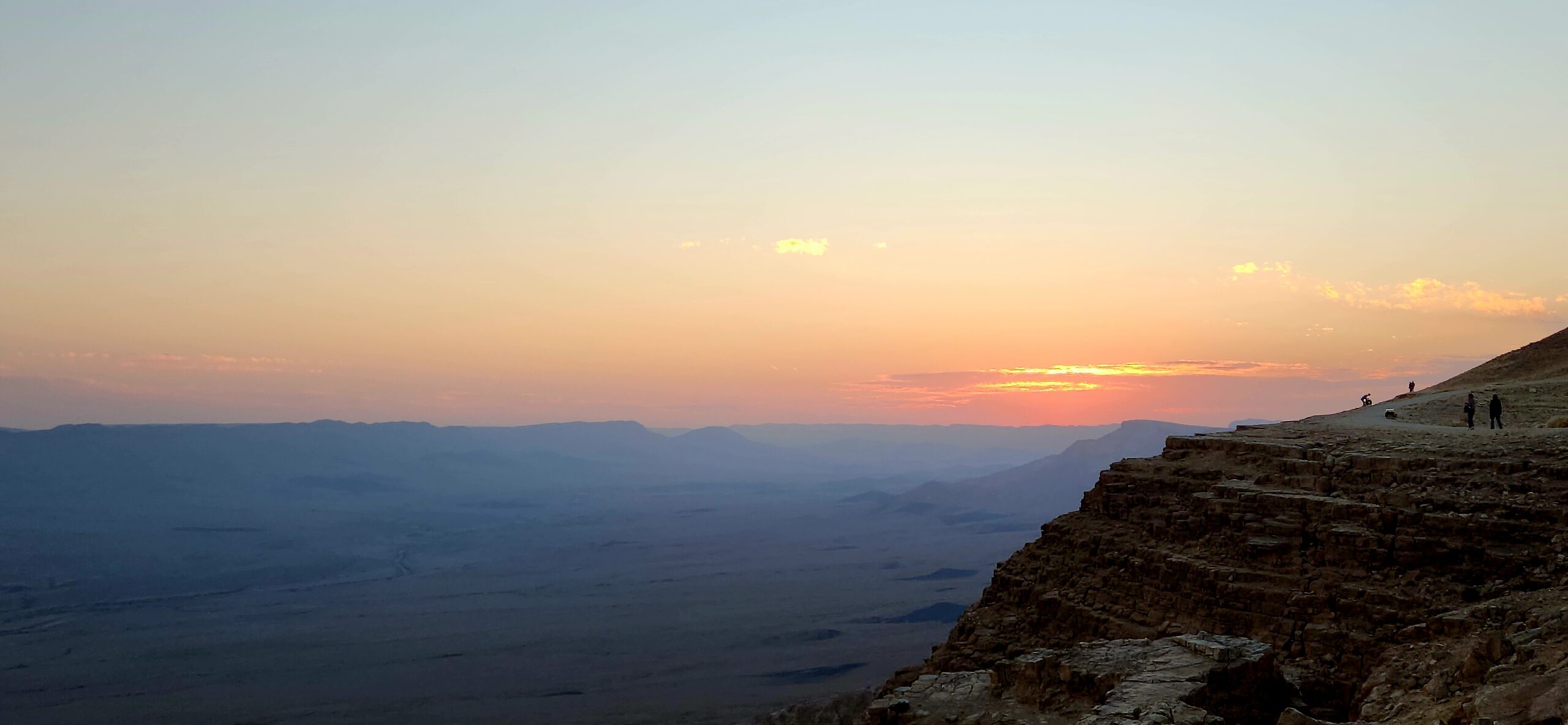
In some itineraries, a Bedouin visit works beautifully as part of a larger desert day. You might start with a scenic drive through the Negev, continue to a lookout or archaeological site, and then slow down for a hosted meal or tent visit. On another day, it may pair naturally with hiking, a 4×4 route, or time near Mitzpe Ramon and the Ramon Crater. For those who really want to deep dive into the culture, a full day of different villages and cities including baking, tracking, shepherding and intimate conversation over meals is also available. The desert is not only about scenery. It is also about the people who know how to read it.

Some travelers ask whether this kind of visit is performative. That is a fair question, and the answer depends on how the experience is arranged. There are visits designed mainly for volume, where guests pass through quickly with little real interaction. Then there are smaller, more personal encounters shaped by relationships, timing, and mutual respect. The second kind is where a skilled guide makes all the difference.
The role of context and good guiding
Desert hospitality is generous by nature, but visitors still need context. Without it, people may enjoy the tea and the view without really understanding what they are seeing. Why is coffee prepared in a particular way? What does hospitality mean in a desert environment? How have tradition and modern life shaped one another? What should guests ask, and what should they simply observe?
A strong guide helps turn a pleasant visit into a meaningful one. That means choosing the right host setting for your interests, helping conversations flow naturally, and making sure the experience fits your pace. For some travelers, that means a quiet family-style meal. For others, it means combining Bedouin culture with hiking, desert geology, or a broader look at the many communities that make up Israel.
This is especially valuable for travelers who have already visited Israel before. If you have seen Jerusalem, Masada, the Dead Sea, Caesarea, Jaffa, and Tel Aviv, and now want the trip to feel more layered, this is often where the country opens in a different way. A desert encounter can feel less like checking off a destination and more like being invited into a living world.

Who enjoys this most
A Bedouin experience Israel itinerary can work for a wide range of travelers because it is adaptable. Families with older children often love the sensory side of it – the food, the fire, the open space, the sense of being somewhere very different from a city hotel. Couples tend to enjoy the atmosphere and slower rhythm. Faith-based travelers, whether Jewish, Christian, Muslim, often appreciate the chance to encounter a different cultural expression of hospitality and identity within the same journey.

For private travelers, the biggest advantage is flexibility. Some people want a gentle cultural stop with easy access and comfortable seating. Others want to fold it into a full desert day with walking, scenic drives, and lesser-known stops. Some are eager for conversation and questions. Others prefer to absorb the setting more quietly. There is no single correct version, which is exactly why customized planning matters.
When to include it in your trip
The best timing depends on your route and your travel style. If your itinerary already includes the Dead Sea, Masada, or the Negev, adding a Bedouin visit can create a welcome balance. Desert landscapes are powerful, but they become more memorable when paired with human connection. If your schedule is rushed, though, this is not something to squeeze into a narrow gap just to say you did it.
It works best when there is time to arrive, settle in, and let the visit breathe. A lunch or early dinner stop often feels more natural than a hurried mid-afternoon stop. Some trips may include staying the night in a Bedouin tent. Cooler months can be especially pleasant, although the desert has its own beauty year-round. Evening light can be wonderful in the Negev, and if your day is planned well, the transition from wide-open landscape to warm tent hospitality feels very natural.
What to expect and what not to expect
Travelers sometimes imagine a Bedouin experience as a theatrical step back in time. That expectation can get in the way. Bedouin life, like every living culture, includes both continuity and change. Tradition matters, and so does the present day. The most respectful visits do not freeze people into a romantic image. They allow for a fuller picture – one that includes hospitality, memory, adaptation, family, and place.
That is why I always encourage travelers to come with curiosity rather than a script. You do not need to know exactly what questions to ask in advance. You do need to be open to listening, observing, and allowing the visit to be what it is rather than what a brochure once suggested it should be.
For many guests, this becomes one of the most grounding parts of an Israel trip. The desert strips away distraction. The welcome is direct. The setting invites open respectful conversation about culture, that feels unhurried and always sincere.
Making the Bedouin experience in Israel feel personal
The most memorable trips are rarely built from famous names alone. They come from the right combinations – a historic site followed by a home visit, a scenic desert route followed by a shared meal, a well-known destination balanced with something intimate and local. A Bedouin experience in Israel works best in exactly that way.
At Patchwork Israel, this kind of day can be shaped around the traveler, not forced into a fixed package. That matters whether you are visiting for the first time or returning with the hope of seeing a more personal side of the country. The right desert experience can be gentle or adventurous, simple or layered, quiet or conversation-filled. What matters most is that it feels real.
If you are considering adding this to your trip, think less about checking off an activity and more about what kind of encounter you want to remember when you get home. In the desert, the smallest moments often stay with you the longest.