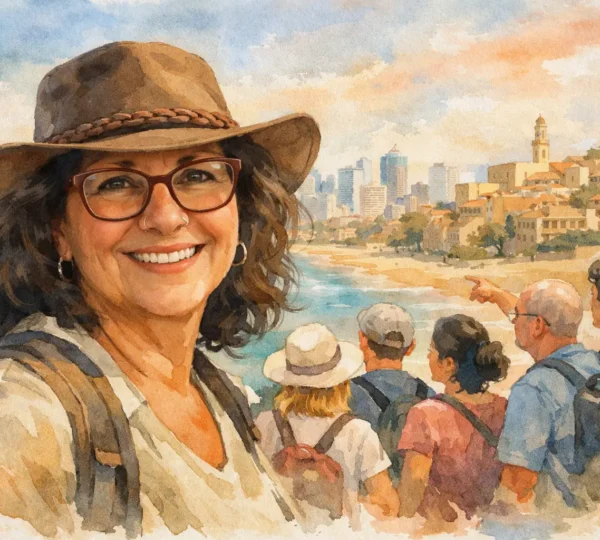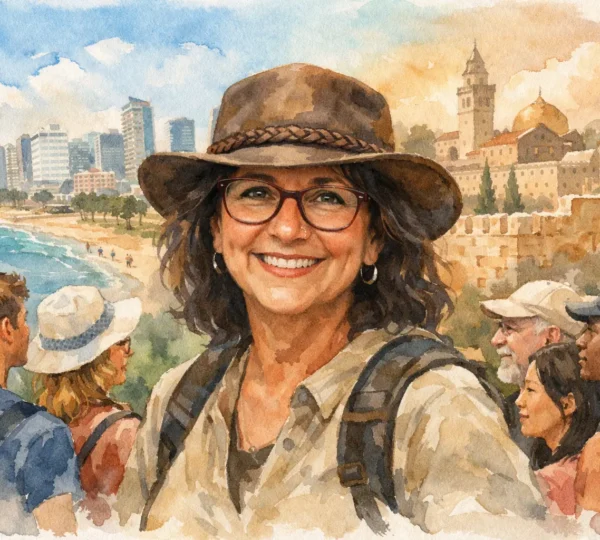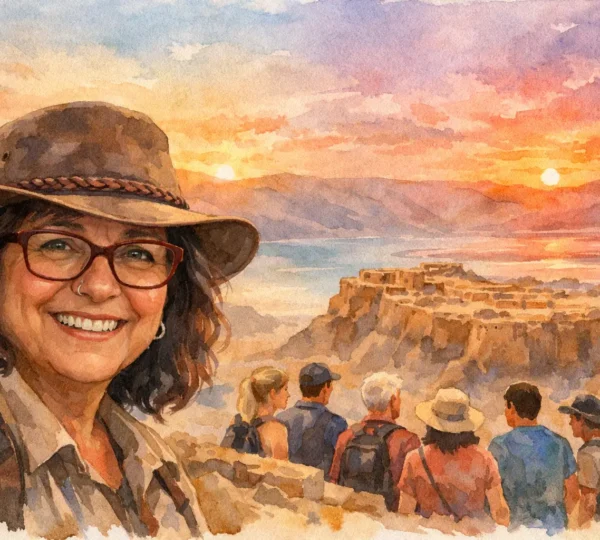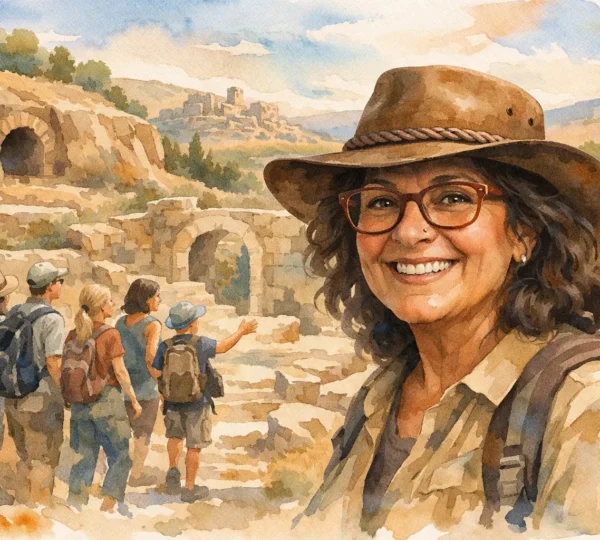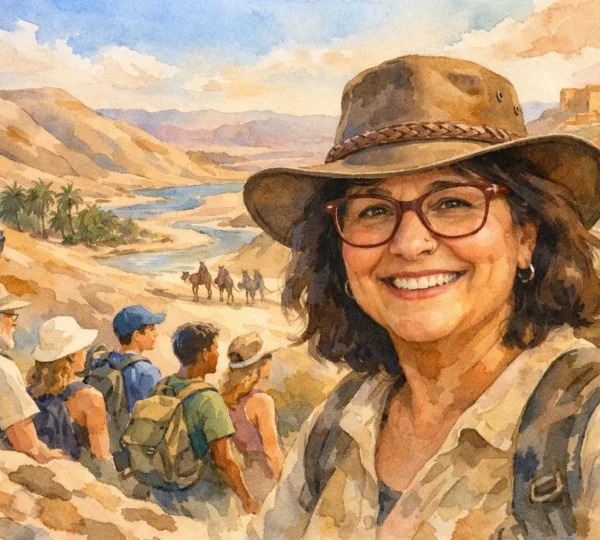
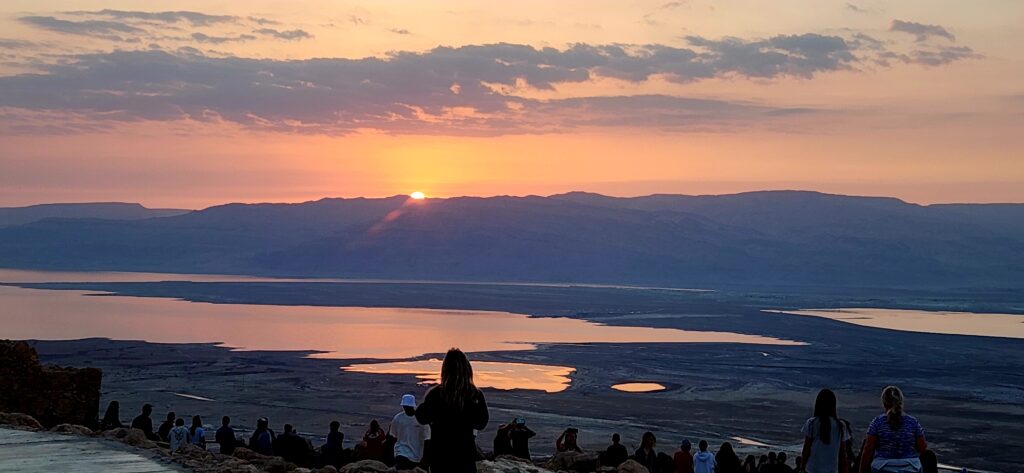
A sunrise over a desert crater or from the top of Masada overlooking the Dead Sea feels very different when someone beside you knows when to pause, when to explain, and when to simply let the silence of the desert do the work.
That is the real value of a holy land private guide. It is not just transportation from one famous or not so famous site to the next. It is having a knowledgeable local who can shape the day around your energy, your interests, your background, and the kind of experience you actually came for. In a country as compact and layered (in a great multi-layered patchwork of variety) as Israel, that difference is not small. It often becomes the difference between a trip that was busy and a trip that was meaningful.
What a holy land private guide really changes
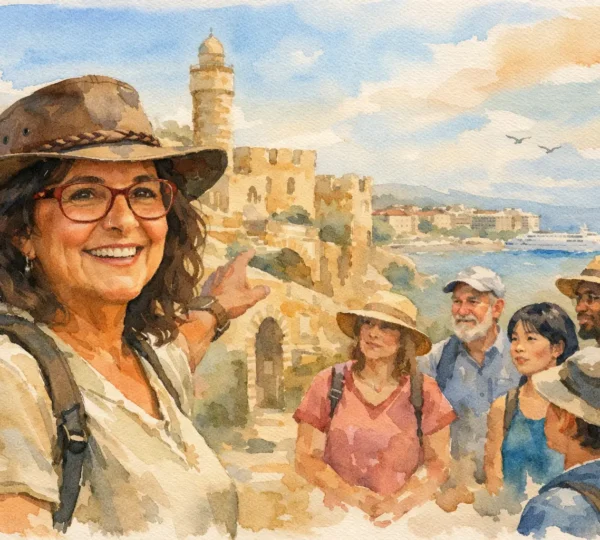
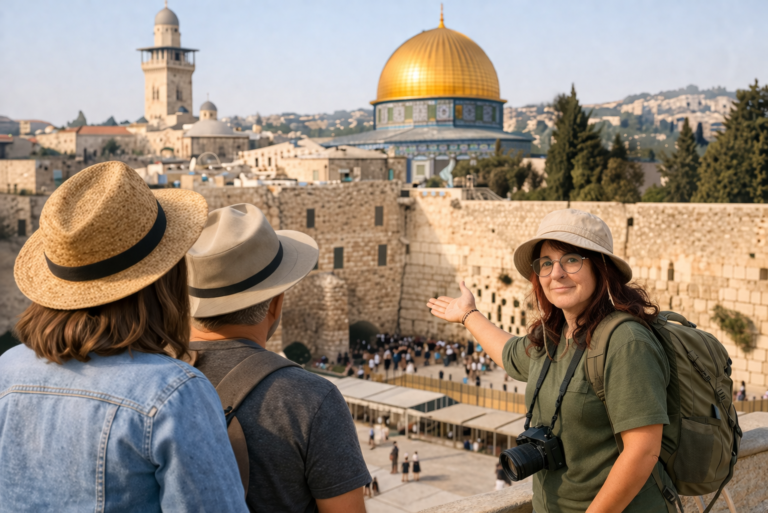
Israel is full of places people recognize long before they arrive – Jerusalem, Bethlehem, the Dead Sea, Jaffa, Nazareth, Caesarea, Masada, the Galilee. But the experience of these places depends heavily on context. A private guide does more than identify landmarks. She helps connect history, faith, landscape, food, multiple cultures and sub-cultures and daily life into something that makes sense.
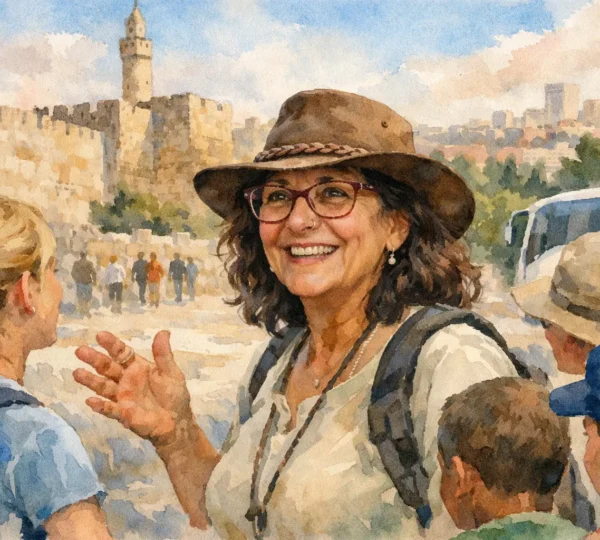
In Jerusalem alone, one street can hold layers from biblical memory, Roman history, Ottoman architecture, living religious tradition, and modern local culture. Without guidance, that can feel overwhelming. With the right guide, it becomes fascinating rather than confusing.
Private guiding also changes the rhythm of travel. Some travelers want time for reflection at sacred sites. Some want archaeology and historical depth. Some want a family-friendly day with room for flexibility, snacks, and shorter walks. Others want to combine a heritage stop in the morning with a market, winery, hike, or desert drive in the afternoon. A good private guide builds around those differences instead of forcing everyone into the same mold.
Not all travelers need the same kind of day
This is where private travel in Israel often stands apart from standard group touring. The Holy Land means different things to different visitors.
For faith-based travelers, the experience may center on Christian, Jewish, Muslim, Bahai, Alawite, Druze or other religious traditions and the places tied to them. For heritage travelers, family roots, migration stories, and cultural memory may matter more than a checklist of major sights. For curious first-time visitors, the goal may be to understand how such a small country can hold so much variety. And for active travelers, the best day might include a desert trail, a mountain view, or a 4×4 route rather than another museum.
A private guide can work with all of that. She can slow the pace when a site deserves time, adjust when weather changes the plan, or swap a crowded stop for a hidden gem that better fits the group. That flexibility is one of the biggest reasons travelers choose a private guide in the first place.
The best holy land private guide is not just a narrator
There is a difference between reciting facts and guiding well.
The best guides read the room. They know when your family needs a break, when your teenagers are more likely to connect through food or outdoor activity, and when a sacred place calls for less talking and more presence. They also know how to turn logistics into a smoother experience – planning routes wisely, managing timing, and helping you make the most of a day without making it feel rushed.
That matters in Israel because distances can be short while experiences are dense. You can start the day in the stone streets of Jerusalem, continue to the Judean Desert, float in the Dead Sea, and still end with dinner overlooking a very different landscape. On paper that sounds simple. In reality, doing it well takes local knowledge.
A seasoned guide also helps travelers move beyond the obvious. The famous sites matter, and they should. But often the moments people remember most are the ones they never would have planned alone – a tucked-away overlook, a neighborhood with a living story, a small culinary stop, a monastery on a quiet hillside, or a desert track reached only because someone local knew it belonged in your day.
Why private guiding works especially well in Israel
Some destinations are easy to improvise. Israel is not always one of them.
The country rewards planning, but it also rewards flexibility. Opening hours, traffic flow, walking routes, weather, religious calendars, and your own pace can shape the day in real ways. A private guide helps balance all of that while keeping the experience personal rather than mechanical.
There is also the question of depth. Israel is one of those places where a site can be spiritually significant, archaeologically important, visually striking, and culturally alive all at once. If you only skim the surface, you may leave with photos but not much understanding. If you go too deep in every location, you can burn out quickly. The right guide helps find the right level for you.
For many travelers, that balance is the sweet spot. You learn a great deal, but the day still feels human. There is room for conversation, for a spontaneous stop, for coffee, for a viewpoint, for a small market, for a detour that becomes a highlight.
What to look for when choosing a guide
Start with fit, not just credentials. Licensing and experience matter, of course, but so does style. Some travelers want an academically rich day. Others want a warmer, more conversational approach. Many want both – someone who knows the material deeply but shares it in a way that feels engaging and grounded.
It also helps to choose a guide who can build across interests rather than staying in one lane. If your ideal trip blends biblical sites with street food, Roman archaeology with desert landscapes, or family heritage with a day outdoors, that range matters.
Ask yourself a few practical questions. Do you want a guide who can customize every day, or are you comfortable selecting from set itineraries? Are you looking for urban touring, nature, culinary experiences, hiking, or off-road adventure alongside classic sites? Do you prefer a faster pace or a more reflective one? Have you visited all the major sites already and want to delve deeper into the more hidden gems? The clearer those answers are, the better your trip will be.
For travelers who want that kind of tailored experience, Patchwork Israel offers exactly this guide-led approach, with personalized touring that can move from iconic destinations to lesser-known places depending on what you want your Israel journey to feel like.
Private guide or group tour?
It depends on what you value most.
Group tours can work well for travelers who want a lower-cost structure and do not mind moving at a shared pace. They often cover major highlights efficiently. But they are, by nature, less flexible. If you want extra time in the Old City, a quieter route through the Galilee, a family-adjusted day, or a blend of sacred sites and soft adventure, a group format can feel limiting.
A private guide costs more, but the value is different. You are paying for personalization, efficiency, expertise, and a day designed around your priorities rather than the average preference of a bus full of strangers. For families, multigenerational travelers, faith-based visitors, and people making a once-in-a-lifetime trip, that trade-off is often worth it.
Beyond landmarks: the trip becomes personal
The strongest private tours are not only about where you go. They are about how the country begins to feel connected.
One day might bring the layers of Jerusalem into focus. Another might show how the Mediterranean feels in Jaffa and Tel Aviv. Another might open up the desert through Masada, Ein Gedi, or a more rugged off-road experience. Another might move north into greener landscapes, mountain air, villages, vineyards, or places where history sits quietly instead of announcing itself.
That is when travelers start to feel the country as a patchwork rather than a checklist. Sacred and everyday. Ancient and modern. Urban and wild. Familiar names and hidden corners. A private guide helps those contrasts make sense without flattening them into one story.
And that may be the biggest reason to choose one. The Holy Land is deeply meaningful to many people, but it is not one-dimensional. It is textured, surprising, and full of places that ask for more than a quick glance.
If you want your trip to feel less like covering ground and more like truly meeting the country, it’s history, culture and people, the right guide can make all the difference. The best days are not the ones where you simply saw more. They are the ones where more of it stayed with you.

A sunrise over a desert crater or from the top of Masada overlooking the Dead Sea feels very different when someone beside you knows when to pause, when to explain, and when to simply let the silence of the desert do the work.
That is the real value of a holy land private guide. It is not just transportation from one famous or not so famous site to the next. It is having a knowledgeable local who can shape the day around your energy, your interests, your background, and the kind of experience you actually came for. In a country as compact and layered (in a great multi-layered patchwork of variety) as Israel, that difference is not small. It often becomes the difference between a trip that was busy and a trip that was meaningful.
What a holy land private guide really changes
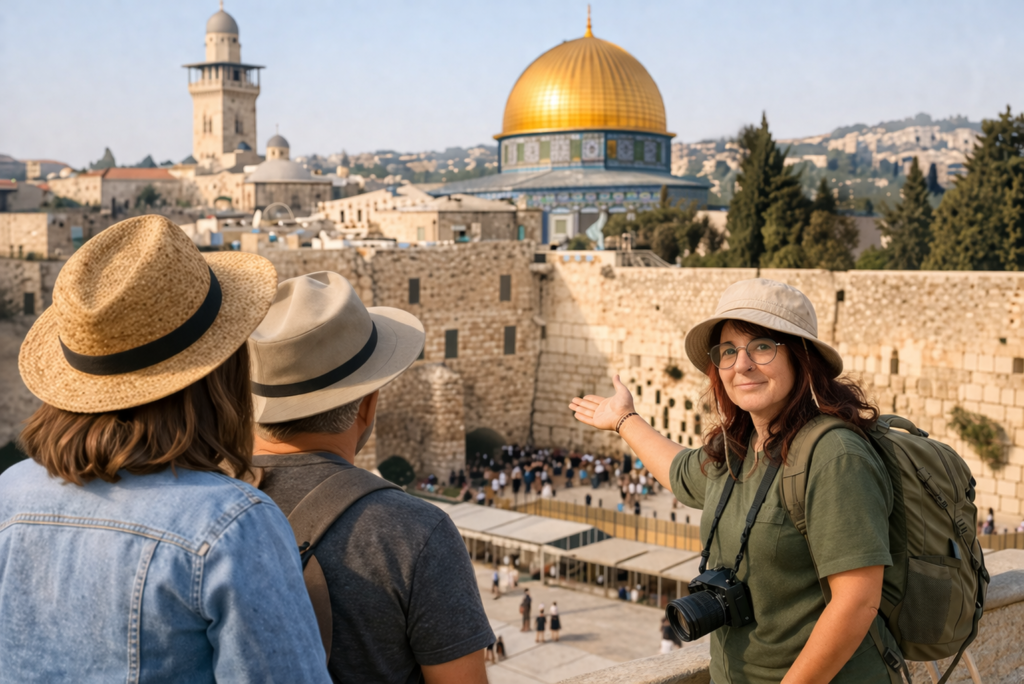
Israel is full of places people recognize long before they arrive – Jerusalem, Bethlehem, the Dead Sea, Jaffa, Nazareth, Caesarea, Masada, the Galilee. But the experience of these places depends heavily on context. A private guide does more than identify landmarks. She helps connect history, faith, landscape, food, multiple cultures and sub-cultures and daily life into something that makes sense.
In Jerusalem alone, one street can hold layers from biblical memory, Roman history, Ottoman architecture, living religious tradition, and modern local culture. Without guidance, that can feel overwhelming. With the right guide, it becomes fascinating rather than confusing.
Private guiding also changes the rhythm of travel. Some travelers want time for reflection at sacred sites. Some want archaeology and historical depth. Some want a family-friendly day with room for flexibility, snacks, and shorter walks. Others want to combine a heritage stop in the morning with a market, winery, hike, or desert drive in the afternoon. A good private guide builds around those differences instead of forcing everyone into the same mold.
Not all travelers need the same kind of day
This is where private travel in Israel often stands apart from standard group touring. The Holy Land means different things to different visitors.
For faith-based travelers, the experience may center on Christian, Jewish, Muslim, Bahai, Alawite, Druze or other religious traditions and the places tied to them. For heritage travelers, family roots, migration stories, and cultural memory may matter more than a checklist of major sights. For curious first-time visitors, the goal may be to understand how such a small country can hold so much variety. And for active travelers, the best day might include a desert trail, a mountain view, or a 4×4 route rather than another museum.
A private guide can work with all of that. She can slow the pace when a site deserves time, adjust when weather changes the plan, or swap a crowded stop for a hidden gem that better fits the group. That flexibility is one of the biggest reasons travelers choose a private guide in the first place.
The best holy land private guide is not just a narrator
There is a difference between reciting facts and guiding well.
The best guides read the room. They know when your family needs a break, when your teenagers are more likely to connect through food or outdoor activity, and when a sacred place calls for less talking and more presence. They also know how to turn logistics into a smoother experience – planning routes wisely, managing timing, and helping you make the most of a day without making it feel rushed.
That matters in Israel because distances can be short while experiences are dense. You can start the day in the stone streets of Jerusalem, continue to the Judean Desert, float in the Dead Sea, and still end with dinner overlooking a very different landscape. On paper that sounds simple. In reality, doing it well takes local knowledge.
A seasoned guide also helps travelers move beyond the obvious. The famous sites matter, and they should. But often the moments people remember most are the ones they never would have planned alone – a tucked-away overlook, a neighborhood with a living story, a small culinary stop, a monastery on a quiet hillside, or a desert track reached only because someone local knew it belonged in your day.
Why private guiding works especially well in Israel
Some destinations are easy to improvise. Israel is not always one of them.
The country rewards planning, but it also rewards flexibility. Opening hours, traffic flow, walking routes, weather, religious calendars, and your own pace can shape the day in real ways. A private guide helps balance all of that while keeping the experience personal rather than mechanical.
There is also the question of depth. Israel is one of those places where a site can be spiritually significant, archaeologically important, visually striking, and culturally alive all at once. If you only skim the surface, you may leave with photos but not much understanding. If you go too deep in every location, you can burn out quickly. The right guide helps find the right level for you.
For many travelers, that balance is the sweet spot. You learn a great deal, but the day still feels human. There is room for conversation, for a spontaneous stop, for coffee, for a viewpoint, for a small market, for a detour that becomes a highlight.
What to look for when choosing a guide
Start with fit, not just credentials. Licensing and experience matter, of course, but so does style. Some travelers want an academically rich day. Others want a warmer, more conversational approach. Many want both – someone who knows the material deeply but shares it in a way that feels engaging and grounded.
It also helps to choose a guide who can build across interests rather than staying in one lane. If your ideal trip blends biblical sites with street food, Roman archaeology with desert landscapes, or family heritage with a day outdoors, that range matters.
Ask yourself a few practical questions. Do you want a guide who can customize every day, or are you comfortable selecting from set itineraries? Are you looking for urban touring, nature, culinary experiences, hiking, or off-road adventure alongside classic sites? Do you prefer a faster pace or a more reflective one? Have you visited all the major sites already and want to delve deeper into the more hidden gems? The clearer those answers are, the better your trip will be.
For travelers who want that kind of tailored experience, Patchwork Israel offers exactly this guide-led approach, with personalized touring that can move from iconic destinations to lesser-known places depending on what you want your Israel journey to feel like.
Private guide or group tour?
It depends on what you value most.
Group tours can work well for travelers who want a lower-cost structure and do not mind moving at a shared pace. They often cover major highlights efficiently. But they are, by nature, less flexible. If you want extra time in the Old City, a quieter route through the Galilee, a family-adjusted day, or a blend of sacred sites and soft adventure, a group format can feel limiting.
A private guide costs more, but the value is different. You are paying for personalization, efficiency, expertise, and a day designed around your priorities rather than the average preference of a bus full of strangers. For families, multigenerational travelers, faith-based visitors, and people making a once-in-a-lifetime trip, that trade-off is often worth it.
Beyond landmarks: the trip becomes personal
The strongest private tours are not only about where you go. They are about how the country begins to feel connected.
One day might bring the layers of Jerusalem into focus. Another might show how the Mediterranean feels in Jaffa and Tel Aviv. Another might open up the desert through Masada, Ein Gedi, or a more rugged off-road experience. Another might move north into greener landscapes, mountain air, villages, vineyards, or places where history sits quietly instead of announcing itself.
That is when travelers start to feel the country as a patchwork rather than a checklist. Sacred and everyday. Ancient and modern. Urban and wild. Familiar names and hidden corners. A private guide helps those contrasts make sense without flattening them into one story.
And that may be the biggest reason to choose one. The Holy Land is deeply meaningful to many people, but it is not one-dimensional. It is textured, surprising, and full of places that ask for more than a quick glance.
If you want your trip to feel less like covering ground and more like truly meeting the country, it’s history, culture and people, the right guide can make all the difference. The best days are not the ones where you simply saw more. They are the ones where more of it stayed with you.